4.7 Changing Social Hierarchies: Class and Race from 1450-1750

🌍AP World History: Modern Unit 4 Review
4.7 Changing Social Hierarchies: Class and Race from 1450-1750
🌍 AP World History: Modern
4.1
Technological Innovations from 1450 to 1750
4.2
Exploration: Causes and Events from 1450 to 1750
4.3
Columbian Exchange
4.4
Maritime Empires Established
4.5
Maritime Empires Maintained and Developed
4.6
Internal and External Challenges to State Power from 1450 to 1750
4.7
Changing Social Hierarchies: Class and Race from 1450-1750
4.8
Continuity and Change from 1450 to 1750
Between 1450 and 1750, empires and growing global trade reshaped who held power and status. Some states like the Mughals and Ottomans accommodated ethnic and religious diversity to strengthen their rule, while others suppressed certain groups.
Changing Social Hierarchies from 1450 to 1750
AP World History Topic 4.7 focuses on how empire-building and global economic change reshaped social status. Some states accommodated ethnic and religious diversity to use the contributions of different groups, while other states restricted or suppressed certain groups.
The highest-yield examples are the Ottoman acceptance of Jews after expulsions from Spain and Portugal, Mughal accommodation under Akbar, restrictive Qing policies toward Han Chinese, Russian boyars and serfdom, and the casta system in the Americas. Use these examples to explain class, race, religion, and gender as tools of social organization.
Why This Matters for the AP World History Exam
This topic builds skills you will use across the exam, especially continuity and change over time and comparison. You should be able to explain how social categories stayed the same or shifted as empires expanded and global trade intensified. The contrast between states that accommodated diversity and states that limited it gives you strong comparative evidence, and the rise of new elites connects directly to causation arguments about how military expansion and trade reorganized societies. Use these examples as concrete support when you build arguments about social structures in the period from 1450 to 1750.
Key Takeaways
- Some empires, including the Mughal and Ottoman, accommodated ethnic and religious diversity to use the contributions of different groups; others suppressed diversity or limited certain groups' roles.
- Imperial military expansion and global economic opportunity created new political and economic elites, including the Qing transition in China and the casta system in the Americas.
- The power of older elites, such as the Russian boyars, Ottoman timar holders, and European nobility, rose and fell as monarchs grew stronger.
- Differential treatment shows up in real cases: Jews expelled from Spain and Portugal but accepted in the Ottoman Empire, restrictive policies against Han Chinese in Qing China, and varying status of women in the Ottoman Empire.
- Race and ancestry became organizing tools in colonial Latin America, with status tied to birthplace and mixed heritage.
Social Reorganization in the Land-Based Empires
States in this period made deliberate choices about how to handle the many ethnic and religious groups they ruled. Some leaned into accommodation; others enforced uniformity. Both approaches were about consolidating power.
The Ottoman Empire
The Ottoman Empire used a flexible but layered social structure to manage diversity.
- At the top, the Sultan granted land and favors to loyal officials and military elites.
- Religious scholars, military officers, and tax collectors filled the levels below.
- Janissaries, elite soldiers originally recruited through the devshirme system (Christian boys taken and trained for state service), gained influence over time.
Religious minorities, especially Jews and Christians, could practice their faith in self-governing millet communities in exchange for a tax. Many Jews expelled from Spain and Portugal found refuge in the Ottoman Empire, which is one of the clearest examples of how differently states treated the same group. The status of women in the Ottoman Empire also varied across different classes, another example of social categories shifting by group.
The Mughal Empire
Under rulers like Akbar, the Mughals accommodated their largely non-Muslim population. Akbar removed the jizya tax on non-Muslims and encouraged dialogue across faiths. Later rulers reversed some of these policies, which contributed to resistance movements. This back-and-forth is a useful example of how social and religious practices can change over time within a single empire.
China and the Qing Dynasty
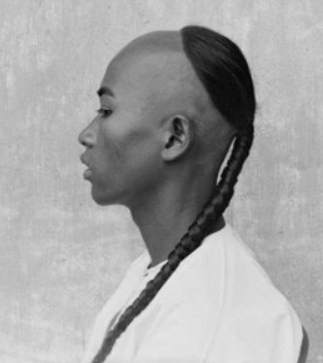
The Qing dynasty was established by the Manchus, an ethnic minority that took control after the Ming. The transition to the Qing created a new ruling elite, which fits the pattern of military expansion producing new political elites in this period.
- The Qing kept much of the Confucian bureaucracy but imposed cultural markers, including the required queue hairstyle, to signal submission.
- Han Chinese faced restrictive policies, and refusing to adopt required customs could carry harsh penalties.
- Some Han elites worked with the Qing and helped enforce their rule.
This is a clear case of a small group ruling a much larger population, which the Qing managed through a mix of cooperation and control.
European Social Orders and Resistance
Class in Europe
European society was built on layered class hierarchies, though growing commerce was starting to shift things.
| Class | Description |
|---|---|
| Monarchs | Claimed divine right; centralized power |
| Nobles | Owned land; often served in government or military |
| Clergy | Held moral and educational authority |
| Merchant class | Urban traders rising in wealth and influence |
| Peasants & Serfs | Worked land; faced heavy taxation and limited rights |
European nobility is one of the existing elites whose influence fluctuated as monarchs centralized power. France under Louis XIV is a good example: after the Fronde revolt, Louis worked to limit noble independence and pull authority toward the crown.
Jewish Communities in Europe
The expulsion of Jews from Spain (1492) and Portugal (1497) pushed Jewish communities toward places like the Ottoman Empire, Poland, and the Netherlands. Their experiences ranged from relative tolerance to renewed hostility depending on location and economic conditions. This is the European side of the same expulsion-versus-acceptance contrast you can use in a comparison argument.
Russia: Serfdom and the Boyars
Russian society was steeply hierarchical.
- The tsar held supreme authority.
- Boyars were the landowning aristocracy and one of the existing elites whose power shifted as the monarchy strengthened.
- Serfs were peasants bound to the land, with little freedom of movement.
While serfdom was fading in much of Europe, it became more entrenched in Russia during this period, a notable continuity-and-change contrast.
Colonial Americas: Race-Based Hierarchies
The Casta System in Latin America
Spanish and Portuguese colonies organized society around ancestry. The casta system was a rigid hierarchy used to maintain colonial control and is one of the new elites that formed through imperial military expansion and global economic opportunity.
| Rank | Group | Description |
|---|---|---|
| 1 | Peninsulares | Europeans born in Spain or Portugal |
| 2 | Creoles | Europeans born in the Americas |
| 3 | Mestizos | Mixed Indigenous and European ancestry |
| 4 | Mulattoes | Mixed African and European ancestry |
| 5 | Zambos | Mixed African and Indigenous ancestry |
| 6 | Indigenous Peoples | Native American populations |
| 7 | Enslaved Africans | Forced laborers from Africa |
Colonial officials tied rights and privileges to these categories. People of mixed ancestry could sometimes move up modestly, but they were generally barred from top political and religious positions.
North America
In the British colonies, hierarchy was less formally codified than in Latin America, but race still shaped social position.
- Enslaved Africans were legally and socially placed at the bottom.
- Indigenous peoples were displaced and marginalized.
- White indentured servants ranked low but could improve their standing after completing service.
Women in Early Modern Societies
Women's roles depended heavily on class, religion, and region.
- Elite women could gain influence through court politics or marriage; the varying status of different classes of women in the Ottoman Empire is a strong example.
- Enslaved and peasant women carried the heaviest labor burdens.
- In some Indigenous American societies, women held meaningful economic and political roles before colonization, many of which European norms reduced.
Religious and Ethnic Suppression vs. Tolerance
States across Afro-Eurasia handled diversity in very different ways, and that contrast is one of the most useful things to learn from this topic.
| Empire | Approach Toward Minorities |
|---|---|
| Ottoman | Allowed Jews and Christians self-governing communities under a tax |
| Mughal (Akbar) | Encouraged religious dialogue and removed the jizya |
| Mughal (later) | Re-imposed the jizya and pressured non-Muslim groups |
| Qing China | Imposed Manchu customs and restricted Han Chinese |
| Tokugawa Japan | Suppressed Christianity and expelled missionaries |
| Spanish America | Imposed Catholicism and suppressed Indigenous religions |
The big takeaway: some states used practical pluralism to strengthen their rule, while others enforced cultural uniformity to consolidate authority, often at the expense of minority groups.
How to Use This on the AP World History Exam
Continuity and Change Over Time
Track what stayed the same and what shifted. Existing elites like the boyars, timar holders, and European nobility persisted, but their power fluctuated as monarchs centralized authority. Serfdom faded in much of Europe yet deepened in Russia. Practice naming both the continuity and the change in one sentence.
Comparison
The accommodation-versus-suppression split is built for comparison prompts. Pair the Ottoman acceptance of Jews against the Spanish and Portuguese expulsion, or Akbar's tolerance against Qing restrictions on Han Chinese. Always explain a similarity and a difference, not just one side.
Causation
Connect cause to effect: imperial military expansion and expanding trade created new elites (the Qing transition, the casta system), while stronger monarchs reshaped the influence of older elites. Tie the social change back to its driver.
Common Trap
Do not treat "tolerance" as a moral choice. Empires usually accommodated diversity because it was useful for collecting taxes, recruiting soldiers, or keeping order. Frame it as a strategy for control, not kindness.
Common Misconceptions
- Misconception: Tolerance was generosity.Actually: Tolerance was not generosity. States like the Ottomans and Mughals accommodated diversity mainly to gather taxes, military service, and stability, not out of pure goodwill.
- Misconception: The casta system was flexible.Actually: The casta system was not flexible. Movement between categories was limited, and people of mixed ancestry were generally blocked from the highest offices.
- Misconception: Older elites simply disappeared.Actually: Older elites did not simply disappear. Boyars, timar holders, and nobles kept their positions, but their ability to shape royal policy rose and fell as monarchs grew stronger.
- Misconception: A minority cannot rule a majority.Actually: A minority can rule a majority. The Qing Manchus and colonial European elites controlled far larger populations through a mix of cooperation, bureaucracy, and enforced customs.
- Misconception: Social change was uniform.Actually: Social change was not uniform. The same group, like Jews or Han Chinese, could be welcomed in one state and restricted in another during the same period.
Related AP World History Guides
Practice Questions for 4.7
1 of 10
The Ottoman Empire's acceptance of Jews expelled from Spain and Portugal in the late 15th century is best understood in the context of which of the following developments?
A.
European pressure to enforce Christian-majority policies on the Ottomans
B.
Rejection of Islamic law in favor of secular state governance
C.
Desire to eliminate religious differences through forced conversion
D.
Settling Jews to repopulate lands and raise revenue via millets.
Vocabulary
The following words are mentioned explicitly in the AP® course framework for this topic.Term | Definition |
|---|---|
Casta system | A hierarchical racial and social classification system in the Americas that categorized people by ethnic and racial ancestry. |
economic elites | Groups holding wealth, resources, and influence over economic systems and opportunities. |
European nobility | The hereditary aristocratic class in Europe that held political power, land ownership, and social status. |
Mughal Empire | A major Islamic empire in South Asia (16th-18th centuries) known for accommodating religious and ethnic diversity among its subjects. |
Ottoman Empire | A major Islamic empire that ruled from the 14th to early 20th century and was predominantly Sunni Muslim. |
Ottoman timars | Land grants given to Ottoman military officials and administrators as a form of compensation and control. |
political elites | Groups holding power and influence in government and political decision-making. |
Qing Dynasty | The final imperial dynasty of China (1644-1912) that marked a transition in political and economic elites in China. |
Russian boyars | Members of the old Russian aristocracy who held significant political and economic power before centralization under the monarchy. |
social categories | Divisions of society based on characteristics such as race, class, gender, and religion that organize social structures and relationships. |
Frequently Asked Questions
What is AP World History Topic 4.7 about?
Topic 4.7 is about how states, empires, and global trade changed social hierarchies from 1450 to 1750.
What are examples of changing social hierarchies from 1450 to 1750?
Examples include the casta system in the Americas, restrictive Qing policies toward Han Chinese, Ottoman acceptance of Jewish communities, Mughal accommodation under Akbar, and the changing power of Russian boyars.
What was the casta system in AP World History?
The casta system was a social hierarchy in Spanish and Portuguese America that ranked people by ancestry, birthplace, and race.
How did the Ottoman Empire handle religious diversity?
The Ottoman Empire often accommodated religious minorities, including Jewish and Christian communities, as a way to collect taxes, maintain order, and use the contributions of different groups.
How did Qing China change social hierarchy?
The Manchu Qing created a new ruling elite and imposed policies that marked Manchu authority over Han Chinese society.
How should I use Topic 4.7 on the AP World exam?
Use Topic 4.7 for continuity and change, comparison, or causation arguments about how empire-building and global trade reorganized class, race, religion, and gender.
See Fiveable more often in Google
Mark Fiveable as a preferred source and Google is more likely to show you our guides in Top Stories, with a "preferred" badge in AI Mode and AI Overviews.