1.1 Developments in East Asia from 1200-1450

🌍AP World History: Modern Unit 1 Review
1.1 Developments in East Asia from 1200-1450
🌍 AP World History: Modern
Before 1200 Context for AP World
1.1
Developments in East Asia from 1200-1450
1.2
Developments in Dar al-Islam from 1200-1450
1.3
Developments in South and Southeast Asia from 1200-1450
1.4
State Building in the Americas from 1200-1450
1.5
State Building in Africa from 1200-1450
1.6
Developments in Europe from 1200-1450
1.7
Comparisons in the Period from 1200-1450
East Asia from about 1200 to 1450 centered on China, where the Song Dynasty ran a Confucian government, built a booming commercial economy, and exported culture that shaped Japan and Korea. The Mongols took over and created the Yuan Dynasty, but Confucian ideas, Buddhism, and Chinese technology kept spreading across the region.
Developments in East Asia from 1200 to 1450
For AP World History Topic 1.1, the core developments in East Asia were Song China's Confucian bureaucracy, the spread and adaptation of Chinese cultural traditions, and major economic innovations. The Song used Confucianism and civil service exams to maintain an imperial bureaucracy, while Neo-Confucianism, Buddhism, literary traditions, and filial piety shaped societies across East Asia.
Economically, Song China became more commercialized because of higher agricultural production, expanding trade networks, and innovations in manufacturing. Champa rice, Grand Canal expansion, iron and steel production, textiles, porcelain, and paper money are the kinds of specific evidence you can use in AP writing.
Why This Matters for the AP World History Exam
This topic opens the course, so it sets up patterns you will track for the rest of the year. The Song Dynasty gives you a clear example of how a state uses belief systems and bureaucracy to justify and hold power, which connects to state-building questions in every later unit.
It also builds the skills the exam rewards most:
- Causation: explaining how agricultural and manufacturing innovations caused economic and population growth.
- Continuity and change: tracking how Confucianism, Buddhism, and Chinese cultural traditions continued while societies also changed.
- Comparison: setting up later comparisons of state formation across regions.
You can use this content as evidence in free-response writing and as background knowledge for multiple-choice sources about East Asian governance, religion, and trade.
Key Takeaways
- The Song Dynasty used Confucianism and a merit-based imperial bureaucracy, including civil service exams, to maintain and justify its rule.
- Neo-Confucianism blended Confucian ideas with Buddhist and Daoist influences and shaped government, education, and social roles across East Asia.
- Chinese cultural traditions, including filial piety, scholarly writing, and Confucian expectations for women, spread to neighbors like Heian Japan and Korea.
- Buddhism continued to grow through several branches, including Theravada, Mahayana, and Tibetan, and shaped art, learning, and daily life.
- Song China's economy became more commercialized while still depending on free peasant and artisanal labor.
- Innovations like Champa rice, the Grand Canal expansion, iron and steel production, and porcelain and textile manufacturing drove trade and population growth.
How Chinese Dynasties Governed
The Song Dynasty (960-1279) did not invent China's government system, but it strengthened the tools that justified imperial rule:
- Officials were recruited through difficult civil service exams based on Confucian texts.
- Local governors collected taxes and kept order in the provinces.
- The emperor stood at the top and made final decisions.
- Court officials advised the emperor and ran government departments.
This merit-based bureaucracy, rooted in Confucianism, is the key official takeaway for this period. The Song used traditional Confucian methods and an imperial bureaucracy to maintain and justify its rule.
The Song faced pressure from northern nomadic groups and eventually lost the north, shifting south in what historians call the Southern Song period.
The Yuan Dynasty (Example/Application)
The Mongols later took control of China and established the Yuan Dynasty (1279-1368). This is useful context for understanding continuity and change, but the required focus for this topic is the Song system. Under the Yuan:
- Mongol rulers kept many Chinese bureaucrats doing daily administrative work.
- Mongols held the most important positions and sat at the top of the social order.
- Existing Chinese tax structures were used to collect revenue.
Marco Polo's travel writing is a later European account of Yuan China. Treat sources like this as perspectives to analyze, not as neutral fact.
The Ming Dynasty (Preview/Context)
The Ming Dynasty (founded 1368) restored traditional Chinese government and expanded the exam system. The Ming sit at the edge of this time frame and connect more directly to later units, so use them as context rather than the core of this topic.
Confucianism and Government
Across these changes, Confucian ideas stayed at the center of Chinese governance:
- Officials studied Confucian texts to pass their exams.
- The emperor was expected to rule with virtue.
- Social harmony was a central goal.
- Education was highly valued.
During the Song, scholars developed Neo-Confucianism, which:
- Blended traditional Confucian ideas with some Buddhist and Daoist concepts.
- Created a deeper philosophical system.
- Reinforced traditional social roles.
- Emphasized personal moral improvement.
- Became the leading official philosophy.
How Chinese Culture Shaped East Asia
Spread of Cultural Traditions
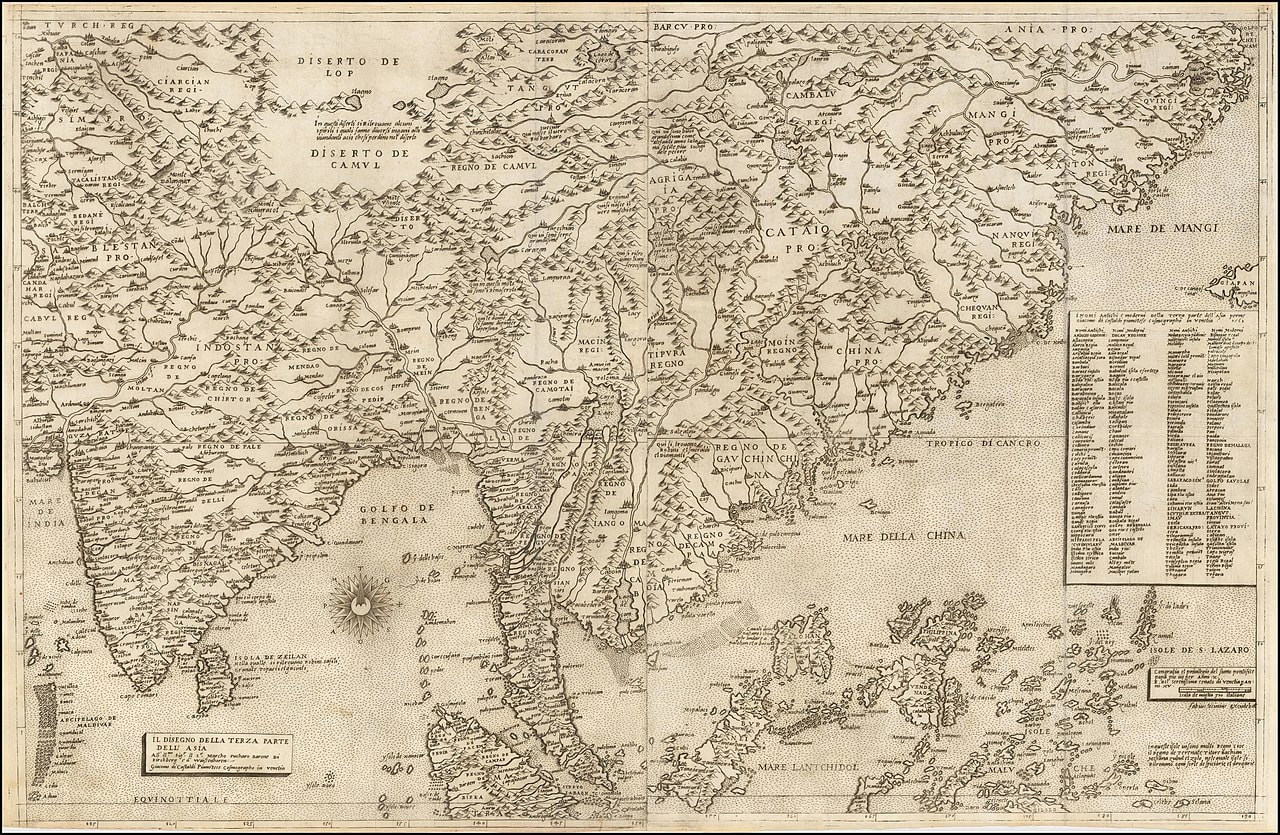
Chinese cultural ideas traveled across East Asia through several channels:
- Official contact between royal courts.
- Merchants following trade routes.
- Buddhist monks traveling for religious reasons.
- Books and scrolls carried by scholars.
Filial piety, the duty to respect parents and ancestors, became important across the region:
- Children were expected to obey parents into adulthood.
- Families maintained ancestor shrines.
- Caring for elderly parents was a serious obligation.
- Family names and histories were preserved carefully.
Neo-Confucianism spread to Korea and Japan, where it helped organize government, shaped education, reinforced social classes, and blended with local traditions.
Writing, Learning, and Scholarly Traditions
China's writing system and literature had a major impact:
- Korea used Chinese characters before developing its own writing system.
- Japan combined Chinese characters with phonetic symbols.
- Educated people across East Asia read Chinese classics.
- Government documents were often written in Classical Chinese.
In Heian Japan (794-1185), the court borrowed heavily from China:
- Nobles wrote poetry influenced by Chinese styles.
- The capital was modeled on the Chinese city of Chang'an.
- Court ceremonies and the arts drew on Chinese models.
- Buddhism, which reached Japan partly through China, became influential.
Korean scholars during the Goryeo (918-1392) and early Joseon periods built government systems inspired by China, studied Confucian texts, and developed advanced printing techniques.
Buddhism Across East Asia
Buddhism continued to grow and take different forms across Asia. The major branches include:
- Theravada: emphasizes individual practice and monastic discipline; widespread in parts of Southeast Asia.
- Mahayana: emphasizes helping others reach enlightenment; influential in China, Korea, and Japan.
- Tibetan: blended Buddhist ideas with local practices and developed extensive monasteries and distinctive art.
In China, Buddhism took several forms:
- Chan (Zen) Buddhism appealed to educated elites through its focus on meditation.
- Pure Land Buddhism attracted ordinary people by promising salvation through faith.
- Buddhist temples often provided schools, lodging for travelers, and disaster relief.
- Some Confucian officials criticized monasteries for holding large amounts of land.
Japan developed its own forms of Buddhism, where Zen influenced arts like the tea ceremony and ink painting, and Pure Land traditions offered hope to ordinary people.
Women in East Asian Society
Confucian expectations shaped women's lives throughout the region. Confucian traditions included both respect for women and expected deference from them:
- Women were generally expected to defer to fathers, husbands, and sons.
- They often managed household affairs but rarely held public office.
- Elite women might learn to read, write, and create art.
- Women could not take the civil service exams or hold government posts.
Within these limits, women still contributed in important ways. Women in Heian Japan produced celebrated literature, many women managed household economies, and women passed down cultural traditions across generations.
Economic Innovations in Song China
Agricultural Growth
The Song period brought major improvements in farming:
- Farmers adopted Champa rice from Vietnam, which grew faster and allowed more harvests.
- Improved irrigation moved water where it was needed.
- New tools made farming more efficient.
- Terracing created more usable farmland on hillsides.
These changes led to more food production, population growth, food surpluses that supported cities, and better protection against famine.
Transportation Improvements
The Song improved how people and goods moved around China:
- The Grand Canal was expanded, linking the north and south.
- Better roads and bridges eased land travel.
- Improved ship designs made water travel safer.
- The compass aided navigation.
These improvements supported faster tax collection, quicker troop movement, expanded regional trade, and better distribution of food during shortages.
Manufacturing Advances
Song manufacturing reached impressive levels:
- Iron and steel production expanded dramatically.
- Better furnaces reached higher temperatures.
- Specialized production centers developed, such as porcelain centers.
Chinese porcelain became famous for its thin, high-quality finish and distinctive patterns, while textile production expanded:
- Silk remained a valuable export.
- Cotton production grew.
- Complex weaving and dyeing produced detailed, colorful fabrics.
The Commercial Revolution
The Song economy became increasingly commercial:
- Paper money came into wide use.
- Credit systems let merchants make larger deals.
- Markets specialized in different products.
- The government regulated weights, measures, and market practices.
Importantly, this commercial growth still depended on free peasant and artisanal labor:
- Free farmers worked their own land.
- Skilled craftspeople worked in workshops.
- Day laborers worked in cities.
- Household production, especially textiles, remained common.
Trade Networks
Chinese trade networks expanded across land and sea:
- Ships reached Southeast Asia, India, and the Persian Gulf.
- Caravans traveled Silk Road routes to Central Asia.
- Tribute trade connected China with neighbors like Korea and Japan.
- River and coastal shipping moved goods within China.
China exported porcelain, silk, tea, and paper, and imported goods like spices, horses, and luxury items. This commercial growth supported a wealthy merchant class, larger cities, and new urban art and culture.
How to Use This on the AP World History Exam
Multiple Choice
Source-based multiple-choice questions often pair a document with a region and period. For East Asia, watch for sources about Confucian government, the civil service exam, Buddhism, or Song trade and technology. Use the source's point of view and date to pick the best answer, and remember that later European accounts like Marco Polo's are perspectives to analyze.
Free Response
Use Song China as strong evidence for:
- Causation: connect Champa rice, the Grand Canal expansion, iron and steel production, and porcelain and textile output to economic and population growth.
- Continuity and change: show how Confucianism and Buddhism continued while Neo-Confucianism and commercialization changed society.
- Comparison: line up Song state-building with state formation in other regions you study later in Unit 1.
When you write, name specific evidence (Champa rice, civil service exams, paper money) instead of staying vague.
Common Trap
Do not turn the labor point into "Song China ran on slaves or serfs." The economy commercialized but still relied on free peasant and artisanal labor. That distinction is exactly the kind of detail graders look for.
Common Misconceptions
- Misconception: The Song invented China's bureaucracy or exam system.Actually: The Song did not invent China's bureaucracy or exam system. They strengthened and relied on existing Confucian methods to justify their rule.
- Misconception: Neo-Confucianism is a brand-new religion.Actually: Neo-Confucianism is not a brand-new religion. It is a development of Confucian thought that absorbed some Buddhist and Daoist ideas.
- Misconception: The required focus for this topic is the Yuan and Ming dynasties.Actually: The Yuan and Ming dynasties are useful context, but the required focus for this topic is the Song system and Song economy.
- Misconception: Commercialization erased traditional labor.Actually: Commercialization did not erase traditional labor. Free peasants and artisans remained the backbone of the workforce.
- Misconception: Chinese cultural influence erased local cultures.Actually: Chinese cultural influence did not erase local cultures. Japan and Korea adapted Chinese ideas and combined them with their own traditions.
- Misconception: Buddhism is one single set of beliefs.Actually: Buddhism is not one single set of beliefs. It includes branches like Theravada, Mahayana, and Tibetan, with different practices and regions of influence.
Related AP World History Guides
Practice Questions for 1.1
1 of 10
The widespread adoption of Champa rice in Song China during the 11th century enabled farmers to cultivate previously marginal hillside terraces and expand production into new regions. This agricultural innovation best illustrates which broader economic transformation of the Song period?
A.
Shift from subsistence farming toward commercial production serving domestic markets.
B.
Integration of Buddhist monastic farming techniques into state agricultural policy.
C.
Widespread replacement of free peasant labor with enslaved agricultural workers.
D.
Rising agricultural productivity that fueled population growth, urbanization, and markets.
Vocabulary
The following words are mentioned explicitly in the AP® course framework for this topic.Term | Definition |
|---|---|
agricultural innovation | New techniques, tools, or methods that improved farming productivity and output. |
artisanal labor | Skilled manual work performed by craftspeople producing goods by hand. |
branches of Buddhism | Different schools and interpretations of Buddhist teachings that developed and spread across Asia, such as Mahayana and Theravada Buddhism. |
Buddhism | A major world religion and philosophical tradition that spread throughout Asia via trade networks. |
Chinese cultural traditions | The customs, beliefs, practices, and values that originated in China and were transmitted across generations and to neighboring regions. |
commercialized economy | An economy increasingly based on buying and selling goods through markets and trade rather than subsistence or barter. |
Confucianism | A philosophical and ethical system based on the teachings of Confucius that emphasized social hierarchy, filial piety, and proper conduct, used by Chinese dynasties to justify their rule. |
imperial bureaucracy | A centralized system of government administration used by empires like the Song Dynasty to organize and control state functions. |
manufacturing innovation | New techniques, tools, or methods that improved the production of goods and crafted items. |
networks of exchange | Interconnected systems of trade and cultural interaction spanning vast distances, developed during the period c. 1200 to c. 1450. |
peasant labor | Work performed by rural agricultural workers whose labor intensified to meet increased demand for food and goods in expanding trade networks. |
productive capacity | The ability of a society or region to produce goods, which increased due to expanded trade networks and technological innovations. |
Song China | A Chinese dynasty that ruled from 960-1279 CE and utilized Confucianism and imperial bureaucracy to maintain its authority. |
Frequently Asked Questions
What were the main developments in East Asia from 1200 to 1450?
The main developments were Song China's Confucian bureaucracy, the spread of Chinese cultural traditions, the continued influence of Buddhism, and the growth of a commercial economy through agricultural, manufacturing, and trade innovations.
What should I know about AP World History 1.1?
Know how Chinese dynasties used Confucianism and bureaucracy to govern, how Chinese cultural traditions influenced East Asia, and how Song economic innovations increased production and trade. Use specific evidence like civil service exams, Neo-Confucianism, Champa rice, porcelain, and the Grand Canal.
How did Buddhism change East Asian societies from 1200 to 1450?
Buddhism continued to shape art, learning, religious practice, and social life across Asia. In East Asia, Mahayana traditions, Chan or Zen Buddhism, and Pure Land practices blended with local cultures and interacted with Confucian and Daoist ideas.
What impact did transportation improvements have on Song China?
Transportation improvements such as Grand Canal expansion, better roads, bridges, ships, and navigation helped move goods, taxes, grain, and people more efficiently. This supported trade, urban growth, and stronger state administration.
Why was Champa rice important in Song China?
Champa rice matured quickly and helped farmers produce more food. Higher agricultural output supported population growth, larger cities, and a more commercialized economy.
How did Chinese culture influence Japan and Korea?
Chinese cultural traditions influenced Japan and Korea through writing systems, Confucian education, Buddhism, court culture, scholarly texts, and ideas about family hierarchy. Those societies adapted Chinese traditions rather than copying them exactly.
See Fiveable more often in Google
Mark Fiveable as a preferred source and Google is more likely to show you our guides in Top Stories, with a "preferred" badge in AI Mode and AI Overviews.