Fiveable

🌍AP World History: Modern Unit 4 Review

QR code for AP World History: Modern practice questions

4.1 Technological Innovations from 1450 to 1750

🌍AP World History: Modern
Unit 4 Review

4.1 Technological Innovations from 1450 to 1750

Written by the Fiveable Content Team • Last updated September 2025
Verified for the 2026 exam
Verified for the 2026 examWritten by the Fiveable Content Team • Last updated September 2025
🌍AP World History: Modern
Unit & Topic Study Guides
Pep mascot

Between 1450 and 1750, technological innovations transformed how people navigated, traveled, and connected across the globe. While these changes were largely driven by European exploration and empire-building, they were made possible by centuries of cross-cultural knowledge exchange. Technologies from the Islamic world, China, and Classical civilizations provided the foundation for breakthroughs in maritime navigation, shipbuilding, and global exploration.

If You Know Nothing Else…

  1. Cross-cultural exchange—especially with Islamic and Asian worlds—fueled European innovation.
  2. Europeans adopted and improved tools for transoceanic exploration.
  3. Maritime technology allowed for vast increases in trade, conquest, and global interactions.
  4. Technological innovations created both opportunity (commerce, exploration) and devastation (colonization, forced migration).

Pep mascot
more resources to help you study

Why Did Innovation Happen?

1. Competition and Wealth

European states competed for trade routes and resources. Sea-based empires wanted faster, safer voyages to tap into Asia's wealth and expand their power abroad.

2. Cross-Cultural Exchange

Europeans benefited from the diffusion of technologies developed in China, the Islamic world, and Classical civilizations. This knowledge filtered through the Silk Roads, Crusades, and Mongol Empire.

3. Renaissance Curiosity and Science

The Renaissance revived interest in science, mathematics, and observation. Intellectual movements like Humanism promoted empirical thinking and curiosity about the natural world.

Technological innovation was not created in a vacuum—Europe’s age of exploration was built on a global foundation of centuries-old knowledge.


New Maritime Technologies and Knowledge

InnovationOrigin/InfluenceFunction & Significance
AstrolabeIslamic World (from Greeks)Used celestial bodies to determine latitude, improving navigation.
Magnetic CompassChina (Han Dynasty)Provided consistent directional guidance at sea, crucial for long voyages.
Lateen SailArab & Indian influenceTriangular sail that allowed ships to tack against the wind, increasing maneuverability.
CaravelPortuguese innovationSmall, fast, highly maneuverable ships ideal for exploration of African and American coasts.
CarrackIberian PeninsulaLarger, ocean-going ship used by empires like Portugal and Spain for transoceanic travel.
FluytDutchCost-efficient cargo ships that boosted Dutch commercial dominance.
Astronomical ChartsGlobal—Classical to IslamicCharts of stars and planets used by navigators to plot courses over long distances.

Improved Knowledge of Wind and Ocean Currents

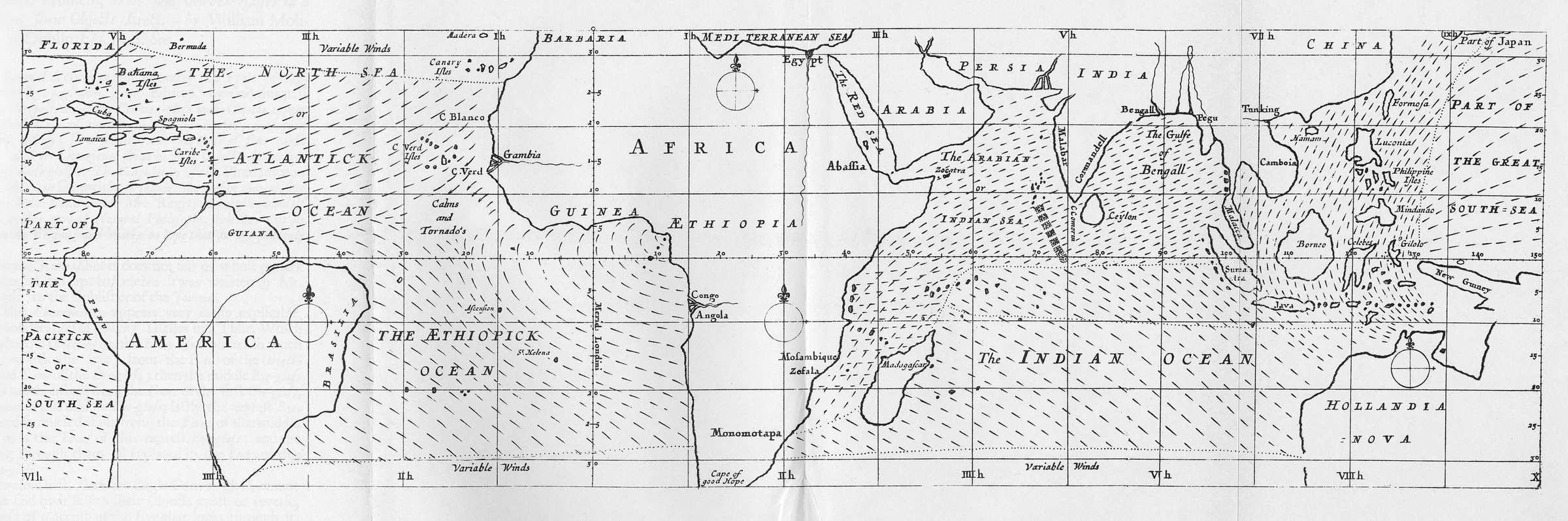
Navigators began to systematically study wind patterns, such as:

  • Trade Winds (blow westward near the equator)
  • Westerlies (blow eastward in mid-latitudes)
  • Volta do Mar ("turn of the sea")—Portuguese technique of using prevailing winds to return to Europe via circular Atlantic routes.

Understanding these patterns allowed sailors to plan round-trip voyages more efficiently, reducing shipwrecks and wasted resources.

Navigators no longer sailed blindly—knowledge of monsoon winds in the Indian Ocean and Atlantic currents made transoceanic travel predictable and profitable.


Scientific Innovation and Its Applications

Advancements in Observation and Mathematics

  • Newton’s Laws of Motion and Gravitation: Though published in 1687, Newton’s work formalized understandings of motion and gravity that would shape navigation and astronomy.
  • Advances in Cartography: Better maps, often made from firsthand observations during voyages, improved accuracy in distance and direction.

Printing Press (from Unit 3, continued)

  • While not new to this era, the printing press allowed for rapid dissemination of maps, sailing instructions, and scientific knowledge.

Effects of Technological Innovation

1. Expanded Trade Networks

  • Enabled the creation of transoceanic trading-post empires (Portuguese, Spanish, Dutch, British, French).
  • Facilitated Columbian Exchange: the global diffusion of crops, animals, people, and diseases.
  • Increased the volume and diversity of goods exchanged, including spices, silver, sugar, and enslaved people.

2. Rise of Maritime Empires

EmpireRegion of FocusNotable Impacts
PortugueseWest Africa, Indian Ocean, BrazilTrading posts, sugar plantations, start of trans-Atlantic slave trade
SpanishCaribbean, Americas, PhilippinesEncomienda system, conquest of Aztecs/Incas, silver mines
DutchIndian Ocean, Indonesia, South AfricaCommercial dominance, joint-stock companies like VOC
BritishNorth America, Caribbean, IndiaColonial settlements, naval strength
FrenchNorth America, West AfricaFur trade, Caribbean plantations, missionary presence

3. State Power and Global Dominance

  • New technologies allowed states to project military and economic power globally.
  • Enabled the subjugation and colonization of Indigenous populations.
  • Facilitated the creation of bureaucratic systems to manage distant colonies.

4. Global Migrations—Voluntary and Forced

  • Enslaved Africans were forcibly transported via the Middle Passage to plantations in the Americas.
  • Explorers and missionaries traveled globally in search of wealth, souls, and glory.
  • Some migrations were voluntary, as persecuted groups or impoverished individuals sought new opportunities.

Technology helped create a truly global economy—one that enriched European empires at the expense of colonized and enslaved peoples.

Explorers to Know

ExplorerSponsorAchievementsConsequences
Christopher ColumbusSpain1492 voyage opened the Americas to EuropeInitiated genocide, enslavement, and forced conversions of Indigenous peoples
Vasco da GamaPortugalFirst to reach India by sea around Africa (1498)Linked Europe to Asian spice trade; established Portuguese colonies
Hernán CortésSpainConquered the Aztec Empire (1519–1521)Collapse of Aztec society; began Spanish colonization of Mesoamerica
Henry HudsonNetherlands/EnglandExplored parts of Arctic, Canada, and present-day New YorkSparked Dutch and British colonial claims in North America
James CookBritainMapped Australia, New Zealand, and Pacific IslandsOpened these regions to British colonization; Indigenous displacement

Conclusion

Technological innovations from 1450 to 1750 reshaped the world. Built on centuries of knowledge exchange across cultures, these developments allowed Europeans to dominate trade, exploration, and colonization. While they expanded commerce and knowledge, they also unleashed systems of exploitation, violence, and forced migration that continue to shape the modern world.

Vocabulary

The following words are mentioned explicitly in the College Board Course and Exam Description for this topic.

TermDefinition
astronomical chartsMaps and diagrams showing positions of stars and celestial bodies used for navigation and determining latitude at sea.
caravelA small, highly maneuverable sailing ship developed in Portugal with triangular sails, used for exploration and trade.
carrackA large, multi-decked sailing ship with high castles at bow and stern, used for long-distance ocean voyages and trade.
compassA navigational instrument using magnetic properties to determine direction, essential for oceanic navigation.
fluytA Dutch merchant ship designed for efficient cargo transport with a narrow hull and shallow draft, used in 17th-century trade.
interregional contactsConnections and interactions between different geographic regions and their peoples, often resulting in the exchange of goods, ideas, and technologies.
lateen sailA triangular sail rigged on a long diagonal spar, allowing ships to sail closer to the wind and improving maneuverability.
patterns of tradeThe established routes, commodities, and commercial networks through which goods were exchanged between regions.
technological transferThe movement and adoption of tools, techniques, and innovations from one region or civilization to another.
transoceanic travelLong-distance ocean travel across the Atlantic and other major bodies of water that connected the Eastern and Western Hemispheres.
wind and currents patternsThe predictable movements of ocean winds and water currents that facilitated efficient maritime routes for ships.

Frequently Asked Questions

What were the main technological innovations between 1450 and 1750?

Key innovations, and why they matter for the AP exam: Europeans built on Classical, Islamic, and Asian knowledge to make long-distance maritime trade possible. Important ship designs: the caravel (maneuverable, lateen sails), the carrack (larger, ocean-crossing), and the Dutch fluyt (cheap, efficient cargo ship). Navigation and instruments: the magnetic compass, astrolabe/astronomical charts, and Mercator-style maps improved course-setting. Sailing techniques and wind knowledge—volta do mar, monsoon wind patterns—made reliable routes (e.g., Vasco da Gama’s Indian Ocean route) possible. Cross-cultural diffusion mattered: lateen sails and Chinese junk designs influenced Europeans. On the AP exam, expect multiple-choice and short-answer items asking how these technologies changed trade and travel (CED 4.1 Learning Objective A). Review the Topic 4.1 study guide (https://library.fiveable.me/ap-world-history/unit-4/new-technologies-1450-1750/study-guide/9ZSxdzOhxt62W56sxkta) and practice questions (https://library.fiveable.me/practice/ap-world-history) to drill examples and cause-effect links.

How did cross-cultural interactions help Europeans develop better technology?

Cross-cultural contacts let Europeans borrow and adapt proven technologies and navigational knowledge, speeding their own innovations. Merchants and sailors picked up the magnetic compass, astronomical charts/astrolabe techniques, and the lateen sail from Islamic and Indian Ocean mariners—improving steering and windward travel. Learning regional wind/current patterns (volta do mar, monsoon winds) and charting them led to better maps (Mercator-style projections) and route planning. Europeans combined these imported tools with new hull designs (caravel, carrack, later the fluyt) to create ships optimized for oceangoing trade. Explorers like Vasco da Gama and Bartolomeu Dias show this mix of borrowed knowledge and European design. For AP exam points, link this to LO A: diffusion of technology changed patterns of trade and travel (CED Topic 4.1). Review the topic study guide (https://library.fiveable.me/ap-world-history/unit-4/new-technologies-1450-1750/study-guide/9ZSxdzOhxt62W56sxkta) and practice questions (https://library.fiveable.me/practice/ap-world-history) to prep.

What's the difference between a caravel, carrack, and fluyt ship?

Short answer: they’re three European ship types that evolved for different needs. - Caravel: small, fast, highly maneuverable (15–16th c.). Often used by Portuguese for exploration along coasts and into windier waters because of lateen sails (triangular) that let them tack into the wind. Good for exploration, not huge cargo capacity. - Carrack (nao): larger ocean-going ship (late 15th–16th c.) used for long Atlantic voyages and carrying treasure—sturdier hull, higher forecastle and sterncastle, mixed square and lateen sails. Carracks could carry more crew and cargo (think early Manila galleon / Vasco da Gama era). - Fluyt: 17th-c. Dutch design built for trade. Narrow crew requirements, very high cargo capacity for its size, cheaper to build and operate, optimized for windward performance with square sails—helped Dutch commercial dominance. On the AP exam, you may be asked to compare technologies’ effects on trade and empire-building (use terms like lateen sail, compass, Vasco da Gama). For a topic review, see the Topic 4.1 study guide (https://library.fiveable.me/ap-world-history/unit-4/new-technologies-1450-1750/study-guide/9ZSxdzOhxt62W56sxkta). For more practice, try the Fiveable AP World practice questions (https://library.fiveable.me/practice/ap-world-history).

Why were new ship designs so important for exploration and trade?

New ship designs mattered because they turned risky coastal voyages into reliable, long-distance ocean travel—so Europeans could explore, reach Asian markets, and build maritime empires. Ships like the caravel (maneuverable, lateen sails), the larger carrack (more cargo, ocean-worthy hull), and the Dutch fluyt (cheap, high-capacity merchant ship) improved speed, cargo space, and handling of wind patterns (volta do mar, monsoon knowledge). Combined with the magnetic compass, astrolabe/astronomical charts, and lateen rigging, sailors could navigate open seas, round Africa (Vasco da Gama, Bartolomeu Dias), and run regular routes like the Manila Galleon. For the AP exam, connect these tech changes to diffusion from Islamic/Asian knowledge and to shifts in trade networks (short-answer and multiple-choice prompts often ask for causation and examples). Review Topic 4.1 resources here (study guide: https://library.fiveable.me/ap-world-history/unit-4/new-technologies-1450-1750/study-guide/9ZSxdzOhxt62W56sxkta; unit overview: https://library.fiveable.me/ap-world-history/unit-4) and practice with questions at https://library.fiveable.me/practice/ap-world-history.

I'm confused about how the compass and lateen sail came from other cultures - can someone explain?

Short answer: both the magnetic compass and the lateen sail show how cross-cultural diffusion powered European maritime advances. The compass was invented and used in China (by the Song dynasty) for navigation; knowledge of it spread west via trade routes and Islamic mariners who used and improved navigational techniques. The lateen sail—a triangular sail that lets ships tack against the wind—developed in the Indian Ocean/Arab maritime world and in the Mediterranean; Europeans adopted it and combined it with hull innovations to build ships like the caravel. Together these borrowed technologies (plus astrolabes and better charts) let Europeans understand winds/currents and make longer ocean voyages. This fits CED Topic 4.1 Learning Objective A: cross-cultural interactions diffused technology and changed trade/travel patterns. For more on these examples, check the Topic 4.1 study guide (https://library.fiveable.me/ap-world-history/unit-4/new-technologies-1450-1750/study-guide/9ZSxdzOhxt62W56sxkta) and practice questions (https://library.fiveable.me/practice/ap-world-history) to prep for exam-style prompts.

What made transoceanic travel possible during this time period?

Transoceanic travel became possible because technology, navigation knowledge, and new ship designs all came together. Europeans borrowed instruments and ideas from the Islamic and Asian worlds—magnetic compasses, the astrolabe, and improved astronomical charts (Mercator-style maps) helped sailors fix latitude and plot long voyages. Ship innovations (caravel, carrack, later the Dutch fluyt) plus rigging like the lateen sail made vessels more seaworthy and maneuverable. Important navigational techniques—understanding monsoon wind patterns, the volta do mar (using ocean gyres), and charts of currents—let captains plan reliable routes (e.g., Vasco da Gama, Bartolomeu Dias). These developments are exactly what CED Topic 4.1 asks you to explain: diffusion of tech and changes in trade/travel. For a clear review of these innovations, see the Topic 4.1 study guide (https://library.fiveable.me/ap-world-history/unit-4/new-technologies-1450-1750/study-guide/9ZSxdzOhxt62W56sxkta). Practice applying this on AP-style questions at Fiveable’s practice page (https://library.fiveable.me/practice/ap-world-history).

How did knowledge from Islamic and Asian worlds influence European innovation?

European innovation from 1450–1750 built heavily on Islamic and Asian knowledge. Sailors and mapmakers borrowed the magnetic compass (from China), the astrolabe and improved astronomical charts (from Islamic astronomers), and Indian Ocean sailing techniques like the lateen sail and understanding of monsoon wind patterns (volta do mar and monsoon routing). Those transfers helped Europeans design new ships (caravel, carrack, later fluyt), plan routes around Africa and across the Atlantic/Pacific, and carry out voyages by Vasco da Gama and Bartolomeu Dias. This cross-cultural diffusion is exactly what CED Learning Objective A asks you to explain: how knowledge from Classical, Islamic, and Asian worlds facilitated European technological developments and changed trade/travel patterns. For targeted review, see the Topic 4.1 study guide (https://library.fiveable.me/ap-world-history/unit-4/new-technologies-1450-1750/study-guide/9ZSxdzOhxt62W56sxkta) and practice 1000+ AP-style questions (https://library.fiveable.me/practice/ap-world-history).

Can someone give me specific examples of technologies that spread between cultures?

Here are specific tech examples that spread across cultures 1450–1750: - Navigation & ship tech: the magnetic compass (from China/Islamic world to Europe), astrolabe and improved astronomical charts, Mercator projection maps—these plus knowledge of monsoon winds and the volta do mar made long voyages possible. (CED keywords: compass, astrolabe, Mercator, volta do mar, monsoon winds.) - Sail and hull designs: the lateen sail (Mediterranean → Atlantic explorers), Chinese junk hull features influencing Indian Ocean vessels, and European ship types that evolved from cross-cultural designs—the caravel, carrack, and later the Dutch fluyt. - Trade-linked tech: the Manila galleon connected silver-for-spices/silk across the Pacific, spreading goods and navigational practices. These are good examples to use in short-answer and LEQ responses tied to Learning Objective 4.1A. For a focused review, see the Topic 4.1 study guide (https://library.fiveable.me/ap-world-history/unit-4/new-technologies-1450-1750/study-guide/9ZSxdzOhxt62W56sxkta). For extra practice, try problems at (https://library.fiveable.me/practice/ap-world-history).

What were astronomical charts and why did sailors need them?

Astronomical charts were maps showing the positions of stars, constellations, and sometimes the sun and planets at different times. Mariners used them for celestial navigation: by identifying known stars and measuring their angle above the horizon (often with an astrolabe or quadrant), sailors could determine latitude and estimate their north–south position at sea. That made long ocean voyages safer and more predictable, especially when out of sight of land and when combined with the magnetic compass, improved sails (lateen), and better ship designs (caravel, carrack). Knowing these techs is exactly what Topic 4.1 tests—expect multiple-choice or short-answer questions about how cross-cultural diffusion (Islamic, Asian, Classical knowledge) improved European navigation. For a quick review, see the Topic 4.1 study guide (https://library.fiveable.me/ap-world-history/unit-4/new-technologies-1450-1750/study-guide/9ZSxdzOhxt62W56sxkta), the unit overview (https://library.fiveable.me/ap-world-history/unit-4), and practice problems (https://library.fiveable.me/practice/ap-world-history).

How do I write a DBQ essay about technological diffusion from 1450-1750?

Start your DBQ with a clear, specific thesis about technological diffusion 1450–1750 (e.g., how cross-cultural contact spread navigation tech and changed trade). Contextualize briefly: Age of Exploration, Islamic/Asian knowledge (compass, astrolabe, lateen sails), and European ship innovations (caravel, carrack, fluyt) that enabled transoceanic routes (Volta do mar, monsoon winds). Use at least four documents to support your claim and bring in outside evidence (Vasco da Gama, Prince Henry, Manila Galleon, Chinese junk) as the required extra piece. For two documents, explain sourcing—author’s POV, purpose, audience, or historical situation—and why that matters for interpreting diffusion. Show complexity: explain simultaneous continuity and change (e.g., existing Indian Ocean networks persisted even as Atlantic routes expanded). Structure: thesis → context → body paragraphs each using documents + outside evidence → sourcing analysis → synthesis/complexity conclusion. Review Topic 4.1 study guide for examples and keywords (caravel, lateen sail, compass, astrolabe) (https://library.fiveable.me/ap-world-history/unit-4/new-technologies-1450-1750/study-guide/9ZSxdzOhxt62W56sxkta). For unit review and 1000+ practice questions, see (https://library.fiveable.me/ap-world-history/unit-4) and (https://library.fiveable.me/practice/ap-world-history).

Did Europeans actually invent any of these navigation technologies themselves?

Short answer: mostly no—Europeans borrowed, adapted, and improved many navigation technologies rather than inventing them from scratch. The magnetic compass and early astrolabes had Chinese and Islamic/Medieval roots; portolan charts and nautical knowledge circulated in the Mediterranean and Indian Ocean. The lateen sail and knowledge of monsoon/wind patterns came from Arab, Indian Ocean, and Asian sailors. Europeans did develop new ship designs (caravel, carrack, fluyt) and mapping advances like Mercator’s projection (a European innovation) and navigation techniques such as the Portuguese volta do mar that combined existing knowledge with new practices. For the AP, emphasize cross-cultural diffusion (CED Topic 4.1 LO A) using specific examples (compass, lateen sail, caravels, Vasco da Gama, monsoon winds). For review, see the Topic 4.1 study guide (https://library.fiveable.me/ap-world-history/unit-4/new-technologies-1450-1750/study-guide/9ZSxdzOhxt62W56sxkta) and practice questions (https://library.fiveable.me/practice/ap-world-history).

What were the consequences of these new ship designs on global trade patterns?

New ship designs (caravel, carrack, fluyt) plus lateen sails, compass and astrolabe made longer, safer, and cheaper ocean voyages possible. Consequences for global trade patterns: more regular, large-scale transoceanic routes (especially Atlantic and Indian Ocean), a shift of economic power from the Mediterranean to Atlantic ports, and the creation of integrated global networks—think Manila Galleon linking Asia and the Americas and European-controlled Atlantic circuits carrying silver, sugar, and enslaved people. Faster, bigger ships also let states and merchants enforce mercantilist monopolies and create overseas maritime empires. For the AP exam, connect these tech changes to shifts in trade routes, the rise of European maritime empires, and examples like Vasco da Gama or the fluyt’s Dutch advantage (useable in MCQs, SAQs, DBQs, or LEQs). For a quick review see the Topic 4.1 study guide (https://library.fiveable.me/ap-world-history/unit-4/new-technologies-1450-1750/study-guide/9ZSxdzOhxt62W56sxkta) and practice questions (https://library.fiveable.me/practice/ap-world-history).

How did understanding wind and current patterns change maritime travel?

Knowing wind and current patterns transformed maritime travel by making ocean routes predictable, faster, and safer—so long voyages became practical for trade and empire-building. Europeans learned the Atlantic’s trade winds and the volta do mar (returning by catching favorable winds), while Indian Ocean sailors used the predictable monsoon winds to schedule seasonal crossings. Combined with tech like the lateen sail, magnetic compass, astrolabe, and improved hulls (caravel, carrack, fluyt), captains could navigate open seas rather than hug coasts. That shift increased long-distance trade, regularized routes (e.g., Manila Galleon, Indian Ocean network), and enabled transoceanic voyages by figures like Vasco da Gama. On the AP exam, you can use this as causation evidence for Topic 4.1 (tech diffusion → changed trade/travel). For a focused review, see the Topic 4.1 study guide (https://library.fiveable.me/ap-world-history/unit-4/new-technologies-1450-1750/study-guide/9ZSxdzOhxt62W56sxkta). Practice questions on these concepts are at (https://library.fiveable.me/practice/ap-world-history).

I missed class - what's the connection between technology and the expansion of trade routes?

Short answer: new tech made long-distance sea trade possible and cheaper, so routes expanded. Improvements in ship design (caravel, carrack, fluyt) plus sails like the lateen let ships tack into wind; compasses, astrolabes, Mercator-style charts and better astronomical knowledge improved navigation. Learning about wind and current patterns (volta do mar, monsoon winds) let sailors plan reliable round-trip routes (Europe–Africa–India, Vasco da Gama’s route, Manila Galleon across the Pacific). Those techs spread through cross-cultural contact (Classical, Islamic, and Asian knowledge) and changed patterns of trade—new transoceanic networks, larger cargoes, and cheaper transport. On the AP exam this shows up in multiple-choice/SAQs and LEQs/DBQs: use specific examples (caravel, compass, volta do mar, Manila Galleon) and link tech diffusion to changes in trade. Review Topic 4.1 on Fiveable (study guide: https://library.fiveable.me/ap-world-history/unit-4/new-technologies-1450-1750/study-guide/9ZSxdzOhxt62W56sxkta) and practice questions (https://library.fiveable.me/practice/ap-world-history).