Theme 6 (TECH) - Technology and Innovation

🌍AP World History: Modern Review
Theme 6 (TECH) - Technology and Innovation
🌍 AP World History: Modern
Overview
Theme 6 (TEC), Technology and Innovation, is the AP World History: Modern theme that tracks how human inventions and adaptations have "resulted in increased efficiency, comfort, and security," shaping development and interactions "with both intended and unintended consequences." The theme covers five strands: agricultural and pastoral production, trade and commerce, transportation, weapons and warfare, and industrialization. You'll see it written as TEC (the official code) or TECH, and it's one of the six themes explicitly assessed across every question type on the AP World exam, from stimulus-based multiple choice to the DBQ and LEQ.
If you can explain how a specific technology caused change in trade, warfare, production, or daily life in any period from 1200 to the present, you're doing TEC analysis. That skill shows up everywhere on the exam.
Key Takeaways
- Song China's Champa rice and Grand Canal boosted production and internal trade, while commercial and navigational technologies expanded trade across Afro-Eurasia.
- Gunpowder weapons pushed rulers toward larger, more centralized armies, while borrowed navigational tools and new ship designs made European transoceanic trade possible.
- Industrial machines tapped coal and oil, increasing Europe's and the United States' share of manufacturing, while railroads, steamships, and the telegraph expanded trade and migration.
- New military technology raised casualties in the world wars; nuclear proliferation intensified Cold War conflict, and U.S. military and technological advances helped bring the Cold War to an end.
- Modern communication and transportation reduced geographic distance, and Green Revolution agriculture supported a growing population, but technological change also brought environmental costs.
What This Theme Means
TEC asks one organizing question: how have humans used technology to improve efficiency, comfort, and security, and what were the consequences, both the ones people intended and the ones nobody saw coming?
The key idea is that technology never moves in a vacuum. Humans create and adapt technologies for specific reasons (cross a desert, win a battle, spin thread faster), and those changes ripple outward. The camel saddle was meant to move goods across the Sahara. It also helped build empires in West Africa. The steam engine was meant to pump water out of mines. It ended up rearranging the entire global economy.
Track these five strands across the course:
- Agricultural and pastoral production. Champa rice, the three-field system, the mechanized reaper, Green Revolution seeds.
- Trade and commerce. Paper money, bills of exchange, caravanserai, telegraph cables, shipping containers.
- Transportation. The Grand Canal, caravels, railroads, steamships, air travel.
- Weapons and warfare. Gunpowder, cannons, machine guns, the atomic bomb, nuclear proliferation.
- Industrialization. Fossil fuels, factories, steel, electricity, precision machinery.
One more habit worth building: always ask who created the technology, who adopted and adapted it, and how it spread. Diffusion (technology moving between societies along trade routes and through conquest) is half of this theme's story.
TEC Across the Nine Units
Here's the theme at a glance, then the details by era.
| Period | What happens with technology and innovation |
|---|---|
| Units 1-2 (c. 1200-1450) | Song China's agricultural and manufacturing innovations; Islamic scholarship and the translation movement; transportation and commercial technologies expand Afro-Eurasian trade |
| Units 3-4 (1450-1750) | Gunpowder builds land-based empires; cross-cultural maritime technology makes transoceanic travel possible |
| Units 5-6 (1750-1900) | The fossil fuels revolution and two industrial revolutions transform production, migration, and empire |
| Units 7-8 (c. 1900-present) | Military technology makes total war deadlier; nuclear weapons and technological rivalry shape the Cold War |
| Unit 9 (c. 1900-present) | Communication, transportation, medical, and agricultural technologies shrink distance and extend life, with serious environmental costs |
Units 1 and 2 (c. 1200-1450): innovation powers trade networks
Song China is your anchor example. Its economy flourished because of increased productive capacity, expanding trade networks, and innovations in agriculture and manufacturing: Champa rice boosted food output, the expanded Grand Canal linked north China to the Yangzi valley and sped internal trade, and Chinese steel and iron production grew alongside textiles and porcelain made for export. Porcelain is a great illustration of technology creating luxury goods. The hard-glaze technique wasn't duplicated outside China for 800 years, and demand for it connected East Asian producers to consumers across Afro-Eurasia. China's commercial economy was so productive that it outran its supply of metal coins, so paper money expanded under the Song and Yuan.
Meanwhile, Muslim states and empires encouraged innovation and supported the translation movement. The House of Wisdom in Abbasid Baghdad preserved and commented on Greek moral and natural philosophy, and scholars like Nasir al-Din al-Tusi advanced mathematics. In Spain, contact between Muslims and Christians produced scholarly and cultural transfers, including the Toledo School of Translators, which moved texts from Arabic, Hebrew, and Greek into Latin and helped reintroduce ancient Greek learning (and sailing knowledge later useful in the Age of Exploration) to Europe.

Unit 2 is basically a technology story told through trade routes. Luxury-goods trade across the Silk Roads grew because of innovations in existing transportation and commercial technologies: the caravanserai, forms of credit like bills of exchange and banking houses, and paper money. Indian Ocean trade expanded through the compass, the astrolabe, larger ship designs (dhows and junks could carry big cargoes with small crews), and sailors' knowledge of the monsoon winds. Trans-Saharan trade grew because the camel saddle and caravan organization made desert crossings efficient, moving gold and salt and fueling commercial cities like Timbuktu.

The Mongols supercharged diffusion. Interregional contacts and conflicts involving the Mongol Empire encouraged significant technological and cultural transfers, including Greco-Islamic medical knowledge moving to western Europe, numbering systems reaching Europe, and the Mongols' adoption of the Uyghur script. More broadly, exchange networks diffused scientific and technological innovations across Afro-Eurasia, with gunpowder and paper spreading outward from China as the headline examples.
Units 3 and 4 (1450-1750): gunpowder on land, sails at sea
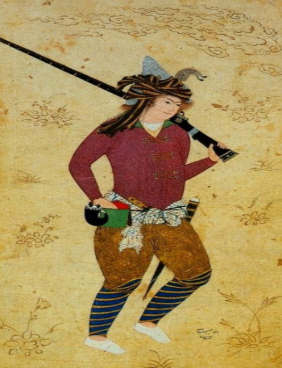
The defining technology of land-based empires is gunpowder. Imperial expansion relied on the increased use of gunpowder, cannons, and armed trade to establish large empires in both hemispheres, which is why the Ottoman, Safavid, and Mughal states (plus the Manchu in China) are often called gunpowder empires. Gunpowder weapons increased the importance of infantry and artillery, weakened older warrior elites, and pushed rulers toward larger, more centralized armies, paired with organizational innovations like the Ottoman devshirme system and salaried samurai in Japan. Notice the GOV connection: military technology helped rulers centralize power, a point you can develop further in the Theme 3 (GOV) Governance review.
At sea, the story is cross-cultural borrowing. Knowledge, scientific learning, and technology from the Classical, Islamic, and Asian worlds spread to Europe, facilitating European technological developments: new tools, innovations in ship design, and improved understanding of regional wind and current patterns, all of which made transoceanic travel and trade possible. Know the specifics. European ship designs included the caravel (exploration), the carrack (a trading ship that carried cannons, blending navigation and military technology), and the fluyt (efficient cargo hauling). Cross-culturally derived technologies included the lateen sail, the compass, and astronomical charts. Portuguese development of maritime technology and navigational skills led directly to increased travel and trade with Africa and Asia and the construction of a global trading-post empire.
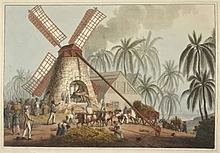
Technology also reshaped production in the colonies. Sugar processing mills in the Americas organized labor for efficiency and speed, and that plantation model, run on enslaved labor, tied technological efficiency to coerced labor systems and Atlantic trade. Many historians see it foreshadowing the factory. And in the mid-1400s, Gutenberg's movable-type printing press (printing itself existed earlier in East Asia) made reproducing texts dramatically cheaper in Europe, helping spread Reformation and later Enlightenment ideas.
Units 5 and 6 (1750-1900): the fossil fuels revolution
This is the theme's biggest turning point. The development of machines, including steam engines and the internal combustion engine, made it possible to exploit vast newly discovered energy stored in fossil fuels, specifically coal and oil. The fossil fuels revolution greatly increased the energy available to human societies. At its core, the Industrial Revolution is two shifts: new energy sources (coal, then oil and electricity) replacing human and animal muscle, and new organization (the factory) concentrating labor in one place to increase efficiency.
You don't need every invention, but know the major ones and what they changed. The spinning jenny (c. 1764) multiplied thread production and pulled textile work, including women's and children's labor, into factories. Watt's steam engine mechanized production and transportation. The Bessemer process (1856) made stronger steel faster, enabling railroads and large construction. The mechanized reaper (1830s) sped harvesting and pushed workers off farms into industrial labor markets.

Industrialization redistributed global manufacturing. Steam-powered production increased Europe's and the United States' share of global manufacturing, and as new methods spread from northwestern Europe to the rest of Europe, the U.S., Russia, and Japan, Middle Eastern and Asian shares declined. Indian shipbuilding and iron works and Indian and Egyptian textiles couldn't compete with industrial machinery backed by foreign domination.
The second industrial revolution brought new methods in steel, chemicals, electricity, and precision machinery in the second half of the 19th century. Railroads, steamships, and the telegraph made exploration, development, and communication possible in interior regions globally, increasing trade and migration. Undersea telegraph cables strengthened imperial administration and stitched the world economy together.

Unit 6 shows the consequences. New modes of transportation let internal and external migrants relocate to cities, fueling 19th-century global urbanization, and also let migrants return home periodically (Japanese agricultural workers in the Pacific, Lebanese merchants in the Americas, Italian industrial workers in Argentina). The factory system's appetite for raw materials built global export economies in cotton, rubber, palm oil, guano, and diamonds. And industrialized states (European powers, the U.S., Japan) expanded empires across Asia, the Pacific, and Africa on the strength of industrial military capacity.
Units 7 and 8 (c. 1900-present): technology and total war
In the world wars, new military technology led to increased levels of wartime casualties. World War I was the first total war, with machine guns and industrial weaponry producing unprecedented losses. World War II added the atomic bomb and fire-bombing (Dresden in Germany, the atomic bombs on Japan), pushing civilian casualties to new heights. Governments also weaponized media technologies, using propaganda, art, and media to mobilize home and colonial populations.
Technology then frames the entire Cold War. Technological and economic gains experienced during World War II by the victorious nations shifted the global balance of power, setting up superpower rivalry. The Cold War led to nuclear proliferation, and the buildup of the military-industrial complex and weapons trading intensified 20th-century conflict. At the other end, advances in U.S. military and technological development are the first named cause of the end of the Cold War and the collapse of the Soviet Union, alongside the failed Soviet invasion of Afghanistan and economic weakness in communist countries. That's a clean causation argument with technology at both ends of the era.
Unit 9 (c. 1900-present): technology shrinks the world
Unit 9 opens with the theme's modern centerpiece. New modes of communication, including radio, cellular communication, and the internet, plus transportation advances like air travel and shipping containers, reduced the problem of geographic distance. Energy technologies, including petroleum and nuclear power, raised productivity and increased the production of material goods.
Technology also transformed bodies and food. More effective birth control gave women greater control over fertility and contributed to declining fertility rates in much of the world. The Green Revolution and commercial agriculture increased productivity and sustained a growing population through high-yield crop varieties, chemical fertilizers, pesticides, and expanded irrigation in places like India, Mexico, and the Philippines, later spreading chemically and genetically modified agriculture. Medical innovations, including vaccines and antibiotics, increased human lifespans, with vaccines reducing or eliminating diseases like smallpox.
Then come the unintended consequences, which is where TEC overlaps heavily with Theme 1 (ENV), Humans and the Environment: deforestation, desertification, declining air quality, freshwater depletion, and greenhouse-gas emissions fueling debates about climate change. Disease outbreaks like the 1918 influenza, Ebola, and HIV/AIDS spurred medical advances while exposing technology's limits. And revolutions in information and communications technology grew knowledge economies in some regions (Finland, Japan, the U.S.) while manufacturing shifted to Asia and Latin America. Unit 9's capstone question is the theme's final exam: explain the extent to which science and technology brought change from 1900 to the present.
Key Concepts and Vocabulary
| Term | Why it matters for TEC |
|---|---|
| Champa rice | Boosted Song China's agricultural productivity (Topic 1.1) |
| Grand Canal | Expanded under the Song; linked internal Chinese trade |
| House of Wisdom | Abbasid center of the translation movement in Baghdad |
| Caravanserai | Roadside inns that supported Silk Roads commerce (2.1) |
| Bills of exchange / paper money | Commercial technologies behind money economies |
| Compass and astrolabe | Navigational tools that expanded Indian Ocean trade (2.3) |
| Camel saddle | Transportation innovation behind trans-Saharan trade (2.4) |
| Gunpowder and paper | Chinese technologies diffused across Afro-Eurasia (2.5) |
| Gunpowder empires | Ottoman, Safavid, Mughal expansion via cannons and armed trade (3.1) |
| Caravel, carrack, fluyt | European ship designs enabling transoceanic trade (4.1) |
| Lateen sail | Cross-culturally derived technology adopted by Europeans |
| Steam engine | Coal-powered machine at the heart of industrialization (5.4) |
| Fossil fuels revolution | Coal and oil massively increased available energy |
| Second industrial revolution | Steel, chemicals, electricity, precision machinery (5.5) |
| Railroads, steamships, telegraph | Opened interior regions; increased trade and migration |
| Atomic bomb / fire-bombing | Total-war technologies that raised WWII casualties (7.7) |
| Nuclear proliferation | Cold War spread of nuclear weapons (8.3) |
| Green Revolution | High-yield crops and chemicals that fed a growing population (9.1) |
| Shipping containers | Post-1900 transport innovation that cut the cost of distance |
| Knowledge economies | ICT-driven growth in Finland, Japan, the U.S. (9.4) |
For more definitions, the AP World key terms glossary covers these and hundreds of other course terms.
How to Use This Theme on the Exam
TEC is assessed across all four question types: 55 multiple-choice questions (40% of your score), 3 short-answer questions (20%), the DBQ (25%), and the LEQ (15%). Here's how it actually shows up.
Multiple choice. Stimulus sets of three to four questions use texts, images, charts, and maps, and maps are natural TEC material. A released sample set pairs a Genoese navigational map from 1489 with a Henricus Martellus world map from the early 1490s, and the correct answers turn on Portugal's development of maritime technology and navigational skills, European cartography drawing on earlier knowledge from the Islamic world, and Spanish exploration driving map revisions. When you see a map or technical image, think TEC first.
SAQs. The time windows place TEC content everywhere. SAQ 3 covers 1200-1750, which reaches everything from the caravanserai to the caravel. SAQ 4 covers 1750-2001, steam power through the internet. SAQs 1 and 2 (1200-2001) often use secondary sources, which can include historians' debates about technological change.
DBQ and LEQ. Theme codes get combined on essay prompts. The released sample DBQ on World War I and colonized peoples is coded to GOV and TEC, because total war's technologies and mobilization methods sit inside the prompt. The sample LEQ on 19th-century reform movements is coded to ECN, GOV, SIO, and TEC, since industrial technology underlies any prompt about industrial society. The lesson: a prompt doesn't have to say "technology" for TEC evidence to earn points. Industrialization evidence works on economics prompts, gunpowder evidence works on state-building prompts, and communication-technology evidence works on globalization prompts. Pairing TEC with the ECON theme review is especially useful since the two themes overlap constantly.
Build arguments around causation and continuity/change. TEC prompts lean on these two reasoning skills: explain how cross-cultural interactions resulted in the diffusion of technology, how technology shaped economic production over time, and the extent to which science and technology brought change from 1900 to the present. A strong thematic thesis names the technology, the specific change it caused, and a consequence (intended or unintended). For example: "Maritime technologies adapted from Islamic and Asian sources, including the lateen sail and compass, enabled Portuguese transoceanic trade and a global trading-post empire, but they also set in motion the Columbian Exchange and Atlantic coerced labor systems." That sentence does causation, diffusion, and unintended consequences in one move.
Sample thematic prompt to try: Develop an argument that evaluates the extent to which technological innovations in the period 1450-1750 transformed patterns of trade, exploration, and state power in Afro-Eurasia and the Atlantic world. (Plan it with gunpowder empires, the caravel/carrack/fluyt, and Portuguese maritime expansion as your evidence base.)
Practice and Next Steps
Test your TEC fluency with AP World guided practice questions, then write timed thematic essays using FRQ practice with instant scoring. Working through past AP World exam questions will show you how often technology evidence earns points on prompts that never mention the word.
A solid study sequence for this theme:
- Pick one technology per strand (one agricultural, one commercial, one transportation, one military, one industrial) and trace it across at least two periods.
- Practice writing one-sentence cause-and-consequence statements for each ("The camel saddle increased trans-Saharan trade efficiency, which fueled the growth of cities like Timbuktu").
- Review the sibling theme guides, especially ENV and GOV, since TEC evidence almost always doubles as evidence for another theme.
- When you're ready, take a full-length AP World practice exam and check your projected score with the score calculator.
Frequently Asked Questions
What is Theme 6 (TEC) in AP World History?
Theme 6 (TEC), Technology and Innovation, covers how human adaptation and innovation increased efficiency, comfort, and security, with both intended and unintended consequences. Its five strands are agricultural and pastoral production, trade and commerce, transportation, weapons and warfare, and industrialization. It's one of the six themes explicitly assessed on the AP World exam.
What are the best examples of technology and innovation in AP World?
Strong examples span the whole course: Champa rice and the Grand Canal in Song China, the compass and astrolabe in Indian Ocean trade, the camel saddle on trans-Saharan routes, gunpowder and cannons for land-based empires, the caravel and lateen sail for transoceanic trade, the steam engine and Bessemer process in industrialization, the atomic bomb in WWII, and the internet, Green Revolution, and shipping containers after 1900. The best essays name the technology, the change it caused, and a consequence.
How is the TEC theme tested on the AP World exam?
TEC appears across all question types: 55 MCQs (40% of your score), 3 SAQs (20%), the DBQ (25%), and the LEQ (15%). Maps and technical images are common TEC stimuli, and essay prompts often combine TEC with other theme codes, like the sample DBQ on World War I coded to GOV and TEC. Practice writing thematic arguments with FRQ practice and instant scoring.
Is it TEC or TECH in AP World?
The official theme code is TEC, though it's often informally written TECH. Either way it refers to the same theme, Technology and Innovation, one of the six themes that organize the entire AP World History: Modern course alongside ENV, CDI, GOV, ECN, and SOC.
See Fiveable more often in Google
Mark Fiveable as a preferred source and Google is more likely to show you our guides in Top Stories, with a "preferred" badge in AI Mode and AI Overviews.