Theme 2 (CDI) - Cultural Developments and Interactions

🌍AP World History: Modern Review
Theme 2 (CDI) - Cultural Developments and Interactions
🌍 AP World History: Modern
Overview
Theme 2 (CDI), Cultural Developments and Interactions, is the AP World History: Modern theme that tracks how religions, belief systems, philosophies, ideologies, science and technology, and the arts shape societies and spread across regions. The College Board describes it this way: "The development of ideas, beliefs, and religions illustrates how groups in society view themselves, and the interactions of societies and their beliefs often have political, social, and cultural implications." CDI is one of the six themes the AP exam explicitly assesses, and it runs through every unit from Buddhism in Song China to K-pop and Coca-Cola. If you can explain how ideas spread and what happens when they collide, you have a thematic thread you can pull through any DBQ or LEQ from 1200 to the present.
Key Takeaways
- CDI covers religions, ideologies, science, technology, and the arts; diffusion, conflict, and syncretism describe ways cultures interact.
- From 1200 to 1450, established traditions continued shaping societies while trade networks, Mongol contacts, and merchant communities spread cultural knowledge.
- From 1450 to 1750, the Reformation split Christianity, Ottoman-Safavid rivalry intensified the Sunni-Shi'a divide, and Sikhism and Atlantic cultural blending showed syncretism.
- From 1750 to 1900, Enlightenment ideas fueled revolutions and reforms, nationalism shaped states and empires, and Social Darwinism and the civilizing mission justified imperialism.
- From 1900 onward, fascism, communism, and capitalism drove global conflict; nonviolence challenged power, and popular and consumer culture spread globally.
- For CDI essays, diffusion, conflict, and syncretism can organize an argument; when using cultural sources, consider who produced them and why.
What This Theme Means
CDI asks one core question: how have traditions, ideas, and religions influenced how groups behave toward themselves and others? The theme has four strands you should keep in mind:
- Religions (Islam, Christianity, Buddhism, Hinduism, Sikhism, and more)
- Belief systems, philosophies, and ideologies (Confucianism, the Enlightenment, nationalism, communism, fascism)
- Science and technology as cultural knowledge (the translation movement, Greco-Islamic medicine, the printing press)
- The arts and architecture (Mughal mausolea, Versailles, propaganda posters, Bollywood)
The second half of the theme, "interactions," is where most essay arguments live. When cultures meet, three things tend to happen, and they make a great analytical toolkit:
- Diffusion: an idea spreads (Islam along trade routes, Enlightenment thought into the Americas).
- Conflict: beliefs clash (the Sunni-Shi'a split, the Protestant Reformation, religious wars).
- Syncretism: beliefs blend into something new (Sikhism, the Virgin of Guadalupe, Neo-Confucianism).
One warning: CDI is not just "the religion theme." Science, ideologies, and pop culture all count, which is why a question about the Cold War or social media can still be a CDI question.
CDI Across the Nine Units
CDI appears in every unit of AP World, but it shows up differently in each era. Here's the quick map, then the detail.
| Period | What happens with CDI |
|---|---|
| Units 1-2 (1200-1450) | Established religions (Islam, Buddhism, Hinduism, Christianity, Confucianism) continue shaping societies; trade networks and the Mongols diffuse beliefs and technology |
| Units 3-4 (1450-1750) | Reformation splits Christianity; Sunni-Shi'a rivalry intensifies; Sikhism emerges; transoceanic contact creates syncretic belief systems |
| Units 5-6 (1750-1900) | Enlightenment ideas fuel revolutions and reform; nationalism rises; Social Darwinism and the civilizing mission justify imperialism |
| Units 7-9 (1900-present) | Ideologies (fascism, communism, capitalism) drive global conflict; nonviolence challenges power; popular and consumer culture goes global |
Units 1-2: Continuity and Diffusion, c. 1200-1450
The big CDI idea in this era is continuity. Existing religions and traditions kept shaping societies, and expanding trade networks spread them further.
In East Asia, Chinese cultural traditions continued and influenced neighboring regions. Filial piety (respect and obligation toward parents and elders) stayed central, Neo-Confucianism blended Confucian and Buddhist ideas, and Chinese literary and scholarly traditions spread to Heian Japan and Korea. Buddhism kept shaping societies across Asia through its major branches: Theravada, Mahayana, and Tibetan.
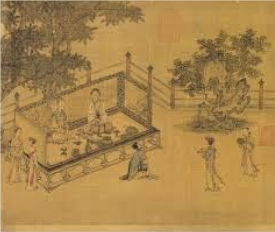
In Dar al-Islam, Islam, Judaism, and Christianity continued to shape societies in Africa and Asia. Islam expanded through merchants, missionaries, and Sufis, and West African rulers like Mali's adopted Islam to connect with trans-Saharan trade. Muslim states also drove intellectual innovation: the House of Wisdom in Abbasid Baghdad and the broader translation movement preserved Greek philosophy and produced advances in mathematics (Nasir al-Din al-Tusi), literature ('A'ishah al-Ba'uniyyah), and medicine. In South and Southeast Asia, Hinduism, Islam, and Buddhism shaped religious life through the Bhakti movement, Sufism, and Buddhist monasticism. In Europe, Christianity, Judaism, and Islam continued to shape society, with scholarly transfers happening in Muslim and Christian Spain.
Unit 2 shows how networks moved culture. The Mongols secured trade routes (the Pax Mongolica), and their interregional contacts transferred Greco-Islamic medical knowledge to western Europe, spread numbering systems, and led to the adoption of the Uyghur script. In the Indian Ocean, merchants created diasporic communities (Arab and Persian merchants in East Africa, Chinese in Southeast Asia, Malay in the Indian Ocean basin) that introduced their cultural traditions into local societies while absorbing local influence in return. Cross-cultural exchange also diffused gunpowder and paper from China, and intensified networks produced famous travel writers: Ibn Battuta, Marco Polo, and Margery Kempe.
Units 3-4: Reformation, Rivalry, and Syncretism, 1450-1750
This era's CDI story is religion splitting, spreading, and blending. The Protestant Reformation marked a break with existing Christian traditions when Martin Luther criticized practices like the sale of indulgences and challenged papal authority. Protestant ideas (like salvation by faith alone) spread through print, and both the Protestant and Catholic Reformations contributed to the growth of Christianity.
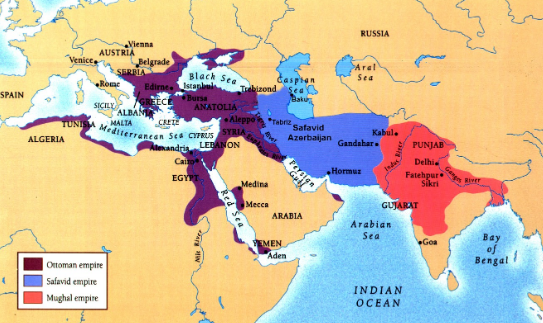
Meanwhile, political rivalry between the Ottoman and Safavid empires intensified the Sunni-Shi'a split within Islam. In South Asia, interactions between Hinduism and Islam produced Sikhism, a new syncretic religion. The Mughal emperor Akbar promoted religious tolerance, encouraged dialogue among Muslims, Hindus, Christians, and Zoroastrians at his court, and sponsored Din-i Ilahi, a small eclectic spiritual initiative that never became a mass religion.
Rulers also used culture to legitimize power, which is where CDI overlaps with Theme 3 (GOV), Governance. Think Mexica human sacrifice, European divine right, Songhai promotion of Islam, Qing imperial portraits, the Incan sun temple of Cuzco, Mughal mausolea and mosques, and palaces like Versailles. Monumental architecture is belief made visible.
Transoceanic contact added the syncretism chapter. The Atlantic system mixed African, American, and European cultures, with all parties contributing to the synthesis. European missionaries spread Christianity to the Americas, but Native Americans and Africans usually blended it with indigenous beliefs rather than adopting it wholesale. The classic example is the Virgin of Guadalupe. States handled religious diversity differently too: Spain and Portugal expelled Jews while the Ottoman Empire accepted them, and Qing China imposed restrictive policies on Han Chinese. In Japan, the Tokugawa Shogunate drew on Neo-Confucian ideas for social order while restricting Christian missionaries and, by the 1630s, sharply limiting foreign contact. Jesuits like Matteo Ricci impressed the Qing court with European science but won few converts.
Don't forget the science strand here: knowledge from the Classical, Islamic, and Asian worlds (the lateen sail, the compass, astronomical charts) spread to Europe and made transoceanic voyages possible in the first place.
Units 5-6: Enlightenment, Nationalism, and Imperial Ideologies, 1750-1900
After 1750, CDI shifts from religions to ideologies. The Enlightenment applied new ways of understanding and empiricist approaches to both the natural world and human relationships, reexamined religion's role in public life, emphasized reason, and developed new political ideas about the individual, natural rights, and the social contract (think Locke, Voltaire, Montesquieu).
These ideas had consequences. Enlightenment thought that questioned established traditions often preceded revolutions, and it shows up directly in revolutionary documents: the American Declaration of Independence, the French Declaration of the Rights of Man and of the Citizen, and Bolivar's "Letter from Jamaica." Enlightenment ideas and religious ideals also fueled reform movements, including expanded suffrage, the abolition of slavery, and the end of serfdom, plus demands for women's rights from Mary Wollstonecraft (A Vindication of the Rights of Woman), Olympe de Gouges (Declaration of the Rights of Woman and of the Female Citizen), and the Seneca Falls Conference of 1848. Nationalism emerged as a major force shaping states and empires, and discontent with established power structures produced new ideologies, including Marxism, socialism, and communism.
Ideas also justified empire. A range of cultural, religious, and racial ideologies rationalized imperialism: Social Darwinism, nationalism, the civilizing mission, and the desire to convert indigenous populations to Christianity. Religion cut the other way too, inspiring anti-imperial rebellions like the Ghost Dance in the U.S., the Xhosa Cattle-Killing Movement in Southern Africa, and the Mahdist wars in Sudan. The 1857 Sepoy Rebellion in British India was sparked partly by rumors that rifle cartridges were greased with pig and cow fat, offending both Hindu and Muslim soldiers.
Migration moved culture as well. Migrants created ethnic enclaves that transplanted their cultures into new environments, while receiving societies showed varying degrees of prejudice, such as the Chinese Exclusion Act in the United States and the White Australia Policy.
Units 7-9: Ideology, Resistance, and Global Culture, 1900-Present
The 20th century is the century of ideology. In both world wars, governments used political propaganda, art, media, and intensified nationalism to mobilize populations for total war. The rise of fascist and totalitarian regimes helped cause WWII, and governments used ideologies like fascism and communism to mobilize state resources and, in totalitarian states, repress freedoms and dominate daily life. Extremist ideology drove mass atrocities, including the Nazi killing of the Jews in the Holocaust.
The Cold War is a CDI topic, even though it looks political. The U.S. and USSR emerged as superpowers locked in ideological conflict between capitalism and communism, each side trying to spread its system globally (capitalism and communism behaved a lot like universalizing belief systems). Groups and individuals promoted alternatives, most notably the Non-Aligned Movement led by figures like Sukarno in Indonesia and Kwame Nkrumah in Ghana.
Resistance to the century's conflicts is also CDI. Mohandas Gandhi (the Salt March, the Homespun Movement, the Quit India Movement), Martin Luther King Jr., and Nelson Mandela promoted nonviolence as a way to bring about political change, while other movements like the Shining Path in Peru and Al-Qaeda used violence against civilians to achieve political aims.
Finally, Unit 9 brings the arts strand back to center stage. Political and social changes of the 20th century changed the arts, and in the second half of the century popular and consumer culture became global: music (reggae, hip-hop, K-pop), movies (Bollywood, Hollywood), social media (Facebook, Twitter, Instagram), television (BBC, CNN), sports (World Cup soccer, the Olympics), online commerce (Alibaba, eBay, Amazon), and global brands (Toyota, Coca-Cola, McDonald's). Responses to globalization took many forms too, including anti-IMF and anti-World Bank activism and locally developed social media like Weibo in China. Rights-based discourses (the U.N. Universal Declaration of Human Rights, global feminism, the Negritude movement, liberation theology in Latin America) challenged old assumptions about race, class, gender, and religion, connecting CDI to Theme 5 (SOC), Social Interactions and Organizations.
Key Concepts and Vocabulary
These terms come up constantly in CDI prompts. You should be able to define each and place it in its period. The AP World key terms glossary has fuller definitions.
| Term | Where it lives |
|---|---|
| Syncretism | Course-wide; Sikhism (3.3), Virgin of Guadalupe and Atlantic cultural synthesis (4.5) |
| Neo-Confucianism and filial piety | East Asia, 1200-1450 |
| Theravada, Mahayana, Tibetan Buddhism | Asia, 1200-1450 |
| Sufism | Spread of Islam via merchants, missionaries, Sufis (1.2) |
| House of Wisdom / translation movement | Abbasid Baghdad (1.2) |
| Bhakti movement | South Asia (1.3) |
| Diasporic merchant communities | Arab, Persian, Chinese, Malay communities in the Indian Ocean (2.3) |
| Pax Mongolica transfers | Greco-Islamic medicine, numbering systems, Uyghur script (2.2) |
| Protestant and Catholic Reformations | Europe, 1450-1750 (3.3) |
| Sunni-Shi'a split | Intensified by Ottoman-Safavid rivalry (3.3) |
| Religious legitimation of rule | Divine right, Songhai promotion of Islam, Mexica human sacrifice (3.2) |
| The Enlightenment | Empiricism, reason, natural rights, social contract (5.1) |
| Nationalism | Shapes states, revolutions, and empires (5.1-5.2) |
| Social Darwinism / civilizing mission | Ideologies justifying imperialism (6.1) |
| Religiously inspired rebellion | Ghost Dance, Xhosa Cattle-Killing, Mahdist wars (6.3) |
| Fascism and totalitarianism | Interwar ideologies and WWII (7.6-7.7) |
| Capitalism vs. communism | Cold War ideological struggle (8.2) |
| Nonviolence | Gandhi, MLK Jr., Mandela (8.7) |
| Global consumer culture | Bollywood, K-pop, World Cup, Coca-Cola (9.6) |
How to Use This Theme on the Exam
The AP World exam assesses content from all six themes across every section: 55 multiple-choice questions (40% of your score), 3 short-answer questions (20%), the DBQ (25%), and the LEQ (15%). CDI can appear anywhere in that mix.
On MCQs, questions come in stimulus-based sets of three to four built around primary texts, secondary texts, images, charts, and maps. Cultural sources (artwork, religious texts, posters) are perfect CDI stimuli. A released sample set uses the Ottoman architect Mimar Sinan and the Selimiye mosque (circa 1600) to test why Sinan wanted to surpass the Hagia Sophia and how Ottoman recruitment made use of the ethnic and religious diversity of imperial subjects. Notice that CDI often pairs with governance there: religion and architecture serving state power.
On SAQs, the released sample SAQ 2 is pure CDI. It uses Arai Hakuseki's circa-1720 Confucian critique of Christianity in Tokugawa Japan and asks you to (A) describe how his argument was influenced by long-standing Asian cultural traditions, (B) explain how this religious encounter differed from most others circa 1450-1750, and (C) explain another case where Asian or African states limited European political power or cultural influence. SAQ 1 (secondary source) and SAQ 2 (primary source) can draw from 1200-2001, SAQ 3 covers 1200-1750, and SAQ 4 covers 1750-2001, so CDI prompts can range from post-classical belief systems to globalized pop culture.
On the DBQ and LEQ, prompts are coded to thematic focuses, and CDI-coded prompts use framings like "explain how systems of belief and their practices affected society," "explain continuity and change within the various belief systems," "explain how ideologies contributed to..." and "explain how and why globalization changed culture over time." The DBQ sits in 1450-2001; the LEQ gives you three options on the same reasoning process in roughly 1200-1750, 1450-1900, and 1750-2001 windows.
Sourcing matters extra on CDI documents. When you analyze point of view, purpose, historical situation, or audience, ask who produced the cultural source and why. A released sample question asks whether Sinan's biography might be "overstating the extent of the architectural challenges" given its purpose. That kind of skeptical move earns sourcing credit.
For building thematic arguments, the diffusion/conflict/syncretism trio gives you ready-made body-paragraph categories. A prompt on belief systems and state power in 1200-1750 could cover rulers spreading religion (Songhai promoting Islam), religion fueling conflict (Ottoman-Safavid rivalry), and religion blending under political pressure (Sikhism, the Virgin of Guadalupe). For complexity, connect CDI to another theme, like technology and innovation (the printing press spreading Reformation ideas) or governance (divine right legitimizing absolutism).
Practice and Next Steps
Try these CDI-themed prompts to test your thematic fluency:
- LEQ (1200-1750): Develop an argument that evaluates the extent to which religions and belief systems shaped state power in the period 1200-1750.
- LEQ (1750-2001): Develop an argument that evaluates the extent to which new ideologies, science, and mass culture transformed societies in the period 1750-2001.
- SAQ: Use the Arai Hakuseki passage above and answer all three parts in about 12 minutes.
For each prompt, sketch a thesis that names a CDI mechanism (diffusion, conflict, or syncretism) and two or three specific examples from different regions. Then write under time pressure.
When you're ready for scored feedback, run your essays through FRQ practice with instant scoring and drill stimulus-based questions in guided MCQ practice. Once CDI feels solid, work through the other five themes, starting with Theme 1 (ENV), Humans and the Environment and Theme 4 (ECON), Economic Systems, since exam prompts often sit at the intersection of two themes.
Frequently Asked Questions
What is Theme 2 (CDI) in AP World History?
CDI stands for Cultural Developments and Interactions, one of the six AP World themes. It covers religions, belief systems, philosophies, ideologies, science and technology, and the arts, and how these spread and interact across societies. The College Board frames it as how ideas and beliefs show how groups view themselves, with political, social, and cultural consequences.
Is CDI only about religion?
No. Religion is one strand, but CDI also covers ideologies (Enlightenment thought, nationalism, communism, fascism), science and technology as cultural knowledge, and the arts and architecture. That's why the Cold War's capitalism-vs-communism struggle and global pop culture like Bollywood and K-pop are both CDI topics.
What is syncretism in AP World, and what are good examples?
Syncretism is the blending of beliefs from different cultures into something new. The strongest AP World examples are Sikhism, which developed in South Asia from interactions between Hinduism and Islam, and the Virgin of Guadalupe, which blended Christianity with indigenous beliefs in the Americas. Neo-Confucianism, which merged Confucian and Buddhist ideas in China, also works for the 1200-1450 era.
How does the CDI theme show up on the AP World exam?
CDI runs through all four sections: 55 multiple-choice questions (40%), 3 SAQs (20%), the DBQ (25%), and the LEQ (15%). CDI prompts typically ask you to explain how belief systems affected society, trace continuity and change in religions, explain how ideologies contributed to events, or explain how globalization changed culture. You can practice these with FRQ practice and instant scoring.
What are the six themes of AP World History: Modern?
The six themes are Humans and the Environment (ENV), Cultural Developments and Interactions (CDI), Governance (GOV), Economic Systems (ECON), Social Interactions and Organizations (SOC), and Technology and Innovation (TECH). They act as the connective tissue of the course, revisited across all nine units, and every exam question connects to at least one theme.
How did Islam spread in the period 1200-1450?
Islam expanded through merchants, missionaries, and Sufis along the Silk Roads, Indian Ocean, and trans-Saharan trade networks. West African rulers like those of Mali adopted Islam to strengthen ties with the broader Dar al-Islam, and Muslim merchant communities formed along Indian Ocean routes. This is a go-to example for diffusion in CDI essays.
See Fiveable more often in Google
Mark Fiveable as a preferred source and Google is more likely to show you our guides in Top Stories, with a "preferred" badge in AI Mode and AI Overviews.