30.7 The Question of a Balanced Budget

💸Principles of Economics Unit 30 Review
30.7 The Question of a Balanced Budget
💸 Principles of Economics
Fiscal Policy and the Federal Budget
Fiscal policy refers to how the government uses spending and taxation to influence the economy. Whether the federal budget is balanced, in deficit, or in surplus has real consequences for economic growth, employment, and inflation. This section covers the tradeoffs of balanced budgets, the debate over a balanced budget amendment, and how automatic stabilizers smooth out the business cycle without anyone having to pass new legislation.

Top images from around the web for Balanced vs Unbalanced Budgets
The Question of a Balanced Budget | Macroeconomics View original
Is this image relevant?
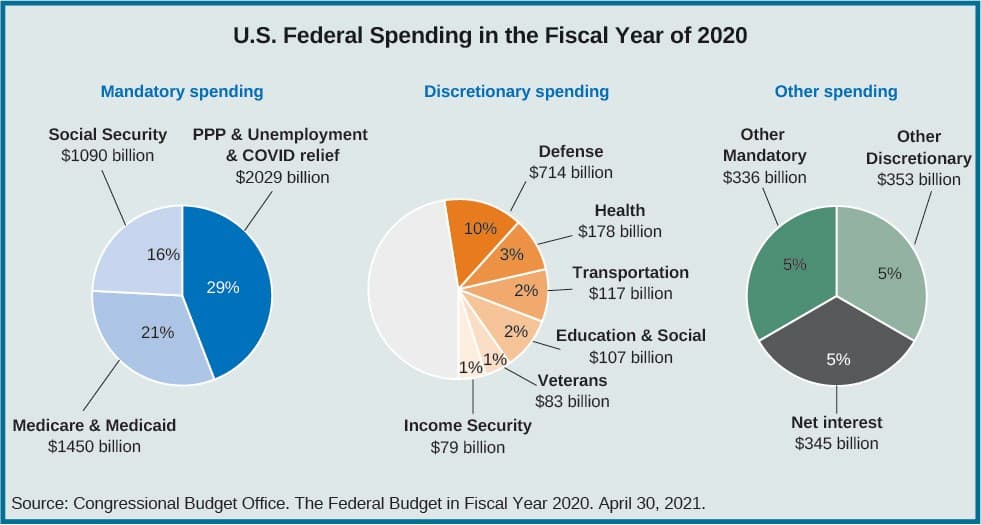
Budgeting and Tax Policy – Introduction to American Government View original
Is this image relevant?
After 15 straight years of deficits, this resolution would require a balanced budget View original
Is this image relevant?
The Question of a Balanced Budget | Macroeconomics View original
Is this image relevant?
Budgeting and Tax Policy – Introduction to American Government View original
Is this image relevant?
Balanced vs. Unbalanced Budgets
A balanced budget occurs when government spending equals tax revenue in a given year. There's no deficit and no surplus, which means the budget itself has a roughly neutral effect on aggregate demand. The downside is that sticking to a balanced budget can restrict the government's ability to respond when the economy shifts.
An unbalanced budget means spending and revenue don't match. This takes two forms:
- Budget deficit: Government spending exceeds tax revenue. This increases aggregate demand, which can help boost growth during recessions. The tradeoff is that government borrowing may push interest rates higher and crowd out private investment (businesses and consumers find it more expensive to borrow).
- Budget surplus: Tax revenue exceeds government spending. This decreases aggregate demand, which can help cool inflation during expansions. The risk is that pulling too much money out of the economy may slow growth when it's not needed.

Balanced Budget Amendment: Pros and Cons
A balanced budget amendment would require the federal government to spend no more than it collects in revenue each year. This idea comes up regularly in policy debates, and there are strong arguments on both sides.
Arguments for:
- Enforces fiscal discipline by compelling the government to spend within its means
- Reduces the national debt over time, along with the interest payments that come with it
- Promotes intergenerational equity by avoiding the practice of passing debt on to future taxpayers
- Could lead to lower interest rates and more room for private investment, since the government would be borrowing less
Arguments against:
- Limits the government's flexibility to respond to economic crises. During a severe recession, deficit spending is one of the main tools for stabilizing the economy.
- Makes it harder to invest in long-term projects like infrastructure (roads, bridges, broadband) that may not pay off within a single budget year
- Could force tax increases or spending cuts during recessions, which would reduce aggregate demand at exactly the wrong time and deepen the downturn
- Difficult to enforce in practice. Governments may resort to creative accounting (shifting expenses off-budget, using unfunded mandates) to technically comply while still spending beyond their means.

Automatic Stabilizers and the Business Cycle
Automatic stabilizers are government policies already built into the system that adjust spending and tax revenue in response to economic conditions, with no new legislation required. The most common examples are the progressive income tax (where higher incomes face higher tax rates), unemployment insurance, and welfare programs like food stamps (SNAP) and Medicaid.
Here's how they work across the business cycle:
During recessions:
- Incomes fall, so income tax revenue automatically drops (people move into lower tax brackets).
- More people qualify for unemployment benefits and welfare programs, so government spending on those programs rises.
- The budget deficit increases automatically, which puts more money into the economy and stimulates aggregate demand.
During expansions:
- Incomes rise, so income tax revenue automatically increases (people move into higher tax brackets).
- Fewer people need unemployment benefits or welfare, so government spending on those programs falls.
- The deficit shrinks (or a surplus appears), which pulls some money out of the economy and helps prevent overheating.
The net effect is that automatic stabilizers moderate the swings of the business cycle. They increase aggregate demand when the economy is weak (people keep more disposable income, spending stays higher) and decrease it when the economy runs hot (higher taxes reduce disposable income, spending cools off). This reduces the need for discretionary fiscal policy, where Congress would have to actively pass new tax or spending changes to achieve the same effect.
See Fiveable more often in Google
Mark Fiveable as a preferred source and Google is more likely to show you our guides in Top Stories, with a "preferred" badge in AI Mode and AI Overviews.