9.2 How a Profit-Maximizing Monopoly Chooses Output and Price

💸Principles of Economics Unit 9 Review
9.2 How a Profit-Maximizing Monopoly Chooses Output and Price
💸 Principles of Economics
Monopoly Output and Pricing Decisions
Monopolies are the sole supplier in their market, which gives them something competitive firms never have: the power to choose their price. But that power comes with a tradeoff. To sell more units, a monopolist must lower the price on all units, not just the extra one. Understanding how monopolies navigate this tradeoff to maximize profit is central to this topic.

Top images from around the web for Demand curves: competition vs monopoly
Reading: Choosing Output and Price | Microeconomics View original
Is this image relevant?
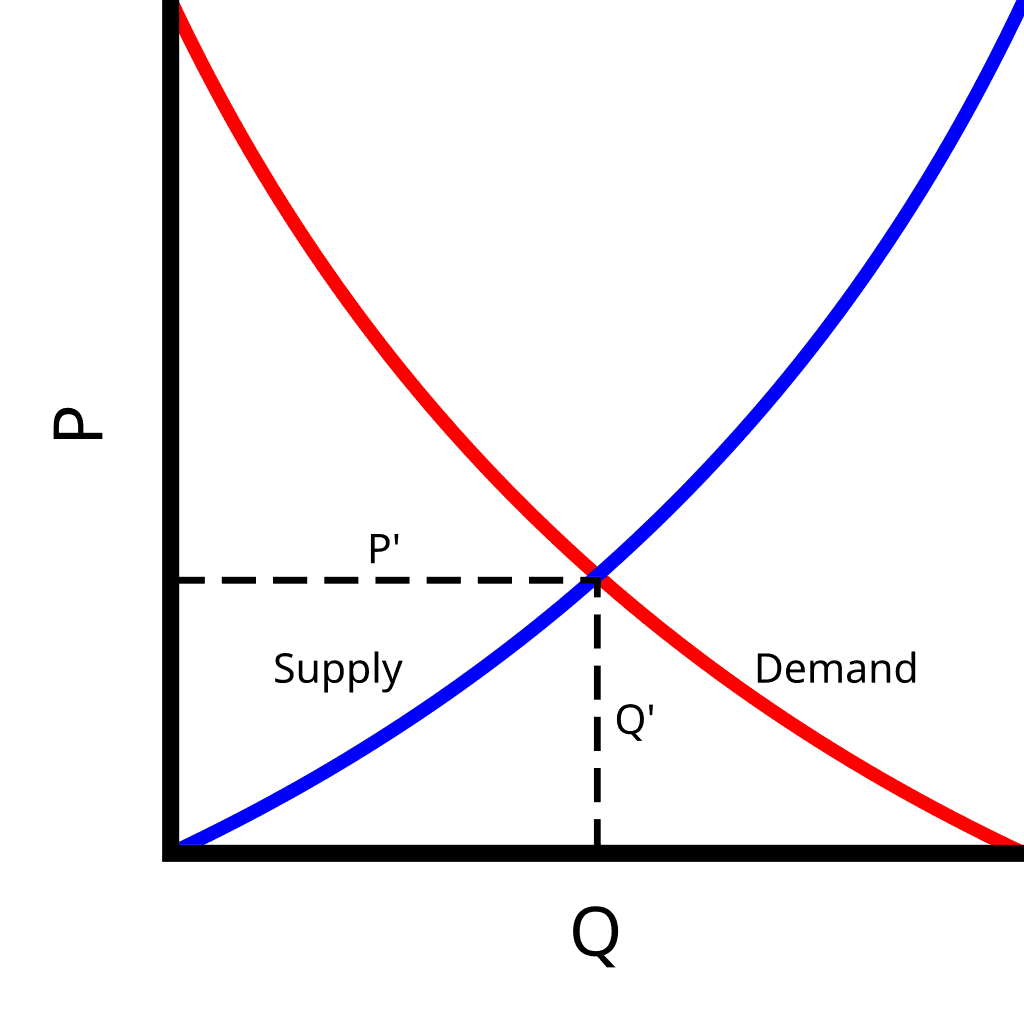
File:Supply and demand curves.svg - Wikimedia Commons View original
Is this image relevant?
Reading: Illustrating Monopoly Profits | Microeconomics View original
Is this image relevant?
Reading: Choosing Output and Price | Microeconomics View original
Is this image relevant?
File:Supply and demand curves.svg - Wikimedia Commons View original
Is this image relevant?
Demand Curves: Competition vs. Monopoly
The demand curve a firm faces determines how much control it has over price.
Perfect competitors are price takers. A wheat farmer, for example, sells at whatever the market price happens to be. Selling one more bushel doesn't require lowering the price, so the firm's demand curve is a horizontal line at the market price (perfectly elastic).
Monopolies are price makers. Because a monopolist is the only seller, it faces the entire downward-sloping market demand curve. An electric utility company, for instance, can raise its price, but doing so means fewer customers will buy. This inverse relationship between price and quantity demanded is what makes monopoly pricing decisions more complex.

Profit Maximization for Monopolies
A monopoly maximizes profit by producing where marginal revenue (MR) equals marginal cost (MC). This is the same rule competitive firms follow, but the outcome is very different because of how MR behaves for a monopolist.
Here's the process for finding the profit-maximizing output and price:
- Start with the monopoly's downward-sloping demand curve and derive the MR curve (which lies below the demand curve).
- Identify the marginal cost (MC) curve.
- Find the quantity where MR = MC. This is the profit-maximizing output.
- Go up from that quantity to the demand curve (not the MR curve) to find the price the monopolist charges.
That last step is where students often slip up. The monopolist doesn't charge the price on the MR curve. It charges the highest price consumers are willing to pay for that quantity, which you read off the demand curve.

Marginal Analysis in Monopolies
Marginal revenue (MR) is the change in total revenue from selling one more unit:
For a monopoly, MR is always less than price. Why? Because the demand curve slopes downward, so selling an additional unit requires lowering the price on every unit sold, not just the last one. Think of an airline that must cut ticket prices across the board to fill one more seat. The revenue gained from that seat is partially offset by the revenue lost on all the other seats that now sell for less.
Marginal cost (MC) is the change in total cost from producing one more unit:
The key relationship to remember: for a monopolist, at every quantity. This is what drives the difference between monopoly and competitive outcomes.
Allocative Efficiency: Monopoly vs. Competition
Allocative efficiency occurs when . At that point, the value consumers place on the last unit (reflected by price) exactly equals the cost of producing it. Resources are optimally allocated.
- Perfect competition achieves this naturally. Firms are price takers, so in the long run they produce where , delivering the socially optimal quantity.
- Monopolies do not achieve this. They produce where , and since , the result is . The monopolist charges more than the cost of producing the last unit, which means it produces less than the socially optimal quantity.
This underproduction creates deadweight loss: a net reduction in total surplus (consumer surplus + producer surplus) compared to the competitive outcome. Some mutually beneficial trades simply don't happen. Picture concert tickets priced so high that seats go empty even though willing buyers exist at a lower price. That lost value is deadweight loss.
Monopoly is allocatively inefficient because , meaning society would benefit from more output, but the monopolist has no incentive to provide it.
Monopoly Characteristics and Market Power
A few concepts underpin why monopolies can sustain their market power:
- Barriers to entry prevent new firms from entering the market. These can include patents, control of key resources, or government licenses.
- Economies of scale give large firms cost advantages. As production increases, average cost falls, making it hard for smaller entrants to compete.
- Natural monopoly arises when one firm can serve the entire market at lower cost than two or more firms could. Utility companies are a classic example, since duplicating infrastructure (water pipes, power lines) would be wasteful.
Two surplus concepts are also important for analyzing monopoly outcomes:
- Consumer surplus is the difference between what consumers are willing to pay and the price they actually pay. Monopoly pricing shrinks consumer surplus compared to competition.
- Producer surplus is the difference between the price the monopolist receives and its marginal cost. Monopolies typically capture more producer surplus than competitive firms, partly at consumers' expense.
See Fiveable more often in Google
Mark Fiveable as a preferred source and Google is more likely to show you our guides in Top Stories, with a "preferred" badge in AI Mode and AI Overviews.