16.2 Insurance and Imperfect Information

💸Principles of Economics Unit 16 Review
16.2 Insurance and Imperfect Information
💸 Principles of Economics
Insurance and Risk Pooling
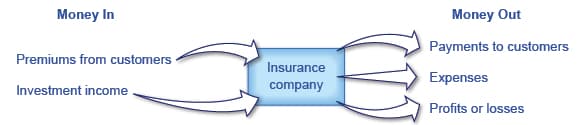
Insurance exists to solve a basic problem: individuals can't afford to bear certain large, unpredictable losses on their own. By collecting small, regular payments (premiums) from many people and using that money to pay the few who actually suffer losses, insurance spreads risk across a group.

Top images from around the web for Risk Transfer and Pooling
Why have insurance premiums gone up so much? - Economics Observatory View original
Is this image relevant?
Insurance and Imperfect Information · Economics View original
Is this image relevant?
Why Are Risk-Pooling and Risk-Sharing Arrangements Necessary for Financing Healthcare and ... View original
Is this image relevant?
Why have insurance premiums gone up so much? - Economics Observatory View original
Is this image relevant?
Insurance and Imperfect Information · Economics View original
Is this image relevant?
Risk Transfer and Pooling
Risk pooling is the core mechanism. An insurer collects premiums from a large group of policyholders and places them into a shared fund. When someone in the group experiences a covered loss, the fund pays out their claim.
The math behind this works because of the law of large numbers: the larger the pool, the more predictable total losses become. If you insure 100 homes, a single house fire could wipe out the fund. If you insure 100,000 homes, the percentage that burn in a given year becomes very stable and predictable.
Insurers use statistical analysis to estimate expected losses for the pool and then set premiums accordingly. Premiums aren't the same for everyone. Higher-risk policyholders (a driver with multiple accidents, for example) pay more, while lower-risk policyholders pay less. This risk-based pricing keeps the system fair and the fund solvent.
Imperfect Information in Insurance Markets
Insurance markets run into trouble when buyers and sellers don't have the same information. Economists call this asymmetric information, and it shows up in two major ways: moral hazard and adverse selection.

Moral Hazard
Moral hazard happens when having insurance changes a person's behavior, making them take on more risk or exercise less caution than they otherwise would.
- A person with full auto insurance might drive more recklessly because they know repairs are covered.
- A homeowner with flood insurance might skip investing in flood-proofing their basement.
The result: more claims and higher costs for the insurer, which eventually drives up premiums for everyone. Insurers fight moral hazard with tools like deductibles (you pay the first of a claim, so you still have skin in the game) and co-pays (you cover a percentage of each loss).
Adverse Selection
Adverse selection occurs when high-risk individuals are more likely to buy insurance than low-risk individuals. People generally know more about their own risk level than the insurer does.
Here's how it spirals:
- An insurer sets premiums based on the average risk level of the population.
- Low-risk individuals look at the premium and think it's too expensive relative to their actual risk, so some of them drop out.
- The remaining pool is now riskier on average, so the insurer raises premiums.
- More low-risk people leave, the pool gets even riskier, and premiums rise again.
This cycle can continue until the market collapses or only the highest-risk individuals remain. Economists sometimes call this a death spiral.

How Insurers Respond
Both moral hazard and adverse selection can lead to market failures. Insurers may respond by:
- Limiting coverage or excluding certain conditions
- Raising premiums across the board
- Requiring detailed screenings or medical exams before issuing policies
- Exiting unprofitable markets entirely
Any of these responses reduces access to insurance and decreases overall market efficiency.
Government Policies
When private insurance markets fail or leave gaps, governments often step in. The main tools include:
- Mandating coverage — Requiring everyone to purchase insurance (as with the Affordable Care Act's individual mandate) forces low-risk individuals into the pool, which counteracts adverse selection and keeps premiums lower for everyone.
- Providing subsidies — Financial assistance helps low-income individuals afford coverage, expanding access to people who would otherwise go uninsured.
- Regulating insurers — Rules like prohibiting denial of coverage based on pre-existing conditions protect consumers and promote a more equitable market.
- Government-run programs — Programs like Medicare (for those 65 and older) and Medicaid (for low-income individuals) fill gaps where private markets don't serve certain populations well.
Trade-offs of Government Intervention
These policies come with real costs and complications:
- Mandates can be politically unpopular and impose costs on people who'd prefer not to buy insurance.
- Subsidies increase costs for taxpayers.
- Heavy regulation can create compliance burdens for insurers and may limit product innovation.
- Government-run programs face their own challenges with funding, efficiency, and long-term sustainability.
No intervention is free of trade-offs. The goal for policymakers is to weigh the benefits of broader access and market stability against these costs, choosing the combination that produces the best outcome for the most people.
See Fiveable more often in Google
Mark Fiveable as a preferred source and Google is more likely to show you our guides in Top Stories, with a "preferred" badge in AI Mode and AI Overviews.