17.1 How Businesses Raise Financial Capital

💸Principles of Economics Unit 17 Review
17.1 How Businesses Raise Financial Capital
💸 Principles of Economics
Sources of Financial Capital and Financing Choices
Companies need money to grow, and they have several ways to get it: borrowing from banks, selling bonds, offering stock to the public, or reinvesting their own profits. Each option affects ownership, taxes, and financial flexibility differently. The way a company chooses to raise money also sends signals to investors about how confident management is in the firm's future.

Top images from around the web for Raising Financial Capital
U.S. Financial Institutions | OpenStax Intro to Business View original
Is this image relevant?
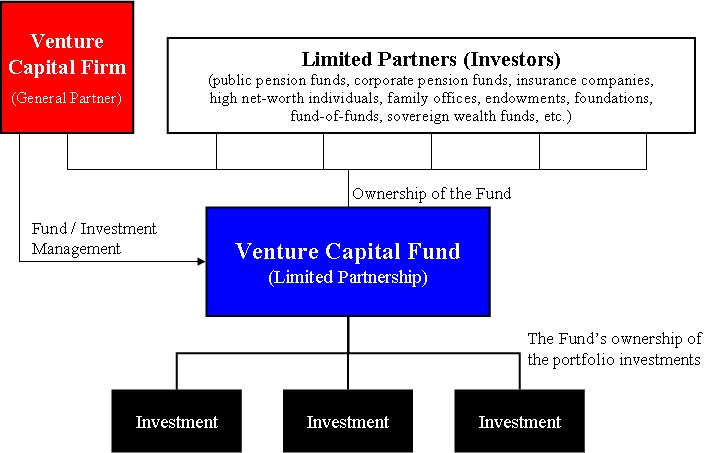
File:Venture Capital Fund Diagram.png - Wikipedia View original
Is this image relevant?
Modes of Raising Capital in India - Int'l J. of Legal Science and Innovation View original
Is this image relevant?
U.S. Financial Institutions | OpenStax Intro to Business View original
Is this image relevant?
File:Venture Capital Fund Diagram.png - Wikipedia View original
Is this image relevant?
Raising Financial Capital
Firms have five main sources of financial capital:
- Bank loans provide either short-term financing for day-to-day working capital needs or long-term financing for bigger capital investments like equipment or facilities.
- Bonds are debt securities sold directly to investors. Corporate bonds pay regular interest (called coupon payments) on a set schedule. Some companies issue convertible bonds, which give the bondholder the option to convert the bond into shares of stock later.
- Stock (equity) can be sold to the public through an initial public offering (IPO) when a company first goes public, or through a secondary offering if the company wants to sell additional shares after it's already publicly traded.
- Retained earnings are profits the company keeps instead of paying out as dividends. This is an internal source of capital, so it doesn't involve outside investors at all.
- Venture capital comes from specialized investors who fund startups and early-stage companies in exchange for an equity stake. This is common in tech and other high-growth industries where traditional lenders see too much risk.

Borrowing vs. Bonds vs. Stock
Each financing method comes with trade-offs. Here's how they compare:
Borrowing from banks
- Advantages: The company keeps full ownership and control. Interest payments are tax-deductible, which lowers the firm's taxable income.
- Disadvantages: Banks typically require collateral (assets pledged to secure the loan). Interest payments are mandatory whether the company is profitable or not. Loan agreements often include restrictive covenants that limit what the company can do financially.
Issuing bonds
- Advantages: No ownership dilution since bondholders are creditors, not owners. Interest is tax-deductible, just like bank loan interest. Bond terms can be customized more flexibly than standard bank loans.
- Disadvantages: Bond interest rates are often higher than bank loan rates because bonds typically lack collateral backing. The company needs a solid credit rating to attract buyers. Interest payments are still mandatory regardless of profitability.
Selling stock
- Advantages: There are no mandatory payments to shareholders (dividends are optional). The capital raised is permanent since it never has to be repaid. Public stock also improves liquidity, making it easier for investors to buy and sell their ownership stakes.
- Disadvantages: New shareholders dilute existing owners' control and share of profits. Unlike interest, dividends are not tax-deductible, so equity financing doesn't provide a tax benefit. Public companies must comply with securities regulations and disclose financial information regularly.
A key pattern to notice: debt (loans and bonds) gives you a tax advantage but creates mandatory payments. Equity (stock) gives you flexibility on payments but costs you ownership and has no tax benefit.

Information Impacts on Financing
Information asymmetry occurs when company managers know more about the firm's true prospects than outside investors do. This gap creates two problems:
- Adverse selection: Before the deal happens, investors can't easily tell good firms from bad ones. So they demand higher returns to compensate for the uncertainty. This means firms with genuinely strong prospects may avoid issuing securities because the market would underprice them. Meanwhile, firms with weaker prospects are more eager to raise capital at those prices. The result is that the pool of firms seeking outside funding skews toward lower-quality companies.
- Moral hazard: After capital is raised, managers may take on excessive risk or engage in self-dealing because the downside losses fall largely on investors, not on the managers themselves.
Financing choices can act as signals of company quality:
- Choosing to issue debt signals confidence. It tells the market that management believes future cash flows will be strong enough to cover mandatory interest payments.
- Choosing to issue equity can signal the opposite. Investors may interpret a stock offering as a sign that management thinks the stock is currently overvalued, or that it lacks confidence in the firm's ability to handle debt obligations.
A company's reputation and track record can help reduce these information problems. Investors are more willing to trust managers who have a history of delivering on their promises, which lowers the premium they demand for uncertainty.
See Fiveable more often in Google
Mark Fiveable as a preferred source and Google is more likely to show you our guides in Top Stories, with a "preferred" badge in AI Mode and AI Overviews.