14.5 Employment Discrimination

💸Principles of Economics Unit 14 Review
14.5 Employment Discrimination
💸 Principles of Economics
Labor Market Discrimination
Labor market discrimination occurs when workers receive different treatment in hiring, pay, or promotion based on characteristics unrelated to their productivity. Understanding discrimination matters in economics because it distorts how labor markets allocate resources, contributes to persistent income inequality, and reduces overall economic output.

Top images from around the web for Impact on Labor Market Outcomes
Exclusion and Discrimination in the Labor Market View original
Is this image relevant?
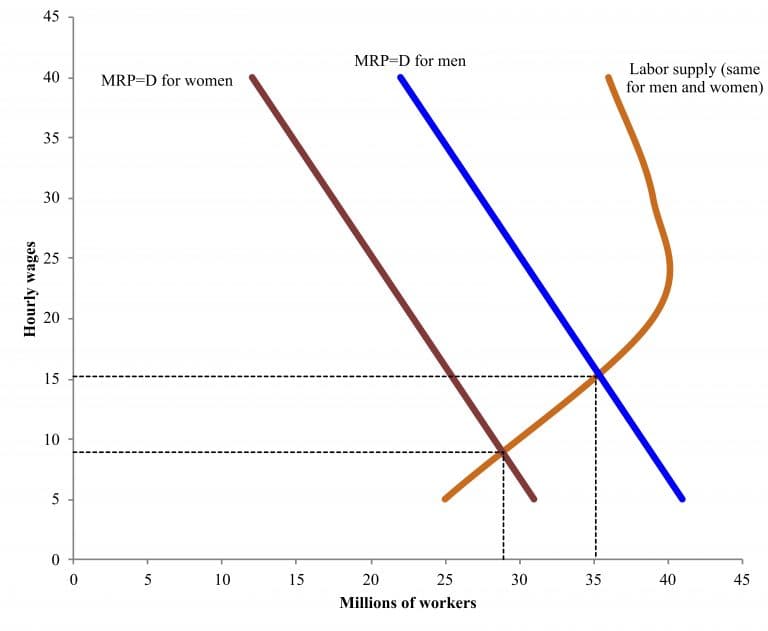
The Economics of Discrimination – Economics for the Greater Good View original
Is this image relevant?
The Different Experiences of Black Unemployment and White Unemployment | CEPR Blog | CEPR View original
Is this image relevant?
Exclusion and Discrimination in the Labor Market View original
Is this image relevant?
The Economics of Discrimination – Economics for the Greater Good View original
Is this image relevant?
Impact on Labor Market Outcomes
Discrimination creates measurable distortions across the labor market. When employers make decisions based on bias rather than worker productivity, the effects ripple outward.
- Lower wages for discriminated groups doing comparable work to non-discriminated groups
- Higher unemployment rates for discriminated groups due to bias in hiring practices
- Underemployment, where workers end up in jobs below their actual skill level
- Occupational segregation, meaning certain demographic groups cluster in particular types of work. For example, women and minorities are overrepresented in lower-paying service jobs and underrepresented in higher-paying fields like engineering and finance.
These individual-level harms add up to economy-wide costs. When qualified workers are overlooked because of prejudice, firms end up with less productive employees and the economy underutilizes its human capital. Discriminated groups may also have weaker incentives to invest in education if they expect lower returns on that investment. The result is slower economic growth and persistent wealth gaps across groups.

Earnings Disparities
Wage gaps are one of the most studied consequences of labor market discrimination. Two major gaps stand out in U.S. data.
Gender wage gap: U.S. women earn approximately 82 cents for every dollar earned by men (2022 data). Several factors drive this gap:
- Occupational segregation channels women into lower-paying fields like education and healthcare support, while men are overrepresented in higher-paying fields like technology and finance.
- Differences in work experience arise because women are more likely to take career interruptions for childbearing and caregiving, which reduces accumulated experience and seniority.
- Direct discrimination in hiring, promotion, and compensation persists even after controlling for occupation and experience.
Racial wage gap: Black and Hispanic workers in the U.S. earn less than White workers on average for comparable work. Contributing factors include:
- Unequal access to quality education, which creates differences in skill levels before workers even enter the job market
- Occupational segregation, with minorities overrepresented in lower-paying jobs
- Discrimination rooted in racial stereotypes and implicit bias during hiring and promotion
Intersectionality is also important here. Workers who belong to multiple disadvantaged groups face compounded discrimination. A Black woman, for instance, may experience both gender and racial bias simultaneously, resulting in an even larger wage penalty than either factor alone would predict.

Public Policies
Governments use several tools to address labor market discrimination, each with trade-offs.
Anti-discrimination laws prohibit employers from making decisions based on protected characteristics like race, gender, age, or disability. Key U.S. examples include:
- The Civil Rights Act of 1964, which prohibits employment discrimination on the basis of race, color, religion, sex, or national origin
- The Equal Pay Act of 1963, which requires equal pay for equal work regardless of gender
Affirmative action policies go further by actively seeking to increase representation of underrepresented groups in education and employment. These policies are controversial: supporters argue they correct for historical disadvantages, while critics raise concerns about reverse discrimination.
Diversity and inclusion initiatives within firms promote practices like unconscious bias training and diverse hiring pipelines. These can help reduce bias by making decision-makers more aware of their assumptions.
Pay transparency laws encourage or require employers to disclose salary ranges. By making compensation data visible, these policies increase accountability and can expose unjustified pay gaps.
Challenges remain in making these policies effective:
- Discrimination is often subtle and difficult to prove in court, since employers rarely state bias explicitly.
- Some policies can create unintended consequences. For example, firms might reduce hiring of protected groups to minimize lawsuit risk.
- Resistance from those who benefit from existing arrangements can slow or block reform efforts.
No single policy eliminates discrimination on its own. Economists generally argue that a combination of legal protections, transparency measures, and cultural change within organizations produces the strongest results.
See Fiveable more often in Google
Mark Fiveable as a preferred source and Google is more likely to show you our guides in Top Stories, with a "preferred" badge in AI Mode and AI Overviews.