5.1 Price Elasticity of Demand and Price Elasticity of Supply

💸Principles of Economics Unit 5 Review
5.1 Price Elasticity of Demand and Price Elasticity of Supply
💸 Principles of Economics
Elasticity measures how much quantity demanded or quantity supplied changes in response to a price change. Understanding elasticity helps explain why price increases crush sales for some products but barely affect others, and it's central to how businesses set prices and how governments predict the effects of taxes and subsidies.
Price Elasticity of Demand

Top images from around the web for Calculation of demand elasticity
Calculating Price Elasticities Using the Midpoint Formula | Macroeconomics View original
Is this image relevant?
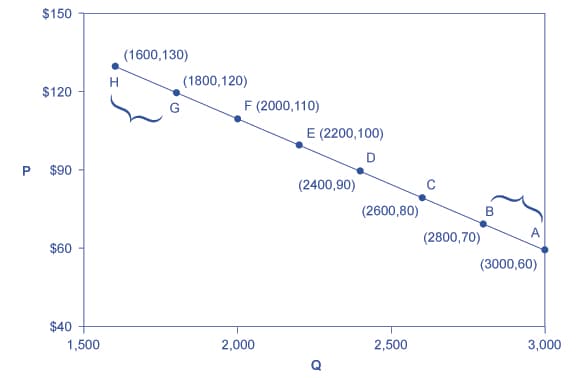
Calculating Price Elasticities Using the Midpoint Formula | Macroeconomics View original
Is this image relevant?
Reading: Elasticity, Costs, and Customers | Microeconomics View original
Is this image relevant?
Calculating Price Elasticities Using the Midpoint Formula | Macroeconomics View original
Is this image relevant?
Calculating Price Elasticities Using the Midpoint Formula | Macroeconomics View original
Is this image relevant?
Calculation of demand elasticity
Price elasticity of demand (PED) quantifies how responsive the quantity demanded of a good is to a change in its price. You calculate it by dividing the percentage change in quantity demanded by the percentage change in price.
PED is almost always negative (price goes up, quantity demanded goes down), but economists often discuss it in absolute value terms. In this guide, the classifications below use the raw negative values.
The midpoint method is the standard way to calculate PED because it gives the same elasticity value regardless of whether the price is rising or falling. Instead of using the starting value as the base, you use the average of the starting and ending values for both price and quantity.
- and = initial and final quantities demanded
- and = initial and final prices
Interpreting PED values:
- Elastic demand (PED < -1): Quantity demanded changes by a larger percentage than price. Example: if the price of a streaming service rises 10% and subscriptions drop 20%, PED = -2.
- Inelastic demand (PED between -1 and 0): Quantity demanded changes by a smaller percentage than price. Example: if insulin prices rise 10% and quantity demanded falls only 1%, PED = -0.1.
- Unit elastic demand (PED = -1): The percentage change in quantity demanded exactly equals the percentage change in price, so they move proportionally.
Classification of elasticities
The relationship between elasticity and total revenue (price × quantity) is one of the most tested concepts in this unit.
- Elastic demand (|PED| > 1): Total revenue moves in the opposite direction of price.
- Raise the price → lose so many buyers that revenue falls (e.g., movie tickets)
- Lower the price → gain enough buyers that revenue rises (e.g., smartphones on sale)
- Inelastic demand (|PED| < 1): Total revenue moves in the same direction as price.
- Raise the price → lose few buyers, so revenue rises (e.g., gasoline)
- Lower the price → gain few buyers, so revenue falls (e.g., salt)
- Unit elastic demand (|PED| = 1): Total revenue stays constant when price changes, because the quantity effect exactly offsets the price effect.
Factors that influence PED:
- Availability of substitutes: The more substitutes a good has, the more elastic its demand. If one fast-food chain raises prices, consumers easily switch to another.
- Proportion of income: Goods that take up a larger share of your budget tend to have more elastic demand. A 10% increase in car prices matters more to your wallet than a 10% increase in the price of salt.
- Time horizon: Demand is generally more elastic in the long run. If electricity prices spike, you can't do much immediately, but over months you can buy efficient appliances or install solar panels.
- Necessity vs. luxury: Necessities like water and basic medications tend to be inelastic. Luxuries like designer clothing tend to be elastic because consumers can simply go without.

Other Types of Elasticity
Income elasticity of demand measures how quantity demanded responds to changes in consumer income. Normal goods have positive income elasticity (you buy more as income rises), while inferior goods have negative income elasticity (you buy less as income rises, switching to preferred alternatives).
Cross-price elasticity of demand measures how the quantity demanded of one good responds to a price change in a related good.
- Positive cross-price elasticity → the goods are substitutes (e.g., Coke and Pepsi: if Coke's price rises, demand for Pepsi increases)
- Negative cross-price elasticity → the goods are complements (e.g., printers and ink: if printer prices rise, demand for ink falls)
Price Elasticity of Supply

Calculation of supply elasticity
Price elasticity of supply (PES) measures how responsive the quantity supplied of a good is to a change in its price. Unlike PED, PES is typically positive because the law of supply tells us that higher prices encourage greater production.
The calculation mirrors the demand formula:
- and = initial and final quantities supplied
- and = initial and final prices
Interpreting PES values:
- Elastic supply (PES > 1): Producers can ramp up output easily when price rises. Example: a t-shirt manufacturer can quickly print more shirts.
- Inelastic supply (PES < 1): Producers struggle to increase output even when price rises. Example: oil production is constrained by drilling capacity and geology.
- Unit elastic supply (PES = 1): Percentage change in quantity supplied exactly matches the percentage change in price.
Factors that influence PES:
- Availability of inputs: When raw materials and labor are readily available, firms can expand production more easily, making supply more elastic.
- Technology: Improved production technology allows firms to respond to price changes faster, increasing elasticity. Think of how advances in solar panel manufacturing have made supply more responsive.
- Time horizon: This is the big one. In the short run, supply tends to be inelastic because firms face fixed factors of production (a concert venue can't add seats overnight). In the long run, supply becomes more elastic as firms can build new factories, hire workers, and enter or exit the market (housing construction can expand over years).
Market Equilibrium and Surplus
Market equilibrium occurs where the quantity supplied equals the quantity demanded at a particular price. At this point, there's no pressure for the price to change.
- Consumer surplus is the difference between what consumers are willing to pay and the market price they actually pay. On a supply-and-demand graph, it's the triangle below the demand curve and above the equilibrium price.
- Producer surplus is the difference between the market price producers receive and the minimum price they'd accept (their cost of production). On the graph, it's the triangle above the supply curve and below the equilibrium price.
These surplus concepts connect to elasticity: when demand is more inelastic, consumers capture less surplus because they're paying closer to their maximum willingness to pay. When supply is more inelastic, producers capture less of the gains from trade relative to what they could in a more flexible market.
See Fiveable more often in Google
Mark Fiveable as a preferred source and Google is more likely to show you our guides in Top Stories, with a "preferred" badge in AI Mode and AI Overviews.