1.1 What Is Economics, and Why Is It Important?

💸Principles of Economics Unit 1 Review
1.1 What Is Economics, and Why Is It Important?
💸 Principles of Economics
Introduction to Economics
Economics is the study of how we make choices in a world of scarcity. Since resources are limited but human wants are not, every person, business, and government faces trade-offs. Understanding how those trade-offs work helps you make better decisions as a consumer, a worker, an investor, and a voter.

Top images from around the web for Relevance of economics in daily life
1.2 Opportunity Costs & Sunk Costs – Principles of Microeconomics View original
Is this image relevant?
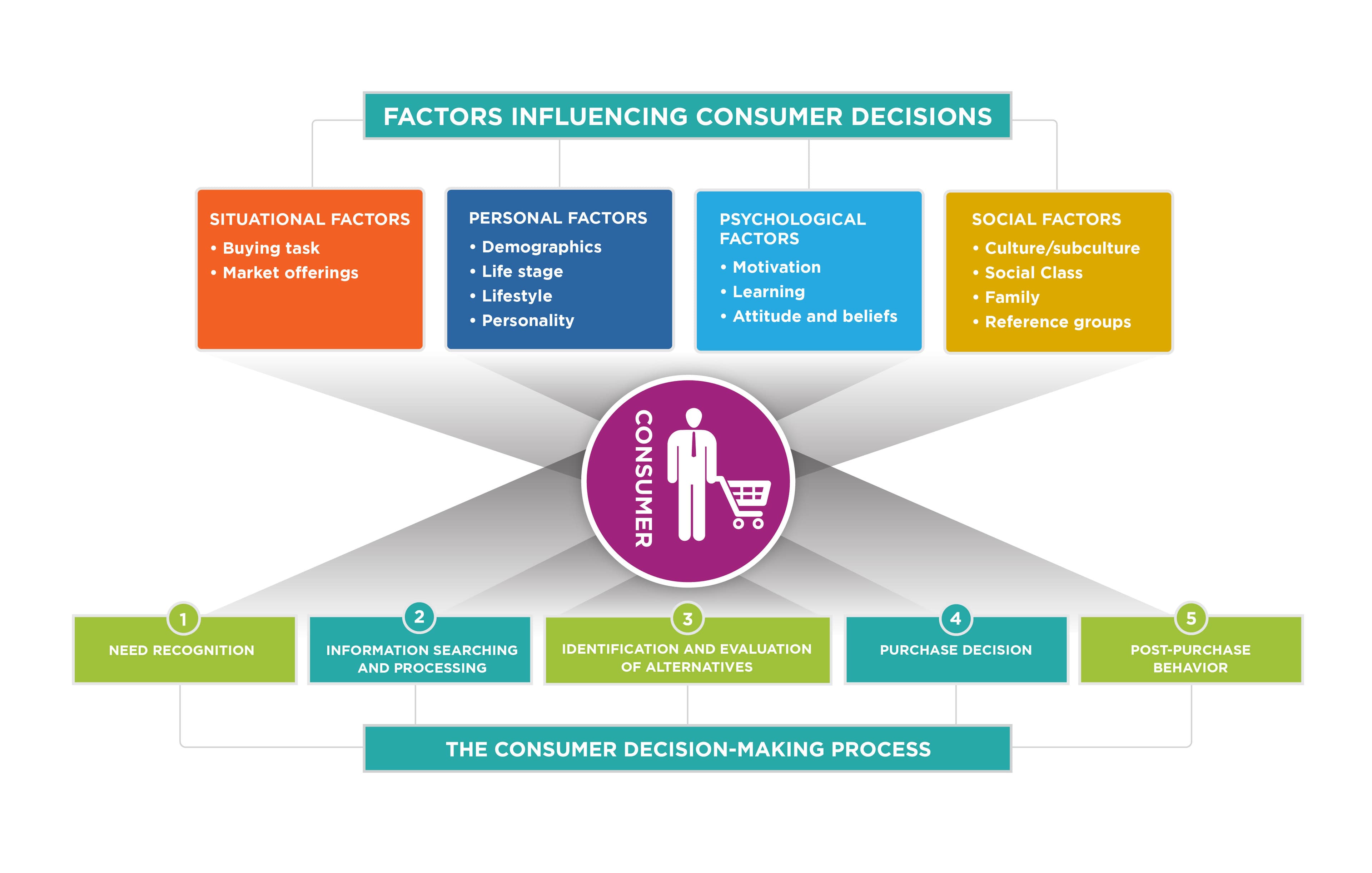
Reading: Influences on Consumer Decisions | Introduction to Business View original
Is this image relevant?
Reading: Buying-Process Stages | Introduction to Marketing View original
Is this image relevant?
1.2 Opportunity Costs & Sunk Costs – Principles of Microeconomics View original
Is this image relevant?
Reading: Influences on Consumer Decisions | Introduction to Business View original
Is this image relevant?
Relevance of Economics in Daily Life
Economic thinking shows up more often than you'd expect. Every time you decide how to spend your time or money, you're making an economic choice.
- Scarcity is the core problem: there aren't enough resources to satisfy every want and need, so people must choose. Deciding between buying a new car or saving for retirement is a scarcity problem.
- Understanding concepts like opportunity cost, supply and demand, and incentives helps you navigate real decisions: which products to buy, how much to save versus spend, and how to evaluate economic policies when you vote.
- Economics also explains the larger forces that shape your life, like why prices rise (inflation), why people lose jobs during recessions (unemployment), and what drives economic growth.

Impact of the Division of Labor on Productivity
The division of labor means breaking a production process into specialized tasks, where each worker focuses on one part of the job instead of doing everything.
This matters because specialization makes workers faster and more skilled at their specific tasks. Think about an assembly line in a car factory: one person installs engines, another fits doors, another handles wiring. Each worker gets very good at their piece, and the whole team produces far more cars per day than if each person tried to build an entire car alone.
Specialization also:
- Allows the use of specialized tools and machinery designed for specific tasks
- Makes mass production possible, which leads to economies of scale, where the cost per unit drops as production increases. Smartphone manufacturing is a good example: producing millions of units spreads the fixed costs (factory, equipment, design) across so many phones that each one becomes affordable.
- Encourages innovation, since workers focused on a narrow task are more likely to find ways to improve it

Scarcity's Role in Economic Choices
Scarcity is the fundamental economic problem: unlimited wants and needs, limited resources to satisfy them. Because of scarcity, every choice involves a trade-off. Choosing one option means giving up another.
For example, a city that allocates land for housing development gives up the option of preserving that land as a natural park. Both options have value, but you can't have both on the same plot of land.
Opportunity cost is the value of the next-best alternative you give up when you make a choice. If you choose to attend college for four years, the opportunity cost includes the income you could have earned by working or starting a business during that time. Thinking in terms of opportunity cost helps you compare options more clearly.
Scarcity also drives how entire economies allocate resources:
- In a market economy, prices do most of the work. Higher prices signal that something is scarce and valuable, directing resources toward producing it. Rare earth metals used in electronics, for instance, carry high prices that reflect their limited supply.
- In a command economy, a central authority (the government) decides how resources are allocated, choosing to invest more in healthcare or defense based on its priorities.
- Most real-world economies are mixed, combining elements of both.
The production possibilities frontier (PPF) is a model that shows the maximum combination of two goods an economy can produce with its current resources and technology. Points on the curve represent efficient use of resources. Points inside the curve mean resources are being underutilized (workers unemployed, factories idle). Points outside the curve are unattainable without more resources or better technology.
Economic Analysis and Systems
Economists split their field into two broad areas:
- Microeconomics focuses on individual markets, firms, and consumers. It examines how they make decisions and interact with each other.
- Macroeconomics looks at the economy as a whole, studying topics like inflation, unemployment, and overall economic growth.
One of the most fundamental tools in economics is supply and demand analysis, which explains how buyers and sellers interact in a market. Market equilibrium occurs when the quantity supplied equals the quantity demanded at a particular price. At that point, there's no pressure for the price to rise or fall.
Different economic systems handle resource allocation in different ways. Market systems rely on prices and voluntary exchange. Command systems rely on central planning. Mixed systems, which describe most countries today, use a combination of both approaches.
See Fiveable more often in Google
Mark Fiveable as a preferred source and Google is more likely to show you our guides in Top Stories, with a "preferred" badge in AI Mode and AI Overviews.