29.3 Macroeconomic Effects of Exchange Rates

💸Principles of Economics Unit 29 Review
29.3 Macroeconomic Effects of Exchange Rates
💸 Principles of Economics
Exchange Rates and Macroeconomic Impacts
Exchange rates don't just determine how much a vacation abroad costs. They ripple through the entire economy, shifting aggregate demand, changing the cost of imported inputs, and affecting how money flows across borders. A currency that strengthens or weakens even modestly can reshape trade balances, corporate balance sheets, and banking system stability.

Top images from around the web for Aggregate Demand and Supply
The Expenditure-Output Model · Economics View original
Is this image relevant?
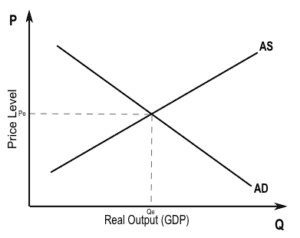
The Aggregate Demand-Aggregate Supply Model | Macroeconomics View original
Is this image relevant?
Aggregate Supply | Boundless Economics View original
Is this image relevant?
The Expenditure-Output Model · Economics View original
Is this image relevant?
The Aggregate Demand-Aggregate Supply Model | Macroeconomics View original
Is this image relevant?
Aggregate Demand and Supply
Exchange rate movements hit the economy from two directions: the demand side (through net exports) and the supply side (through input costs).
Demand side (Net Exports and AD):
- Appreciation means the domestic currency buys more foreign currency. That makes domestic goods relatively more expensive for foreign buyers, so exports fall. At the same time, imports become cheaper for domestic consumers, so imports rise. Both effects reduce net exports (), which pulls aggregate demand () down.
- Depreciation works in reverse. Domestic goods become cheaper abroad, boosting exports, while imports become pricier, discouraging them. rises, pushing up.
A quick way to remember: appreciation hurts exporters but helps consumers of imports; depreciation helps exporters but raises import prices.
Supply side (Input Costs and AS):
Many firms rely on imported raw materials, energy, or intermediate goods. Exchange rate changes affect what those inputs cost.
- Appreciation makes imported inputs cheaper (think oil, semiconductors, industrial metals), which can lower production costs and shift aggregate supply () outward.
- Depreciation makes those same inputs more expensive, raising production costs and potentially shifting inward.
This means a depreciation can create a tricky situation: increases (from higher ), but may decrease (from costlier inputs). The net effect on output and the price level depends on which shift is larger.

International Borrowing and Lending
Exchange rates shape how capital moves between countries.
- When a currency appreciates, foreign investors find it attractive to lend into that economy. Their returns, once converted back to their home currency, look larger. This encourages capital inflows. Domestic borrowers may also find it cheaper to borrow abroad, since the strong currency makes foreign-denominated debt easier to service.
- When a currency depreciates, the opposite happens. Foreign lenders earn less when they convert returns back home, discouraging capital inflows. Domestic borrowers face higher effective costs on foreign-currency debt, making overseas borrowing less appealing. This can trigger capital outflows as investors move money to more stable or higher-return markets.
Interest rate parity ties these ideas together. It states that the difference in interest rates between two countries should roughly equal the expected change in the exchange rate between their currencies. If Country A offers higher interest rates than Country B, the theory predicts Country A's currency will depreciate by about that interest rate gap over time. This condition helps explain why capital doesn't simply flood into whichever country has the highest interest rate: the expected currency movement offsets the rate advantage.

Banking System Stability
Exchange rate swings can threaten the financial system, especially when banks and firms hold mismatched currencies on their balance sheets.
Currency mismatches arise when a bank borrows in one currency (say, US dollars) but lends in another (say, pesos). If the peso depreciates sharply, the bank still owes the same amount in dollars, but its peso-denominated assets are now worth less in dollar terms. The bank's liabilities balloon relative to its assets, potentially wiping out its capital.
Balance sheet effects extend beyond banks to firms and households:
- Appreciation improves balance sheets for anyone holding foreign-currency debt, because that debt shrinks in domestic-currency terms. Foreign-currency assets also rise in value.
- Depreciation does the opposite. Foreign-currency debts grow heavier, and net worth can deteriorate quickly.
Financial stability risks escalate when depreciation is sudden or large:
- Investors may pull capital out of the country, accelerating the depreciation further in a self-reinforcing cycle.
- Banks with significant unhedged foreign-currency exposure (positions not protected by derivatives or other instruments) face the greatest danger.
- In severe cases, this dynamic can spark a full banking crisis. The 1997 Asian Financial Crisis is a textbook example: sharp currency depreciations across Thailand, Indonesia, and South Korea exposed massive currency mismatches and triggered widespread bank failures.
The core takeaway is that exchange rates connect trade, investment, and financial stability in ways that reinforce each other. A depreciation that boosts exports can simultaneously strain the banking system if institutions carry unhedged foreign-currency debt. Understanding these linkages is essential for analyzing real-world policy debates about currency intervention and capital controls.
See Fiveable more often in Google
Mark Fiveable as a preferred source and Google is more likely to show you our guides in Top Stories, with a "preferred" badge in AI Mode and AI Overviews.