7.4 Production in the Long Run

💸Principles of Economics Unit 7 Review
7.4 Production in the Long Run
💸 Principles of Economics
Long Run Production
In the short run, firms are stuck with at least one fixed input. The long run removes that constraint: firms can adjust every input, from labor to capital to technology. This distinction matters because it determines how businesses plan growth, choose production methods, and pursue lower costs over time.

Top images from around the web for Long run vs short run production
Reading: The Long Run and the Short Run | Macroeconomics View original
Is this image relevant?
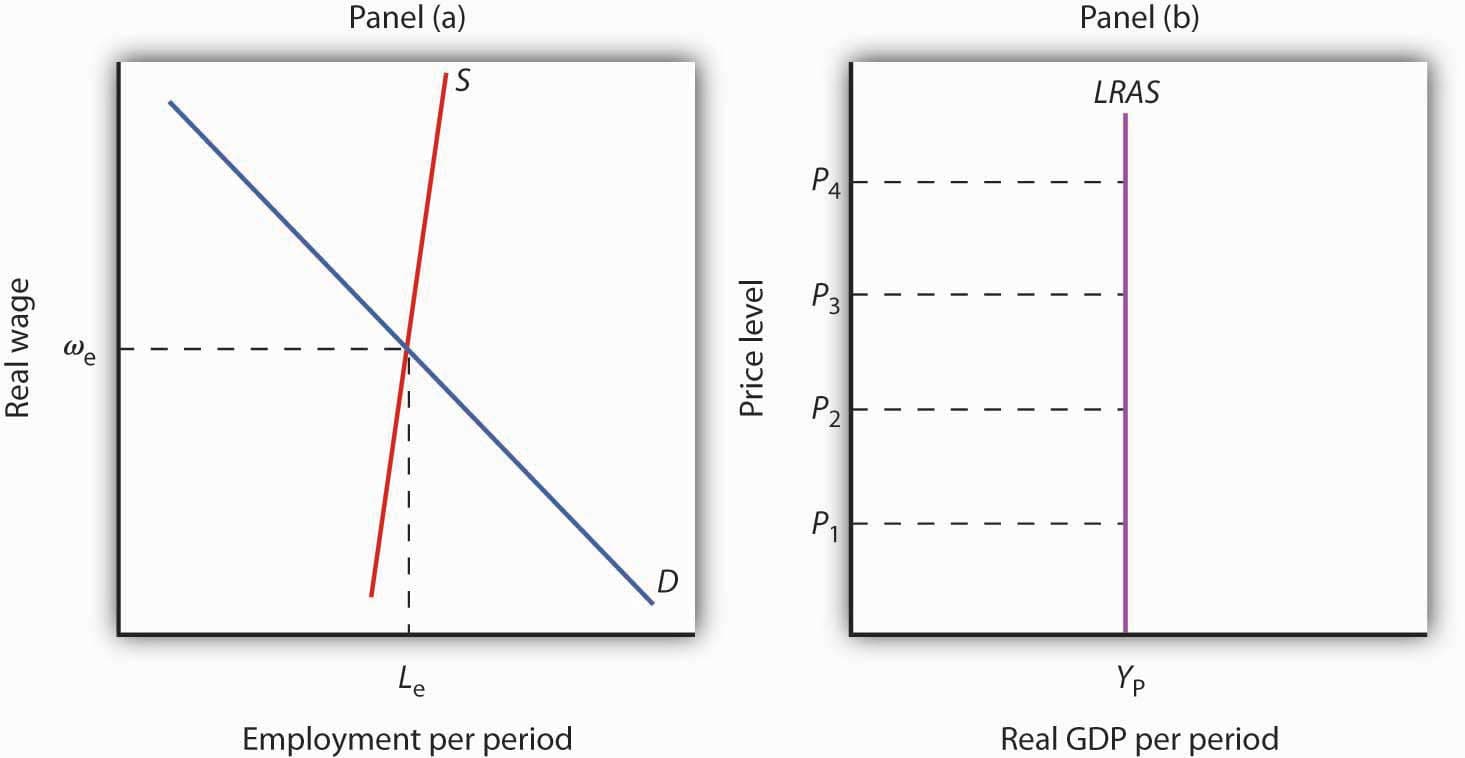
Reading: The Long Run and the Short Run | Macroeconomics View original
Is this image relevant?
Production Cost | Boundless Economics View original
Is this image relevant?
Reading: The Long Run and the Short Run | Macroeconomics View original
Is this image relevant?
Reading: The Long Run and the Short Run | Macroeconomics View original
Is this image relevant?
Long Run vs. Short Run Production
The core difference is flexibility. In the short run, at least one factor of production is fixed. A factory's size, for instance, can't change overnight. In the long run, every input is variable.
- In the short run, a firm might hire more workers but can't expand its building. That fixed factory creates a ceiling on how much output can grow efficiently.
- In the long run, the firm can build a bigger factory, buy more machines, and hire more workers. It can choose whatever combination of inputs minimizes cost for a given output level.
- Because of this flexibility, long-run decisions focus on finding the optimal input mix, such as the right ratio of workers to machines for a particular scale of production.
- Short-run constraints often lead to inefficiencies (e.g., unused factory space during slow periods, or overcrowding during busy ones). Long-run planning aims to eliminate those mismatches.

Diminishing Marginal Productivity
Diminishing marginal productivity means that as you keep adding more of one input while holding others constant, each additional unit of that input eventually contributes less to total output.
Think of it this way: if a small bakery has two ovens and one baker, adding a second baker helps a lot. A third baker helps some. A tenth baker, with still only two ovens, barely adds any extra output because the ovens are fully utilized.
- This concept is most visible in the short run, where fixed factors (like capital) get overutilized as you pile on more of the variable factor (like labor).
- In the long run, firms can adjust all factors, which helps them avoid the worst effects of diminishing returns. If you need more workers, you can also add more machines to keep the ratio balanced.
- However, diminishing marginal productivity still applies to each individual factor in the long run. Adding enormous amounts of any single input, even when others are adjustable, will eventually yield smaller and smaller gains.

Long-Term Production Process Adjustments
Because all inputs are variable in the long run, firms have several strategies for improving production:
Investing in technology and capital. Purchasing robotics, automation systems, or upgraded equipment shifts the entire production function upward, meaning the firm gets more output from the same quantity of inputs.
Changing the scale of production:
- Scaling up to achieve economies of scale, where average costs fall as output rises (e.g., bulk discounts on raw materials, spreading fixed overhead across more units).
- Scaling down to address diseconomies of scale, where average costs rise because the organization has grown too large to manage efficiently (e.g., communication breakdowns, bureaucratic slowdowns).
Optimizing the input mix. Firms search for the combination of labor, capital, and other resources that produces a target output at the lowest possible cost. This might mean substituting expensive skilled labor with automated equipment, or vice versa, depending on relative prices.
Adopting new production techniques. Methods like lean manufacturing reduce waste and streamline operations. Better worker training and specialization also raise productivity without necessarily increasing the quantity of inputs.
Pursuing economies of scope. Producing multiple related products lets a firm share resources across product lines, lowering the average cost of each. A dairy company producing both milk and cheese from the same raw input is a classic example.
Production Analysis Tools
Isoquants are curves on a graph showing all combinations of two inputs (say, labor and capital) that produce the same level of output. They work like contour lines on a topographic map. Moving to a higher isoquant means more output. The slope of an isoquant at any point reflects how easily the firm can substitute one input for another.
Returns to scale describe what happens to output when all inputs increase by the same proportion:
- Constant returns to scale: Doubling all inputs exactly doubles output.
- Increasing returns to scale: Doubling all inputs more than doubles output. This is the source of economies of scale.
- Decreasing returns to scale: Doubling all inputs less than doubles output. This is linked to diseconomies of scale.
Long-run average cost (LRAC) curve traces the lowest possible average cost at each level of output, assuming the firm can choose any scale of production. It's typically U-shaped: costs fall at first (increasing returns), flatten out (constant returns), and eventually rise (decreasing returns).
Expansion path shows the cost-minimizing combination of inputs at each output level. On a graph with isoquants and budget lines (isocost lines), the expansion path connects all the points where the firm achieves a given output for the least cost. It maps out how the firm should grow.
See Fiveable more often in Google
Mark Fiveable as a preferred source and Google is more likely to show you our guides in Top Stories, with a "preferred" badge in AI Mode and AI Overviews.