13.2 How Governments Can Encourage Innovation

💸Principles of Economics Unit 13 Review
13.2 How Governments Can Encourage Innovation
💸 Principles of Economics
Innovation drives economic growth, but the market on its own tends to underinvest in it. Why? Because new knowledge is a positive externality: once an idea exists, others can benefit from it without paying the inventor. This means the social benefit of innovation exceeds the private benefit, leading to less innovation than is socially optimal. Governments step in to close that gap through intellectual property protections, direct funding, and partnerships that spread the cost and risk of research.
Government Policies and Innovation

Top images from around the web for Intellectual Property Rights
Intellectual Property – Mastering Strategic Management – 1st Canadian Edition View original
Is this image relevant?
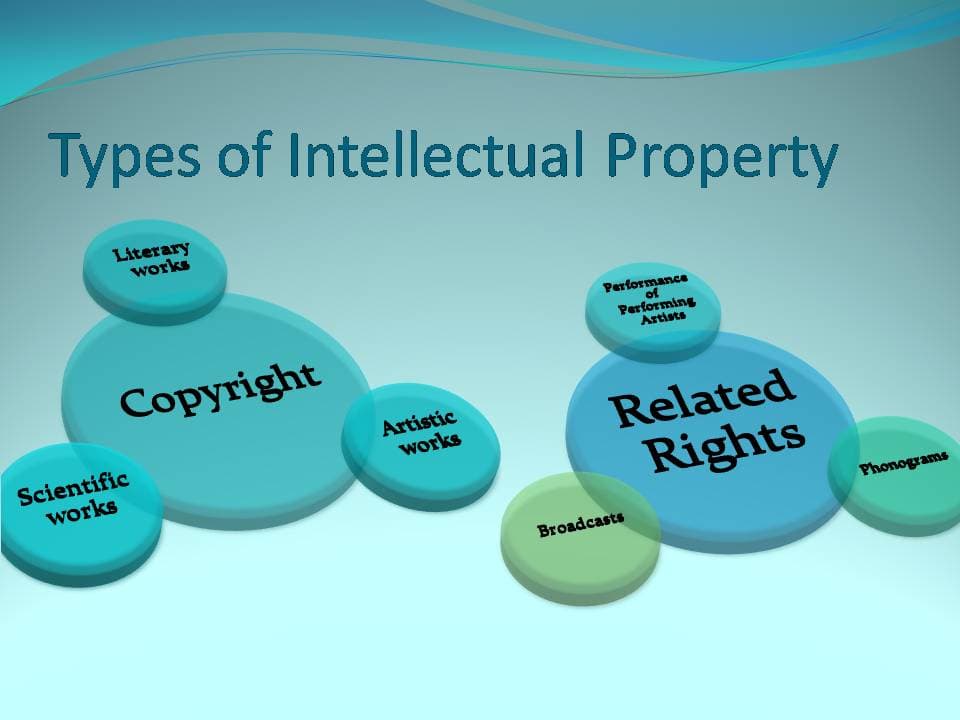
legal writing: Types of Intellectual Property View original
Is this image relevant?
Upload Login Signup View original
Is this image relevant?
Intellectual Property – Mastering Strategic Management – 1st Canadian Edition View original
Is this image relevant?
legal writing: Types of Intellectual Property View original
Is this image relevant?
Intellectual Property Rights
Intellectual property (IP) rights exist to solve the free-rider problem in innovation. Without protection, competitors could copy a new product immediately, and the original inventor would have little reason to spend years and money developing it in the first place. IP rights give creators a temporary monopoly on their work so they can recoup their investment.
The two main forms you need to know:
- Patents protect inventions by granting the inventor exclusive rights to make, use, or sell the invention for a set period (typically 20 years in the U.S.). No one else can produce or sell that invention without the patent holder's permission.
- Copyrights protect original creative works like books, music, and software, giving creators exclusive rights to reproduce and distribute their creations.
Beyond the profit motive, IP rights also encourage the disclosure of knowledge. To receive a patent, an inventor must publicly describe how the invention works. This means other researchers can study it, learn from it, and build on it once the patent expires. The tradeoff is clear: society grants a temporary monopoly in exchange for new knowledge entering the public domain.
From an economics standpoint, IP rights shift the private benefit of innovation closer to the social benefit, moving output toward the socially optimal quantity.

Government Research and Development Policies
Even with IP protections, private firms may still underinvest in research, especially basic research where the payoff is uncertain and far in the future. Government R&D policies address this in three main ways:
- Direct funding for research through grants from agencies like the National Science Foundation (NSF) and the National Institutes of Health (NIH), as well as research conducted in government laboratories such as the National Institute of Standards and Technology (NIST). This is especially important for basic science that private companies won't fund because the commercial applications aren't yet clear.
- Tax incentives for private sector R&D, including the Research and Experimentation Tax Credit, which allows companies to deduct a portion of their R&D expenses from their tax liability. Accelerated depreciation for R&D equipment also lowers the effective cost of investing in new technology. These incentives reduce the private cost of R&D, encouraging firms to do more of it.
- Support for STEM education through government funding for science, technology, engineering, and mathematics programs at every level, from primary school through graduate school. Scholarships and fellowships for STEM students help build the skilled workforce that makes future innovation possible.

Public-Private Research Cooperation
Some of the most effective innovation happens when government and the private sector pool their resources. Each side brings something the other lacks: government offers funding, facilities, and long time horizons, while private firms bring market knowledge, commercialization expertise, and additional capital.
- Public-private partnerships are collaborations where government agencies and private companies share resources, expertise, and risk on a joint project. A well-known example is the Partnership for a New Generation of Vehicles, in which the U.S. government worked with major automakers to develop more fuel-efficient vehicles.
- Cooperative Research and Development Agreements (CRADAs) are formal agreements that let private companies access government lab facilities, equipment, and expertise. In return, the companies provide funding and resources, and both sides share the resulting intellectual property.
- University-industry collaborations pair academic institutions (which offer deep research expertise and lab facilities) with private companies (which offer funding and knowledge of what the market actually needs). These partnerships help turn university research into commercial products and services that reach consumers.
In each of these arrangements, the core economic logic is the same: by sharing costs and risks, these partnerships make it worthwhile to pursue innovations that neither side would undertake alone, helping push output closer to the socially efficient level.
See Fiveable more often in Google
Mark Fiveable as a preferred source and Google is more likely to show you our guides in Top Stories, with a "preferred" badge in AI Mode and AI Overviews.