12.5 International Environmental Issues

💸Principles of Economics Unit 12 Review
12.5 International Environmental Issues
💸 Principles of Economics
International Environmental Issues
Global environmental problems are uniquely difficult to solve because pollution and resource depletion don't stop at national borders. When one country's factory emissions cause acid rain in a neighboring country, or when overfishing depletes a shared ocean stock, the costs spill across borders with no market mechanism to account for them. These are international externalities, and they sit at the heart of why global environmental cooperation is so hard.
Countries struggle to coordinate because of conflicting priorities, unequal resources, and the ever-present temptation to free-ride on others' efforts. Understanding these barriers, and the strategies designed to overcome them, is central to thinking about environmental policy at the global scale.

Top images from around the web for International Externalities and Environmental Impact
The Ocean Atlas: All Infographics at a Glance | Heinrich-Böll-Stiftung View original
Is this image relevant?
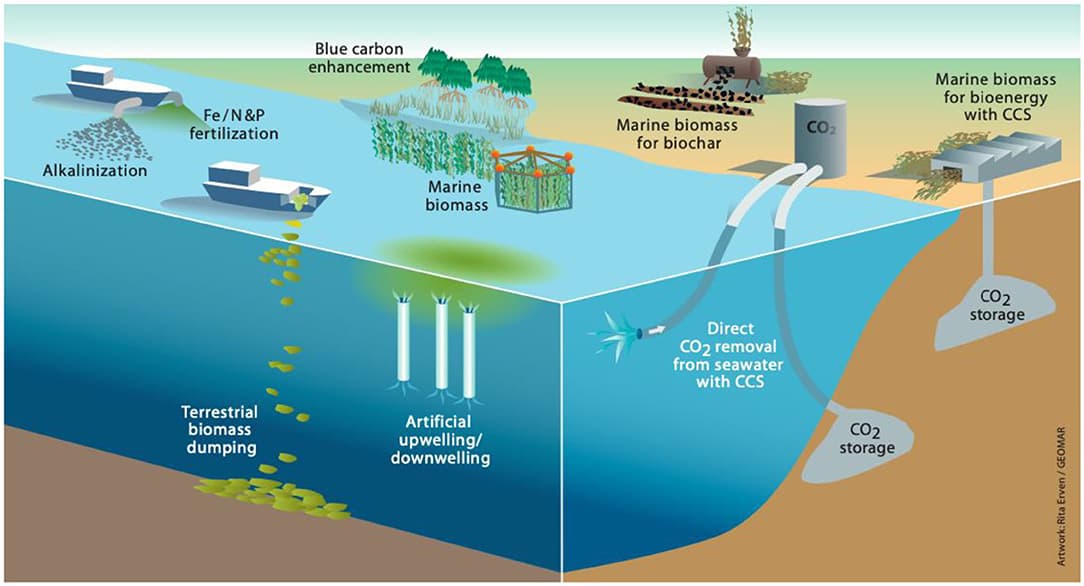
Frontiers | Navigating Potential Hype and Opportunity in Governing Marine Carbon Removal View original
Is this image relevant?
Frontiers | End Overfishing and Increase the Resilience of the Ocean to Climate Change View original
Is this image relevant?
The Ocean Atlas: All Infographics at a Glance | Heinrich-Böll-Stiftung View original
Is this image relevant?
Frontiers | Navigating Potential Hype and Opportunity in Governing Marine Carbon Removal View original
Is this image relevant?
International Externalities and Environmental Impact
An international externality occurs when one country's actions affect another country's well-being without that cost or benefit showing up in market prices.
- Negative international externalities impose costs on other countries. A coal plant in one nation can send sulfur dioxide across borders, causing respiratory illness and crop damage in neighboring countries that had no say in the decision.
- Positive international externalities provide benefits beyond borders. When Brazil preserves a section of the Amazon rainforest, the carbon sequestration and biodiversity benefits are shared globally, even though Brazil bears the cost of forgoing development.
These externalities create two predictable economic problems:
- Overexploitation of shared resources. Because no single country "owns" international waters or the atmosphere, each has an incentive to use more than is sustainable. Overfishing in international waters is a classic example: each nation's fleet takes as much as it can, and the fish stock collapses.
- Underinvestment in environmental protection. If the benefits of conservation flow mostly to other nations, any individual country has weak incentives to invest. Why pay the full cost of reducing emissions if most of the climate benefit goes to everyone else?

Challenges in Addressing Global Environmental Issues
The free-rider problem is the biggest obstacle. If Country A cuts emissions at great expense, Countries B through Z enjoy cleaner air whether they contributed or not. Each country has a rational incentive to let others bear the cost, which means too few countries act.
Differences in priorities and resources compound the problem:
- Developed countries, having already industrialized, tend to prioritize environmental protection. Developing countries often prioritize economic growth and poverty reduction, viewing strict environmental rules as a barrier to catching up.
- Developing countries frequently lack the financial resources and technology needed to adopt cleaner production methods, even when they want to.
Enforcement is weak by design. There is no global governing authority that can force a country to meet its environmental commitments. International agreements rely on voluntary compliance. Countries can withdraw if they decide the agreement is too costly or unfair, as the United States did with the Paris Agreement in 2017 (before rejoining in 2021).

Strategies for International Cooperation
Despite these challenges, several strategies aim to make cooperation possible.
Technology transfer involves high-income countries sharing environmentally friendly technologies with low-income countries. For example, providing access to solar panel manufacturing or efficient irrigation systems helps developing nations reduce their environmental impact without sacrificing economic development.
Financial assistance addresses the resource gap directly. Funds like the Green Climate Fund and the Global Environment Facility channel money from wealthier nations to developing countries for environmental protection and sustainable development projects. The logic is straightforward: if the whole world benefits from a country preserving its forests or reducing emissions, the whole world should help pay for it.
Capacity building goes beyond money and equipment. High-income countries provide technical training and help build the institutions that developing countries need for effective environmental management. This includes training regulators, establishing monitoring systems, and strengthening legal frameworks for enforcement.
International agreements and frameworks tie these strategies together. The Paris Agreement on climate change, for instance, does several things at once:
- Sets clear targets for reducing greenhouse gas emissions
- Creates mechanisms for monitoring and reporting each country's progress
- Applies the principle of common but differentiated responsibilities, meaning that countries with greater historical contributions to pollution and greater economic capacity take on larger commitments
This flexibility is deliberate. Agreements that treat all countries identically tend to collapse because developing nations view them as unfair. Differentiated responsibilities make it more likely that countries will actually sign on and follow through.
See Fiveable more often in Google
Mark Fiveable as a preferred source and Google is more likely to show you our guides in Top Stories, with a "preferred" badge in AI Mode and AI Overviews.