12.4 The Benefits and Costs of U.S. Environmental Laws

💸Principles of Economics Unit 12 Review
12.4 The Benefits and Costs of U.S. Environmental Laws
💸 Principles of Economics
Economic Analysis of Environmental Protection
Environmental protection involves trade-offs. Economists use marginal analysis to find the level of protection where the benefits of cleaner air, water, and preserved ecosystems justify the costs of achieving them. The goal isn't zero pollution (which would be impossibly expensive) but rather the efficient level where net benefits to society are maximized.
Ecotourism illustrates one way environmental preservation pays off economically. By keeping natural areas intact, communities can generate sustainable income and jobs, giving people a financial reason to protect ecosystems rather than exploit them.

Top images from around the web for Marginal Analysis and Environmental Protection
The Tradeoff between Economic Output and Environmental Protection | OS Microeconomics 2e View original
Is this image relevant?
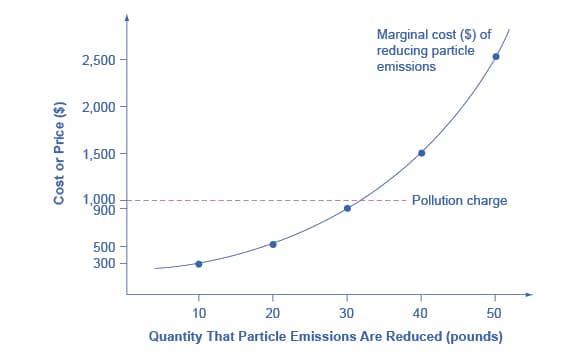
Market-Oriented Environmental Tools · Economics View original
Is this image relevant?
The Benefits and Costs of U.S. Environmental Laws · Economics View original
Is this image relevant?
The Tradeoff between Economic Output and Environmental Protection | OS Microeconomics 2e View original
Is this image relevant?
Market-Oriented Environmental Tools · Economics View original
Is this image relevant?
Economic Analysis of Environmental Protection

Marginal Analysis and Environmental Protection
Marginal analysis compares the additional benefit of one more unit of an activity against the additional cost of that unit. Applied to environmental protection, it helps answer: How much pollution reduction is worth pursuing?
- Marginal benefit (MB): the additional benefit society gains from one more unit of environmental protection (e.g., fewer hospital visits, cleaner drinking water)
- Marginal cost (MC): the additional cost of achieving that next unit of protection (e.g., more expensive equipment, higher compliance costs for firms)
The efficient level of environmental protection occurs where MB = MC. At that point, net benefit (total benefits minus total costs) is maximized.
- If MB > MC, society gains more from increasing protection, so it should expand.
- If MC > MB, the last unit of protection costs more than it's worth, so society would benefit from scaling back slightly.
This doesn't mean pollution should be zero. Eliminating the last traces of pollution would have enormous marginal costs and relatively small marginal benefits. Marginal analysis finds the cost-effective balance.

Economic Benefits of Ecotourism
Ecotourism is travel to natural areas for the purpose of observing and appreciating nature, such as rainforests, coral reefs, or wildlife preserves. It creates a direct economic incentive to keep ecosystems healthy rather than converting them to other uses.
Preserved environments generate economic value in several ways:
- Income for local communities through tourism businesses like hotels, restaurants, and guided tours
- Job creation in roles such as park rangers, tour operators, and hospitality workers
- Government revenue from park entrance fees, concessions, and tourism-related taxes
- Encouragement of sustainable practices like renewable energy use and waste reduction in surrounding areas
A key insight here is that ecotourism makes biodiversity and unique landscapes economically valuable. Protecting an endangered species or a pristine coastline isn't just an environmental choice; it becomes a financial one. Compared to extractive industries like logging or mining, ecotourism can provide more sustainable long-term income and employment without depleting the resource it depends on.
Evaluating Pollution Reduction Policies
Costs and Health Benefits of Reducing Pollution
Reducing air and water pollution produces real benefits, but it also imposes real costs. Sound policy requires weighing both sides carefully.
Costs of pollution reduction:
- Compliance costs for businesses: Firms must install pollution control equipment (like scrubbers on smokestacks), which raises production costs. Those higher costs often get passed on to consumers through higher prices for goods like electricity and gasoline.
- Job displacement in polluting industries: Stricter regulations can reduce employment in sectors like coal mining and heavy manufacturing.
- Government spending on enforcement: Agencies must fund inspections, monitoring, and legal action to ensure compliance.
Health benefits of reducing pollution:
- Fewer respiratory illnesses from improved air quality, including reduced rates of asthma and bronchitis
- Lower exposure to toxic pollutants in drinking water, such as lead and mercury
- Decreased healthcare costs as pollution-related hospitalizations and medication needs decline
- Improved quality of life: fewer missed work days, longer life expectancy, and better overall well-being
Applying marginal analysis to policy:
Policymakers compare the MB of pollution reduction (primarily health benefits) with the MC (compliance, enforcement, and economic adjustment costs). The efficient policy targets the level of reduction where MB = MC.
Cost-benefit analysis (CBA) formalizes this process by quantifying and comparing total costs against total benefits. This often requires putting a dollar value on health outcomes, which is difficult but necessary for informed decisions. CBA also considers distributional effects: low-income communities are often located near pollution sources and bear a disproportionate share of health costs, which raises equity concerns beyond pure efficiency.
See Fiveable more often in Google
Mark Fiveable as a preferred source and Google is more likely to show you our guides in Top Stories, with a "preferred" badge in AI Mode and AI Overviews.