28.2 Bank Regulation

💸Principles of Economics Unit 28 Review
28.2 Bank Regulation
💸 Principles of Economics
Bank Regulation and Monetary Policy
Bank regulation shapes how monetary policy actually reaches the economy. When a central bank changes interest rates, those changes flow through the banking system to borrowers and savers. If banks are poorly regulated or unstable, that transmission breaks down. This unit covers how regulation, supervision, and safety-net policies like deposit insurance keep the system functioning.

Top images from around the web for Connection between bank regulation and monetary policy
Monetary Policy and Economic Outcomes | OpenStax Macroeconomics 2e View original
Is this image relevant?
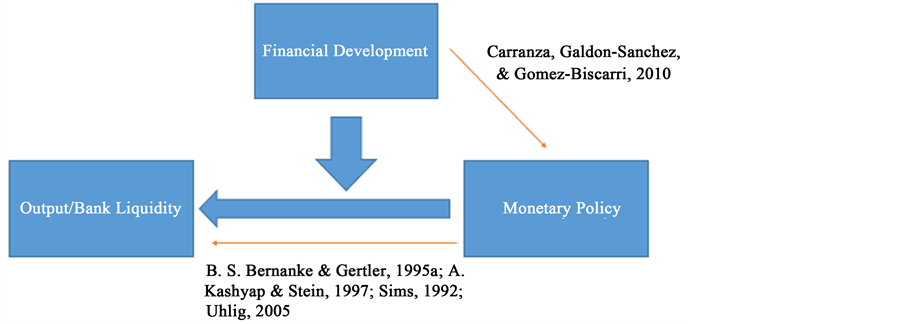
Effect of Financial Development on the Transmission of Monetary Policy View original
Is this image relevant?
Impact of Economic Regulation through Monetary Policy: Impact Analysis of Monetary Policy Tools ... View original
Is this image relevant?
Monetary Policy and Economic Outcomes | OpenStax Macroeconomics 2e View original
Is this image relevant?
Effect of Financial Development on the Transmission of Monetary Policy View original
Is this image relevant?
Connection between bank regulation and monetary policy
Bank regulation and monetary policy aren't separate tracks. They directly affect each other.
Regulation shapes how banks respond to monetary policy:
- Capital requirements determine how much capital (equity and retained earnings) a bank must hold relative to its assets. Higher capital requirements mean banks have less capacity to expand lending when the central bank lowers rates, because more of their resources are tied up as a buffer.
- Liquidity requirements dictate how many short-term, easily sellable assets a bank must keep on hand. These affect how quickly banks can adjust their lending in response to interest rate changes.
Monetary policy considers banking stability:
- Central banks may lower interest rates not just to stimulate the economy, but specifically to support bank lending during downturns.
- During crises, central banks turn to unconventional tools like quantitative easing (QE), where the central bank purchases financial assets (such as government bonds) to inject liquidity directly into the banking system. This supports lending when normal interest rate cuts aren't enough.
Coordination matters. Bank regulators and central banks need to work in the same direction. If a central bank is trying to encourage lending by lowering rates, but regulators simultaneously tighten capital requirements, the two policies can cancel each other out. Consistent coordination helps achieve both financial stability and monetary policy goals like price stability and sustainable growth.

Role of bank supervision in maintaining financial stability
Bank supervision is the hands-on, ongoing monitoring of individual banks to make sure they're operating safely.
What supervisors do:
- Monitor banks' financial health, risk management practices, and leverage ratios (how much debt a bank holds relative to its equity). A bank with a very high leverage ratio is taking on more risk.
- When supervisors spot problems, they can require corrective action, such as forcing a bank to increase its capital buffers or reduce exposure to risky assets.
Stress tests are a major supervisory tool. Regulators run simulations that ask: What would happen to this bank if the economy entered a severe recession or if financial markets crashed? These tests identify vulnerabilities before they become real crises and give regulators grounds to require changes.
Why this builds confidence: When depositors and investors trust that banks are well-managed and financially sound, they're far less likely to panic and pull their money out. Effective supervision also limits contagion risk, which is the danger that one bank's failure triggers a chain reaction that spreads to other institutions across the financial system.

Deposit Insurance and Lender of Last Resort
These are the two main safety nets that prevent banking panics. They address different problems but reinforce each other.
How deposit insurance and lender of last resort policies prevent bank runs
Deposit insurance protects depositors' funds up to a set limit ( per depositor, per bank in the US, backed by the FDIC).
- Without deposit insurance, if rumors spread that a bank is in trouble, every depositor has a rational incentive to withdraw their money immediately, before the bank runs out of cash. This is a bank run, and it can destroy even a healthy bank.
- With deposit insurance, depositors know their funds are guaranteed by the government. There's no reason to rush to withdraw, so the panic never starts.
Lender of last resort (LOLR) policies address a different problem: temporary liquidity shortages at banks that are fundamentally solvent (their assets exceed their liabilities, but they can't convert those assets to cash fast enough).
- The central bank acts as LOLR by extending short-term credit to banks that can't borrow from normal sources like the interbank lending market.
- This prevents a liquidity problem from becoming a solvency crisis. A bank that just needs a few days of cash to meet obligations doesn't have to sell assets at fire-sale prices or collapse entirely.
How they work together:
- Deposit insurance reduces the chance of a bank run starting in the first place by keeping depositors calm.
- If a liquidity shock still hits a bank (perhaps from large institutional withdrawals not covered by deposit insurance), LOLR lending provides emergency funding.
- Together, they contain problems at individual banks before those problems spread across the financial system.
One important trade-off to keep in mind: both deposit insurance and LOLR support create moral hazard. Banks may take on more risk knowing that depositors are insured and that the central bank will step in during a crisis. This is exactly why bank regulation and supervision exist alongside these safety nets.
See Fiveable more often in Google
Mark Fiveable as a preferred source and Google is more likely to show you our guides in Top Stories, with a "preferred" badge in AI Mode and AI Overviews.