AMSCO 9.3 The End of the Cold War

🇺🇸AP US History Review
AMSCO 9.3 The End of the Cold War
🇺🇸 AP US History
AMSCO 1.2:Native American Societies Before European Contact Notes
AMSCO 2.1 Context: European Colonization of North America Notes
AMSCO 2.2 European Colonization Notes
AMSCO 2.3 The Regions of the British Colonies Notes
AMSCO 2.4 Transatlantic Trade Notes
AMSCO 2.5 Interactions between American Indians and Europeans Notes
AMSCO 2.6 Slavery in the British Colonies Notes
AMSCO 2.7 Colonial Society and Culture Notes
AMSCO 2.8 Comparison in Period 2 (1607-1754) Notes
AMSCO 3.1 Contextualizing Period 3
AMSCO 3.2 The Seven Year's War
AMSCO 3.3 Taxation Without Representation
AMSCO 3.4 Philosophical Foundations of the American Revolution
AMSCO 3.5 The American Revolution
AMSCO 3.6 The Influence of Revolutionary Ideals
AMSCO 3.7 The Articles of Confederation
AMSCO 3.8 The Constitutional Convention and Debates Over Ratification
AMSCO 3.9 The Constitution
AMSCO 3.10 Shaping a New Republic
AMSCO 3.11 Developing an American Identity
AMSCO 3.12 Movements in the Early Republic
AMSCO 3.13 Continuity and Change in Period 3
AMSCO 4.1 Contextualizing Period 4
AMSCO 4.2 The Rise of Political Parties and the Era of Jefferson
AMSCO 4.3 Politics and Regional Interests
AMSCO 4.4 America on the World Stage
AMSCO 4.5 Market Revolution
AMSCO 4.6 Effects of the Market Revolution on Society and Culture
AMSCO 4.7 Expanding Democracy
AMSCO 4.8 Jackson and Federal Power
AMSCO 4.9 The Development of an American Culture
AMSCO 4.10 The Second Great Awakening
AMSCO 4.11 An Age of Reform
AMSCO 4.12 African Americans in the Early Republic
AMSCO 4.13 Southern Society in the Early Republic
AMSCO 4.14 Causation in Period 4
AMSCO 5.1 Contextualizing Period 5
AMSCO 5.2 The Idea of Manfiest Destiny
AMSCO 5.3 Manifest Destiny and the Mexican-American War
AMSCO 5.4 The Compromise of 1850
AMSCO 5.5 Sectional Conflict: Regional Differences
AMSCO 5.6 Failure of Compromise
AMSCO 5.7 Election of 1860 and Secession
AMSCO 5.8 Military Conflict in the Civil War
AMSCO 5.9 Government Policies During the Civil War
AMSCO 5.10 Reconstruction
AMSCO 5.11 Failure of Reconstruction
AMSCO 5.12 Comparion in Period 5
AMSCO 6.1 Contextualizing Period 6
AMSCO 6.2 Westward Expansion: Economic Development
AMSCO 6.3 Westward Expansion: Social and Cultural Development
AMSCO 6.4 The "New South"
AMSCO 6.5 Technological Innovation
AMSCO 6.6 The Rise of Industrial Capitalism
AMSCO 6.7 Labor in the Gilded Age
AMSCO 6.8 Immigration and Migration in the Gilded Age
AMSCO 6.9 Responses to Immigration in the Gilded Age
AMSCO 6.10 Development of the Middle Class
AMSCO 6.11 Reform in the Gilded Age
AMSCO 6.12 Role of Government in the Gilded Age
AMSCO 6.13 Politics in the Gilded Age
AMSCO 6.14 Continuity and Change Period 6
AMSCO 7.1 Contextualizing Period 7
AMSCO 7.2 Imperialism: Debates
AMSCO 7.3 The Spanish-American War and U.S. Foreign Policy to 1917
AMSCO 7.4 The Progressives
AMSCO 7.5 World War I: Military and Diplomacy
AMSCO 7.6 World War I: Home Front
AMSCO 7.7 1920s: Innovations in Communication and Technology
AMSCO 7.8 1920s: Cultural and Political Controversies
AMSCO 7.9 The Great Depression
AMSCO 7.10 The New Deal
AMSCO 7.11 Inerwar Foreign Policy
AMSCO 7.12 World War II Mobilization
AMSCO 7.13 World War II Military
AMSCO 7.14 World War II and Postwar Diplomacy
AMSCO 7.15 Comparison in Period 7
AMSCO 8.1 Contextualizing Period 8
AMSCO 8.2 The Cold War from 1945 to 1980
AMSCO 8.3 The Red Scare
AMSCO 8.4 Economy after 1945
AMSCO 8.5 Culture after 1945
AMSCO 8.6 Early Steps in the Civil Rights Movement, 1945-1960
AMSCO 8.7 America as a World Power
AMSCO 8.8 The Vietnam War
AMSCO 8.9 The Great Society
AMSCO 8.10 The African American Civil Rights Movement in the 1960s
AMSCO 8.11 The Civil Rights Movement Expands
AMSCO 8.12 Youth Culture of the 1960s
AMSCO 8.13 The Environment and Natural Resources from 1968 to 1980
AMSCO 8.14 Society in Transition
AMSCO 8.15 Continuity and Change in Period 8
AMSCO 9.1 Contextualizing Period 9
AMSCO 9.2 Reagan and Conservatism
AMSCO 9.3 The End of the Cold War
AMSCO 9.4 A Changing Economy
AMSCO 9.5 Migration and Immgiration in the 1990s and 2000s
AMSCO 9.6 Challenges of the 21st Century
AMSCO 9.7 Causation in Period 9
AMSCO 1.1 Contextualizing Period 1 Notes
AMSCO 1.3 European Exploration in the Americas Notes
AMSCO 1.4 Columbian Exchange, Spanish Exploration, and Conquest Notes
AMSCO 1.5 Labor, Slavery, and Caste in the Spanish Colonial System Notes
AMSCO 1.6 Cultural Interactions in the Americas Notes
AMSCO 1.7 Causation in Period 1 Notes
Overview
AMSCO Topic 9.3, "The End of the Cold War," covers how the four-decade standoff between the United States and the Soviet Union finally ended between Reagan's first term and the Soviet collapse in December 1991. The chapter tracks Reagan's massive military buildup and "evil empire" rhetoric, his surprising pivot to summits with Mikhail Gorbachev, the Iran-Contra scandal, the fall of the Berlin Wall, the breakup of the USSR under George H. W. Bush, and the messy aftermath in Russia and Eastern Europe. It sits in Period 9 (1980-present), and the big skill here is causation: historians still debate whether Reagan's pressure or Gorbachev's reforms mattered more.
Key Takeaways
- Reagan increased military spending and backed right-wing governments in Latin America to intensify Cold War competition.
- In the Iran-Contra affair, Reagan aides secretly sold arms to Iran and illegally sent the profits to Nicaragua's Contras, violating the Boland Amendment.
- Gorbachev's domestic reforms made him willing to negotiate with Reagan, leading to the 1987 INF agreement; historians also debate whether Reagan's military buildup pressured the Soviets.
- Solidarity won in Poland, Communist governments fell across Eastern Europe, and protesters tore down the Berlin Wall in 1989; Germany reunited the next year.
- Nationalist demands and a failed coup preceded the Soviet Union's dissolution in December 1991, while START I and START II reduced U.S. and Russian nuclear warheads.
- After the Cold War, the European Union expanded, Russia struggled with economic reform and corruption, and violence in the former Yugoslavia prompted NATO intervention.
Reagan Renews the Cold War
Reagan came into office determined to rebuild American military power and intensify Cold War competition. He called the Soviet Union the "evil empire" and the "focus of evil in the modern world," and he backed the rhetoric with money and force.
The Military Buildup
- Billions went to new weapons systems like the B-1 bomber and the MX missile, plus expanding the Navy from 450 to 600 ships.
- The Strategic Defense Initiative (SDI) was a plan for a high-tech shield of lasers and particle beams to destroy enemy missiles before they reached the U.S. Critics nicknamed it "Star Wars" and warned it would escalate the arms race, since the Soviets could just build more missiles than the system could stop.
- Even with some congressional cuts, the defense budget jumped from $171 billion in 1981 to over $300 billion in 1985. (This spending also fed the deficits you read about in AMSCO 9.2 on Reagan and conservatism.)
Central America and Grenada
Reagan supported "friendly" right-wing dictators in Latin America to keep communism out.
- In Nicaragua, the Marxist Sandinistas overthrew the dictator in 1979. The U.S. armed the Contras to fight them. In 1985, congressional Democrats passed the Boland Amendment banning further aid to the Contras.
- In El Salvador, the administration spent nearly $5 billion backing the government against leftist guerrillas. Right-wing death squads tied to the Salvadoran army killed more than 40,000 civilians, including American missionaries, sparking protests at home.
- In Grenada (October 1983), Reagan sent marines to topple a pro-Cuban regime and block a Communist military base in the Americas. The quick invasion restored a pro-U.S. government and counts as the military triumph of his presidency.
The Iran-Contra Affair
This was the scandal of the Reagan years. Aides secretly sold U.S. antitank and antiaircraft missiles to Iran's government in exchange for help freeing American hostages held by an Iranian-linked group in Lebanon. In 1986, a staffer then funneled the profits from those arms sales to the Nicaraguan Contras. That diversion was illegal: it violated both the Boland Amendment and Congress's budget authority. Reagan denied knowing about it, and televised congressional hearings painted him as an uninformed, hands-off president manipulated by advisers. His popularity dropped sharply but recovered.
Setbacks in the Middle East
- In 1982, Israel (with U.S. approval) invaded southern Lebanon to stop PLO raids, and U.S. peacekeepers entered Lebanon's civil war.
- In April 1983, a suicide bombing of the U.S. embassy in Beirut killed 63 people. Months later, a truck bomb at the U.S. Marines barracks killed 241 soldiers. Reagan pulled U.S. forces out with little to show for the losses.
- Secretary of State George Schultz pushed for a PLO homeland in the West Bank, and under U.S. pressure, PLO leader Yasser Arafat agreed in 1988 to recognize Israel's right to exist.
Gorbachev, the Summits, and Thawing Relations
The Cold War actually got hotter in the early 1980s, fueled by Reagan's buildup and Soviet missile deployments against NATO. Then in 1985, Mikhail Gorbachev took power in the USSR and changed everything.
Glasnost and Perestroika
Gorbachev tried to save the failing Communist system with two reforms:
- Glasnost ("openness") ended political repression and allowed greater political freedom for Soviet citizens.
- Perestroika ("restructuring") introduced some free-market practices into the Soviet economy.
To pay for reform, Gorbachev needed out of the costly arms race, though Soviet conservatives resisted cuts to military spending. In June 1987, Reagan stood at the Brandenburg Gate beside the Berlin Wall, the Cold War's most tangible symbol, and challenged him directly: "Mr. Gorbachev, tear down this wall!"
Three Summits and the INF Agreement
- November 1985: the first Reagan-Gorbachev summit produced agreements on cultural and scientific exchanges and environmental issues.
- October 1986, Reykjavik, Iceland: less successful, because Reagan's commitment to his missile defense system blocked progress on arms control.
- 1987, Washington, D.C.: both sides compromised and agreed to remove and destroy all intermediate-range missiles. This is the INF agreement, the concrete arms-control win of the era.
In 1988, Gorbachev began pulling Soviet troops out of Afghanistan and cooperated with the U.S. to pressure Iran and Iraq to end their war. By the end of Reagan's second term, the end of the Cold War seemed at hand.
Why Did the Cold War End? (Assessing Causes)
This is the historiographical debate the exam loves. Don't memorize one cause; weigh several:
- Gorbachev's desire for domestic reform made him willing to negotiate.
- Reagan's military buildup, some argue, forced the Soviets to concede they couldn't keep up.
- Reagan's willingness to negotiate arms reductions relieved domestic pressure on Gorbachev, letting him pursue reform.
- Eastern European opponents of communism, like Polish union leader Lech Walesa and the Polish pope John Paul II, waged a long struggle for freedom.
- George Kennan's containment policy guided the U.S. through the whole Cold War without triggering a world war.
George H. W. Bush and the Cold War's End
The Cold War had given U.S. foreign policy a clear purpose. George H. W. Bush, a former UN ambassador and CIA director, became the first president to define America's role after it.
The Persian Gulf War
Bush's hopes for a "new world order" of peace and democracy were tested in August 1990 when Iraq's dictator Saddam Hussein invaded oil-rich Kuwait, threatening Western oil sources in Saudi Arabia and the Persian Gulf. Bush built a United Nations coalition, and in January 1991, Operation Desert Storm sent more than 500,000 Americans plus units from 28 other nations into action. The ground war defeated the Iraqi army in just 100 hours, but Saddam Hussein stayed in power in Iraq.
Communism Cracks: Tiananmen and Eastern Europe
- China: In spring 1989, prodemocracy students and workers demonstrated in Beijing's Tiananmen Square while Western cameras broadcast it worldwide. The Chinese government crushed the protest with tanks at night, killing hundreds. China stayed an authoritarian one-party state while promoting economic development.
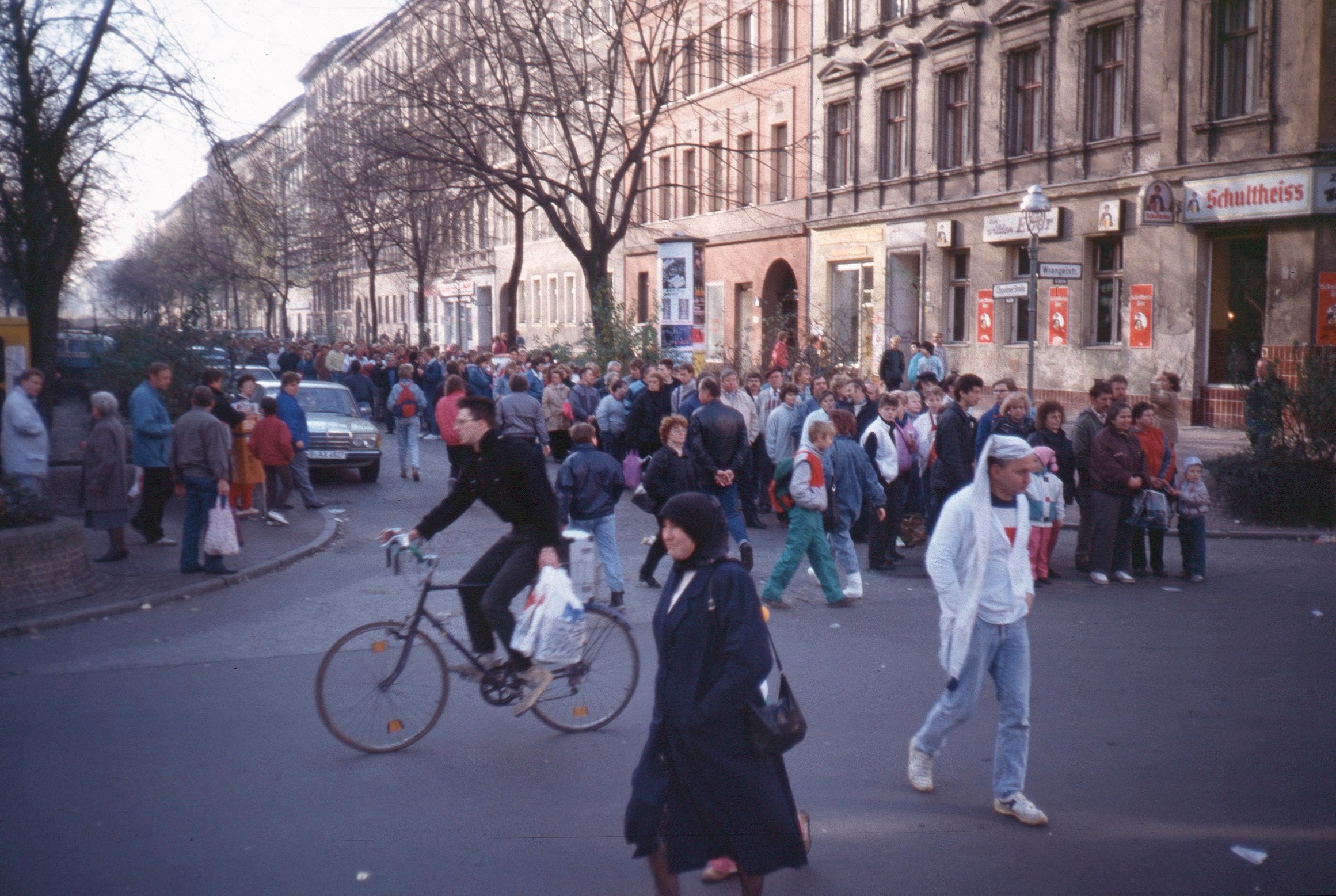
- Eastern Europe: The once-outlawed Solidarity movement under Lech Walesa won overwhelmingly in Poland, and Communist parties then fell in Hungary, Czechoslovakia, Bulgaria, and Romania. In late 1989, protesters tore down the Berlin Wall, and East Germany's Communists were forced out. In October 1990, the two Germanys, divided since 1945, reunited with the blessing of both NATO and the Soviet Union.
The Breakup of the Soviet Union
Nationalist demands for self-determination overwhelmed Gorbachev. In 1990, the Baltic republics of Estonia, Latvia, and Lithuania declared independence. After Communist hard-liners staged a failed coup against Gorbachev, the remaining republics dissolved the Soviet Union in December 1991, leaving Gorbachev a leader with no country. Boris Yeltsin, president of the Russian Republic, joined nine former Soviet republics in a loose confederation called the Commonwealth of Independent States (CIS), disbanded the Communist Party in Russia, and attempted to build a democracy and a free-market economy.
Proof the Cold War Was Over
Nuclear disarmament agreements made the end official:
- START I (1991): Bush and Gorbachev cut nuclear warheads to under 10,000 per side.
- START II (late 1992): Bush and Yeltsin reduced warheads to just over 3,000 each, with U.S. economic aid for Russia included.
Bush stayed cautious rather than declaring victory. Americans worried about civil wars in the former Soviet Union, Yugoslavia began disintegrating in 1991, and people at home asked whether the U.S. still needed heavy defense spending and bases around the world. That debate over how to use American power post-Cold War carries into AMSCO 9.6 on 21st-century challenges.
Aftermath in Europe and Russia
The transition out of communism was rocky almost everywhere.
- European Union: By 2002, the EU was a unified market of 15 nations, 12 sharing the euro. It grew to 27 nations by 2007, including 10 former Soviet satellites such as Poland, Bulgaria, and Romania.
- Russia: Yeltsin struggled with economic reform and rampant corruption. Vladimir Putin took office in 2000. U.S.-Russia relations were strained by Russia's brutal repression of the Chechnya civil war, NATO's 1999 admission of the Czech Republic, Hungary, and Poland, and Russia's support of Serbia in the Balkan wars.
- Former Yugoslavia: Serbian dictator Slobodan Milosevic violently suppressed independence movements in Slovenia, Croatia, Bosnia-Herzegovina, and Kosovo. Ethnic and religious rivalries (Catholic, Orthodox, Muslim) fueled "ethnic cleansing" that killed hundreds of thousands, including many Muslims. Diplomacy, bombing, and NATO troops (including U.S. forces) stopped the bloodshed in Bosnia in 1995 and Kosovo in 1999. These were Europe's bloodiest conflicts since World War II.
- Difficult times: Decades of stagnation under communism made prosperity and democracy slow to take root, leaving newly independent states vulnerable to corruption and autocratic rulers.
Key Terms to Know
| Term | Why it matters |
|---|---|
| Mikhail Gorbachev | Soviet leader from 1985 whose reforms and arms negotiations made ending the Cold War possible. |
| "Evil empire" | Reagan's label for the Soviet Union, capturing his hardline first-term rhetoric. |
| Strategic Defense Initiative (SDI) | Proposed laser-and-particle-beam missile shield, nicknamed "Star Wars," that critics said would escalate the arms race. |
| Sandinistas | Marxist movement that overthrew Nicaragua's dictator in 1979, prompting U.S. intervention. |
| Contras | Anti-Sandinista fighters the U.S. armed in Nicaragua until Congress cut them off. |
| Boland Amendment | 1985 law prohibiting further U.S. aid to the Contras, which the Iran-Contra scheme illegally violated. |
| Iran-Contra affair | Secret arms sales to Iran whose profits were illegally diverted to the Contras, the major scandal of Reagan's presidency. |
| Glasnost | Gorbachev's "openness" policy ending political repression in the USSR. |
| Perestroika | Gorbachev's "restructuring" of the Soviet economy with some free-market practices. |
| INF agreement | 1987 Reagan-Gorbachev deal to remove and destroy all intermediate-range missiles. |
| Tiananmen Square | Site of China's 1989 prodemocracy protest, crushed by government tanks. |
| Lech Walesa | Polish Solidarity union leader whose movement's electoral victory helped topple communism in Eastern Europe. |
| Berlin Wall | Cold War's most hated symbol, torn down by protesters in late 1989. |
| Boris Yeltsin | Russian Republic president who helped dissolve the USSR and pursued democracy and free markets. |
| Commonwealth of Independent States (CIS) | Loose confederation of former Soviet republics formed after the USSR dissolved in December 1991. |
| START I and START II | Treaties (1991, 1992) slashing U.S. and Russian nuclear warheads, tangible proof the Cold War ended. |
| European Union (EU) | Unified European market that expanded to absorb former Soviet satellites, with 12 nations adopting the euro. |
| "Ethnic cleansing" | Mass killing in the former Yugoslavia that NATO intervention stopped in Bosnia (1995) and Kosovo (1999). |
Practice and Next Steps
Pair these notes with the Topic 9.3 course study guide on the end of the Cold War for the College Board framing, then check the full set of AMSCO chapter notes to keep moving through Period 9. The next chapter, AMSCO 9.4 on the changing economy, shifts from foreign policy to globalization at home.
To check yourself, run guided multiple-choice practice on Period 9, or try writing a causation-focused response with FRQ practice and instant scoring. The "why did the Cold War end" debate is a natural LEQ or SAQ prompt, so practice arguing both the Reagan-pressure side and the Gorbachev-reform side.
Frequently Asked Questions
What does AMSCO Topic 9.3 The End of the Cold War cover?
AMSCO 9.3 covers Reagan's military buildup and interventions in Central America, the Iran-Contra affair, Gorbachev's glasnost and perestroika reforms, the Reagan-Gorbachev summits and INF agreement, the fall of the Berlin Wall in 1989, and the Soviet Union's dissolution in December 1991 under George H. W. Bush. It ends with the rocky aftermath in Russia, the EU's expansion, and the Balkan wars.
What were glasnost and perestroika?
They were Mikhail Gorbachev's two major reforms after he became Soviet leader in 1985. Glasnost means "openness" and ended political repression, giving Soviet citizens more political freedom. Perestroika means "restructuring" and introduced some free-market practices into the Soviet economy. To fund these reforms, Gorbachev needed to end the costly arms race, which is why he negotiated with Reagan.
Did Reagan win the Cold War by himself?
No, and historians actively debate the causes, which makes this great LEQ material. Some emphasize Reagan's military buildup forcing the Soviets to concede; others credit Gorbachev's reform agenda, his willingness to negotiate arms reductions, Eastern European resisters like Lech Walesa and Pope John Paul II, and decades of containment policy shaped by George Kennan. The strongest APUSH answers weigh multiple causes rather than crediting one person.
What was the Iran-Contra affair and why was it illegal?
Reagan aides secretly sold U.S. missiles to Iran in exchange for help freeing American hostages in Lebanon, then in 1986 diverted the profits to fund the Contras fighting Nicaragua's Sandinista government. The diversion violated the Boland Amendment, which banned aid to the Contras, and Congress's budget authority. Reagan denied knowing about it, and televised hearings portrayed him as a hands-off president manipulated by advisers.
How does the end of the Cold War show up on the APUSH exam?
Topic 9.3 is built for causation questions: explaining the causes and effects of the Cold War's end and its legacy, like new debates over American power, the Persian Gulf War, and interventions in the Balkans. Expect SAQ or LEQ prompts asking you to weigh Reagan's buildup against Gorbachev's reforms. You can practice writing causation arguments with FRQ practice and instant scoring.
See Fiveable more often in Google
Mark Fiveable as a preferred source and Google is more likely to show you our guides in Top Stories, with a "preferred" badge in AI Mode and AI Overviews.