AMSCO 3.10 Shaping a New Republic

🇺🇸AP US History Review
AMSCO 3.10 Shaping a New Republic
🇺🇸 AP US History
AMSCO 1.2:Native American Societies Before European Contact Notes
AMSCO 2.1 Context: European Colonization of North America Notes
AMSCO 2.2 European Colonization Notes
AMSCO 2.3 The Regions of the British Colonies Notes
AMSCO 2.4 Transatlantic Trade Notes
AMSCO 2.5 Interactions between American Indians and Europeans Notes
AMSCO 2.6 Slavery in the British Colonies Notes
AMSCO 2.7 Colonial Society and Culture Notes
AMSCO 2.8 Comparison in Period 2 (1607-1754) Notes
AMSCO 3.1 Contextualizing Period 3
AMSCO 3.2 The Seven Year's War
AMSCO 3.3 Taxation Without Representation
AMSCO 3.4 Philosophical Foundations of the American Revolution
AMSCO 3.5 The American Revolution
AMSCO 3.6 The Influence of Revolutionary Ideals
AMSCO 3.7 The Articles of Confederation
AMSCO 3.8 The Constitutional Convention and Debates Over Ratification
AMSCO 3.9 The Constitution
AMSCO 3.10 Shaping a New Republic
AMSCO 3.11 Developing an American Identity
AMSCO 3.12 Movements in the Early Republic
AMSCO 3.13 Continuity and Change in Period 3
AMSCO 4.1 Contextualizing Period 4
AMSCO 4.2 The Rise of Political Parties and the Era of Jefferson
AMSCO 4.3 Politics and Regional Interests
AMSCO 4.4 America on the World Stage
AMSCO 4.5 Market Revolution
AMSCO 4.6 Effects of the Market Revolution on Society and Culture
AMSCO 4.7 Expanding Democracy
AMSCO 4.8 Jackson and Federal Power
AMSCO 4.9 The Development of an American Culture
AMSCO 4.10 The Second Great Awakening
AMSCO 4.11 An Age of Reform
AMSCO 4.12 African Americans in the Early Republic
AMSCO 4.13 Southern Society in the Early Republic
AMSCO 4.14 Causation in Period 4
AMSCO 5.1 Contextualizing Period 5
AMSCO 5.2 The Idea of Manfiest Destiny
AMSCO 5.3 Manifest Destiny and the Mexican-American War
AMSCO 5.4 The Compromise of 1850
AMSCO 5.5 Sectional Conflict: Regional Differences
AMSCO 5.6 Failure of Compromise
AMSCO 5.7 Election of 1860 and Secession
AMSCO 5.8 Military Conflict in the Civil War
AMSCO 5.9 Government Policies During the Civil War
AMSCO 5.10 Reconstruction
AMSCO 5.11 Failure of Reconstruction
AMSCO 5.12 Comparion in Period 5
AMSCO 6.1 Contextualizing Period 6
AMSCO 6.2 Westward Expansion: Economic Development
AMSCO 6.3 Westward Expansion: Social and Cultural Development
AMSCO 6.4 The "New South"
AMSCO 6.5 Technological Innovation
AMSCO 6.6 The Rise of Industrial Capitalism
AMSCO 6.7 Labor in the Gilded Age
AMSCO 6.8 Immigration and Migration in the Gilded Age
AMSCO 6.9 Responses to Immigration in the Gilded Age
AMSCO 6.10 Development of the Middle Class
AMSCO 6.11 Reform in the Gilded Age
AMSCO 6.12 Role of Government in the Gilded Age
AMSCO 6.13 Politics in the Gilded Age
AMSCO 6.14 Continuity and Change Period 6
AMSCO 7.1 Contextualizing Period 7
AMSCO 7.2 Imperialism: Debates
AMSCO 7.3 The Spanish-American War and U.S. Foreign Policy to 1917
AMSCO 7.4 The Progressives
AMSCO 7.5 World War I: Military and Diplomacy
AMSCO 7.6 World War I: Home Front
AMSCO 7.7 1920s: Innovations in Communication and Technology
AMSCO 7.8 1920s: Cultural and Political Controversies
AMSCO 7.9 The Great Depression
AMSCO 7.10 The New Deal
AMSCO 7.11 Inerwar Foreign Policy
AMSCO 7.12 World War II Mobilization
AMSCO 7.13 World War II Military
AMSCO 7.14 World War II and Postwar Diplomacy
AMSCO 7.15 Comparison in Period 7
AMSCO 8.1 Contextualizing Period 8
AMSCO 8.2 The Cold War from 1945 to 1980
AMSCO 8.3 The Red Scare
AMSCO 8.4 Economy after 1945
AMSCO 8.5 Culture after 1945
AMSCO 8.6 Early Steps in the Civil Rights Movement, 1945-1960
AMSCO 8.7 America as a World Power
AMSCO 8.8 The Vietnam War
AMSCO 8.9 The Great Society
AMSCO 8.10 The African American Civil Rights Movement in the 1960s
AMSCO 8.11 The Civil Rights Movement Expands
AMSCO 8.12 Youth Culture of the 1960s
AMSCO 8.13 The Environment and Natural Resources from 1968 to 1980
AMSCO 8.14 Society in Transition
AMSCO 8.15 Continuity and Change in Period 8
AMSCO 9.1 Contextualizing Period 9
AMSCO 9.2 Reagan and Conservatism
AMSCO 9.3 The End of the Cold War
AMSCO 9.4 A Changing Economy
AMSCO 9.5 Migration and Immgiration in the 1990s and 2000s
AMSCO 9.6 Challenges of the 21st Century
AMSCO 9.7 Causation in Period 9
AMSCO 1.1 Contextualizing Period 1 Notes
AMSCO 1.3 European Exploration in the Americas Notes
AMSCO 1.4 Columbian Exchange, Spanish Exploration, and Conquest Notes
AMSCO 1.5 Labor, Slavery, and Caste in the Spanish Colonial System Notes
AMSCO 1.6 Cultural Interactions in the Americas Notes
AMSCO 1.7 Causation in Period 1 Notes
Overview
AMSCO Topic 3.10, "Shaping a New Republic," covers the presidencies of George Washington (1789-1797) and John Adams (1797-1801), when the new United States had to prove the Constitution could actually work. The chapter walks through Hamilton's financial program, the foreign policy crises sparked by the French Revolution, conflicts with American Indians on the western frontier, the rise of the first political parties, and the Alien and Sedition Acts. This is the payoff topic of Period 3 (1754-1800): everything from the Constitution gets tested in real life here.
Big picture for the AP exam: this chapter answers two questions. How did competition (with Britain, Spain, France, and American Indian nations) intensify conflict? And why did political parties form even though the framers assumed they never would?
Key Takeaways
- Washington set a precedent by meeting regularly with his cabinet, while the Judiciary Act of 1789 created district and circuit courts.
- Hamilton's financial plan called for paying and assuming debts, raising tariffs, and creating a national bank, with each proposal sparking political debate.
- Washington kept the U.S. out of Europe's wars; Jay Treaty secured British withdrawal from frontier posts, and Pinckney Treaty opened the lower Mississippi and New Orleans to American trade.
- After Anthony Wayne defeated the Northwest Confederacy, the Treaty of Greenville opened the Ohio Territory to settlement; Washington's response to the Whiskey Rebellion showed the federal government could enforce its laws.
- Hamilton's Federalists favored a strong central government, while Jefferson's Democratic-Republicans favored states' rights; Washington warned against parties, sectionalism, and permanent alliances.
- Adams avoided war after the XYZ Affair, but Federalists passed the Alien and Sedition Acts against immigrants and critics; Jefferson and Madison responded with resolutions arguing that states could nullify federal laws.
Washington's Presidency and Organizing the Government
Washington was the unanimous choice of the Electoral College and took the oath of office on April 30, 1789, in New York City (the temporary capital). Almost everything he did set a precedent, because the Constitution left the details of governing vague.
The First Cabinet
Washington appointed four department heads, confirmed by the Senate, and met with them regularly as a cabinet of advisers (a practice presidents still follow):
- Thomas Jefferson, secretary of state
- Alexander Hamilton, secretary of the treasury
- Henry Knox, secretary of war
- Edmund Randolph, attorney general
Notice Jefferson and Hamilton in the same room. Their clashes inside this cabinet basically created the two-party system.
The Judiciary Act of 1789
The Constitution only mentions one federal court, the Supreme Court. Congress filled in the rest with the Judiciary Act of 1789, which:
- Set the Supreme Court at one chief justice and five associate justices
- Empowered the Court to rule on the constitutionality of state court decisions
- Created 13 district courts and three circuit courts of appeals
Hamilton's Financial Program
Hamilton's plan to stabilize U.S. finances had three parts, and each one became a political fight:
- Pay the national debt at face value and have the federal government assume state war debts
- High tariffs on imports to protect "infant" American industries and raise revenue
- A national bank to hold government funds and print banknotes for a stable currency
Northern merchants loved it (tariffs and stable currency helped them directly). Jefferson and southern Anti-Federalists hated it, arguing it enriched the wealthy at the expense of indebted farmers. Congress passed the plan in modified form, with tariffs lower than Hamilton wanted.
The Compromise of 1790 (Debt for a Capital)
Jefferson agreed to support full debt payment and assumption of state debts. In exchange, Hamilton agreed to put the nation's capital in the South, along the Potomac River. That site later became Washington, D.C.
The Bank Fight: Strict vs. Loose Interpretation
This is the constitutional debate the AP exam loves:
- Jefferson (strict interpretation): the Constitution never gives Congress the power to create a bank, so it can't.
- Hamilton (loose interpretation): the "necessary and proper" clause lets Congress do whatever it needs to carry out its enumerated powers.
Washington sided with Hamilton, and the Bank of the United States became law. It was chartered by the federal government but privately owned, with the government as a major shareholder.
Foreign Affairs: Staying Out of Europe's Wars
The French Revolution broke out during Washington's first term and triggered wars between revolutionary France and Europe's monarchies. The central foreign policy question for both Washington and Adams: back France, back Britain, or stay out?
Proclamation of Neutrality (1793)
Americans were torn. Many supported France's republican experiment; many were horrified by the mass executions. The old U.S.-French alliance technically still existed, but it had been made with the French monarchy. Jefferson's faction wanted to side with France, especially since Britain was seizing American merchant ships bound for French ports.
Washington decided the young nation was too weak for a European war and issued the Proclamation of Neutrality in 1793. Jefferson resigned from the cabinet in protest.
"Citizen" Genêt: the French minister to the U.S. appealed directly to the American people to support France, ignoring diplomatic norms so badly that even Jefferson backed Washington's request for his recall. Genêt stayed in the U.S. anyway, married, and became a citizen.
Jay Treaty (1794) with Britain
Washington sent Chief Justice John Jay to negotiate over British posts on the western frontier and Britain's seizure of American ships and impressment of sailors. The result: Britain agreed to evacuate its frontier posts, but the treaty said nothing about impressment. It was unpopular, angered pro-French Americans, and barely passed the Senate. But it kept the peace and preserved neutrality.
Pinckney Treaty (1795) with Spain
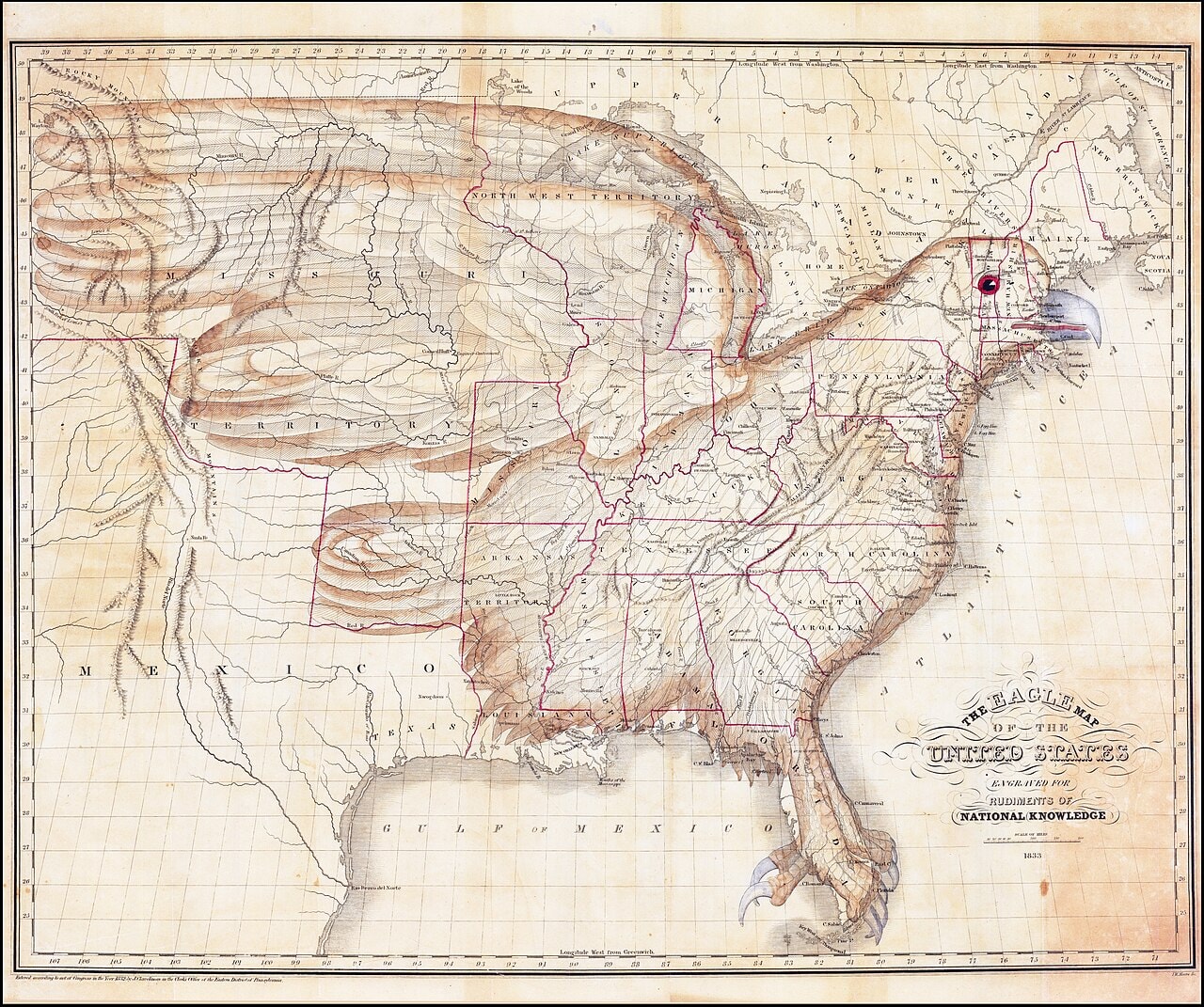
The Jay Treaty had an unexpected bonus. Spain, worried the U.S. was cozying up to Britain, negotiated with Thomas Pinckney and agreed to:
- Open the lower Mississippi River and New Orleans to American trade
- Grant Americans the right of deposit in New Orleans (transfer cargo without paying Spanish duties)
- Accept the 31st parallel as Florida's northern boundary
For western farmers who shipped crops down the Mississippi, this was huge.
Domestic Crises: The Frontier and the Whiskey Rebellion
American Indian Resistance in the Ohio Valley
As settlers pushed across the Alleghenies into the Ohio Valley, the Shawnee, Delaware, Iroquois, and other tribes formed the Northwest (Western) Confederacy under the Miami war chief Little Turtle. They won early victories over settler militias, and reports that the British were arming them enraged Americans.
In 1794, General Anthony Wayne defeated the Confederacy at the Battle of Fallen Timbers in northwestern Ohio. In the 1795 Treaty of Greenville, the defeated tribes surrendered their claims to the Ohio Territory and opened it to settlement.
The Whiskey Rebellion (1794)
To replace revenue lost from the lower tariffs, Hamilton got Congress to pass excise taxes, including one on whiskey. Western Pennsylvania farmers who distilled whiskey from surplus corn refused to pay and attacked revenue collectors.
Washington federalized 15,000 state militia under Hamilton's command, and the rebellion collapsed with almost no bloodshed. The contrast with Shays's Rebellion under the Articles of Confederation is the point: the new government could actually enforce its laws. Westerners resented the show of force, though, and Jefferson's popularity as their champion grew.
Western Lands and New States
The Jay Treaty and Fallen Timbers gave the federal government control of vast western lands. The Public Land Act (1796) set orderly procedures for dividing and selling federal land at moderate prices. New states entered smoothly: Vermont (1791), Kentucky (1792), and Tennessee (1796).
The First Political Parties
The Constitution never mentions political parties, and the framers assumed none would form. They were wrong within a few years. The Federalist vs. Anti-Federalist ratification debates previewed the split, and in the 1790s (the "Federalist era") parties organized around Hamilton and Jefferson. The French Revolution hardened the divide.
| Federalists | Democratic-Republicans | |
|---|---|---|
| Leaders | John Adams, Alexander Hamilton | Thomas Jefferson, James Madison |
| Constitution | Loose interpretation, strong central government | Strict interpretation, weak central government |
| Foreign policy | Pro-British | Pro-French |
| Military | Large peacetime army and navy | Small peacetime army and navy |
| Economy | Aid business, national bank, high tariffs | Favor agriculture, oppose the bank and high tariffs |
| Supporters | Northern business owners, large landowners (strongest in the Northeast) | Skilled workers, small farmers, plantation owners (strongest in the South and West) |
Washington's Farewell Address (1796)
Retiring after two terms, Washington (with Hamilton's help) published a farewell message warning against:
- Involvement in European affairs
- "Permanent alliances" in foreign policy
- Political parties
- Sectionalism
Presidents mostly followed the foreign policy warnings for the next century. The party warning was already obsolete when he gave it. His voluntary retirement also created the two-term tradition, unbroken until Franklin Roosevelt won a third term in 1940, after which the 22nd Amendment (ratified 1951) made the two-term limit constitutional.
John Adams' Presidency
In the election of 1796, Federalist John Adams beat Democratic-Republican Thomas Jefferson by three electoral votes. Under the original Constitution, the runner-up became vice president, so Adams got his rival Jefferson as VP. (The 12th Amendment, ratified in 1804, fixed this by having president and vice president run as a team.)
The XYZ Affair
French warships and privateers were seizing U.S. merchant ships. Adams sent a delegation to Paris, where French ministers (identified only as X, Y, and Z) demanded bribes before negotiations could begin. The Americans refused, and when the story broke, the public clamored for war: "Millions for defense, but not one cent for tribute." Hamilton's faction wanted war to grab French and Spanish lands in North America. Adams, knowing the army and navy were too weak to fight a major power, resisted and sent new ministers to Paris instead. War avoided.
The Alien and Sedition Acts
Anti-French anger gave the Federalists a majority in both houses of Congress in 1798, and they used it against the Democratic-Republicans:
- Naturalization Act: raised the citizenship wait from 5 to 14 years (most immigrants voted Democratic-Republican)
- Alien Acts: let the president deport "dangerous" aliens and detain enemy aliens in wartime
- Sedition Act: made it illegal for newspaper editors to criticize the president or Congress, with fines or imprisonment for violators
The Kentucky and Virginia Resolutions (1798)
Democratic-Republicans argued the acts violated 1st Amendment rights, but the Supreme Court hadn't yet established judicial review (the power to strike down unconstitutional laws). So they fought through the states. Jefferson wrote the Kentucky resolution; Madison wrote Virginia's. Both argued the states had formed a "compact," so a state could nullify a federal law that broke it. Only those two states adopted resolutions, but the compact theory resurfaced in the nullification controversy of the 1830s.
The crisis faded after the Federalists lost Congress in the election of 1800. The new Democratic-Republican majority let the acts expire or repealed them, and in 1803 the Marshall Court asserted the power of judicial review.
Key Terms to Know
| Term | Why it matters |
|---|---|
| Cabinet | Washington's regular meetings with his four department heads set a precedent every president has followed. |
| Judiciary Act (1789) | Created the federal court structure: a six-justice Supreme Court, 13 district courts, and three circuit courts of appeals. |
| National bank | Centerpiece of Hamilton's plan and the spark for the strict vs. loose interpretation debate. |
| National debt | Hamilton insisted on paying it at face value and assuming state war debts to establish U.S. credit. |
| Proclamation of Neutrality (1793) | Washington's decision to keep the weak young nation out of the war between France and Britain. |
| "Citizen" Genêt | French minister whose appeals directly to the American public got him recalled. |
| Jay Treaty (1794) | Got Britain out of frontier posts but ignored impressment; unpopular but preserved peace. |
| Pinckney Treaty (1795) | Spain opened the Mississippi and New Orleans to American trade and accepted the 31st parallel Florida boundary. |
| Right of deposit | Let Americans transfer cargo in New Orleans without paying Spanish duties, vital for western farmers. |
| Battle of Fallen Timbers | Anthony Wayne's 1794 defeat of Little Turtle's Northwest Confederacy. |
| Treaty of Greenville | The 1795 treaty in which defeated tribes gave up claims to the Ohio Territory. |
| Public Land Act (1796) | Set orderly, affordable procedures for selling federal western lands. |
| Federalist Party | Hamilton's party: loose interpretation, strong central government, pro-British, pro-business. |
| Democratic-Republican Party | Jefferson and Madison's party: strict interpretation, states' rights, pro-French, pro-agriculture. |
| Washington's Farewell Address | Warned against permanent alliances, political parties, and sectionalism; shaped foreign policy for a century. |
| XYZ Affair | French bribe demands that nearly pushed the U.S. into war; Adams chose peace instead. |
| Alien and Sedition Acts | Federalist laws targeting immigrants and silencing Democratic-Republican newspaper critics. |
| Kentucky and Virginia Resolutions | Jefferson and Madison's compact-theory argument that states could nullify federal laws. |
Practice and Next Steps
Pair these notes with the Topic 3.10 Shaping a New Republic course study guide for the College Board framing, then continue to AMSCO 3.11 Developing an American Identity. You can find the rest of the chapter notes on the APUSH AMSCO notes page.
To check yourself, run through APUSH guided practice questions on the 1790s, look up unfamiliar vocab in the key terms glossary, and try an essay on the rise of political parties with FRQ practice and instant scoring. The Hamilton vs. Jefferson divide is one of the most-tested comparisons in Unit 3, so make sure that table is solid before moving on.
Frequently Asked Questions
What does AMSCO Topic 3.10 Shaping a New Republic cover?
AMSCO 3.10 covers the Washington and Adams presidencies (1789-1801): organizing the federal government and cabinet, Hamilton's financial program, neutrality during the French Revolution, the Jay and Pinckney Treaties, the Whiskey Rebellion, the rise of the Federalist and Democratic-Republican parties, the XYZ Affair, and the Alien and Sedition Acts. It pairs with the Topic 3.10 course study guide.
What were the three parts of Hamilton's financial plan?
Hamilton proposed (1) paying the national debt at face value and assuming state war debts, (2) high tariffs to protect infant industries and raise revenue, and (3) a national bank to hold government funds and create a stable currency. Congress passed it in modified form with lower tariffs, after Jefferson traded his support on the debt for a southern capital on the Potomac.
What is the difference between the Federalists and Democratic-Republicans?
Federalists (Hamilton, Adams) wanted a loose interpretation of the Constitution, a strong central government, a national bank, high tariffs, and pro-British foreign policy, drawing support from northern business owners. Democratic-Republicans (Jefferson, Madison) wanted strict interpretation, states' rights, an agricultural economy, and pro-French policy, drawing support from small farmers, skilled workers, and southern plantation owners.
Did the XYZ Affair lead to war with France?
No. After French ministers (X, Y, and Z) demanded bribes from American negotiators, the public demanded war and Hamilton's faction hoped to seize French and Spanish lands. But Adams knew the U.S. Army and Navy couldn't fight a major power, so he resisted the war fever and sent new ministers to Paris instead. Avoiding war is considered one of Adams' defining decisions.
Why are the Kentucky and Virginia Resolutions important for the APUSH exam?
Written by Jefferson and Madison in 1798 to oppose the Alien and Sedition Acts, the resolutions argued the states formed a 'compact' and could nullify federal laws that broke it. That compact theory matters beyond Unit 3 because it became the rationale for the nullification controversy of the 1830s, making it a strong continuity-and-change example on essays.
What did Washington warn against in his Farewell Address?
In his 1796 Farewell Address, Washington warned against involvement in European affairs, permanent foreign alliances, political parties, and sectionalism. The foreign policy warnings shaped U.S. diplomacy for about a century, but the party warning was already outdated since the Federalists and Democratic-Republicans had formed by 1796.
See Fiveable more often in Google
Mark Fiveable as a preferred source and Google is more likely to show you our guides in Top Stories, with a "preferred" badge in AI Mode and AI Overviews.