AMSCO 7.13 World War II Military

🇺🇸AP US History Review
AMSCO 7.13 World War II Military
🇺🇸 AP US History
AMSCO 1.2:Native American Societies Before European Contact Notes
AMSCO 2.1 Context: European Colonization of North America Notes
AMSCO 2.2 European Colonization Notes
AMSCO 2.3 The Regions of the British Colonies Notes
AMSCO 2.4 Transatlantic Trade Notes
AMSCO 2.5 Interactions between American Indians and Europeans Notes
AMSCO 2.6 Slavery in the British Colonies Notes
AMSCO 2.7 Colonial Society and Culture Notes
AMSCO 2.8 Comparison in Period 2 (1607-1754) Notes
AMSCO 3.1 Contextualizing Period 3
AMSCO 3.2 The Seven Year's War
AMSCO 3.3 Taxation Without Representation
AMSCO 3.4 Philosophical Foundations of the American Revolution
AMSCO 3.5 The American Revolution
AMSCO 3.6 The Influence of Revolutionary Ideals
AMSCO 3.7 The Articles of Confederation
AMSCO 3.8 The Constitutional Convention and Debates Over Ratification
AMSCO 3.9 The Constitution
AMSCO 3.10 Shaping a New Republic
AMSCO 3.11 Developing an American Identity
AMSCO 3.12 Movements in the Early Republic
AMSCO 3.13 Continuity and Change in Period 3
AMSCO 4.1 Contextualizing Period 4
AMSCO 4.2 The Rise of Political Parties and the Era of Jefferson
AMSCO 4.3 Politics and Regional Interests
AMSCO 4.4 America on the World Stage
AMSCO 4.5 Market Revolution
AMSCO 4.6 Effects of the Market Revolution on Society and Culture
AMSCO 4.7 Expanding Democracy
AMSCO 4.8 Jackson and Federal Power
AMSCO 4.9 The Development of an American Culture
AMSCO 4.10 The Second Great Awakening
AMSCO 4.11 An Age of Reform
AMSCO 4.12 African Americans in the Early Republic
AMSCO 4.13 Southern Society in the Early Republic
AMSCO 4.14 Causation in Period 4
AMSCO 5.1 Contextualizing Period 5
AMSCO 5.2 The Idea of Manfiest Destiny
AMSCO 5.3 Manifest Destiny and the Mexican-American War
AMSCO 5.4 The Compromise of 1850
AMSCO 5.5 Sectional Conflict: Regional Differences
AMSCO 5.6 Failure of Compromise
AMSCO 5.7 Election of 1860 and Secession
AMSCO 5.8 Military Conflict in the Civil War
AMSCO 5.9 Government Policies During the Civil War
AMSCO 5.10 Reconstruction
AMSCO 5.11 Failure of Reconstruction
AMSCO 5.12 Comparion in Period 5
AMSCO 6.1 Contextualizing Period 6
AMSCO 6.2 Westward Expansion: Economic Development
AMSCO 6.3 Westward Expansion: Social and Cultural Development
AMSCO 6.4 The "New South"
AMSCO 6.5 Technological Innovation
AMSCO 6.6 The Rise of Industrial Capitalism
AMSCO 6.7 Labor in the Gilded Age
AMSCO 6.8 Immigration and Migration in the Gilded Age
AMSCO 6.9 Responses to Immigration in the Gilded Age
AMSCO 6.10 Development of the Middle Class
AMSCO 6.11 Reform in the Gilded Age
AMSCO 6.12 Role of Government in the Gilded Age
AMSCO 6.13 Politics in the Gilded Age
AMSCO 6.14 Continuity and Change Period 6
AMSCO 7.1 Contextualizing Period 7
AMSCO 7.2 Imperialism: Debates
AMSCO 7.3 The Spanish-American War and U.S. Foreign Policy to 1917
AMSCO 7.4 The Progressives
AMSCO 7.5 World War I: Military and Diplomacy
AMSCO 7.6 World War I: Home Front
AMSCO 7.7 1920s: Innovations in Communication and Technology
AMSCO 7.8 1920s: Cultural and Political Controversies
AMSCO 7.9 The Great Depression
AMSCO 7.10 The New Deal
AMSCO 7.11 Inerwar Foreign Policy
AMSCO 7.12 World War II Mobilization
AMSCO 7.13 World War II Military
AMSCO 7.14 World War II and Postwar Diplomacy
AMSCO 7.15 Comparison in Period 7
AMSCO 8.1 Contextualizing Period 8
AMSCO 8.2 The Cold War from 1945 to 1980
AMSCO 8.3 The Red Scare
AMSCO 8.4 Economy after 1945
AMSCO 8.5 Culture after 1945
AMSCO 8.6 Early Steps in the Civil Rights Movement, 1945-1960
AMSCO 8.7 America as a World Power
AMSCO 8.8 The Vietnam War
AMSCO 8.9 The Great Society
AMSCO 8.10 The African American Civil Rights Movement in the 1960s
AMSCO 8.11 The Civil Rights Movement Expands
AMSCO 8.12 Youth Culture of the 1960s
AMSCO 8.13 The Environment and Natural Resources from 1968 to 1980
AMSCO 8.14 Society in Transition
AMSCO 8.15 Continuity and Change in Period 8
AMSCO 9.1 Contextualizing Period 9
AMSCO 9.2 Reagan and Conservatism
AMSCO 9.3 The End of the Cold War
AMSCO 9.4 A Changing Economy
AMSCO 9.5 Migration and Immgiration in the 1990s and 2000s
AMSCO 9.6 Challenges of the 21st Century
AMSCO 9.7 Causation in Period 9
AMSCO 1.1 Contextualizing Period 1 Notes
AMSCO 1.3 European Exploration in the Americas Notes
AMSCO 1.4 Columbian Exchange, Spanish Exploration, and Conquest Notes
AMSCO 1.5 Labor, Slavery, and Caste in the Spanish Colonial System Notes
AMSCO 1.6 Cultural Interactions in the Americas Notes
AMSCO 1.7 Causation in Period 1 Notes
Overview
AMSCO Topic 7.13, "World War II: Military," covers how the United States and its allies defeated the Axis powers on two fronts: Europe (with Britain and the Soviet Union against Germany) and the Pacific (where the U.S. did most of the fighting against Japan). The chapter runs from the turning points of 1942 through D-Day, the discovery of the Holocaust, island hopping, and the atomic bombings of Hiroshima and Nagasaki. It sits at the end of Period 7 (1890-1945), and the big skill here is explaining causes and effects: why the Allies won (cooperation, technology, and major campaigns) and what the war's end set in motion.
The chapter opens with J. Robert Oppenheimer's famous reaction to the first atomic test: "Now I am become Death, the destroyer of worlds." That quote signals where this story ends, so keep the moral questions about total war in mind as you read.
Fighting Germany: The European Theater
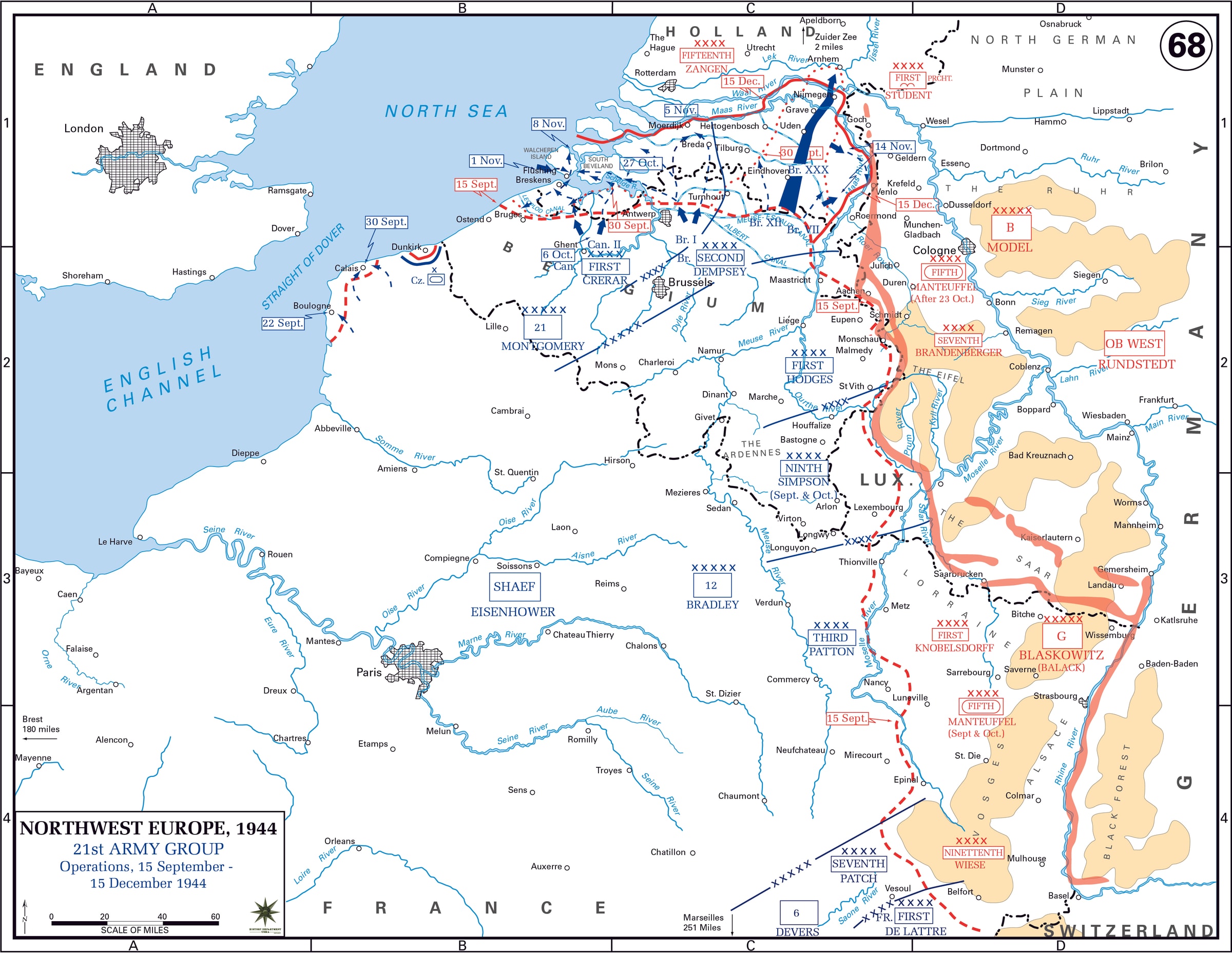
The German advance peaked in 1942 and then began rolling back, partly because the U.S. entered the war, but mainly because of the Soviet victory at Stalingrad in the winter of 1942. From there, the Allies squeezed Germany from the south, west, and east.
The Battle of the Atlantic and Strategic Bombing
In 1942, the British and Americans coordinated around two goals: stop German submarines in the Atlantic and start bombing German cities.
- The Battle of the Atlantic was the long naval fight to control shipping lanes. German U-boats sank over 500 Allied ships in 1942 alone.
- The Allies gradually contained the submarine threat with radar, sonar, and bombing of German naval bases.
- U.S. bombers flew daylight "strategic bombing" raids aimed at military targets, while Germany and Britain bombed each other's population centers. As the war went on, the line between military and civilian targets blurred, especially once the U.S. began firebombing Japanese cities.
From North Africa to Italy
The Allies first had to push German forces out of North Africa and the Mediterranean before attacking Europe itself.
- Operation Torch, the North Africa campaign, began in November 1942. Led by U.S. General Dwight Eisenhower and British General Bernard Montgomery, the Allies took North Africa from the Germans by May 1943.
- Next came Sicily, occupied in summer 1943 as a stepping stone to Italy. Mussolini fell from power that summer, but Hitler's forces rescued him and gave him nominal control of northern Italy.
- The Allies invaded the Italian peninsula in September 1943, but German troops resisted fiercely and held much of northern Italy until the final surrender in May 1945.
D-Day and the Push Toward Berlin
D-Day, June 6, 1944, was the largest invasion by sea in history. British, Canadian, and U.S. forces under Eisenhower's command secured beachheads on the Normandy coast of France.
- After the bloody but successful landing, the Allies moved fast. Paris was liberated by the end of August 1944.
- By September, Allied troops had crossed the German border for the final push toward Berlin.
- Germany launched a desperate counterattack in Belgium in December 1944, the Battle of the Bulge. It was a setback, but Americans reorganized and resumed the advance.
German Surrender and the Holocaust
Allied bombing since 1942 had worn down Germany's industrial capacity. With the Russian army closing in on Berlin, Hitler committed suicide on April 30, 1945, and the Nazi armies surrendered unconditionally on May 7.
As U.S. troops advanced through Germany, they came upon Nazi concentration camps and saw the full horror of the Holocaust: 6 million Jewish civilians and several million non-Jews systematically murdered by Nazi Germany. These revelations reinforced the American view of the war as a fight for the survival of freedom and democracy against fascist ideology.
Fighting Japan: The Pacific Theater
In Europe, Britain, the Soviet Union, and the U.S. shared the burden of defeating Germany, but in the Pacific the fight against Japan was largely a U.S. effort. After Pearl Harbor, Japan seized much of East and Southeast Asia. By early 1942, Japanese troops held Korea, eastern China, the Philippines, the Dutch East Indies (Indonesia), British Burma and Malaya, French Indochina (Vietnam, Cambodia, and Laos), and most Pacific islands west of Midway.
Midway: The Turning Point of 1942
The Battle of Midway (June 4-7, 1942) ended Japanese expansion. The Pacific war was dominated by naval forces fighting over a vast area, and the U.S. had a decisive edge: intercepting and decoding Japanese messages. That intelligence let U.S. forces destroy four Japanese carriers and 300 planes.
Island Hopping
After Midway, the U.S. needed to get within striking distance of Japan's home islands. The strategy was island hopping: seize strategic locations, bypass strongly held Japanese posts, and isolate them with naval and air power. Step by step, Allied forces moved toward Japan.
Leyte Gulf and Okinawa
Two battles stand out as the war closed in on Japan.
- Early in 1942, Japan had conquered the Philippines and driven out General Douglas MacArthur, commander of army units in the Southern Pacific, who vowed "I shall return." The Battle of Leyte Gulf (October 1944), the largest naval battle in history, virtually destroyed the Japanese navy and prepared the way for U.S. reoccupation of the Philippines. It also saw Japan's first use of kamikaze pilots, who made suicide attacks on U.S. ships.
- The Battle of Okinawa (April to June 1945) was colossal. Kamikazes inflicted major damage, and before taking this island near Japan, U.S. forces suffered 50,000 casualties and killed 100,000 Japanese. Those numbers shaped expectations for an invasion of Japan itself.
The Manhattan Project and the Atomic Bombs
After Okinawa, an invasion force stood ready to attack Japan, with extremely heavy casualties feared. But the U.S. had developed a new weapon. The top-secret Manhattan Project, run by General Leslie Groves, employed over 100,000 people and spent $2 billion to build a bomb powered by splitting the atom. J. Robert Oppenheimer, director of the Los Alamos Laboratory in New Mexico, successfully tested the first atomic bomb on July 16, 1945.
President Harry Truman (new to the job after FDR's death) and the Allies demanded Japan surrender unconditionally or face "utter destruction." When Japan's reply was unsatisfactory, Truman decided to use the weapon:
- August 6, 1945: atomic bomb dropped on Hiroshima.
- August 9, 1945: second bomb dropped on Nagasaki.
- About 250,000 Japanese died, either immediately or after prolonged suffering.
War and Morality
The atomic bombs sparked debates about the morality of targeting civilians, but the question wasn't new. Germany's submarine attacks on passenger ships raised it in World War I. In World War II, Germany and Britain bombed each other's cities on the theory it would force the other side to sue for peace. Postwar research found it didn't work; industrial output often went up because bombing urban centers freed workers from commercial jobs to staff hidden war plants.
Some argued that in modern industrialized societies, civilians were part of the war effort and therefore legitimate targets. The U.S. started with "strategic bombing" of only military targets but crossed the line with the firebombing of Japanese cities, which killed thousands of civilians. Nuclear weapons raised the stakes further: large-scale nuclear warfare could end most human life on Earth. This is a classic APUSH debate prompt, so know both the casualty-avoidance argument for the bombs and the civilian-targeting critique.
Japan Surrenders
Within a week of the Nagasaki bomb, Japan agreed to surrender, on the condition that the emperor could remain as a titular (powerless) head of state. General MacArthur received Japan's formal surrender on September 2, 1945, aboard the battleship USS Missouri in Tokyo's harbor. The diplomacy ending the war set the stage for efforts to build a more lasting peace, which carries you into the Cold War.
Key Terms to Know
| Term | Why it matters |
|---|---|
| Battle of the Atlantic | The long naval war over shipping lanes; German U-boats sank 500+ Allied ships in 1942 before radar, sonar, and base bombing contained them. |
| "Strategic bombing" | Daylight U.S. raids aimed at military targets, a contrast with attacks on cities that increasingly blurred the military-civilian line. |
| Dwight Eisenhower | U.S. general who led Operation Torch in North Africa and commanded the D-Day invasion. |
| D-Day | June 6, 1944, the largest seaborne invasion in history, landing Allied forces at Normandy to liberate France. |
| Battle of the Bulge | Germany's last desperate counterattack in Belgium, December 1944; the Allies recovered and pushed on to Berlin. |
| Holocaust | Nazi Germany's systematic murder of 6 million Jews and several million others, discovered by advancing U.S. troops. |
| Battle of Midway | June 4-7, 1942 naval battle where codebreaking helped the U.S. destroy four Japanese carriers, ending Japanese expansion. |
| Island hopping | U.S. Pacific strategy of seizing key islands while bypassing and isolating strong Japanese positions. |
| Douglas MacArthur | Army commander in the Southern Pacific who vowed "I shall return" to the Philippines and accepted Japan's surrender. |
| Battle of Leyte Gulf | October 1944, the largest naval battle in history; it virtually destroyed the Japanese navy. |
| Kamikaze | Japanese suicide pilots, first used at Leyte Gulf, who inflicted major damage at Okinawa. |
| Battle of Okinawa | April-June 1945 battle near Japan; 50,000 U.S. casualties foreshadowed the cost of invading Japan. |
| Manhattan Project | The $2 billion, 100,000-worker secret program under General Leslie Groves that built the atomic bomb. |
| J. Robert Oppenheimer | Director of the Los Alamos Laboratory who led the first successful atomic test on July 16, 1945. |
| Atomic bomb | The weapon that hastened Japan's surrender and ignited lasting debates over the morality of nuclear warfare. |
| Hiroshima | First city hit by an atomic bomb, August 6, 1945. |
| Nagasaki | Second city hit, August 9, 1945; together the bombs killed about 250,000 Japanese. |
| Harry Truman | President who made the decision to drop the atomic bombs after Japan rejected unconditional surrender. |
Practice and Next Steps
Go deeper on this topic with the 7.13 World War II: Military course study guide, and review how it connects to earlier wartime content in AMSCO 7.5 World War I: Military and Diplomacy. For the bigger Period 7 picture, start with AMSCO 7.1 Contextualizing Period 7 or browse all APUSH AMSCO notes.
To test yourself, try guided multiple-choice practice on WWII content, write a response with FRQ practice and instant scoring, or look up terms like "island hopping" in the APUSH key terms glossary.
Frequently Asked Questions
What does AMSCO Topic 7.13 cover in APUSH?
AMSCO 7.13, "World War II: Military," covers the U.S. and Allied victory over the Axis powers on two fronts. In Europe: the Battle of the Atlantic, Operation Torch, D-Day, and the discovery of the Holocaust. In the Pacific: Midway, island hopping, Leyte Gulf, Okinawa, and the atomic bombings of Hiroshima and Nagasaki.
What was the turning point of World War II in the Pacific?
The Battle of Midway, June 4-7, 1942, ended Japanese expansion. U.S. forces intercepted and decoded Japanese messages, which let them destroy four Japanese carriers and 300 planes. After Midway, the U.S. went on the offensive with island hopping.
What was island hopping and why did it work?
Island hopping was the U.S. strategy of seizing strategic Pacific islands while bypassing strongly held Japanese posts and isolating them with naval and air power. Instead of fighting for every island, the U.S. cut off the toughest ones and moved steadily within striking distance of Japan's home islands.
Why did Truman decide to drop the atomic bombs on Japan?
After Okinawa, where U.S. forces suffered 50,000 casualties, extremely heavy losses were feared in an invasion of Japan. When Japan gave an unsatisfactory reply to the demand for unconditional surrender, Truman used the Manhattan Project's new weapon on Hiroshima (August 6) and Nagasaki (August 9, 1945). About 250,000 Japanese died, and Japan surrendered within a week of the second bomb.
How does Topic 7.13 show up on the APUSH exam?
You need to explain the causes and effects of the Allied victory: cooperation among the Allies, technological advances like radar and the atomic bomb, and campaigns like D-Day and island hopping. The morality debate over the atomic bombs is also a common essay angle. Practice applying this with APUSH FRQ practice and instant scoring.