1.2 Native American Societies Before European Contact

🇺🇸AP US History Unit 1 Review
1.2 Native American Societies Before European Contact
🇺🇸 AP US History
1.1
Context: European Encounters in the Americas
1.2
Native American Societies Before European Contact
1.3
European Exploration in the Americas
1.4
Columbian Exchange, Spanish Exploration, and Conquest
1.5
Labor, Slavery, and Caste in the Spanish Colonial System
1.6
Cultural Interactions Between Europeans, Native Americans, and Africans
1.7
Causation in Period 1
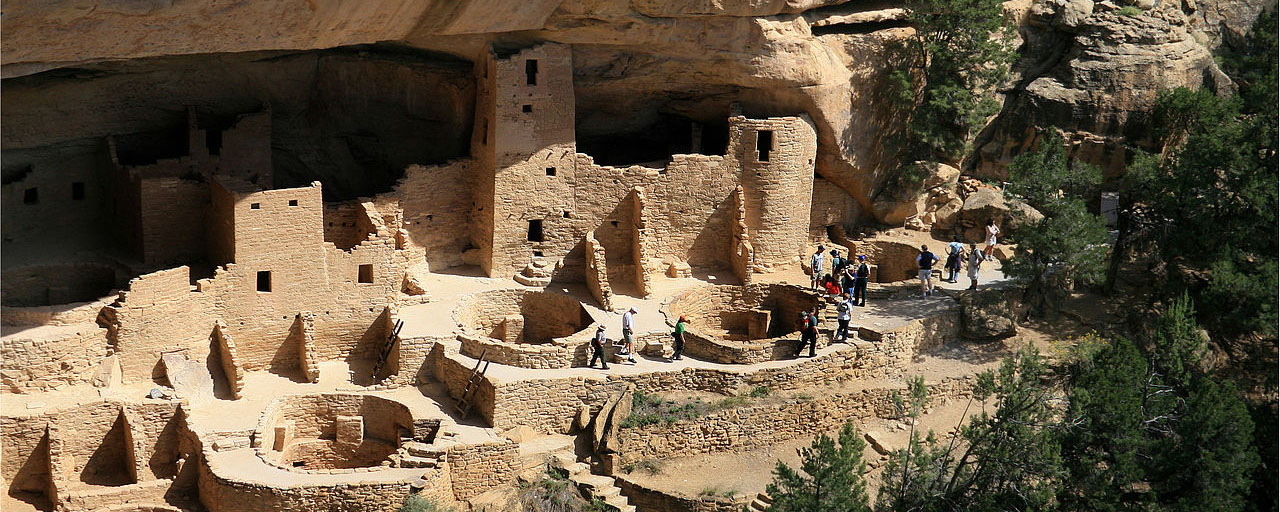
Native peoples in the Southwest began constructing these highly defensible cliff dwellings in 1190 CE and continued expanding and refurbishing them until 1260 CE before abandoning them around 1300 CE. Native American societies before European contact were diverse, complex, and shaped by regional environments.
The marker of 1491 serves as a division between the Native American world and the world that came after European exploration, colonization, and invasion. In 1491, both North and South America were inhabited by flourishing and highly complex civilizations. In particular, North America was home to hundreds of tribes, cities, and societies. First Nation Peoples in North America are often grouped by similarities in their adaptations to the environments (desert vs arctic vs woodland societies).
Indigenous societies in North America before Europeans were vastly more complex than College Board requires for the exam, which focuses on the major tribes and societies within seven identified geographical areas and some basic components of their lifestyles.
While some of these details are lost to history due to the events that unfold on this continent after contact with Europeans, there are many, many more histories that are still preserved by indigenous people and communities today, even if they are not covered in the APUSH curriculum.
Key Takeaways
- Maize cultivation and irrigation supported permanent Southwest settlements, including homes built on the ledges of Mesa Verde.
- Along the Northwest coast and in California, communities hunted whales and salmon and used nearby forests to build lodgings and canoes.
- In the Northeast, Mississippi Valley cultures built earthworks and mounds, which were used for ceremonies, burials, and sometimes elite residences.
- Great Plains groups maintained mobile lifestyles in response to seasonal bison migrations and limited rainfall for farming.
- Trade networks helped Native societies work around local resource limits, moving coastal shells inland and obsidian across long distances.
Permanent Settlements
The spread of maize cultivation from present-day Mexico northward into the present-day American Southwest and beyond supported economic development, settlement, advanced irrigation, and social diversification among indigenous societies. Through farming corn, beans, maize, and squash, tribes like the Apache, Navajo, and Pueblo built permanent settlements into the ledges of Mesa Verde.
Along the Northwest coast and in California, tribes developed communities along the ocean to hunt whales and salmon, building wooden lodgings, totem poles, and canoes from surrounding forests. These tribes included the Tlingit, Chinook, Coos, and Chumash.
In the Northeast, Mississippi Valley cultures built elaborate earthworks and mounds, demonstrating how the rich floodplain environment supported population densities that could organize large-scale construction projects. These mounds served as ceremonial centers, burial sites, and in some cases, elevated platforms for elite residences, showing how environmental abundance translated into social complexity.
Nomadic Hunting and Gathering Tribes
In contrast to the fixed societies of the Southwest, Natives in the Great Plains and surrounding grasslands retained mobile, nomadic lifestyles. Based on the aridity, or dryness, of the conditions, the Great Plains was more suitable for hunting and gathering, with food sources consisting of rabbits, snakes, birds, nuts, and insects. The Shoshone lived in cone-shaped huts built with wooden poles, covered with dried grasses and brush that could be packed and transported as the tribe moved.
The major groups and regions of First Nations Peoples to know for AP US History are:
| Geographical Area | Arctic and Subarctic | Northwest Coast and California | Plateau | Great Basin | Southwest | Northeast (Eastern Woodlands) | Southeast | Great Plains |
|---|---|---|---|---|---|---|---|---|
| Major Tribes | Eskimo and Cree | Tlingit, Chinook, Coos, & Chumash | Nez Perce | Shoshone | Apache, Navajo, and Pueblo | Iroquois, Mohawk | Cherokee, Seminole | Sioux, Cheyenne |
| Housing | Igloos | Wooden houses; often sheltering several related families | Bison-high teepees; rounded homes of wood | Cone-shaped huts built with wooden poles, covered with dried grasses and brush. | Built homes on the ledges of Mesa Verde | Mound builders for burial | Reed and bark huts. | Teepees |
| Food Supply | Hunting and fishing. | Whales and other sea mammals; salmon | Salmon (fish) | Rabbits, snakes, birds, nuts, and insects | Corn, beans, maize, and squash | Deer; corn, beans, squash, tobacco | Tobacco, squash, melons, cabbage, peas, and corn | Bison; wild edible plants and roots |
| Clothing & Tools | Waterproof clothing and blankets; Tools made from bone and teeth | Animal skin clothing; spoons, masks, canoes, and totem polls | Deerskin clothing and robes of rabbit skin; Bows and arrows, spears, knives | Women wore strips of bark, sandals, and fur; baskets | Not stated | Clothing not stated; used forests to make tools, homes, fuel, and food | Clothing not stated; bows and arrows, blow guns, and traps | Bison fur; dogs were used to carry supplies. |
| Present-Day | Canada and Greenland | Canada, California, Washington, and Oregon | Oregon, California, Idaho, and Canada | Nevada, California, Arizona, Utah, Idaho, Oregon | Mexico, Arizona, New Mexico, Utah, and Colorado | Stretched from New England to the Gulf of Mexico | Texas to West Virginia, down to Florida | Mississippi River to the Rocky Mountains, from Canada to Texas |
Environmental Determinants of Development
- 🏜️ Southwest societies developed irrigation because the arid climate made traditional rainfall agriculture impossible, yet river access provided opportunity.
- 🌾 Great Plains mobility was a direct response to seasonal bison migration patterns and limited rainfall for agriculture.
- ⚓ Northeast settlements became permanent because the balance of fertile soil, abundant game, and seasonal growing cycles enabled stable, year-round food supplies.
Environmental Exchange Networks
Native societies created extensive trade networks to overcome the limitations of their local environments. Coastal shells traveled to inland tribes, while obsidian and specialized materials moved across thousands of miles. These networks demonstrate how Native Americans actively managed environmental constraints through inter-regional cooperation
Native American tribes across North America adapted cleverly to their environments before Europeans arrived. They created different ways of life based on what resources they had - whether farming corn in the Southwest, hunting bison on the Plains, or fishing along the coasts. Understanding these different lifestyles helps us see what Europeans encountered when they first arrived. Next, we'll look at why Europeans came to America and what happened when these different worlds met.
Practice Questions for 1.2
1 of 10
The construction of wooden lodges, totem poles, and canoes by Northwest Coast societies most directly resulted from which environmental resource availability?
A.
Floodplain fertility that enabled large populations to produce surplus corn for trade and craft specialization
B.
Irrigation systems developed to manage arid conditions and support permanent agricultural villages
C.
Seasonal bison migration patterns that provided hides and bones for tool and shelter construction
D.
Vast forest resources and abundant marine life that supported settled communities without requiring agriculture
Vocabulary
The following words are mentioned explicitly in the AP® course framework for this topic.Term | Definition |
|---|---|
Atlantic seaboard | The coastal region along the Atlantic Ocean in North America where Native American societies developed mixed agricultural and hunter-gatherer economies. |
Great Basin | An arid region in the western United States where Native American societies developed mobile lifestyles in response to environmental conditions. |
Great Plains | Grassland regions in western North America where Native American societies adapted to aridity through largely mobile lifestyles. |
hunting and gathering | An economic subsistence strategy based on hunting animals and collecting wild plants, practiced by societies in the Northwest and California. |
irrigation | The artificial supply of water to land or crops, used by Southwest societies to support agriculture in arid environments. |
maize cultivation | The practice of growing maize (corn) as a crop, which spread from Mexico northward and supported economic development and settlement in North American societies. |
Mississippi River Valley | A region in North America where some Native American societies developed mixed agricultural and hunter-gatherer economies and permanent settlements. |
mixed agricultural and hunter-gatherer economies | Economic systems that combined farming with hunting and gathering, developed by societies in the Northeast, Mississippi River Valley, and Atlantic seaboard regions. |
mobile lifestyles | A way of life characterized by regular movement from place to place, adopted by societies in the Great Basin and western Great Plains in response to limited resources. |
permanent villages | Settled communities where people lived year-round, supported by mixed agricultural and hunter-gatherer economies in the Northeast and Mississippi River Valley. |
settled communities | Permanent or semi-permanent human settlements, supported in some areas by abundant ocean resources in the Northwest and California regions. |
social diversification | The development of different social classes, roles, and structures within a society, often resulting from increased economic productivity. |
Frequently Asked Questions
What were Native American societies like before Europeans came to America?
Before European contact, Native American societies were diverse and adapted to their environments. In the Southwest (Ancestral Puebloans) maize cultivation from present-day Mexico supported settled villages, irrigation canals, and social complexity. In the Mississippi Valley (Mississippian/Cahokia) intensive maize farming produced large mound-building towns and political hierarchies. In the Great Plains and Great Basin, aridity and grasslands encouraged mobile hunter-gatherer or seasonal bison-hunting lifeways (horse-less at this time). The Northeast and Atlantic seaboard featured mixed farming and hunting—Iroquoian longhouses and permanent villages—while the Pacific Northwest and California relied on rich ocean and forest resources, supporting dense, sometimes sedentary communities, complex trade (Chinook), and potlatch ceremonies. These regional adaptations are exactly what AP Topic 1.2 asks you to explain (CED Learning Objective B; keywords: maize cultivation, irrigation, Cahokia, Plains nomadism, Iroquoian longhouses, Pacific Northwest fishing). For a concise review, see the Topic 1.2 study guide (/apush/unit-1/native-american-societies-before-european-contact/study-guide/WSdp3WwC8fc4Hcds2um6) and practice problems (/practice/ap-us-history).
How did Native Americans adapt to different environments before European contact?
Native peoples adapted to their environments in many specific ways. In the Southwest, the spread of maize from Mexico let Ancestral Puebloans build permanent villages, develop irrigation canals, and diversify social roles. In the Mississippi Valley (Mississippian culture) maize-supported chiefdoms like Cahokia built mounds and large settlements. In the arid Great Basin and the Plains’ grasslands, groups stayed largely mobile—Plains peoples hunted bison without horses and moved seasonally. In the Northeast and Atlantic seaboard, mixed farming and hunting led to permanent villages and Iroquoian longhouses. On the Pacific Northwest and California coast, abundant ocean resources supported sedentary fishing communities, complex trade (Chinook networks), and potlatch ceremonies. For AP prep, link these examples to contextualization and evidence in FRQs/DBQs (show cause, continuity/change). For a focused review, see the Topic 1.2 study guide (/apush/unit-1/native-american-societies-before-european-contact/study-guide/WSdp3WwC8fc4Hcds2um6); for broader unit review and 1,000+ practice questions go to (/apush/unit-1) and (/practice/ap-us-history).
Why did some Native American groups become farmers while others stayed hunter-gatherers?
It comes down to environment and available crops. Where maize (corn) spread north from Mexico, groups could grow surplus food, build irrigation (Pueblo) and settle into villages—think Ancestral Puebloans in the Southwest and Mississippian mound-builders like Cahokia (KC-1.1.I.A, I.C). In arid Great Basin and the Plains, resources were sparse or seasonal, so people stayed mobile as hunter-gatherers or nomadic bison hunters (KC-1.1.I.B). Where rivers, forests, and the Atlantic coast offered mixed resources, groups combined farming and foraging, which supported larger permanent communities (Northeast, Iroquoian longhouses). In the Pacific Northwest, rich ocean resources let societies remain largely hunter-gatherer yet socially complex (KC-1.1.I.D). For AP exam prep tie this to Learning Objective B (how groups interacted with environments). Review Topic 1.2 on Fiveable (study guide) for examples and try practice questions (/apush/unit-1/native-american-societies-before-european-contact/study-guide/WSdp3WwC8fc4Hcds2um6; /practice/ap-us-history).
What is maize cultivation and how did it spread from Mexico?
Maize cultivation = growing domesticated corn that Mesoamericans bred from wild grasses. It gave higher, storable yields than many wild foods, so groups could settle, farm intensively, and build larger societies (think Ancestral Puebloans and Mississippian towns like Cahokia). From its origins in present-day Mexico, people spread maize north over centuries through trade, migration, and cultural exchange. As it moved into the Southwest, groups adapted it with irrigation canals and Pueblo-style irrigation; farther north and east it blended with hunting/gathering economies, encouraging permanent villages and mound-building. For APUSH, memorize that maize’s northward spread supported economic development, settlement, advanced irrigation, and social diversification (CED KC-1.1.I.A). Want a focused Topic 1.2 review? See the Fiveable study guide (/apush/unit-1/native-american-societies-before-european-contact/study-guide/WSdp3WwC8fc4Hcds2um6) and practice questions (/practice/ap-us-history).
How did growing corn change Native American societies in the Southwest?
When maize (corn) spread from Mexico into the Southwest it transformed societies by enabling settled, sedentary communities like the Ancestral Puebloans to develop. Reliable maize production supported larger populations, permanent villages (pueblos), and complex social roles beyond food production—craft specialization, religious leadership, and more stratified social organization. Because the region is arid, groups built irrigation systems and water-management techniques (Pueblo irrigation, canals) to boost yields, which in turn encouraged coordinated labor and community governance. Maize-based surplus also made long-distance trade and ceremonial life (kivas, mound-building analogs in other regions) more possible. For APUSH, note KC-1.1.I.A: maize drove economic development, settlement, irrigation, and social diversification—a common short-answer/multiple-choice topic. For a focused review, see the Topic 1.2 study guide on Fiveable (/apush/unit-1/native-american-societies-before-european-contact/study-guide/WSdp3WwC8fc4Hcds2um6) and practice questions (/practice/ap-us-history).
What's the difference between how Native Americans lived in the Great Plains versus the Northeast?
Great Plains tribes were mostly mobile hunter-gatherers who followed bison across the grasslands. Before horses arrived, Plains people practiced highly mobile “Plains nomadism” (seasonal camps, portable shelters) so they could hunt bison and use sparse resources. In contrast, societies in the Northeast combined farming and hunting—maize, beans, and squash supported permanent villages, larger populations, and longhouses (think Iroquoian confederacies). That mixed agricultural/hunter-gatherer economy encouraged settled life, more complex political structures, and village-based social life. On the AP exam, you’ll often be asked to compare mobility vs. sedentism or explain how environment shaped society (CED KC-1.1.I.B vs KC-1.1.I.C). For a quick review, see the Topic 1.2 study guide (/apush/unit-1/native-american-societies-before-european-contact/study-guide/WSdp3WwC8fc4Hcds2um6). For extra practice, try problems at (/practice/ap-us-history).
I'm confused about why geography affected Native American lifestyles so much - can someone explain?
Geography shaped Native American life because different climates and resources forced different food strategies, settlement patterns, and social systems. Where maize spread from Mexico into the Southwest it allowed settled villages, irrigation (Pueblo irrigation), and social complexity (Ancestral Puebloans). In arid Great Basin and western Plains areas, sparse resources produced mobile lifeways and Plains nomadism (horse-less bison hunting before horses). The fertile Mississippi Valley and Atlantic seaboard supported mixed farming and permanent villages (Mississippian culture, Cahokia, mound-building; Iroquoian longhouses in the Northeast). On the Pacific coast, rich ocean resources enabled fishing-based, settled communities, trade networks, and potlatch ceremonies (Chinook). For AP practice, know these cause-and-effect links (CED Learning Objective B, KC-1.1.I.A–D)—they show how environment drove economy, settlement, and culture. Review Topic 1.2 on Fiveable for a quick study guide (/apush/unit-1/native-american-societies-before-european-contact/study-guide/WSdp3WwC8fc4Hcds2um6) and try practice questions (/practice/ap-us-history).
How do I write a DBQ essay about Native American environmental adaptations?
Start with a focused thesis that answers a prompt about how/why Native peoples adapted to environments (e.g., “Native groups adapted to regional environments by developing maize agriculture and irrigation in the Southwest, mobile foraging on the Plains, mixed farming in the Northeast, and fishing/trade on the Pacific coast, which shaped settlement, social organization, and economy”). Briefly contextualize (post-1491 regional diversity; maize spread). Use at least four documents to support different regions and tie each to your argument. For two documents, analyze POV/purpose/situation (who produced it and why). Bring in 1+ piece of outside evidence (Ancestral Pueblo irrigation, Cahokia mound-building, Great Basin mobility, Iroquoian longhouses, Chinook potlatch). Show complexity by comparing regions and explaining causes/effects (environment → subsistence → settlement/social change). Follow DBQ rules: thesis, context, use ≥4 docs, sourcing for ≥2, outside evidence, and aim for a nuanced claim. Review Topic 1.2 study guide on Fiveable (/apush/unit-1/native-american-societies-before-european-contact/study-guide/WSdp3WwC8fc4Hcds2um6) and practice questions (/practice/ap-us-history).
What were the main differences between sedentary and nomadic Native American societies?
Sedentary societies (like the Ancestral Puebloans, Mississippian Cahokia, and Iroquoian peoples) relied on maize cultivation, developed irrigation, and built permanent villages or towns (pueblos, mound centers, longhouses). That allowed greater social complexity: stratified leadership, specialized crafts, long-distance trade, and large public works (irrigation canals, mound-building). Nomadic groups (Great Basin and Plains before widespread horses) adapted to arid or grassland environments by moving seasonally to follow resources—hunter-gatherer lifeways, small mobile bands, and less permanent settlements. Some Pacific Northwest groups were sedentary despite relying on fishing because ocean resources supported dense, settled communities and complex trade (Chinook, potlatch). The difference mainly reflects environment → economy → settlement → social organization (CED KC-1.1.I.A–D). For more review on Topic 1.2, see the Fiveable study guide (/apush/unit-1/native-american-societies-before-european-contact/study-guide/WSdp3WwC8fc4Hcds2um6). Practice questions: /practice/ap-us-history.
Why did Native Americans in California and the Northwest stay hunter-gatherers instead of becoming farmers?
They stayed hunter-gatherers because their environment already provided rich, reliable food so intensive maize farming wasn’t necessary. In California and the Pacific Northwest, abundant salmon, shellfish, acorns, and other wild resources supported large populations with relatively permanent villages in some places, but people still relied on seasonal harvesting, fishing, and trade (think Chinook trade networks and potlatch ceremonies). Where water and soil didn’t favor maize irrigation (unlike the Southwest), investing in agriculture gave less payoff than specialized foraging, fishing, and complex trade. Mobility and resource scheduling matched local climates and helped social diversification without cereal farming (CED: KC-1.1.I.D; Pacific Northwest fishing). For more on how environment shaped native economies before contact, see the Topic 1.2 study guide (/apush/unit-1/native-american-societies-before-european-contact/study-guide/WSdp3WwC8fc4Hcds2um6). Practice AP-style questions are at (/practice/ap-us-history).
What caused some Native American societies to develop permanent villages?
Mostly it comes down to food production and environment. Where maize cultivation spread north from Mesoamerica, populations could produce surplus food reliably; that supported denser settlements, specialized roles, and investment in irrigation (think Ancestral Puebloan canals and Pueblo irrigation in the Southwest). In river valleys (Mississippi/Ohio) and the Northeast, mixed agricultural and hunting–gathering economies (maize + local wild resources) let groups stay year-round and build permanent villages—the Mississippian mound towns like Cahokia are a big example. In contrast, arid Great Basin and open Plains environments encouraged mobility. In resource-rich coastal areas (Pacific Northwest, California), abundant fish and sea resources supported settled communities and complex trade. This matches CED KC-1.1.I.A–D (maize, irrigation, mixed economies, regional adaptations). For a focused review, see the Topic 1.2 study guide (/apush/unit-1/native-american-societies-before-european-contact/study-guide/WSdp3WwC8fc4Hcds2um6) and practice questions (/practice/ap-us-history).
How did irrigation systems help Native American societies in the Southwest?
Irrigation systems let Southwestern societies (like the Ancestral Puebloans and Pueblo peoples) grow maize reliably in a dry, arid climate. By building canals, terraces, and check dams they controlled scarce water from rivers and seasonal runoff, which increased crop yields, supported larger year-round populations, and made permanent villages possible. More food meant labor specialization, social diversification, and complex settlements—so irrigation was a key driver of economic development and settlement in the region (KC-1.1.I.A). On the AP exam, you can use Pueblo irrigation as specific evidence when explaining how environment shaped pre-contact societies for a short-answer or document-based question. For a quick review, check the Topic 1.2 study guide on Fiveable (/apush/unit-1/native-american-societies-before-european-contact/study-guide/WSdp3WwC8fc4Hcds2um6) and practice more with AP-style questions at Fiveable Practice (/practice/ap-us-history).
Compare how Native Americans in the Great Basin lived versus those along the Atlantic coast
Great question—short version: people in the Great Basin lived largely as mobile hunter-gatherers because the region was arid and resources were spread out. Bands moved seasonally to gather seeds, hunt small game, and use water sources (this is the “Great Basin mobility” idea in the CED). In contrast, Native peoples along the Atlantic coast practiced mixed farming and hunting/fishing—maize, beans, and squash supported larger, often permanent villages (think Iroquoian longhouses and stable coastal settlements). That led to greater social complexity and denser populations on the coast, while Great Basin groups stayed smaller and more flexible. Both strategies show how environment shaped culture (CED Learning Objective B: interaction with the natural environment). For a quick review, see the Topic 1.2 study guide (/apush/unit-1/native-american-societies-before-european-contact/study-guide/WSdp3WwC8fc4Hcds2um6). For more practice, try Fiveable’s APUSH practice questions (/practice/ap-us-history).
What were the effects of maize cultivation on Native American social structures?
Maize cultivation transformed social structures by enabling surplus food, permanent settlements, and greater social complexity. As the CED notes, maize spread from Mexico into the Southwest and beyond, supporting irrigation (Pueblo irrigation, canals), denser populations (Ancestral Puebloans), and specialized roles. Surpluses let some people focus on non-food tasks, encouraging craft specialization, political leadership, and public works—think Mississippian chiefdoms like Cahokia with mound-building. In the Northeast and Mississippi Valley, mixed farming plus hunting led to permanent villages and communal institutions (Iroquoian longhouses, greater social diversification). Overall, maize shifted many groups from mobile bands toward sedentary, stratified societies with more complex economies, trade networks, and political organization (KC-1.1.I.A; Topic 1.2, Learning Objective B). For more detail, see the Topic 1.2 study guide (/apush/unit-1/native-american-societies-before-european-contact/study-guide/WSdp3WwC8fc4Hcds2um6). Review the whole unit (/apush/unit-1) and practice questions (/practice/ap-us-history).
I missed class - what are the main Native American cultural regions I need to know for the AP exam?
You should know these main cultural regions and how they fit CED Topic 1.2 (what they grew/ate, settlement patterns, and social/technological adaptations): - Southwest (Ancestral Puebloans): maize spread, irrigation, pueblos—settled, complex irrigation systems. - Great Basin & Great Plains: arid/grassland environments → mobile lifeways; Plains practiced horse-less bison hunting before Europeans. - Northeast / Atlantic Seaboard / Mississippi Valley (Mississippian culture, Cahokia): mixed agriculture + hunting, permanent villages, mound-building, Iroquoian longhouses. - Pacific Northwest / California: rich marine resources, fishing-based economies, settled communities, Chinook trade networks and potlatch ceremonies. These map directly to CED keywords (maize cultivation, Cahokia, mound-building, Great Basin mobility, Plains nomadism, Iroquoian longhouses, Chinook). For AP questions expect you to explain environment → economy → settlement and social change. Review the Topic 1.2 study guide (Fiveable) for quick examples and primary-source practice: (/apush/unit-1/native-american-societies-before-european-contact/study-guide/WSdp3WwC8fc4Hcds2um6). For more practice problems, see (/practice/ap-us-history).
See Fiveable more often in Google
Mark Fiveable as a preferred source and Google is more likely to show you our guides in Top Stories, with a "preferred" badge in AI Mode and AI Overviews.