7.15 Comparison in Period 7

🇺🇸AP US History Unit 7 Review
7.15 Comparison in Period 7
🇺🇸 AP US History
7.1
Context: America in the World
7.2
Imperialism: Debates
7.3
The Spanish-American War
7.4
The Progressives
7.5
World War I: Military and Diplomacy
7.6
World War I: Home Front
7.7
1920s: Innovations
7.8
1920s: Cultural and Political Controversies
7.9
The Great Depression
7.10
The New Deal
7.11
Interwar Foreign Policy
7.12
World War II: Mobilization
7.13
World War II: Military
7.14
Postwar Diplomacy
7.15
Comparison in Period 7
Comparison in Period 7 asks you to weigh how major events from 1890 to 1945 shaped American identity. Imperialism, Progressive reform, World War I, the Great Depression, the New Deal, and World War II each changed how Americans understood government, citizenship, and global power.
What to Know About Comparison in Period 7
- Large companies helped shift the U.S. economy toward industry and cities, while Progressives pushed for business regulation and better working conditions.
- The 1929 stock market crash led to a long economic decline, and Roosevelt's New Deal expanded the government's role in economic and social welfare.
- Communications technology spread mass culture and sparked debates over values, while economic hardship and global conflicts drove migration.
- U.S. territorial expansion and World War I increased American power abroad while fueling debates over the country's role in the world.
- World War II helped end the Depression and opened jobs to women and minorities; afterward, the U.S. helped rebuild Europe and emerged as a superpower.
Economy
Growth expanded opportunity, while economic instability led to new efforts to reform U.S. society and its economic system.
The period from 1890 to 1945 was marked by a significant shift in the American economy from a rural, agricultural one to an urban, industrial one, as the country saw rapid industrialization and urbanization. The growth of large companies, particularly in industries such as manufacturing, transportation, and finance, played a major role in driving this transition. The development of new technologies, such as the telephone and electricity, and increased immigration also contributed to the growth of urban areas and the expansion of industry.
But the expansion of industry came at a price. Many workers found themselves working long hours in unsanitary conditions to meet the demands of ruthless factory owners. Progressives also reacted to corruption in politics, such as machine bosses and business influence over officials, and they demanded more government action to clean up public life.

Image Courtesy of Wikipedia
The Progressives, a diverse coalition of political leaders, activists, and intellectuals, sought to address these issues through a variety of measures, including greater government intervention, regulation of big business, reforms to the political system, and improvements to working conditions and the welfare of citizens. They believed that government had a role to play in promoting social justice and improving the lives of all citizens, and their efforts led to significant reforms, such as the establishment of the Federal Reserve System, the establishment of a federal income tax, and the passage of laws aimed at improving working conditions.
But the biggest shock to the American economy came on October 29, 1929: Black Tuesday.*The stock market crash led to widespread panic, as investors and banks lost vast sums of money and many businesses went bankrupt. This, in turn, led to a decline in consumer spending, rising unemployment, and a decline in economic activity that lasted for several years.
The Great Depression had a profound impact on American society. This involved a significant expansion of the role of government in the American economy, as the government took on a larger responsibility for providing social welfare and employment to its citizens. President Franklin D. Roosevelt's New Deal programs, such as the Social Security Act and the National Industrial Recovery Act, aimed to address the effects of the Great Depression and improve the economy through increased government intervention.
These programs redefined the goals and ideas of modern American liberalism, emphasizing the role of government in promoting social and economic justice, and establishing the idea that government has a responsibility to ensure the welfare of its citizens.
Technology
Innovations in communications and technology contributed to the growth of mass culture, while significant changes occurred in internal and international migration patterns.
The innovations in communications and technology, such as the telephone, telegraph, and radio, contributed to the growth of mass culture in America during the early 20th century. These technologies allowed for the rapid dissemination of information and entertainment, and helped to create a more connected and unified national culture.
However, this growth also led to increased debates over the effects of popular culture on public values, morals, and American national identity. Some people argued that the rise of popular culture was having a negative impact on society, by promoting materialism and encouraging a decline in traditional values and morals.

Image Courtesy of Wikipedia
Others saw it as a positive development, as it allowed for greater artistic expression and helped to bring people together through shared cultural experiences. The debates over the effects of popular culture on American society continue to this day, as the country continues to grapple with the relationship between culture, values, and national identity.
The most prominent of these battles was the Scopes Trial. The trial was held in Tennessee and centered around the question of whether the state could ban the teaching of evolution in public schools. On one side were those who believed that the Bible was the literal truth and that evolution was a dangerous and anti-religious doctrine. On the other side were those who believed that evolution was a scientifically established fact and that it should be taught in schools as such.
Economic factors such as unemployment, poverty, and the desire for better opportunities were major drivers of internal migration, as people moved from rural areas to cities in search of work and a better life. At the same time, global events such as World War I and the Russian Revolution led to large-scale international migration, as people fled conflict, persecution, and political instability in their home countries. Political change then sharply cut these numbers: immigration restrictions in the 1920s reduced arrivals and changed where immigrants came from. Internal migration also swung sharply and felt different for different groups. During and after World War I, many African Americans moved from the South to northern cities for jobs, and in the 1930s hardship pushed many farm families to move in search of work.
Military Power
Participation in a series of global conflicts propelled the United States into a position of international power while renewing domestic debates over the nation’s proper role in the world.
In 1898, the U.S. gained control of the Hawaiian Islands through a joint resolution of Congress, effectively making Hawaii a U.S. territory. During the Spanish-American War in 1898, the U.S. defeated Spain and gained control of Puerto Rico, Guam, and the Philippines.
As the country expanded its territory and influence, public debates intensified over America's role in the world. Some people argued that the United States had a responsibility to promote its values and interests around the world, while others believed that the country should focus on its own internal affairs and avoid getting involved in the affairs of other countries. These debates reflected the larger questions and anxieties of American society at the time, as the country was struggling to define its place in a rapidly changing world.
World War I and its aftermath intensified ongoing debates about the nation’s role in the world and how best to achieve national security and pursue American interests. The U.S. emerged from World War I as the world's leading economic power, with a thriving industrial base and abundant natural resources. The U.S. military played a key role in the Allied victory in World War I, and the country's military prowess helped to establish its reputation as a major military power.
America also took an active role in shaping the post-war settlement and international organizations, such as the League of Nations, that were created to maintain peace and stability in the aftermath of the war. However, it retreated back to isolationism after the war.
World War II cemented the US' place on the world stage. The war effort led to increased industrial production and job opportunities, which helped to end the Great Depression and led to an economic boom. The war created a shortage of labor, leading to the integration of women and minorities into the workforce. There were also significant advancements in technology and science, including the development of radar, jet engines, and the atomic bomb. The US played a decisive role in defeating the Germans and the Japanese.
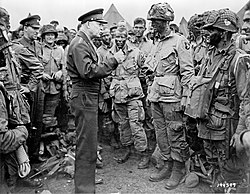
Image Courtesy of Wikipedia
After the war, Europe was destroyed. The US played a major role in rebuilding Europe through the Marshall Plan, which provided economic assistance to European countries to help rebuild their economies after the war. The US emerged as a superpower after the war, playing a leading role in the formation of international organizations like the United Nations and NATO. It also actively sought to contain Soviet influence around the world.
This section is really a review section for you to take a step back and look at the big picture of Period 7.
Be able to trace themes and causation related to these three large topics:
- The growth of the US economy, including its ups and downs
- The changes in technology and mass culture during this time period
- The emergence of the US as a global world power, especially through warfare
Practice Questions for 7.15
1 of 10
What development did the U.S. acquisitions of Hawaii, Puerto Rico, Guam, and the Philippines (1898–1902) most directly cause?
A.
Creation of independent democratic governments in each territory within five years
B.
Broad public consensus that overseas expansion was necessary
C.
Immediate military defeats by indigenous forces across all territories
D.
A reassessment of American national identity and its international role
See Fiveable more often in Google
Mark Fiveable as a preferred source and Google is more likely to show you our guides in Top Stories, with a "preferred" badge in AI Mode and AI Overviews.