AMSCO 8.1 Contextualizing Period 8

🇺🇸AP US History Review
AMSCO 8.1 Contextualizing Period 8
🇺🇸 AP US History
AMSCO 1.2:Native American Societies Before European Contact Notes
AMSCO 2.1 Context: European Colonization of North America Notes
AMSCO 2.2 European Colonization Notes
AMSCO 2.3 The Regions of the British Colonies Notes
AMSCO 2.4 Transatlantic Trade Notes
AMSCO 2.5 Interactions between American Indians and Europeans Notes
AMSCO 2.6 Slavery in the British Colonies Notes
AMSCO 2.7 Colonial Society and Culture Notes
AMSCO 2.8 Comparison in Period 2 (1607-1754) Notes
AMSCO 3.1 Contextualizing Period 3
AMSCO 3.2 The Seven Year's War
AMSCO 3.3 Taxation Without Representation
AMSCO 3.4 Philosophical Foundations of the American Revolution
AMSCO 3.5 The American Revolution
AMSCO 3.6 The Influence of Revolutionary Ideals
AMSCO 3.7 The Articles of Confederation
AMSCO 3.8 The Constitutional Convention and Debates Over Ratification
AMSCO 3.9 The Constitution
AMSCO 3.10 Shaping a New Republic
AMSCO 3.11 Developing an American Identity
AMSCO 3.12 Movements in the Early Republic
AMSCO 3.13 Continuity and Change in Period 3
AMSCO 4.1 Contextualizing Period 4
AMSCO 4.2 The Rise of Political Parties and the Era of Jefferson
AMSCO 4.3 Politics and Regional Interests
AMSCO 4.4 America on the World Stage
AMSCO 4.5 Market Revolution
AMSCO 4.6 Effects of the Market Revolution on Society and Culture
AMSCO 4.7 Expanding Democracy
AMSCO 4.8 Jackson and Federal Power
AMSCO 4.9 The Development of an American Culture
AMSCO 4.10 The Second Great Awakening
AMSCO 4.11 An Age of Reform
AMSCO 4.12 African Americans in the Early Republic
AMSCO 4.13 Southern Society in the Early Republic
AMSCO 4.14 Causation in Period 4
AMSCO 5.1 Contextualizing Period 5
AMSCO 5.2 The Idea of Manfiest Destiny
AMSCO 5.3 Manifest Destiny and the Mexican-American War
AMSCO 5.4 The Compromise of 1850
AMSCO 5.5 Sectional Conflict: Regional Differences
AMSCO 5.6 Failure of Compromise
AMSCO 5.7 Election of 1860 and Secession
AMSCO 5.8 Military Conflict in the Civil War
AMSCO 5.9 Government Policies During the Civil War
AMSCO 5.10 Reconstruction
AMSCO 5.11 Failure of Reconstruction
AMSCO 5.12 Comparion in Period 5
AMSCO 6.1 Contextualizing Period 6
AMSCO 6.2 Westward Expansion: Economic Development
AMSCO 6.3 Westward Expansion: Social and Cultural Development
AMSCO 6.4 The "New South"
AMSCO 6.5 Technological Innovation
AMSCO 6.6 The Rise of Industrial Capitalism
AMSCO 6.7 Labor in the Gilded Age
AMSCO 6.8 Immigration and Migration in the Gilded Age
AMSCO 6.9 Responses to Immigration in the Gilded Age
AMSCO 6.10 Development of the Middle Class
AMSCO 6.11 Reform in the Gilded Age
AMSCO 6.12 Role of Government in the Gilded Age
AMSCO 6.13 Politics in the Gilded Age
AMSCO 6.14 Continuity and Change Period 6
AMSCO 7.1 Contextualizing Period 7
AMSCO 7.2 Imperialism: Debates
AMSCO 7.3 The Spanish-American War and U.S. Foreign Policy to 1917
AMSCO 7.4 The Progressives
AMSCO 7.5 World War I: Military and Diplomacy
AMSCO 7.6 World War I: Home Front
AMSCO 7.7 1920s: Innovations in Communication and Technology
AMSCO 7.8 1920s: Cultural and Political Controversies
AMSCO 7.9 The Great Depression
AMSCO 7.10 The New Deal
AMSCO 7.11 Inerwar Foreign Policy
AMSCO 7.12 World War II Mobilization
AMSCO 7.13 World War II Military
AMSCO 7.14 World War II and Postwar Diplomacy
AMSCO 7.15 Comparison in Period 7
AMSCO 8.1 Contextualizing Period 8
AMSCO 8.2 The Cold War from 1945 to 1980
AMSCO 8.3 The Red Scare
AMSCO 8.4 Economy after 1945
AMSCO 8.5 Culture after 1945
AMSCO 8.6 Early Steps in the Civil Rights Movement, 1945-1960
AMSCO 8.7 America as a World Power
AMSCO 8.8 The Vietnam War
AMSCO 8.9 The Great Society
AMSCO 8.10 The African American Civil Rights Movement in the 1960s
AMSCO 8.11 The Civil Rights Movement Expands
AMSCO 8.12 Youth Culture of the 1960s
AMSCO 8.13 The Environment and Natural Resources from 1968 to 1980
AMSCO 8.14 Society in Transition
AMSCO 8.15 Continuity and Change in Period 8
AMSCO 9.1 Contextualizing Period 9
AMSCO 9.2 Reagan and Conservatism
AMSCO 9.3 The End of the Cold War
AMSCO 9.4 A Changing Economy
AMSCO 9.5 Migration and Immgiration in the 1990s and 2000s
AMSCO 9.6 Challenges of the 21st Century
AMSCO 9.7 Causation in Period 9
AMSCO 1.1 Contextualizing Period 1 Notes
AMSCO 1.3 European Exploration in the Americas Notes
AMSCO 1.4 Columbian Exchange, Spanish Exploration, and Conquest Notes
AMSCO 1.5 Labor, Slavery, and Caste in the Spanish Colonial System Notes
AMSCO 1.6 Cultural Interactions in the Americas Notes
AMSCO 1.7 Causation in Period 1 Notes
Overview
AMSCO Topic 8.1, Contextualizing Period 8, sets the stage for everything from 1945 to 1980: the Cold War with the Soviet Union, postwar economic boom, the civil rights movement, liberal reform, and the conservative backlash that followed. In 1945, the United States came out of World War II with the world's largest and strongest economy, but nobody knew whether the Depression would return or how communism abroad and inequality at home would reshape American life. This chapter previews the five big threads that run through every Unit 8 topic, so it's worth knowing them cold before you dive into the rest of the unit.
The one question this period asks over and over: how did America's new role as a global superpower change life at home?
Key Takeaways
- The Cold War drove U.S. involvement in Korea and Vietnam, while segregation undermined America's claims to defend freedom abroad.
- The second Red Scare spread suspicion through American institutions, and protests against the Vietnam War deeply divided the country.
- Limited overseas competition and pent-up demand helped fuel postwar growth, while returning veterans and their families moved to the Sun Belt and built suburbs.
- The African American civil rights movement won legal and political gains against segregation; later, women and ethnic minorities raised new equality issues as expanded liberal programs drew backlash.
- As manufacturing jobs moved overseas and confidence in government declined, stagnating wages helped fuel a conservative resurgence by the mid-1970s.
U.S.-Soviet Conflict: The Cold War Frame
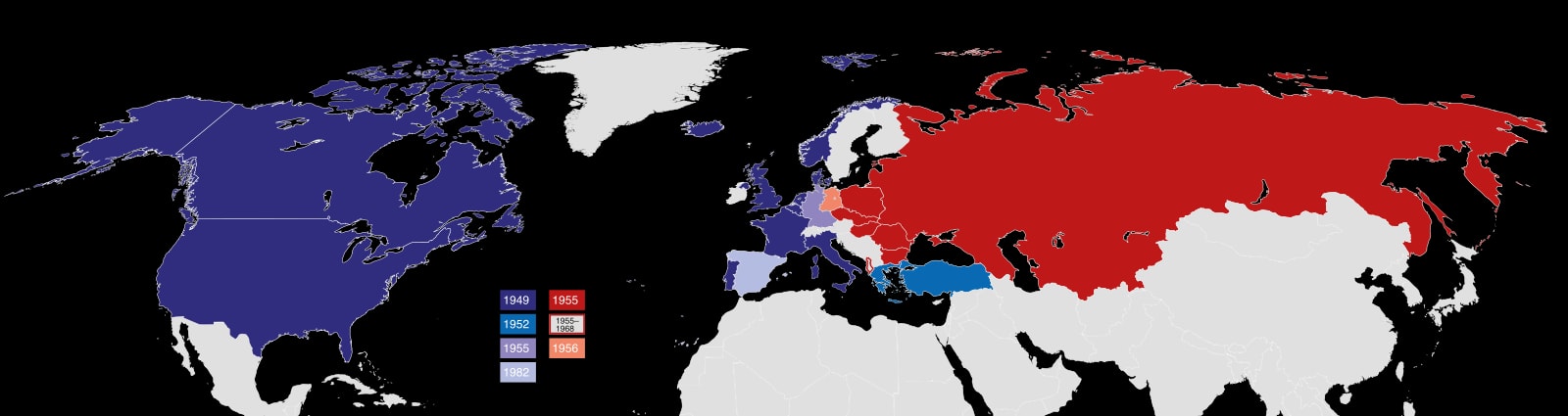
The Cold War, the postwar struggle between the United States and the Soviet Union (Western democracies versus the Communist bloc), provides the context for most events from 1945 to 1980. If you're ever stuck on a contextualization point for this period, the Cold War is usually your answer.
Where the conflict showed up:
- Hot wars by proxy. U.S. involvement in Korea and Vietnam grew directly out of the effort to limit Communist expansion.
- Direct confrontation. The Cuban Missile Crisis of 1962 brought the two superpowers to the brink of nuclear war.
- Everyday life. The Cold War seeped into American society in strange ways. Some schools were literally built over bomb shelters.
- Civil rights. Segregation mocked American democracy in front of a watching world and contradicted the freedom and equal opportunity the U.S. claimed to defend against communism. That international embarrassment pushed more Americans to confront the injustice of segregation.
U.S. policymakers worked to limit Communist military power and ideological influence, build a free-market global economy, and create an international security system. The full story is in AMSCO 8.2 The Cold War from 1945 to 1980 and AMSCO 8.7 America as a World Power.
Concerns about Communism at Home
After World War II, the United States went through a second Red Scare. The fear wasn't baseless paranoia at first. Spies really had passed atomic bomb secrets to the Communists. But the hunt for Communists spread far beyond espionage, reaching into the State Department, the military, Hollywood, schools, churches, and other American institutions. At the height of the fear, people even suspected their neighbors.
The Cold War also fueled fierce public debates over foreign policy:
- U.S. involvement in Vietnam triggered massive protests by students and antiwar activists.
- Those protests deeply divided the nation and brought down a president (Lyndon Johnson chose not to seek reelection in 1968).
- The era raised a recurring APUSH question: how much power should the federal government have, and what means are acceptable for pursuing security while protecting civil liberties?
One key nuance: the Cold War was not 35 years of constant crisis. It fluctuated between periods of confrontation and periods of coexistence, or détente. Get the details in AMSCO 8.3 The Red Scare and AMSCO 8.8 The Vietnam War.
Economic Growth and the Postwar Boom
Despite fears that the Depression would return without wartime spending, Americans enjoyed robust economic growth through the 1950s and 1960s. Two contextual factors explain why:
- Little overseas competition. The rest of the world's economies were rebuilding factories, roads, railways, and harbors destroyed during World War II. American industry had the field to itself.
- Pent-up demand. After the austerity of the Great Depression and World War II, Americans were ready to spend on housing, autos, and other consumer goods.
The boom reshaped the map. Returning veterans and their families, helped by the government's GI Bill, moved to the Sun Belt states and built new suburbs across the nation. This demographic shift fostered a sense of postwar optimism, but it also set up later political and moral debates that sharply divided the country.
These changes get full coverage in AMSCO 8.4 Economy after 1945 and AMSCO 8.5 Culture after 1945.
Civil Rights and Liberal Reform
If anything pushed the Cold War out of the headlines, it was the civil rights movement. The chapter frames this thread in two waves:
- 1950s-1960s: The African American civil rights movement worked to fulfill Reconstruction-era promises, achieving real legal and political successes in ending segregation, though progress toward racial equality was slow.
- 1970s: Women and ethnic minorities raised new issues of equality and social justice, building movements focused on identity, social justice, and the environment.
At the same time, postwar liberalism expanded the role of government through new programs and court decisions. The response ranged from enthusiastic support to a growing backlash from both secular and religious conservatives. Liberalism also came under attack from the left, not just the right.
Trace this thread through AMSCO 8.6 Early Steps in the Civil Rights Movement, AMSCO 8.9 The Great Society, AMSCO 8.10 The African American Civil Rights Movement in the 1960s, and AMSCO 8.11 The Civil Rights Movement Expands.
The Turn toward Conservatism
By the late 1960s, the Democratic majority that had held power since the New Deal was weakening. Several frustrations stacked up:
- Anger over the Vietnam War
- Opposition to civil rights reforms and other liberal domestic programs
- Increased civil unrest
Then the economy turned. Postwar optimism and prosperity gave way to pessimism and a declining standard of living for many Americans as good-paying manufacturing jobs moved overseas to low-wage countries. People lost confidence in government's ability to solve problems and in American institutions generally, from the news media to colleges and universities.
By the mid-1970s, with wage growth stagnating for average Americans, liberalism slowly gave way to a conservative resurgence. That resurgence is the bridge into Period 9, so when you see "Reagan" later, remember the roots are here.
Key Terms to Know
| Term | Why it matters |
|---|---|
| Cold War | The U.S.-Soviet struggle (Western democracies vs. the Communist bloc) that frames nearly every event from 1945 to 1980. |
| Communist bloc | The group of nations aligned with the Soviet Union, the ideological opponent of Western democracies. |
| Korean War | An early hot war where the U.S. fought to limit Communist expansion in Asia. |
| Vietnam War | The conflict that sparked massive antiwar protests, divided the nation, and brought down a president. |
| Cuban Missile Crisis (1962) | A direct U.S.-Soviet confrontation that brought the world to the brink of nuclear war. |
| Second Red Scare | The postwar hunt for Communists in government, Hollywood, schools, churches, and even neighborhoods. |
| Détente | Periods of coexistence and reduced tension that alternated with confrontation during the Cold War. |
| GI Bill | Government benefits that helped returning veterans buy homes, fueling suburban growth. |
| Sun Belt | The southern and western states where veterans and families migrated after the war, shifting population and political power. |
| Suburbs | New communities built across the nation in the postwar boom, a defining demographic change of the era. |
| Civil rights movement | The push by African Americans in the 1950s-60s to end segregation and fulfill Reconstruction-era promises. |
| Segregation | The system of racial separation whose injustice contradicted American principles and embarrassed the U.S. abroad. |
| Liberalism | The postwar political approach that expanded government's role, drawing both support and backlash. |
| Conservative resurgence | The political shift of the mid-1970s as confidence in government and liberal programs declined. |
| Antiwar movement | Student and activist protests against Vietnam that deeply divided the nation. |
Want more definitions? Browse the full APUSH key terms glossary.
Practice and Next Steps
This chapter is context, not new content to memorize in detail, so use it as a roadmap. Review the matching course-topic guide, 8.1 Context: U.S. as a Global Leader, then move into AMSCO 8.2 The Cold War from 1945 to 1980.
To check your understanding:
- Run through guided MCQ practice on Period 8 topics.
- Try a contextualization paragraph with FRQ practice and instant scoring. Period 8 context is one of the most common setups for DBQ and LEQ prompts.
- When you've finished the unit, test yourself with a full-length APUSH practice exam.
Frequently Asked Questions
What is Period 8 in APUSH?
Period 8 covers 1945 to 1980, from the end of World War II through the late 1970s. Its major threads are the Cold War with the Soviet Union, the second Red Scare, postwar economic growth and suburbanization, the civil rights movement and liberal reform, and the conservative resurgence of the mid-1970s.
What is the main context for Period 8 in APUSH?
The Cold War. The struggle between the United States and the Soviet Union from 1945 to 1980 provides the context for most events of the period, from the Korean and Vietnam Wars to the Red Scare and even the civil rights movement, since segregation undermined America's image abroad. The 8.1 course-topic guide covers this framing in more depth.
Was the Cold War constant conflict from 1945 to 1980?
No. The Cold War fluctuated between periods of direct confrontation, like the Cuban Missile Crisis of 1962, and periods of coexistence known as détente. Recognizing that back-and-forth pattern is a common way to show complexity in APUSH essays on this period.
Why did the US economy boom after World War II instead of returning to depression?
Two main reasons: the rest of the world's economies were rebuilding their destroyed factories and infrastructure, so American industry faced little overseas competition, and pent-up consumer demand from the Depression and wartime austerity fueled spending on housing, cars, and consumer goods. The GI Bill also helped veterans buy homes, driving suburban and Sun Belt growth.
How does Period 8 context show up on the APUSH exam?
Contextualization points on the DBQ and LEQ often come from exactly what this chapter covers: the Cold War frame, postwar prosperity, the civil rights movement, and the conservative turn. If a prompt sits anywhere in 1945-1980, opening with the relevant thread from this chapter is a reliable strategy. Practice writing those openers with FRQ practice and instant scoring.
See Fiveable more often in Google
Mark Fiveable as a preferred source and Google is more likely to show you our guides in Top Stories, with a "preferred" badge in AI Mode and AI Overviews.