8.11 The Expansion of the Civil Rights Movement

🇺🇸AP US History Unit 8 Review
8.11 The Expansion of the Civil Rights Movement
🇺🇸 AP US History
8.1
Context: U.S. as a Global Leader
8.2
The Cold War from 1945 to 1980
8.3
The Red Scare
8.4
Economy after 1945
8.5
Culture after 1945
8.6
Early Steps in the Civil Rights Movement (1940s and 1950s)
8.7
America as a World Power
8.8
The Vietnam War
8.9
The Great Society
8.10
The African American Civil Rights Movement (1960s)
8.11
The Expansion of the Civil Rights Movement
8.12
Youth Culture of the 1960s
8.13
The Environment and Natural Resources
8.14
Society in Transition
8.15
Continuity and Change in Period 8
The African American Civil Rights Movement helped inspire other groups to organize for equality in the 1960s and 1970s. Latino Americans, Native Americans, women, LGBTQ+ communities, and people with disabilities used protest, legal action, and organizing to demand rights and recognition.
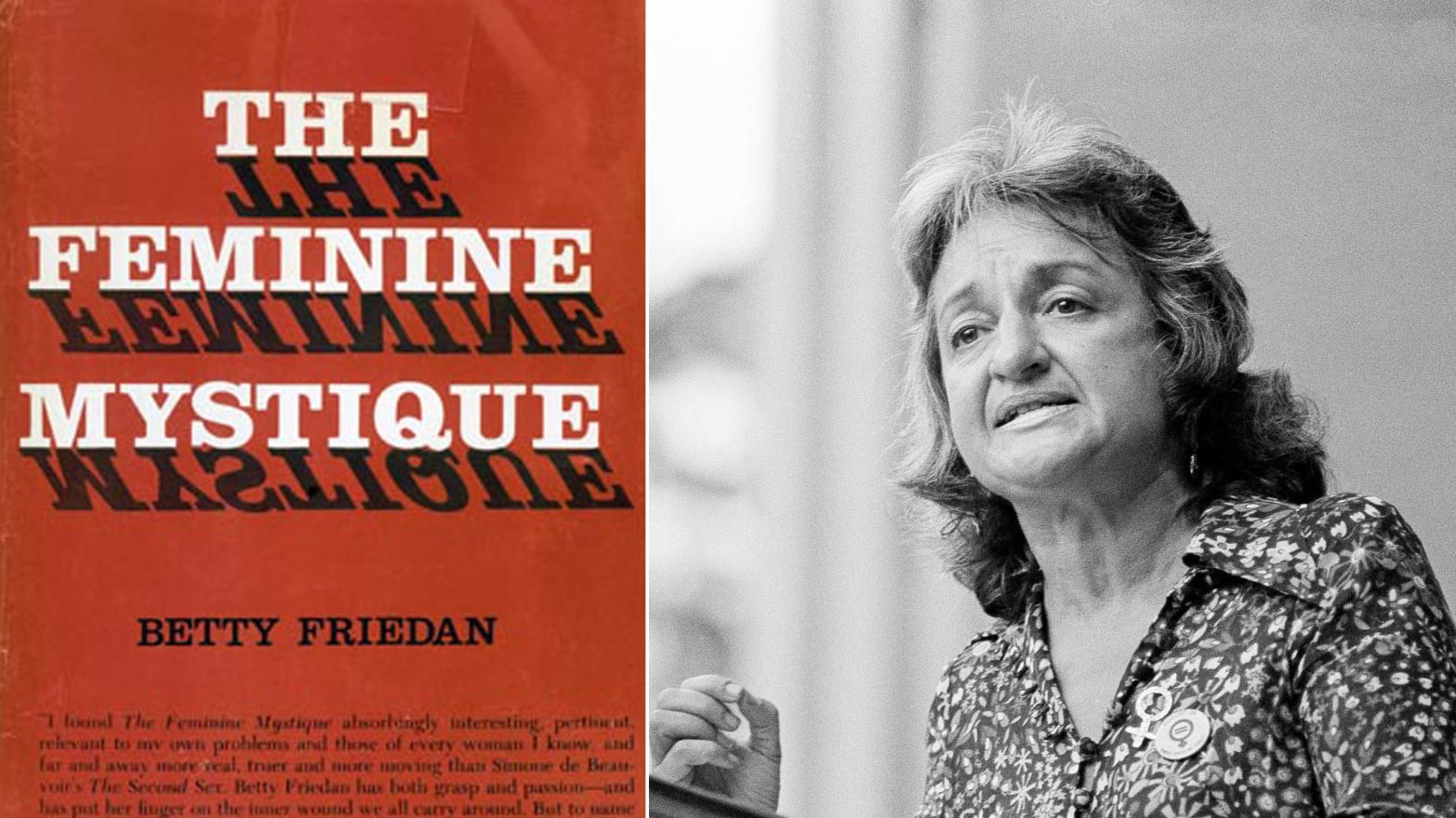
The Civil Rights Movement provided a template for activism that other groups adapted to their specific circumstances, using direct action, legal challenges, and appeals to American ideals of equality and justice.
What to Know About the Expansion of the Civil Rights Movement
- Cesar Chavez and Dolores Huerta's United Farm Workers used strikes and boycotts to seek better wages and working conditions, while the Chicano Movement emphasized cultural pride and political power.
- Native American activists used occupations to draw attention to treaty violations and reservation conditions; federal laws later expanded tribal control over services and protected traditional spiritual practices.
- The women's movement challenged discrimination and gender roles; Title IX barred discrimination in federally funded education, but the Equal Rights Amendment was not ratified.
- The Stonewall Riots marked a turning point for LGBTQ+ activism, which won recognition that homosexuality was not a mental disorder and later organized for AIDS research and treatment.
- Youth activists pushed for participatory democracy and student rights, while the counterculture challenged social norms and helped broaden debates about equality and culture.
The Latino Civil Rights Movement
Latino Americans faced widespread discrimination in employment, housing, and education, with experiences varying among Mexican Americans in the Southwest, Puerto Ricans in the Northeast, and Cuban immigrants in Florida:
- Farm workers, led by Cesar Chavez and Dolores Huerta, formed the National Farm Workers Association in 1962, which became the United Farm Workers (UFW) in 1966
- The UFW organized strikes and boycotts to improve working conditions and wages
- The grape boycott of 1965-1970 gained nationwide support and forced growers to negotiate
- Urban Latino communities formed organizations like the Mexican American Legal Defense and Education Fund (MALDEF)
- The Chicano Movement emerged, emphasizing cultural pride and political empowerment
- Latino activists fought for bilingual education and against educational segregation
- Young activists established the Brown Berets, modeled after the Black Panthers, to address police brutality
Latino activists rejected assimilation as the only path to equality, instead celebrating their cultural heritage while demanding full rights as American citizens.
Asian American activists, inspired by the same era of protest, also pushed for equality in society and the economy. They built a pan-Asian identity, formed organizations, and demanded fair treatment in jobs, housing, and education, much as Latino and American Indian movements did.
The American Indian Movement
Native Americans faced the highest rates of poverty, unemployment, and lowest life expectancy of any group in America. In response, they organized to reclaim their rights and cultural heritage:
- The American Indian Movement (AIM) was founded in 1968 to address police brutality and discrimination
- In 1969, activists occupied Alcatraz Island for 19 months, claiming it under an 1868 treaty
- The 1972 "Trail of Broken Treaties" march to Washington, DC culminated in the occupation of the Bureau of Indian Affairs
- In 1973, AIM led a 71-day occupation of Wounded Knee, South Dakota, site of the 1890 massacre
- These protests brought national attention to treaty violations and reservation conditions
- The Indian Self-Determination Act of 1975 gave tribes greater control over education and services
- The American Indian Religious Freedom Act of 1978 protected traditional spiritual practices
- Economic development efforts included establishing tribal colleges and casinos on reservation lands
Native American activism combined protests for political rights with a cultural renaissance that included language preservation, traditional arts, and spiritual practices. Like Latino and Asian American activists, who also sought remedies for earlier injustices, American Indians pressed for redress of past wrongs such as broken treaties.
The Women's Movement

The feminist movement of the 1960s and 1970s, often called the "second wave," built upon earlier women's rights efforts and challenged gender discrimination in all aspects of American life:
- Betty Friedan's 1963 book "The Feminine Mystique" articulated the dissatisfaction felt by many middle-class women
- The National Organization for Women (NOW), founded in 1966, became the largest feminist organization
- Women demanded enforcement of the Equal Pay Act of 1963 and Title VII of the Civil Rights Act of 1964
- Consciousness-raising groups helped women recognize shared experiences of discrimination
- Activists challenged gender stereotypes in media, education, and the workplace
- The Equal Rights Amendment (ERA) passed Congress in 1972 but fell short of state ratification
- Title IX (1972) prohibited gender discrimination in federally funded education programs
- The movement split between liberal feminists focused on legal equality and radical feminists calling for deeper social change
- Women of color formed organizations addressing the intersection of gender, race, and class discrimination
Women's activism extended beyond legal rights to challenge cultural attitudes about gender roles, family responsibilities, and sexuality.
LGBTQ+ Rights Movement
LGBTQ+ Americans faced widespread discrimination, including laws criminalizing homosexual behavior, employment discrimination, and social stigma:
- The Stonewall Riots of June 1969 marked a turning point when patrons of a New York gay bar fought back against a police raid
- The Gay Liberation Front and Gay Activists Alliance formed to advocate for equal rights
- Early victories included the removal of homosexuality from the American Psychiatric Association's list of mental disorders in 1973
- Activists challenged discriminatory laws and policies at local, state, and federal levels
- Harvey Milk became one of the first openly gay elected officials in the U.S. in 1977
- The movement faced a significant setback with the onset of the AIDS crisis in the early 1980s
- Activists responded by forming organizations like ACT UP to demand medical research and treatment
- Public debates about military service, anti-discrimination protections, and marriage rights continued into later decades
The LGBTQ+ movement challenged traditional views of gender and sexuality while advocating for legal protections against discrimination.

The Counterculture and Youth Activism
Young people in the 1960s rejected many traditional social norms and values, creating a counterculture that influenced social movements:
- College students formed the Students for a Democratic Society (SDS) to promote participatory democracy
- The Free Speech Movement at UC Berkeley in 1964 advocated for academic freedom and student rights
- Hippie culture rejected materialism and promoted alternative lifestyles
- The "Summer of Love" in 1967 attracted thousands to San Francisco's Haight-Ashbury district
- Underground newspapers, music, and art challenged mainstream cultural values
- The counterculture promoted greater informality in clothing, language, and relationships
- New attitudes toward sexuality developed, challenging traditional restrictions and taboos
- Drug experimentation became associated with youth rebellion and spiritual exploration
- Environmental concerns emerged as part of broader criticism of industrial society
Common Themes and Strategies
Despite their differences, these movements shared several characteristics:
| Movement | Key Organizations | Notable Leaders | Major Achievements |
|---|---|---|---|
| Latino Rights | United Farm Workers (UFW), MALDEF | Cesar Chavez, Dolores Huerta | Improved farm worker conditions, bilingual education |
| Native American | American Indian Movement (AIM) | Russell Means, Dennis Banks | Indian Self-Determination Act, religious freedom laws |
| Women's Rights | National Organization for Women (NOW) | Betty Friedan, Gloria Steinem | Title IX, workplace protections, reproductive rights |
| LGBTQ+ Rights | Gay Liberation Front, Gay Activists Alliance | Harvey Milk, Sylvia Rivera | Decriminalization of homosexuality, anti-discrimination laws |
| Youth/Counterculture | Students for Democratic Society (SDS) | Tom Hayden, Abbie Hoffman | Campus reforms, cultural transformation, environmental awareness |
These movements profoundly altered American society by expanding the definition of civil rights beyond race to include gender, sexuality, ethnicity, and culture. While achieving significant legal and cultural changes, they also revealed the persistence of discrimination and inequality in American life. The legacy of these movements continues to shape ongoing struggles for justice and equality in the United States.
Practice Questions for 8.11
1 of 10
Source A: "We must present ourselves as respectable, well-dressed citizens to prove to the public that homosexuals are indistinguishable from the heterosexual majority in our professional lives." (Activist pamphlet, 1965).
Source B: "We reject the attempt to fit into a repressive heterosexual society. We must come out openly, celebrate our differences, and dismantle the institutions that criminalize our existence." (Liberation manifesto, 1970).
Which statement best describes how the two arguments differ regarding LGBTQ+ activism?
A.
Source A advocates for private acceptance through professional conformity, while Source B demands cultural expression within private community spaces.
B.
Source A advocates for gradual legal reform through respectability, while Source B demands immediate equality through conventional political lobbying.
C.
Source A advocates for changing public opinion through conventional citizenship, while Source B demands legal protection through existing institutions.
D.
Source A advocates for social assimilation and respectability, while Source B demands radical visibility.
Vocabulary
The following words are mentioned explicitly in the AP® course framework for this topic.Term | Definition |
|---|---|
American Indian movements | Organized efforts by Native Americans to achieve social and economic equality and address historical injustices. |
Asian American movements | Organized efforts by Asian Americans to achieve social and economic equality and address historical injustices. |
civil rights | The movement and legal efforts to secure equal rights and protections for African Americans and other marginalized groups, particularly regarding ending segregation and discrimination. |
counterculture | A social movement of the 1960s in which young people rejected mainstream values and norms of their parents' generation, advocating alternative lifestyles and social change. |
Feminist movements | Organized efforts by women to achieve legal, economic, and social equality. |
Latino movements | Organized efforts by Latino/Hispanic Americans to achieve social and economic equality and address historical injustices. |
LGBTQ+ activism | Organized efforts by lesbian, gay, bisexual, transgender, and queer individuals to achieve legal, economic, and social equality. |
redress of past injustices | Efforts to address and remedy historical wrongs and discrimination experienced by marginalized groups. |
See Fiveable more often in Google
Mark Fiveable as a preferred source and Google is more likely to show you our guides in Top Stories, with a "preferred" badge in AI Mode and AI Overviews.