Theme 1 (NAT) - American and National Identity

🇺🇸AP US History Review
Theme 1 (NAT) - American and National Identity
🇺🇸 AP US History
Theme 1 (NAT) - American and National Identity
Theme 2 (WXT) - Work, Exchange, and Technology
Theme 3 (GEO) - Geography and The Environment
Theme 4 (MIG) - Migration and Settlement
Theme 5 (PCE) - Politics and Power
Theme 6 (WOR) - Americans in the World
Theme 7 (ARC) - American and Regional Culture
Theme 8 (SOC): Social Structures
Overview
Theme 1 in APUSH is NAT, American and National Identity. It tracks how and why definitions of American identity and values developed among the diverse and changing population of North America, along with related topics like citizenship, constitutionalism, foreign policy, assimilation, and American exceptionalism. NAT is one of eight themes that act as the connective tissue of the course, and because every DBQ and LEQ is built around a thematic focus, an identity-themed essay prompt is always a live possibility on the exam.
The core question is deceptively simple: what does it mean to be an "American," and who gets to count as one? The answer changes in every period, which is exactly what makes this theme so useful for essay writing.
Key Takeaways
- British colonists grew more culturally English while local self-government and religious diversity helped form a distinct colonial identity.
- Revolutionary ideas about natural rights shaped the Declaration of Independence, while the Constitution framed later debates; in the early 1800s, national culture grew alongside a distinctive Southern regional identity.
- Dred Scott denied African Americans citizenship, but Lincoln linked the Civil War to founding ideals, and the 13th, 14th, and 15th Amendments changed their constitutional rights.
- Plessy v. Ferguson upheld Jim Crow segregation, while immigrants negotiated Americanization and many American Indians preserved tribal identities despite federal assimilation policies.
- World War I brought speech restrictions, a Red Scare, and immigration quotas; World War II raised questions about civil liberties, especially through Japanese American internment.
- Cold War loyalty debates and the civil rights movement kept citizenship questions alive, while debates after 1980 continued over immigration, diversity, gender roles, and family structures.
What This Theme Means
NAT asks how a scattered set of colonies became a nation with a shared (and constantly contested) identity. Every NAT question is some version of "who is American, and what does America stand for?"
The theme breaks into a few sub-strands you'll see over and over:
- Citizenship. Who legally belongs? Watch this fight run from Dred Scott to the 14th and 15th Amendments to the civil rights movement.
- Constitutionalism. Americans define themselves through founding documents. The Declaration of Independence, the Articles of Confederation, the Constitution, and Federalist No. 10 are the required founding documents of the course, and later generations keep arguing about what those texts promised.
- Assimilation and Americanization. What happens when immigrants and Native peoples meet a dominant culture that demands they change? This strand peaks in the Gilded Age and the 1920s.
- American exceptionalism. The belief that America is a uniquely blessed nation with a special mission, from "city upon a hill" rhetoric to Manifest Destiny.
- National vs. regional identity. A national culture develops, but regional identities (especially a distinctive Southern identity built on slavery) keep pulling against it.
If a prompt mentions identity, citizenship, loyalty, belonging, or what the nation's ideals mean, you're in NAT territory.
NAT Across the Nine Periods
Here's the whole arc at a glance, then the period-by-period detail.
| Period | What happens with American and national identity |
|---|---|
| 1 (1491-1607) | Background only. Europeans and Native Americans assert divergent worldviews; racial justifications for subjugation emerge. |
| 2 (1607-1754) | Colonies undergo Anglicization while building autonomous self-government; a distinct colonial identity forms. |
| 3 (1754-1800) | The anchor period. Independence, the Declaration, the Constitution, and the first national culture. |
| 4 (1800-1848) | A new national culture and expanded democracy, but a distinctive Southern regional identity grows alongside it. |
| 5 (1844-1877) | Sectional crisis, Civil War, and the constitutional redefinition of citizenship in the 13th-15th Amendments. |
| 6 (1865-1898) | Jim Crow and Plessy v. Ferguson narrow citizenship; assimilation debates over immigrants and American Indians. |
| 7 (1890-1945) | World wars, Red Scare, quotas, and internment force questions of loyalty and who counts as American. |
| 8 (1945-1980) | Cold War loyalty debates and the civil rights movement's push to fulfill Reconstruction-era promises. |
| 9 (1980-present) | Continuing debates over immigration, diversity, gender roles, and post-9/11 civil liberties. |
Period 1 (1491-1607): Background, Not Core Coverage
There's no American identity yet because there's no America. The course frames this period through geography, world contact, and social structures instead. Still, the seeds matter. Europeans and Native Americans asserted divergent worldviews on religion, gender roles, family, land use, and power, and extended contact produced European debates over how non-Europeans should be treated, with evolving religious, cultural, and racial justifications for the subjugation of Africans and Native Americans. Those racial hierarchies will shape every later fight over who counts as American. Treat Period 1 as context, not evidence central to NAT.
Period 2 (1607-1754): Becoming More British and More American at Once
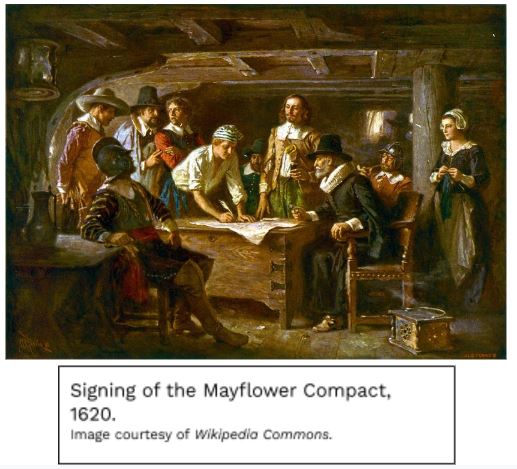


Here's the paradox that makes this period great essay material. The British colonies experienced gradual Anglicization, developing autonomous political communities based on English models, fueled by intercolonial commercial ties, a transatlantic print culture, and the spread of Protestant evangelicalism. Colonists were becoming more culturally English.
At the same time, they were becoming something new. Pluralism from different European religious and ethnic groups, later amplified by the First Great Awakening and Enlightenment ideas, seeded a distinct colonial identity. Local self-government (the Virginia House of Burgesses, New England town meetings, the Mayflower Compact) built habits of autonomy. The diverging goals of European leaders and colonists created growing mistrust on both sides of the Atlantic over territorial settlements, frontier defense, self-rule, and trade. Colonial resistance drew on local self-government experience, evolving ideas of liberty, Enlightenment political thought, religious independence, and an ideology critical of perceived corruption in the imperial system.
John Winthrop's "city upon a hill" sermon from this era is the classic early statement of American exceptionalism, the idea of America as a model society for the world.
Period 3 (1754-1800): The Anchor Period for NAT

This is the most important period for this theme, full stop. Unit 3 is explicitly framed around explaining the context in which America gained independence and developed a sense of national identity.
The Philosophical Foundations of the American Revolution (Topic 3.4) are the heart of it. Enlightenment ideas inspired American political thinkers to emphasize individual talent over hereditary privilege, while religion strengthened Americans' view of themselves as a people blessed with liberty. Colonial leaders justified resistance using the natural rights of British subjects, the rights of Englishmen, and Enlightenment ideas. The belief in republican government based on natural rights found its fullest expression in Thomas Paine's Common Sense and the Declaration of Independence (1776), and those ideas resonated throughout American history, shaping how Americans understood the nation's ideals. When Lincoln invokes 1776 at Gettysburg, or civil rights activists invoke equality in the 1960s, they're drawing on this period.
Four ideas from the Declaration anchor American political identity:
| Term | Definition |
|---|---|
| Inalienable rights | Fundamental rights no government can take away. Locke said "life, liberty, and property"; Jefferson revised it to "life, liberty, and the pursuit of happiness." |
| Social contract | Government derives its power from the consent of the governed. |
| Right to revolt | If government violates the social contract, the people may replace it. |
| Popular sovereignty | Political power resides in the people. |
Constitutionalism is the other NAT pillar here. The Articles of Confederation (1781) failed because their creators feared centralized power so much they built a paralyzed government. The Constitution (1787) and Federalist No. 10 created the framework Americans still argue about today.
Culture mattered too. New forms of national culture developed alongside continued regional variations, and ideas about national identity increasingly found expression in art, literature, and architecture (Topic 3.11). Republican motherhood gave women the role of raising virtuous citizens, transmitting national values across generations.
Period 4 (1800-1848): A National Culture and Its Regional Rival

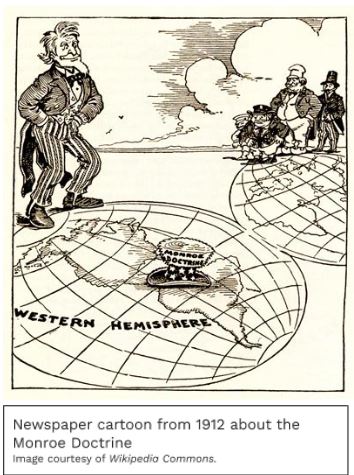
No Unit 4 topic carries a NAT tag, but the unit's capstone question is pure NAT: to what extent did politics, economics, and foreign policy promote the development of American identity from 1800 to 1848? The United States began to develop a modern democracy and celebrated a new national culture while Americans tried to make their society and institutions match their democratic ideals.
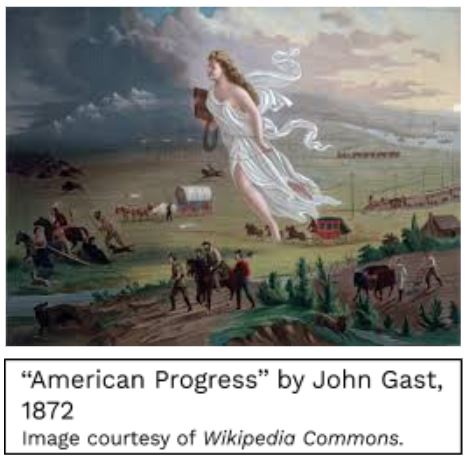
The evidence is rich. The Election of 1800 saw power transfer peacefully between rival parties for the first time. The War of 1812, sometimes called the Second War for Independence, confirmed American sovereignty and launched a wave of nationalism in the Era of Good Feelings. A new national culture emerged that combined American elements, European influences, and regional cultural sensibilities. Suffrage expanded to all adult white men, broadening who participated in the polity. Manifest Destiny, the belief that America was divinely destined to span the continent, put American exceptionalism into action, captured visually in John Gast's American Progress.
But that expansion had costs that complicate the identity story: Indian Removal and the Trail of Tears, and a Mexican-American War that raised the status of thousands of Mexican residents in conquered territory. Meanwhile, Southern reliance on staple-crop exports contributed to the growth of a distinctive Southern regional identity. That regional counterweight to national identity is the fuse for Period 5.
Period 5 (1844-1877): The Civil War Redefines What "American" Means
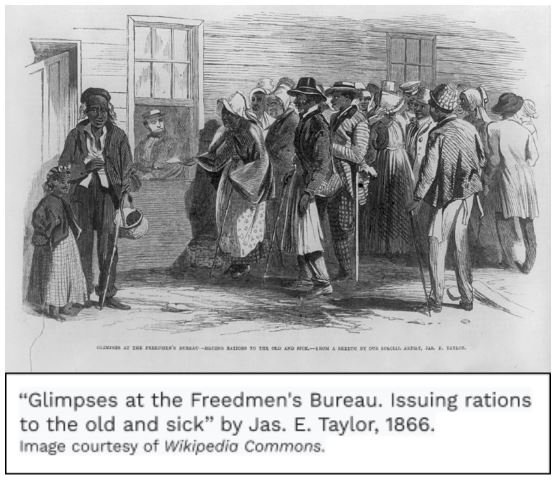
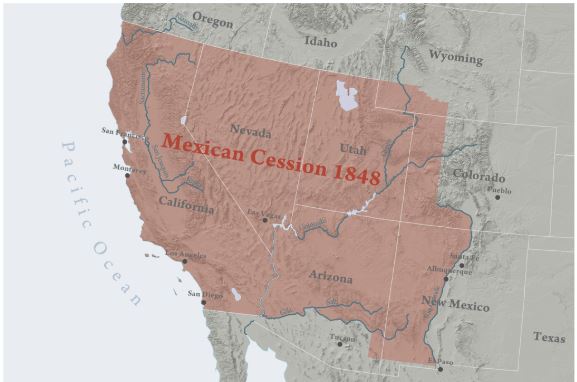
Three NAT-tagged topics make this period second only to Period 3 in importance. The Mexican Cession triggered heated controversies over whether to allow slavery in the new territories, which national leaders tried to resolve through the Compromise of 1850 (Topic 5.4). Citizenship questions also surrounded Mexican Americans and American Indians in newly acquired lands, and an anti-Catholic nativist movement aimed at limiting new immigrants' political power and cultural influence. Dred Scott v. Sandford (1857) gave the era's harshest answer to the citizenship question: the Supreme Court ruled that African Americans were not citizens at all.
During the Civil War (Topic 5.9), Lincoln's Emancipation Proclamation reframed the purpose of the war and helped prevent the Confederacy from gaining full diplomatic support from European powers, while African Americans fled plantations and enlisted in the Union Army. Lincoln used speeches like the Gettysburg Address to portray the struggle against slavery as the fulfillment of America's founding democratic ideals, dating the nation to 1776 ("four score and seven years ago") and the Declaration's promise of equality. This is the single best cross-period NAT example in the course: a Period 5 president redefining national identity using Period 3 documents.
Reconstruction then rewrote citizenship into the Constitution. The 13th Amendment abolished slavery; the 14th and 15th granted African Americans citizenship, equal protection under the laws, and voting rights. But Reconstruction's failure (Topic 5.11) shows continuity and change in what it meant to be American: segregation, violence, Supreme Court decisions, and local political tactics progressively stripped away African American rights. Crucially, the 14th and 15th Amendments eventually became the basis for court decisions upholding civil rights in the 20th century. Remember that line; it links Period 5 directly to Period 8.
Period 6 (1865-1898): Narrowed Citizenship and the Assimilation Debate
The NAT anchor here is the "New South" (Topic 6.4). Plessy v. Ferguson upheld racial segregation, known as Jim Crow, and helped mark the end of most of the political gains African Americans made during Reconstruction. Facing increased violence, discrimination, and scientific theories of race, African American reformers continued to fight for political and social equality.
Two other identity fights run through the Gilded Age. First, the growth of international migration brought increasing public debates over assimilation and Americanization, and many immigrants negotiated compromises between the cultures they brought and the culture they found in the United States (Topic 6.9). Second, the federal government violated treaties and confined American Indians to reservations, denying them sovereignty, yet many American Indians preserved their cultures and tribal identities despite government policies promoting assimilation.
Period 7 (1890-1945): Loyalty, Quotas, and Wartime Self-Definition
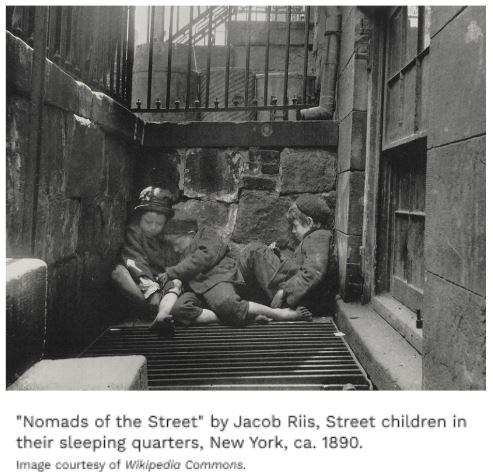
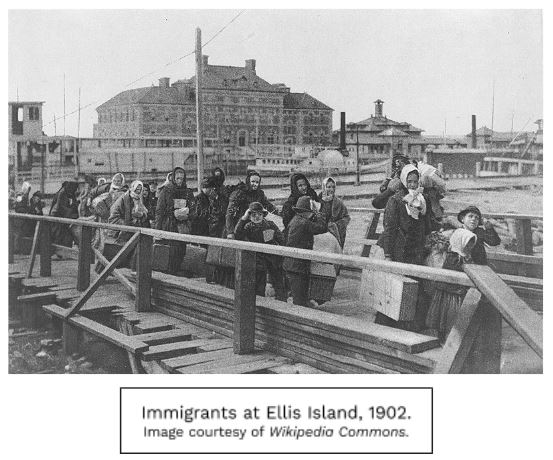
The unit's capstone asks you to compare the relative significance of the major events of the first half of the 20th century in shaping American identity, so the whole period is fair game for NAT prompts. Popular culture grew in influence even as debates increased over its effects on public values, morals, and American national identity.
The identity fights get sharp during the wars. During World War I, official restrictions on freedom of speech grew as anxiety about radicalism led to a Red Scare and attacks on labor activism and immigrant culture. Nativist campaigns produced immigration quotas restricting southern and eastern European immigration and increased barriers to Asian immigration. In the 1920s, Americans debated gender roles, modernism, science, religion, and issues related to race and immigration.
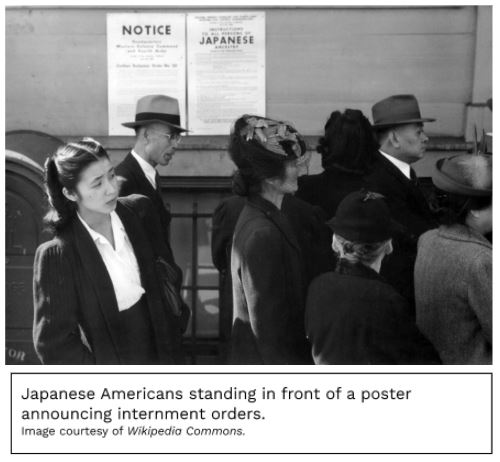
World War II shows both sides of the theme at once. Americans viewed the war as a fight for the survival of freedom and democracy against fascist and militarist ideologies, the clearest wartime statement of national self-definition. Yet mobilization produced debates over racial segregation and challenges to civil liberties, most notably the internment of Japanese Americans. A nation fighting for democracy abroad while interning citizens at home is exactly the kind of tension that earns essay complexity points.
Period 8 (1945-1980): Loyalty Tests and Reconstruction-Era Promises


The Red Scare (Topic 8.3) is the NAT anchor. Americans debated policies and methods designed to expose suspected communists within the United States even as both parties supported the broader strategy of containing communism. At its core, this was a citizenship-and-loyalty debate about who counts as a trustworthy American.
The civil rights movement carries the citizenship strand forward: activists sought to fulfill Reconstruction-era promises, directly invoking the 14th and 15th Amendment guarantees from Period 5. The unit capstone asks the extent to which events from 1945 to 1980 reshaped national identity, which is essentially a pre-written LEQ prompt.
Period 9 (1980-present): The Debates Continue

The unit capstone is explicitly NAT: explain the relative significance of the effects of change after 1980 on American national identity. Intense political and cultural debates continued over immigration policy, diversity, gender roles, and family structures during the Reagan era and after. The war on terrorism raised questions about the protection of civil liberties and human rights, echoing the World War I speech restrictions and the postwar Red Scare. Every Period 9 identity debate has an earlier-period parallel, which makes this period gold for "connections across periods" in essays.
Key Concepts and Vocabulary
These are the NAT terms most worth knowing cold. For more, hit the APUSH key terms glossary.
| Term | Why it matters for NAT |
|---|---|
| Citizenship | The legal question of who belongs; redefined by the 14th Amendment |
| Constitutionalism | Defining the nation through founding documents |
| American exceptionalism | Belief in America's unique mission, from Winthrop to Manifest Destiny |
| Anglicization | Colonies becoming culturally English while developing autonomy (Period 2) |
| Natural rights / rights of Englishmen | The vocabulary of revolutionary-era political identity |
| Republicanism | Government based on popular consent, expressed in Common Sense and the Declaration |
| Declaration of Independence (1776) | Required founding document; the nation's ideological birth certificate |
| Constitution (1787) and Federalist No. 10 | Required founding documents anchoring constitutionalism |
| Republican motherhood | Women's role transmitting national values to the next generation |
| National culture vs. regional variation | The push-pull between one identity and many (Periods 3-4) |
| Distinctive Southern regional identity | The regional identity, built on staple crops and slavery, that fractures the nation |
| Emancipation Proclamation | Reframed the Civil War's purpose and deterred European support for the Confederacy |
| Gettysburg Address | Lincoln casting the war as fulfilling the founding democratic ideals |
| 13th, 14th, 15th Amendments | Abolition, citizenship, equal protection, and voting rights written into the Constitution |
| Plessy v. Ferguson / Jim Crow | Segregation upheld; Reconstruction's political gains rolled back |
| Nativism and immigration quotas | Movements to limit immigrants' political power and cultural influence |
| Assimilation / Americanization | Gilded Age debates over immigrant and American Indian identity |
| Red Scare (WWI-era and post-WWII) | Loyalty panics defining who counts as a trustworthy American |
| Japanese American internment | The signature WWII civil liberties violation |
| Tribal sovereignty | Denied by treaty violations and reservation policy, preserved through cultural persistence |
How to Use This Theme on the Exam
Every DBQ and LEQ is aligned to a thematic focus, so a NAT-themed essay can show up in any administration. The exam runs 3 hours 15 minutes: 55 multiple-choice questions (40%), 3 short-answer questions (20%), 1 DBQ (25%), and 1 LEQ (15%).
Know the period windows, because they decide which NAT material you can use where:
- DBQ: covers 1754-1980. Revolution-era identity, Reconstruction citizenship, and Cold War loyalty debates are all eligible.
- SAQs: SAQs 1 and 2 cover 1754-1980; SAQ 3 covers 1491-1877 and SAQ 4 covers 1865-2001 (you choose between them).
- LEQ: the three options cover 1491-1800, 1800-1898, and 1890-2001, all sharing the same reasoning process.
NAT pairs with all three reasoning processes in the course: continuity and change (Philosophical Foundations of the Revolution; the "New South"), comparison (the Compromise of 1850), and causation (the Red Scare). The period-capstone identity questions (Periods 4, 7, 8, and 9) use "extent" and "relative significance" language, the same task verbs as real LEQ prompts. Practice answering them as essays.
The biggest payoff is the complexity point. The DBQ and LEQ rubrics reward "explaining multiple themes or perspectives to explore complexity or nuance" and "explaining relevant and insightful connections within and across periods." NAT hands you a ready-made cross-period thread: natural-rights ideology in the Revolution becomes Lincoln's Gettysburg framing, which becomes the Reconstruction amendments, which become the "Reconstruction-era promises" the civil rights movement fought to fulfill, which echo in post-1980 identity debates. If you can write that chain into an essay where it fits, you're working at the level the rubric rewards.
One more strategic note: Units 3 through 8 are each worth 10-17% of the exam, while Units 1 and 9 are only 4-6% each. The NAT material that matters most sits exactly where the exam weight is heaviest, especially Periods 3 and 5.
Practice and Next Steps
Start by drilling identity-related multiple choice with guided practice questions, then write a timed essay on a NAT-style prompt using FRQ practice with instant scoring. A good self-test: pick any two periods and write a thesis explaining continuity or change in what it meant to be American between them.
NAT rarely travels alone in essay prompts. It overlaps constantly with Theme 5 (PCE), Politics and Power on citizenship and constitutional fights, Theme 4 (MIG), Migration and Settlement on assimilation and nativism, and Theme 7 (ARC), American and Regional Culture on national culture versus regional identity. Review those next, then test the whole picture with a full-length practice exam.
Frequently Asked Questions
What is Theme 1 (NAT) in APUSH?
NAT stands for American and National Identity, the first of eight APUSH themes. It covers how and why definitions of American identity and values developed among North America's diverse population, including citizenship, constitutionalism, foreign policy, assimilation, and American exceptionalism. Think of it as the running question 'who counts as American, and what does America stand for?' traced from the colonies to the present.
What are the 8 APUSH themes?
The eight APUSH themes are American and National Identity (NAT), Work, Exchange, and Technology (WXT), Geography and the Environment (GEO), Migration and Settlement (MIG), Politics and Power (PCE), America in the World (WOR), American and Regional Culture (ARC), and Social Structures (SOC). They cross-cut all nine periods and serve as the connective tissue of the course. You can review each one through Fiveable's APUSH thematic guides.
Does the NAT theme show up in every APUSH period?
Not equally. Periods 1 and 4 have no NAT-tagged topics, so treat Period 1 as background and use Period 4 evidence (new national culture, expanded suffrage, Southern regional identity) through its capstone identity question. The richest NAT material sits in Period 3 (Revolution and founding documents) and Period 5 (Civil War, the Gettysburg Address, and the 13th-15th Amendments), which are also among the heaviest-weighted units on the exam.
Can the APUSH DBQ or LEQ be about American and national identity?
Yes. Every DBQ and LEQ is aligned to one of the eight themes, so a NAT prompt is possible in any administration. The DBQ covers 1754-1980, which makes Revolution-era identity, Reconstruction citizenship, and Cold War loyalty debates all fair game. You can practice identity-themed prompts with FRQ practice and instant scoring.
What are the best examples for an APUSH essay on national identity?
The strongest cross-period chain runs from Revolution-era natural-rights ideology (Common Sense and the Declaration of Independence) to Lincoln's Gettysburg Address framing the Civil War as fulfilling founding ideals, to the 14th and 15th Amendments redefining citizenship, to the civil rights movement fulfilling those Reconstruction-era promises. That kind of across-period connection maps directly onto the rubric's complexity point. Other strong evidence includes Plessy v. Ferguson, 1920s immigration quotas, Japanese American internment, and the post-WWII Red Scare.
See Fiveable more often in Google
Mark Fiveable as a preferred source and Google is more likely to show you our guides in Top Stories, with a "preferred" badge in AI Mode and AI Overviews.