Theme 6 (WOR) - Americans in the World

🇺🇸AP US History Review
Theme 6 (WOR) - Americans in the World
🇺🇸 AP US History
Theme 1 (NAT) - American and National Identity
Theme 2 (WXT) - Work, Exchange, and Technology
Theme 3 (GEO) - Geography and The Environment
Theme 4 (MIG) - Migration and Settlement
Theme 5 (PCE) - Politics and Power
Theme 6 (WOR) - Americans in the World
Theme 7 (ARC) - American and Regional Culture
Theme 8 (SOC): Social Structures
Overview
Theme 6 (WOR), America in the World (often searched as "Americans in the World"), tracks two big stories: how interactions between nations shaped North American history during the colonial era, and how the United States influenced world affairs once it existed. WOR is one of eight themes that act as the connective tissue of APUSH, and it shows up in every unit from European exploration in 1491 to the war on terrorism. If a DBQ or LEQ prompt mentions foreign policy, war, empire, or America's "role in the world," you're in WOR territory.
This theme is unusually exam-relevant because the College Board's own published sample DBQ is a WOR prompt (on the expanding U.S. role in the world from 1865 to 1910). Knowing the through-line from Washington's Farewell Address to containment to 9/11 gives you ready-made cross-period connections, which is exactly what the complexity point on the DBQ and LEQ rewards.
Key Takeaways
- European competition for wealth and territory shaped early North America, while Native nations made alliances, negotiated, and resisted colonial expansion.
- The Seven Years' War expanded British territory but brought heavy costs; European allies later helped the Patriots win the Revolution, and Washington warned against permanent foreign alliances.
- The Monroe Doctrine opposed further European colonization in the Western Hemisphere, the Mexican-American War raised questions about slavery in new territories, and the Emancipation Proclamation hindered Confederate diplomacy.
- Overseas markets and the Spanish-American War expanded U.S. influence abroad; after entering two world wars, the United States emerged as the most powerful nation on Earth.
- During the Cold War, the United States pursued containment through aid, institutions, and wars in Korea and Vietnam, while Americans debated nuclear weapons and executive war powers.
- Military spending, diplomacy, and changes in Eastern Europe and the Soviet Union helped end the Cold War; after September 11, U.S. wars against terrorism raised civil liberties questions.
What This Theme Means
WOR asks one core question with two halves. First, how did global rivalries, wars, and ideas shape what happened in North America? Second, how did the United States project power and influence abroad, and how did Americans argue about whether it should?
That second half matters more than students expect. WOR isn't just a list of wars. It's also a 200-year-running argument about what America's "proper role in the world" should be: isolationist or engaged, republic or empire, world policeman or neutral trader. The theme breaks down into a few recurring strands:
- Imperial competition in the colonial era. European nations competing for wealth, territory, and converts, with Native nations as players (not just victims) who made alliances, negotiated, and resisted militarily.
- The foreign policy of a new and growing nation. Diplomacy with Britain and Spain, the Monroe Doctrine, wars of expansion against Mexico.
- The turn to empire and global power. Overseas markets, the Spanish-American War, two world wars, and the emergence of the U.S. as a superpower.
- The Cold War and after. Containment, decolonization, détente, the end of the Cold War, and the war on terrorism.
- Debates over American power. Imperialists vs. anti-imperialists, isolationism vs. intervention, the military-industrial complex, executive war powers, civil liberties in wartime.
WOR overlaps constantly with Theme 5 (PCE), Politics and Power (foreign policy fights become domestic political fights) and Theme 1 (NAT), American and National Identity (wars reshape who counts as American).
WOR Across the Nine Periods
Here's the theme at a glance, then the period-by-period detail.
| Period | What happens with WOR |
|---|---|
| 1 (1491-1607) | European exploration driven by wealth, competition, and Christianity; Columbian Exchange; first European-Native interactions |
| 2 (1607-1754) | Imperial rivalry in the colonies; Native alliances, accommodation, and conflict (Metacom's War, Pueblo Revolt) |
| 3 (1754-1800) | Seven Years' War; Revolution won with European allies; revolutionary ideals spread abroad; Farewell Address warns against permanent alliances |
| 4 (1800-1848) | Louisiana Purchase diplomacy; War of 1812; Monroe Doctrine claims the Western Hemisphere |
| 5 (1844-1877) | Mexican-American War adds vast territory; Emancipation Proclamation blocks Confederate diplomacy |
| 6 (1865-1898) | Businesses and policymakers look outward to the Pacific Rim, Asia, and Latin America; the on-ramp to empire |
| 7 (1890-1945) | Imperialism debates; Spanish-American War; WWI; interwar unilateralism; WWII; U.S. emerges as the most powerful nation on Earth |
| 8 (1945-1980) | Containment, Korea and Vietnam, détente, decolonization, Cold War in Latin America and the Middle East |
| 9 (1980-present) | Reagan buildup and the end of the Cold War; 9/11 and the war on terrorism; continued superpower status |
Period 1 (1491-1607): Exploration and First Contact
European exploration and conquest of the New World stemmed from a search for new sources of wealth, economic and military competition, and a desire to spread Christianity (Topic 1.3). That three-part motive list ("God, gold, glory") is the classic causation answer for early WOR prompts. Spanish conquests of the Aztec and Inca empires brought in gold and silver that strengthened Spain and generated intense competition and change within European societies, pulling France and England into the race.
Contact itself was a WOR story (Topic 1.6). Europeans and Native Americans held divergent worldviews on religion, gender roles, family, land use, and power, and mutual misunderstandings defined the early years of interaction and trade. As European encroachment grew, native peoples defended their political sovereignty and religious beliefs through both diplomatic negotiations and military resistance. Meanwhile, contact sparked debates within Europe over how non-Europeans should be treated, alongside evolving religious, cultural, and racial justifications for subjugation. The Columbian Exchange (crops, livestock, people, and devastating diseases like smallpox) made the Atlantic a single connected world.
Period 2 (1607-1754): Imperial Rivalry and Native Diplomacy
Competition over resources between European rivals and American Indians encouraged trade and led to conflict (Topic 2.5). The key move here is to treat Native nations as diplomatic actors: French, Dutch, British, and Spanish colonies allied with and armed American Indian groups, who in turn sought European alliances against rival Native groups. The French built fur-trade partnerships; the British planted permanent agricultural colonies that gobbled land and triggered clashes.
Three conflicts to know cold:
- The Pequot War (1636-1638) destroyed a major Native group in New England amid land disputes and Puritan expansion.
- Metacom's War (King Philip's War, 1675-1678) grew out of British conflicts with American Indians over land, resources, and political boundaries. It was one of the deadliest colonial wars and a major Native attempt to halt English encroachment.
- The Pueblo Revolt (1680) drove the Spanish out of New Mexico for over a decade. Afterward, Spain accommodated some aspects of American Indian culture in the Southwest. That conflict-then-accommodation pattern is a favorite comparison point (Spanish vs. British responses to resistance).
Period 3 (1754-1800): War, Revolution, and a New Nation's Diplomacy
The Seven Years' War (French and Indian War, Topic 3.2) is the hinge of the whole course. British colonial population growth threatened French-Indian trade networks and American Indian autonomy; Britain won a major expansion of its territorial holdings but at tremendous expense, setting the stage for imperial efforts to raise revenue and consolidate control. Cue the Stamp Act, the Tea Act, and colonial resistance.
The Revolution itself (Topic 3.5) was won internationally. Despite Britain's apparently overwhelming military and financial advantages, the Patriot cause succeeded through colonial militias and the Continental Army, Washington's leadership, ideological commitment, and assistance sent by European allies. The 1778 French alliance brought money, troops, and a navy; Spain and the Netherlands also joined against Britain. Then the ideals flowed back outward: the Declaration of Independence reverberated in France, Haiti, and Latin America, inspiring future independence movements, including the Haitian Revolution (1791-1804), the first successful slave revolt in history.
As a new nation, the U.S. forged diplomatic initiatives to deal with the continued British and Spanish presence in North America (Topic 3.10). War between France and Britain after the French Revolution created challenges over free trade and foreign policy and fed domestic political disagreement. Washington's Farewell Address warned about the danger of permanent foreign alliances, launching the isolationist tradition that WOR prompts return to again and again.
Periods 4-5 (1800-1877): Expansion, Hemisphere, and Civil War Diplomacy
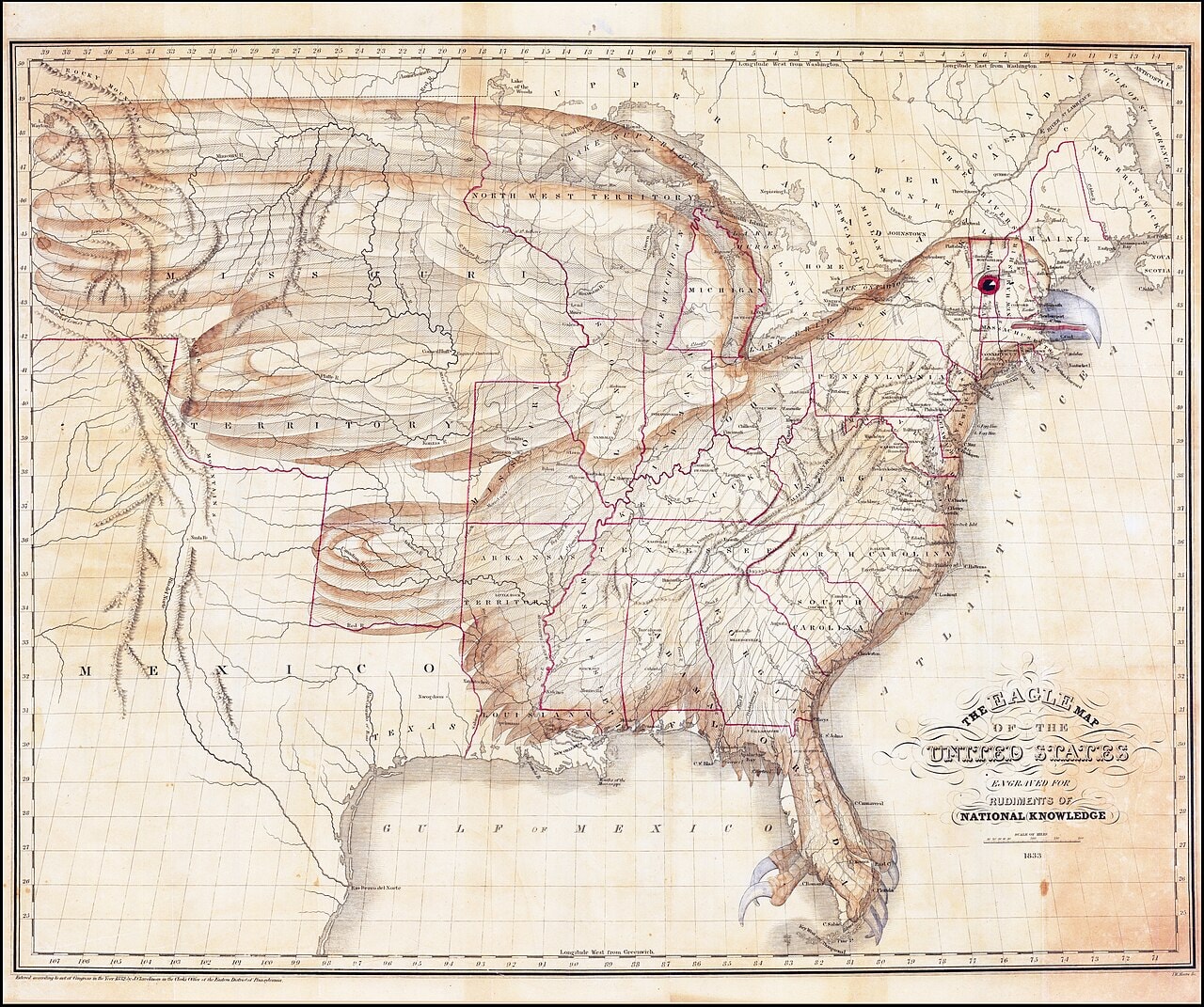
Struggling to create an independent global presence, the United States claimed territory across the continent and promoted foreign trade (Topic 4.4). The Louisiana Purchase came with exploration and diplomatic efforts to extend influence. The War of 1812, sparked partly by British impressment of American sailors, ended in stalemate with the Treaty of Ghent but boosted nationalism and weakened British-allied Native resistance in the Northwest. The Monroe Doctrine (1823) declared the Western Hemisphere closed to further European colonization. The U.S. couldn't enforce it yet, but it became the foundation of hemispheric policy, and the U.S. pursued influence over the hemisphere through military actions, American Indian removal, and diplomacy.
In Period 5, victory in the Mexican-American War (1846-1848, Topic 5.3) plus diplomatic negotiations (including the Gadsden Purchase, 1853) added large western territories, raising questions about the status of slavery, American Indians, and Mexicans in the newly acquired lands. That's the WOR-to-PCE pipeline: a foreign war directly caused the sectional crisis. Expanding trade interest also produced economic, diplomatic, and cultural initiatives toward Asia.
The Civil War had a crucial diplomatic dimension. The Confederacy hoped cotton would win British and French recognition, but the Emancipation Proclamation reframed the war as a moral struggle against slavery and helped prevent the Confederacy from gaining full diplomatic support from European powers. The Union's blockade (the Anaconda Plan) choked off Confederate trade, and the Union ultimately prevailed through better leadership and strategy, key victories, greater resources, and the destruction of Southern infrastructure.
Period 6 (1865-1898): The On-Ramp to Empire
Period 6 has the lightest WOR coverage, but it sets up everything in Period 7. Businesses increasingly looked outside U.S. borders to gain influence and control over markets and natural resources in the Pacific Rim, Asia, and Latin America, and foreign policymakers followed. Naval strategist Alfred Thayer Mahan argued for sea power and overseas bases. Ideas of racial superiority and "civilizing" missions, rooted in Social Darwinism, supplied the ideology. The period ends on the eve of the Spanish-American War in 1898.
Period 7 (1890-1945): Becoming a Global Power
This is WOR's densest stretch, with four heavily tested moments:
- The imperialism debate (Topic 7.2). Imperialists cited economic opportunities, racial theories, competition with European empires, and the 1890s perception that the Western frontier was "closed." Anti-imperialists cited self-determination and invoked both racial theories and the U.S. tradition of isolationism. Notice that both sides used racial arguments. That nuance earns complexity credit.
- The Spanish-American War (1898, Topic 7.3). Victory led to U.S. acquisition of island territories in the Caribbean and the Pacific (Puerto Rico, Guam, the Philippines, plus the annexation of Hawaii the same year), increased involvement in Asia, and the suppression of a nationalist movement in the Philippines. Roosevelt's "big stick" diplomacy and the Panama Canal (1904-1914) extended U.S. power in Latin America.
- World War I (Topic 7.5). After initial neutrality, the U.S. entered the war, departing from its tradition of noninvolvement in European affairs, in response to Wilson's call to defend humanitarian and democratic principles (the Zimmermann Telegram helped push the decision). The American Expeditionary Forces played a relatively limited combat role but tipped the balance toward the Allies. Then the Senate refused to ratify the Treaty of Versailles or join the League of Nations.
- The interwar years and World War II (Topics 7.11, 7.13, 7.14). The U.S. pursued a unilateral foreign policy using international investment, peace treaties, and select military intervention, even while maintaining isolationism. Most Americans opposed war until the Japanese attack on Pearl Harbor (1941). Americans saw WWII as a fight for the survival of freedom and democracy against fascist and militarist ideologies, a view reinforced by revelations about Japanese wartime atrocities, Nazi concentration camps, and the Holocaust. Victory came through Allied cooperation, technological advances, island-hopping in the Pacific, and the D-Day invasion. The atomic bombs hastened the war's end and sparked lasting moral debates. With Europe and Asia in ruins, the United States emerged from the war as the most powerful nation on Earth.
Period 8 (1945-1980): Containment and the Cold War
The U.S. built a foreign policy based on collective security, international aid, and economic institutions that bolstered non-Communist nations (Topic 8.2), and it sought to contain communism through measures including major military engagements in Korea and Vietnam. The Cold War fluctuated between periods of direct and indirect confrontation and periods of mutual coexistence, or détente. That fluctuation is why Topic 8.2 pairs with continuity and change: containment is the continuity, the intensity is the change.
Cold War competition extended to Latin America, where the U.S. supported non-Communist regimes with varying levels of commitment to democracy. Postwar decolonization and powerful nationalist movements in Africa, Asia, and the Middle East led both superpowers to court new nations, many of which stayed nonaligned. Vietnam (Topic 8.8) belongs to both stories: containment and decolonization at once. At home, Americans debated the merits of a large nuclear arsenal and the military-industrial complex, and Vietnam triggered debates over executive power in foreign and military policy. Ideological, military, and economic concerns also shaped U.S. involvement in the Middle East, where the 1973 oil crisis exposed American dependence on global energy markets.
Period 9 (1980-present): Cold War's End and the War on Terrorism
Reagan asserted U.S. opposition to communism through speeches, diplomatic efforts, limited military interventions, and a buildup of nuclear and conventional weapons (Topic 9.3). Increased U.S. military spending, Reagan's diplomatic initiatives, and political changes and economic problems in Eastern Europe and the Soviet Union all helped end the Cold War. Its end brought new U.S. military and peacekeeping interventions and continued debates over the appropriate use of American power.
After the September 11, 2001 attacks on the World Trade Center and the Pentagon, the U.S. launched military efforts against terrorism and lengthy, controversial conflicts in Afghanistan and Iraq (Topic 9.6). The war on terrorism raised questions about the protection of civil liberties and human rights. Despite economic and foreign policy challenges, the United States continued as the world's leading superpower in the 21st century.
Key Concepts and Vocabulary
Build fluency with these WOR terms, and check the APUSH key terms glossary for fuller definitions:
| Term | Why it matters for WOR |
|---|---|
| Columbian Exchange | Connected the Americas to global trade, crops, and disease networks |
| Metacom's War (King Philip's War) | British-Native conflict over land, resources, and boundaries in New England |
| Pueblo Revolt (1680) | Native resistance that forced Spanish accommodation in the Southwest |
| Seven Years' War | British victory, massive debt, and the road to Revolution |
| French alliance (1778) | European assistance that made Patriot victory possible |
| Washington's Farewell Address | Warned against permanent foreign alliances; root of isolationism |
| Monroe Doctrine (1823) | Declared the Western Hemisphere off-limits to new European colonization |
| Mexican-American War | Territorial gains that reignited the slavery question |
| Emancipation Proclamation (diplomatic effect) | Blocked full European diplomatic support for the Confederacy |
| Imperialism vs. anti-imperialism | The 1890s debate over America's proper role in the world |
| Spanish-American War (1898) | Caribbean and Pacific territories; suppression of Filipino nationalism |
| Treaty of Versailles / League of Nations rejection | Senate refusal that signaled retreat from European entanglement |
| Interwar unilateralism | Investment, peace treaties, and select intervention while staying isolationist |
| Pearl Harbor (1941) | The attack that ended isolationism and brought the U.S. into WWII |
| Atomic bombs | Hastened WWII's end; sparked debates about the morality of atomic weapons |
| Containment | The Cold War strategy behind Korea, Vietnam, and collective security |
| Détente | Periods of mutual coexistence within the Cold War |
| Decolonization and nonaligned nations | New nations both superpowers courted after WWII |
| Military-industrial complex | Target of domestic debate over Cold War militarization |
| War on terrorism | Post-9/11 conflicts in Afghanistan and Iraq; civil liberties questions |
How to Use Theme 6 on the Exam
WOR prompts come in two default shapes. The first is causation: "evaluate the causes (or effects) of war X." Exploration, the Seven Years' War, the Revolution, the Mexican-American War, WWI, WWII, Vietnam, and the end of the Cold War all lean on cause-and-effect reasoning. The second is comparison: "compare attitudes about the nation's proper role in the world," which is the exact framing behind both the imperialism debates of the 1890s and interwar foreign policy. If you see either shape, sort your evidence into categories (economic, ideological, strategic) before you write.
The exam's published sample DBQ is pure WOR: "Evaluate the relative importance of different causes for the expanding role of the United States in the world in the period from 1865 to 1910." Its seven documents include the 1867 Alaska cession treaty, Josiah Strong's Our Country (1885), Mahan on sea power (1897), political cartoons from 1898 and 1901, John Hay's Second Open Door Note (1900), and Theodore Roosevelt's 1904 Annual Message. That mix (treaties, ideological tracts, naval strategy, cartoons, diplomatic notes, presidential messages) is what a WOR document set looks like, so practice sourcing those genres.
Know the chronological windows. The DBQ covers 1754-1980, which spans the Seven Years' War through Vietnam, so the heart of WOR is always in play. SAQ 3 covers 1491-1877 (exploration, colonial conflicts, antebellum expansion); SAQ 4 covers 1865-2001 (imperialism through the eve of 9/11). LEQ options cover 1491-1800, 1800-1898, and 1890-2001. The exam itself is 55 multiple-choice questions (40%), 3 SAQs (20%), the DBQ (25%), and the LEQ (15%). WOR's heaviest units (3, 5, 7, and 8) each carry 10-17% of the exam, so your study time should tilt there.
For the complexity point, which rewards explaining multiple causes or effects and making connections across periods, WOR hands you a ready-made arc: the isolationism-to-engagement debate. Trace it from the Farewell Address through the Monroe Doctrine, anti-imperialism, WWI entry and the Versailles rejection, interwar unilateralism, Pearl Harbor, containment, and the war on terrorism. A second built-in arc is the recurring debate over the use of American power, from the imperialism debates to the military-industrial complex to executive war powers in Vietnam to civil liberties after 9/11. Either arc, deployed in a conclusion paragraph, is a strong play for that point. Try drafting one with FRQ practice and instant scoring to see how your thesis and complexity moves hold up.
Two writing samples to model:
SAQ-style: Identify and explain one reason the United States expanded its role in world affairs between 1890 and 1917. Sample response: The U.S. expanded its global role partly out of a desire for new markets and strategic positions. As industrial production grew, business leaders pushed for overseas territories to sell goods and acquire raw materials, and naval strategists like Mahan called for bases to protect trade. Combined with racial theories and the perception that the frontier had closed, these pressures led to the annexation of Hawaii and the Spanish-American War.
LEQ-style thesis: "The Cold War profoundly shaped U.S. foreign policy between 1945 and 1980, producing military interventions, global alliances, and arms buildups. Although economic and humanitarian concerns played a role, nearly all major decisions, whether in Korea, Vietnam, or the Middle East, were filtered through anti-communism and the goal of containing Soviet influence." Notice the structure: a clear claim of extent, a concession, and named categories of evidence.
Practice and Next Steps
Test your WOR fluency with guided multiple-choice practice, then write timed responses using the FRQ question bank and get instant feedback through FRQ practice. When you're ready to put it all together, take a full-length APUSH practice exam.
WOR connects naturally to the other seven themes, so round out your thematic review with the rest of the APUSH thematic guides, starting with Theme 5 (PCE), Politics and Power, since foreign policy debates and domestic politics are two sides of the same prompt.
Frequently Asked Questions
What is Theme 6 (WOR) in APUSH?
Theme 6, America in the World (WOR), covers interactions between nations that affected North American history in the colonial period and the influence of the United States on world affairs afterward. It runs from European exploration in 1491 through the war on terrorism, including the Seven Years' War, the Monroe Doctrine, the Spanish-American War, both world wars, and Cold War containment. It's one of eight themes that connect content across the whole course.
Is the APUSH theme called 'America in the World' or 'Americans in the World'?
The official name is Theme 6: America in the World, abbreviated WOR. Many students and teachers say "Americans in the World," but both refer to the same theme about foreign policy, wars, imperialism, and global influence. On the exam, you'll never be asked the theme's name, just to write arguments using its content.
How does the APUSH exam test the WOR theme?
WOR prompts usually take two shapes: causation questions about the causes and effects of a war (Seven Years' War, WWI, Vietnam) and comparison questions about American attitudes toward the nation's proper role in the world (imperialism debates, interwar foreign policy). The College Board's published sample DBQ is a WOR prompt on the expanding U.S. role in the world from 1865 to 1910. Practice building these arguments with FRQ practice and instant scoring.
Is WOR just about wars in APUSH?
No. WOR includes diplomacy (the Monroe Doctrine, the Emancipation Proclamation's effect on European recognition of the Confederacy), economic expansion (businesses pursuing Pacific Rim and Latin American markets after 1865), and especially domestic debates over American power, like imperialists vs. anti-imperialists and the military-industrial complex. The recurring isolationism-vs-engagement argument is one of the best cross-period threads for earning the DBQ/LEQ complexity point.
Which APUSH units have the most Theme 6 (WOR) content?
Period 7 (1890-1945) is the densest WOR unit, covering the imperialism debates, the Spanish-American War, WWI, interwar policy, and WWII. Units 3, 5, 7, and 8 are WOR's heaviest and each carries 10-17% of the exam, while Periods 1 and 9 are 4-6% each. Period 6 has no WOR-tagged topic but sets up empire through overseas market expansion, so review all nine periods in the thematic guides.
See Fiveable more often in Google
Mark Fiveable as a preferred source and Google is more likely to show you our guides in Top Stories, with a "preferred" badge in AI Mode and AI Overviews.