AMSCO 3.2 The Seven Year's War

🇺🇸AP US History Review
AMSCO 3.2 The Seven Year's War
🇺🇸 AP US History
AMSCO 1.2:Native American Societies Before European Contact Notes
AMSCO 2.1 Context: European Colonization of North America Notes
AMSCO 2.2 European Colonization Notes
AMSCO 2.3 The Regions of the British Colonies Notes
AMSCO 2.4 Transatlantic Trade Notes
AMSCO 2.5 Interactions between American Indians and Europeans Notes
AMSCO 2.6 Slavery in the British Colonies Notes
AMSCO 2.7 Colonial Society and Culture Notes
AMSCO 2.8 Comparison in Period 2 (1607-1754) Notes
AMSCO 3.1 Contextualizing Period 3
AMSCO 3.2 The Seven Year's War
AMSCO 3.3 Taxation Without Representation
AMSCO 3.4 Philosophical Foundations of the American Revolution
AMSCO 3.5 The American Revolution
AMSCO 3.6 The Influence of Revolutionary Ideals
AMSCO 3.7 The Articles of Confederation
AMSCO 3.8 The Constitutional Convention and Debates Over Ratification
AMSCO 3.9 The Constitution
AMSCO 3.10 Shaping a New Republic
AMSCO 3.11 Developing an American Identity
AMSCO 3.12 Movements in the Early Republic
AMSCO 3.13 Continuity and Change in Period 3
AMSCO 4.1 Contextualizing Period 4
AMSCO 4.2 The Rise of Political Parties and the Era of Jefferson
AMSCO 4.3 Politics and Regional Interests
AMSCO 4.4 America on the World Stage
AMSCO 4.5 Market Revolution
AMSCO 4.6 Effects of the Market Revolution on Society and Culture
AMSCO 4.7 Expanding Democracy
AMSCO 4.8 Jackson and Federal Power
AMSCO 4.9 The Development of an American Culture
AMSCO 4.10 The Second Great Awakening
AMSCO 4.11 An Age of Reform
AMSCO 4.12 African Americans in the Early Republic
AMSCO 4.13 Southern Society in the Early Republic
AMSCO 4.14 Causation in Period 4
AMSCO 5.1 Contextualizing Period 5
AMSCO 5.2 The Idea of Manfiest Destiny
AMSCO 5.3 Manifest Destiny and the Mexican-American War
AMSCO 5.4 The Compromise of 1850
AMSCO 5.5 Sectional Conflict: Regional Differences
AMSCO 5.6 Failure of Compromise
AMSCO 5.7 Election of 1860 and Secession
AMSCO 5.8 Military Conflict in the Civil War
AMSCO 5.9 Government Policies During the Civil War
AMSCO 5.10 Reconstruction
AMSCO 5.11 Failure of Reconstruction
AMSCO 5.12 Comparion in Period 5
AMSCO 6.1 Contextualizing Period 6
AMSCO 6.2 Westward Expansion: Economic Development
AMSCO 6.3 Westward Expansion: Social and Cultural Development
AMSCO 6.4 The "New South"
AMSCO 6.5 Technological Innovation
AMSCO 6.6 The Rise of Industrial Capitalism
AMSCO 6.7 Labor in the Gilded Age
AMSCO 6.8 Immigration and Migration in the Gilded Age
AMSCO 6.9 Responses to Immigration in the Gilded Age
AMSCO 6.10 Development of the Middle Class
AMSCO 6.11 Reform in the Gilded Age
AMSCO 6.12 Role of Government in the Gilded Age
AMSCO 6.13 Politics in the Gilded Age
AMSCO 6.14 Continuity and Change Period 6
AMSCO 7.1 Contextualizing Period 7
AMSCO 7.2 Imperialism: Debates
AMSCO 7.3 The Spanish-American War and U.S. Foreign Policy to 1917
AMSCO 7.4 The Progressives
AMSCO 7.5 World War I: Military and Diplomacy
AMSCO 7.6 World War I: Home Front
AMSCO 7.7 1920s: Innovations in Communication and Technology
AMSCO 7.8 1920s: Cultural and Political Controversies
AMSCO 7.9 The Great Depression
AMSCO 7.10 The New Deal
AMSCO 7.11 Inerwar Foreign Policy
AMSCO 7.12 World War II Mobilization
AMSCO 7.13 World War II Military
AMSCO 7.14 World War II and Postwar Diplomacy
AMSCO 7.15 Comparison in Period 7
AMSCO 8.1 Contextualizing Period 8
AMSCO 8.2 The Cold War from 1945 to 1980
AMSCO 8.3 The Red Scare
AMSCO 8.4 Economy after 1945
AMSCO 8.5 Culture after 1945
AMSCO 8.6 Early Steps in the Civil Rights Movement, 1945-1960
AMSCO 8.7 America as a World Power
AMSCO 8.8 The Vietnam War
AMSCO 8.9 The Great Society
AMSCO 8.10 The African American Civil Rights Movement in the 1960s
AMSCO 8.11 The Civil Rights Movement Expands
AMSCO 8.12 Youth Culture of the 1960s
AMSCO 8.13 The Environment and Natural Resources from 1968 to 1980
AMSCO 8.14 Society in Transition
AMSCO 8.15 Continuity and Change in Period 8
AMSCO 9.1 Contextualizing Period 9
AMSCO 9.2 Reagan and Conservatism
AMSCO 9.3 The End of the Cold War
AMSCO 9.4 A Changing Economy
AMSCO 9.5 Migration and Immgiration in the 1990s and 2000s
AMSCO 9.6 Challenges of the 21st Century
AMSCO 9.7 Causation in Period 9
AMSCO 1.1 Contextualizing Period 1 Notes
AMSCO 1.3 European Exploration in the Americas Notes
AMSCO 1.4 Columbian Exchange, Spanish Exploration, and Conquest Notes
AMSCO 1.5 Labor, Slavery, and Caste in the Spanish Colonial System Notes
AMSCO 1.6 Cultural Interactions in the Americas Notes
AMSCO 1.7 Causation in Period 1 Notes
Overview
AMSCO Topic 3.2, "The Seven Years' War," covers the series of wars between Britain, France, and Spain for control of North America from 1689 to 1763, with the spotlight on the final, decisive conflict (1754-1763) known in the colonies as the French and Indian War. This chapter kicks off the action of Period 3 (1754-1800): Britain wins big, but the cost of victory pushes Parliament to end salutary neglect and tax the colonies, which sets up everything from the Stamp Act to the Revolution. For the APUSH exam, you need the causes of the war, why Britain won, and the effects (Peace of Paris, Pontiac's Rebellion, Proclamation of 1763, and the shift in British policy).
If you haven't read it yet, the AMSCO 3.1 context chapter frames why 1754 is the starting point for the whole unit.
Key Takeaways
- In the earlier imperial wars, Britain gained Nova Scotia, but the return of Louisbourg to France angered New England colonists who had captured it.
- French forts in the Ohio River Valley prompted Virginia to send George Washington, whose 1754 surrender near Fort Duquesne opened the French and Indian War.
- Franklin's Albany Plan proposed shared colonial defense and taxes, but colonies rejected it to protect their taxation powers; the Albany congress set a precedent for later congresses.
- William Pitt's strategy of conquering Canada helped Britain win, and the Peace of Paris gave Britain French Canada and Spanish Florida while France ceded Louisiana to Spain.
- Britain viewed colonial militias as unreliable, while colonists trusted their own defense; war debt also led Britain to abandon salutary neglect and make colonies pay more.
- Pontiac's alliance destroyed frontier forts and settlements, and Britain issued the Proclamation of 1763 to prevent more violence by barring settlement west of the Appalachians; thousands of colonists defied it.
Empires at War, 1689-1763
Starting in the late 17th century, Britain, France, and Spain fought a series of worldwide wars, with battles in Europe, India, and North America. The stakes were power in Europe plus control of colonies and their trade. In North America, the most valuable prizes were the sugar-producing Caribbean islands and the fur trade with American Indians in the interior.
The First Three Wars
The first three conflicts (1689-1748) were named after the reigning British monarch:
- King William's War (1689-1697): British expeditions to capture Quebec failed. French-backed American Indians burned British frontier settlements.
- Queen Anne's War (1702-1713): Britain did better, gaining Nova Scotia from France plus trading rights in Spanish America.
- King George's War (1744-1748): James Oglethorpe led a colonial army in Georgia that repulsed Spanish attacks. New Englanders captured Louisbourg, the major French fortress on Cape Breton Island controlling access to the St. Lawrence River. Then the peace treaty handed Louisbourg back to France in exchange for British gains in India. New Englanders, who had fought hard for that fort, were furious.
Notice the pattern: in these early wars, the European powers relied on "amateur" colonial forces and did most of the real fighting in Europe. That changes in 1754.
The Decisive Conflict: The French and Indian War
By 1754, Britain and France both recognized how valuable their colonies were. The numbers explain a lot about the war:
- French colonies had only about 60,000 settlers, but they ran a lucrative fur trade in partnership with Native Americans.
- British colonies had about 1.2 million people and produced grain, fish, tobacco, and lumber that fueled British industry.
The fourth and final war is called the Seven Years' War in Europe. Its North American phase, 1754-1763, is usually called the French and Indian War. Same conflict, two names. (Heads up: "French and Indian" means the colonists fought against the French and their American Indian allies, not alongside them.)
How the War Began
From the British view, France started it by building a chain of forts in the Ohio River Valley, partly to block the westward growth of the British colonies. The governor of Virginia sent a small militia under a young colonel named George Washington to stop the French from finishing Fort Duquesne (modern Pittsburgh) and to win control of the Ohio Valley. Washington won a small initial victory, then surrendered to a larger French and American Indian force on July 3, 1754. That wilderness skirmish opened the final war for empire.
The early war went badly for Britain:
- In 1755, General Edward Braddock's expedition from Virginia ended in disaster near Fort Duquesne, with more than 2,000 British regulars and colonial troops routed by a smaller French and American Indian force.
- France's Algonquin allies raided the frontier from western Pennsylvania to North Carolina.
- A British invasion of French Canada in 1756 was repulsed.
The Albany Plan of Union (1754)
Recognizing that colonial defense needed coordination, the British government called representatives from several colonies to a congress at Albany, New York, in 1754. Delegates from seven colonies adopted Benjamin Franklin's Albany Plan of Union, which proposed an intercolonial government with a system for recruiting troops and collecting taxes for common defense.
It never took effect. Each colony was too protective of its own taxation powers to sign on. Why does it still matter? The Albany congress set a precedent for the more revolutionary congresses of the 1770s (like the Stamp Act Congress and the Continental Congresses). That "failed plan, important precedent" framing is a classic APUSH move.
British Victory and the Peace of Paris (1763)
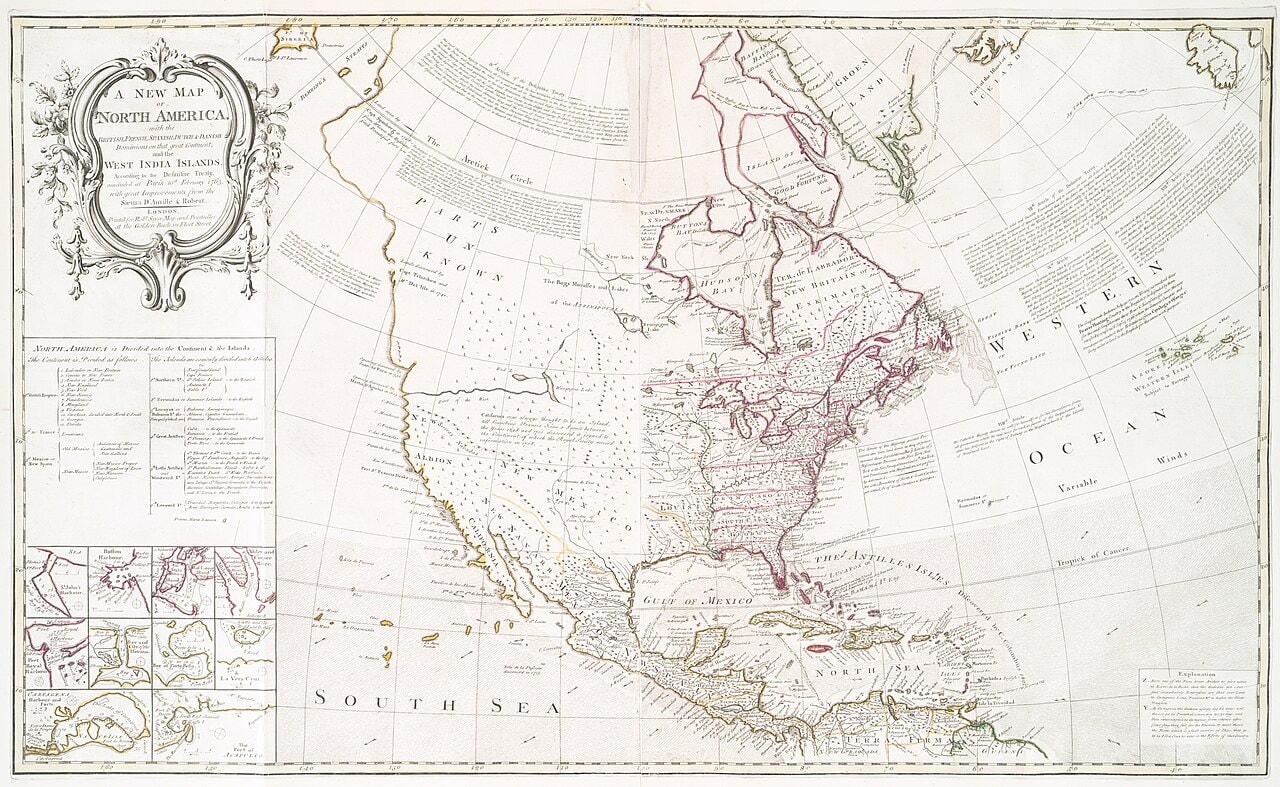
Prime Minister William Pitt focused British strategy on conquering Canada, and it worked:
- 1758: Britain retook Louisbourg.
- 1759: Quebec surrendered to General James Wolfe.
- 1760: Montreal fell.
The Peace of Paris (1763) ended the war. Know the territorial swap:
- Britain acquired French Canada and Spanish Florida.
- To compensate Spain for losing Florida, France ceded Louisiana (its huge territory west of the Mississippi) to Spain.
Result: Britain controlled eastern North America, and French power on the continent virtually ended.
Immediate Effects of the War
The British victory was a turning point in the contest for North America:
- Britain gained unchallenged supremacy among Europeans in North America.
- The autonomy of many American Indian nations was challenged (they could no longer play France and Britain against each other).
- Britain became the world's dominant naval power.
- The colonies no longer faced the threat of attacks from the French, the Spanish, and their American Indian allies.
The most consequential effect, though, was how the British and colonists came to view each other.
The British View vs. the Colonial View
These two perceptions point in opposite directions, and the gap between them is the seed of the Revolution.
- The British view: The colonial militia was a poorly trained, disorderly rabble. Some colonies refused to contribute troops or money. Conclusion: the colonists were unable and unwilling to defend the expanded empire, so Britain would have to do it (and the colonists should help pay).
- The colonial view: The colonists were proud of their record across all four wars and grew confident they could provide for their own defense. They weren't impressed by British troops or leadership, whose European-style tactics seemed badly suited to the densely wooded American terrain.
Reorganization of the British Empire
Britain's victory came at tremendous expense, and that bill changed everything. Before the war, Britain practiced salutary neglect: little direct control over the colonies and loose enforcement of the Navigation Acts regulating trade. After 1763, that policy was abandoned.
Here's the logic chain to remember:
- Four expensive wars left Britain deep in debt.
- Britain now needed a large military force to guard the expanded American frontier.
- British landowners were pressuring the government to lower the heavy wartime taxes at home.
- So King George III and the Whigs in Parliament decided the American colonies should bear more of the cost of the empire.
That decision drives the taxation fights covered in AMSCO 3.3 Taxation Without Representation.
Pontiac's Rebellion (1763)
The first big test of the new imperial policy came in 1763, when Chief Pontiac led an alliance of American Indians in the Ohio River Valley against colonial settlements on the western frontier. They were angered by settlers moving onto their lands and by the British refusal to offer gifts the way the French had. Pontiac's alliance destroyed forts and settlements from New York to Virginia. Tellingly, Britain didn't rely on colonial forces to respond; it sent regular British troops to put down the uprising.
Proclamation of 1763
To stabilize the frontier, Britain issued the Proclamation of 1763, prohibiting colonists from settling west of the Appalachian Mountains. The goal was to prevent more violence between colonists and American Indians. The colonists saw it as betrayal: they had just helped win the war and expected access to western lands as the payoff. Thousands defied the proclamation and streamed west past the boundary line anyway.
These divergent views of the war, plus the new imperial policies, set the context for the British-colonial conflicts over taxation and representation that fill the rest of Unit 3.
Key Terms to Know
| Term | Why it matters |
|---|---|
| Seven Years' War (French and Indian War) | The decisive war (1754-1763) that ended French power in North America and triggered Britain's new colonial policies. |
| George Washington | Young Virginia colonel whose 1754 surrender near Fort Duquesne sparked the war. |
| Fort Duquesne | French fort at modern Pittsburgh; the flashpoint for control of the Ohio River Valley. |
| Edward Braddock | British general whose 1755 expedition was routed near Fort Duquesne, an early disaster for Britain. |
| Albany Plan of Union (1754) | Franklin's rejected plan for intercolonial government; failed, but set a precedent for 1770s congresses. |
| William Pitt | British prime minister whose strategy of conquering Canada won the war. |
| James Wolfe | British general who took Quebec in 1759, a key step toward victory. |
| Peace of Paris (1763) | Treaty giving Britain French Canada and Spanish Florida, while France ceded Louisiana to Spain. |
| Salutary neglect | Britain's pre-war policy of loose colonial control; abandoned after 1763 to raise revenue. |
| King George III | Monarch who, with the Whigs in Parliament, pushed colonies to pay more of the empire's costs. |
| Pontiac's Rebellion (1763) | American Indian uprising in the Ohio Valley; put down by British regulars, not colonial troops. |
| Proclamation of 1763 | Banned colonial settlement west of the Appalachians; colonists defied it in anger. |
| Louisbourg | French fortress captured by New Englanders in King George's War, then returned to France, infuriating colonists. |
Practice and Next Steps
Go deeper with the Topic 3.2 Seven Years' War course study guide, which aligns these events to the exam's causes-and-effects framing. Then continue the AMSCO sequence with 3.3 Taxation Without Representation, or browse the full set of APUSH AMSCO notes.
To check yourself, try APUSH guided practice questions on this topic, and use the key terms glossary for quick definition checks before a quiz.
Frequently Asked Questions
Are the Seven Years' War and the French and Indian War the same thing?
Yes. The Seven Years' War is the European name for the global conflict, and the French and Indian War is the name for its North American phase, which ran from 1754 to 1763. The 'French and Indian' part means the British colonists fought against the French and their American Indian allies, not with them.
What did Britain gain in the Peace of Paris of 1763?
Britain acquired French Canada and Spanish Florida, which gave it control of eastern North America and effectively ended French power on the continent. To compensate Spain for losing Florida, France ceded Louisiana, its territory west of the Mississippi, to Spain.
Why did the Albany Plan of Union fail, and why does APUSH care about it?
Benjamin Franklin's 1754 plan proposed an intercolonial government to recruit troops and collect taxes for common defense, but every colony was too protective of its own taxation powers to approve it. It still matters because the Albany congress set a precedent for the revolutionary congresses of the 1770s, a cause-and-effect link the exam loves.
How did the Seven Years' War lead to the American Revolution?
The war left Britain deeply in debt and needing troops to guard the expanded frontier, so Parliament ended salutary neglect and started taxing the colonies directly. Add the Proclamation of 1763 blocking western settlement and clashing British and colonial views of the war, and you get the taxation and representation fights covered in AMSCO 3.3.
What was the Proclamation of 1763 and why were colonists angry about it?
It was a British order prohibiting colonial settlement west of the Appalachian Mountains, meant to prevent conflict with American Indians after Pontiac's Rebellion. Colonists had expected access to western lands as a reward for winning the war, so thousands simply defied the boundary and moved west anyway.
See Fiveable more often in Google
Mark Fiveable as a preferred source and Google is more likely to show you our guides in Top Stories, with a "preferred" badge in AI Mode and AI Overviews.