AMSCO 5.4 The Compromise of 1850

🇺🇸AP US History Review
AMSCO 5.4 The Compromise of 1850
🇺🇸 AP US History
AMSCO 1.2:Native American Societies Before European Contact Notes
AMSCO 2.1 Context: European Colonization of North America Notes
AMSCO 2.2 European Colonization Notes
AMSCO 2.3 The Regions of the British Colonies Notes
AMSCO 2.4 Transatlantic Trade Notes
AMSCO 2.5 Interactions between American Indians and Europeans Notes
AMSCO 2.6 Slavery in the British Colonies Notes
AMSCO 2.7 Colonial Society and Culture Notes
AMSCO 2.8 Comparison in Period 2 (1607-1754) Notes
AMSCO 3.1 Contextualizing Period 3
AMSCO 3.2 The Seven Year's War
AMSCO 3.3 Taxation Without Representation
AMSCO 3.4 Philosophical Foundations of the American Revolution
AMSCO 3.5 The American Revolution
AMSCO 3.6 The Influence of Revolutionary Ideals
AMSCO 3.7 The Articles of Confederation
AMSCO 3.8 The Constitutional Convention and Debates Over Ratification
AMSCO 3.9 The Constitution
AMSCO 3.10 Shaping a New Republic
AMSCO 3.11 Developing an American Identity
AMSCO 3.12 Movements in the Early Republic
AMSCO 3.13 Continuity and Change in Period 3
AMSCO 4.1 Contextualizing Period 4
AMSCO 4.2 The Rise of Political Parties and the Era of Jefferson
AMSCO 4.3 Politics and Regional Interests
AMSCO 4.4 America on the World Stage
AMSCO 4.5 Market Revolution
AMSCO 4.6 Effects of the Market Revolution on Society and Culture
AMSCO 4.7 Expanding Democracy
AMSCO 4.8 Jackson and Federal Power
AMSCO 4.9 The Development of an American Culture
AMSCO 4.10 The Second Great Awakening
AMSCO 4.11 An Age of Reform
AMSCO 4.12 African Americans in the Early Republic
AMSCO 4.13 Southern Society in the Early Republic
AMSCO 4.14 Causation in Period 4
AMSCO 5.1 Contextualizing Period 5
AMSCO 5.2 The Idea of Manfiest Destiny
AMSCO 5.3 Manifest Destiny and the Mexican-American War
AMSCO 5.4 The Compromise of 1850
AMSCO 5.5 Sectional Conflict: Regional Differences
AMSCO 5.6 Failure of Compromise
AMSCO 5.7 Election of 1860 and Secession
AMSCO 5.8 Military Conflict in the Civil War
AMSCO 5.9 Government Policies During the Civil War
AMSCO 5.10 Reconstruction
AMSCO 5.11 Failure of Reconstruction
AMSCO 5.12 Comparion in Period 5
AMSCO 6.1 Contextualizing Period 6
AMSCO 6.2 Westward Expansion: Economic Development
AMSCO 6.3 Westward Expansion: Social and Cultural Development
AMSCO 6.4 The "New South"
AMSCO 6.5 Technological Innovation
AMSCO 6.6 The Rise of Industrial Capitalism
AMSCO 6.7 Labor in the Gilded Age
AMSCO 6.8 Immigration and Migration in the Gilded Age
AMSCO 6.9 Responses to Immigration in the Gilded Age
AMSCO 6.10 Development of the Middle Class
AMSCO 6.11 Reform in the Gilded Age
AMSCO 6.12 Role of Government in the Gilded Age
AMSCO 6.13 Politics in the Gilded Age
AMSCO 6.14 Continuity and Change Period 6
AMSCO 7.1 Contextualizing Period 7
AMSCO 7.2 Imperialism: Debates
AMSCO 7.3 The Spanish-American War and U.S. Foreign Policy to 1917
AMSCO 7.4 The Progressives
AMSCO 7.5 World War I: Military and Diplomacy
AMSCO 7.6 World War I: Home Front
AMSCO 7.7 1920s: Innovations in Communication and Technology
AMSCO 7.8 1920s: Cultural and Political Controversies
AMSCO 7.9 The Great Depression
AMSCO 7.10 The New Deal
AMSCO 7.11 Inerwar Foreign Policy
AMSCO 7.12 World War II Mobilization
AMSCO 7.13 World War II Military
AMSCO 7.14 World War II and Postwar Diplomacy
AMSCO 7.15 Comparison in Period 7
AMSCO 8.1 Contextualizing Period 8
AMSCO 8.2 The Cold War from 1945 to 1980
AMSCO 8.3 The Red Scare
AMSCO 8.4 Economy after 1945
AMSCO 8.5 Culture after 1945
AMSCO 8.6 Early Steps in the Civil Rights Movement, 1945-1960
AMSCO 8.7 America as a World Power
AMSCO 8.8 The Vietnam War
AMSCO 8.9 The Great Society
AMSCO 8.10 The African American Civil Rights Movement in the 1960s
AMSCO 8.11 The Civil Rights Movement Expands
AMSCO 8.12 Youth Culture of the 1960s
AMSCO 8.13 The Environment and Natural Resources from 1968 to 1980
AMSCO 8.14 Society in Transition
AMSCO 8.15 Continuity and Change in Period 8
AMSCO 9.1 Contextualizing Period 9
AMSCO 9.2 Reagan and Conservatism
AMSCO 9.3 The End of the Cold War
AMSCO 9.4 A Changing Economy
AMSCO 9.5 Migration and Immgiration in the 1990s and 2000s
AMSCO 9.6 Challenges of the 21st Century
AMSCO 9.7 Causation in Period 9
AMSCO 1.1 Contextualizing Period 1 Notes
AMSCO 1.3 European Exploration in the Americas Notes
AMSCO 1.4 Columbian Exchange, Spanish Exploration, and Conquest Notes
AMSCO 1.5 Labor, Slavery, and Caste in the Spanish Colonial System Notes
AMSCO 1.6 Cultural Interactions in the Americas Notes
AMSCO 1.7 Causation in Period 1 Notes
Overview
AMSCO Topic 5.4, "The Compromise of 1850," covers how the land the United States won in the Mexican-American War reignited the fight over slavery and how Congress tried to patch the Union back together. This chapter sits in Period 5 (1844-1877), right at the point where Manifest Destiny stops being about expansion and starts being about one question: will the new territories be slave or free? You'll learn about Southern dreams of expanding slavery into Latin America, the three main positions on slavery in the West, the dramatic election of 1848, and the five-part Compromise of 1850 that bought the Union about a decade of uneasy peace.
The big takeaway: every new acre of land forced a fight over the balance between 15 free and 15 slave states, and the Compromise of 1850 was the last great attempt by the old guard (Clay, Webster, Calhoun) to keep that balance from breaking the country apart.
Key Takeaways
- Southerners sought new territory for slavery in Cuba and Central America, but the Ostend Manifesto plan was dropped and William Walker's proslavery empire collapsed.
- The Wilmot Proviso proposed banning slavery in land won from Mexico, free-soilers wanted a West without slave labor, and Lewis Cass proposed letting settlers vote on slavery.
- In 1848, Zachary Taylor narrowly defeated Lewis Cass after the Free-Soil vote drew support away from Cass in Northern states.
- Henry Clay's five-part compromise admitted California as a free state, used popular sovereignty in the rest of the Mexican Cession, and added a tough Fugitive Slave Law.
- After Taylor died, Millard Fillmore supported the compromise and Stephen A. Douglas got its separate bills passed, but the Fugitive Slave Law and popular sovereignty fueled later conflicts.
Southern Expansion and the Hunt for New Slave Territory
Many Southerners wanted more land for slave-based plantation agriculture, and they didn't think the Mexican Cession gave them enough. They resented the Missouri Compromise for barring slavery from much of the Louisiana Purchase, and in the early 1850s slaveowners looked south, especially toward Latin America, for places where plantation slavery could expand.
The Push for Cuba and the Ostend Manifesto
Cuba was the biggest prize Southern expansionists wanted.
- President Polk offered Spain $100 million for Cuba. Spain refused to sell the last major piece of its American empire.
- Southern adventurers tried to seize Cuba by force in small expeditions. These failed, and Spanish firing squads executed the men involved.
- President Franklin Pierce (elected 1852) leaned pro-Southern and sent three diplomats to Ostend, Belgium, to secretly negotiate buying Cuba.
- In 1854 they drew up the Ostend Manifesto, a plan to acquire Cuba. It leaked to the U.S. press, antislavery members of Congress exploded in anger, and Pierce dropped the scheme.
The Walker Expedition
Expansionists kept going with or without Washington's help. Southern adventurer William Walker tried and failed to grab Baja California from Mexico in 1853, then seized power in Nicaragua in 1855. The U.S. even briefly recognized his regime in 1856. His plan for a proslavery Central American empire collapsed when neighboring countries invaded and defeated him. Honduran authorities executed Walker in 1860.
Two Treaties and a Land Deal
- Clayton-Bulwer Treaty (1850): Both the U.S. and Britain wanted to build a canal through Central America (a shortcut so ships wouldn't sail around South America). This treaty said neither nation would take exclusive control of any future canal route. It held until 1901, when the Hay-Pauncefote Treaty gave the U.S. a free hand to build alone.
- Gadsden Purchase (1853): Pierce couldn't get Cuba, but he did buy a small strip of land from Mexico for $10 million. It was semidesert, but it was the best route for a southern railroad. Today it forms the southern parts of New Mexico and Arizona.
Three Positions on Slavery in the Territories
The slavery-in-the-territories question split into three camps, and no single policy could please all of them. That's exactly why people kept reaching for compromise.
The flashpoint was the Wilmot Proviso, a proposal to ban slavery from all the land won in the Mexican War. It failed to pass, but the fight over it deepened sectional anger. Banning slavery there would have wrecked the careful balance of 15 free and 15 slave states.
The Free-Soil Position
Northern Democrats and Whigs who backed the Wilmot Proviso wanted to keep all African Americans, both enslaved and free, out of the Mexican Cession.
- Important distinction: this was NOT the same as abolitionism. Many free-soilers had no problem with slavery in the South. They just wanted the West to be open land for White settlers only, without competition from slave labor.
- In 1848 they formed the Free-Soil Party with the slogan "free soil, free labor, and free men."
- The party also pushed for free homesteads (public land for small farmers) and internal improvements like roads and harbors.
The Southern Position
Wealthy, politically powerful plantation owners saw any restriction on slavery's expansion as a violation of their constitutional property rights. They viewed free-soilers and abolitionists as out to destroy slavery entirely. Some moderate Southerners would have accepted extending the Missouri Compromise line all the way to the Pacific, leaving the area north of it free.
Popular Sovereignty
Senator Lewis Cass of Michigan offered the middle-ground option. Instead of Congress deciding whether a territory allowed slavery, let the settlers themselves vote on it. This idea was called popular sovereignty (or squatter sovereignty), and moderates across the country liked it.
The Election of 1848
Slavery in the territories was the central issue of the 1848 presidential race, and three parties each took a different stance.
- Democrats: nominated Lewis Cass on a platform of popular sovereignty.
- Whigs: nominated Mexican War hero General Zachary Taylor, a political newcomer who took no public stand on slavery in the territories.
- Free-Soil Party: opposed expansion and nominated former president Martin Van Buren. It was made up of "Conscience Whigs" (antislavery Whigs) and antislavery Democrats nicknamed barnburners because their defection threatened to burn down the Democratic Party.
Taylor narrowly beat Cass. The Free-Soil vote in key Northern states like New York and Pennsylvania pulled enough support away from Cass to swing the result.
Compromises to Preserve the Union
The Compromise of 1850 was a five-part deal that admitted California as a free state and used popular sovereignty to dodge the slavery question in the rest of the Mexican Cession. It bought the Union time, but it planted the seeds of future fights.
Why a Crisis Hit in 1849-1850
The Gold Rush of 1849 flooded California with about 100,000 settlers, and the West suddenly needed government. Californians wrote a state constitution that banned slavery. Even though President Taylor owned slaves himself, he backed admitting both California and New Mexico as free states. That terrified Southern radicals called fire-eaters, some of whom met in Nashville in 1850 to talk about secession.
Henry Clay's Five-Part Plan
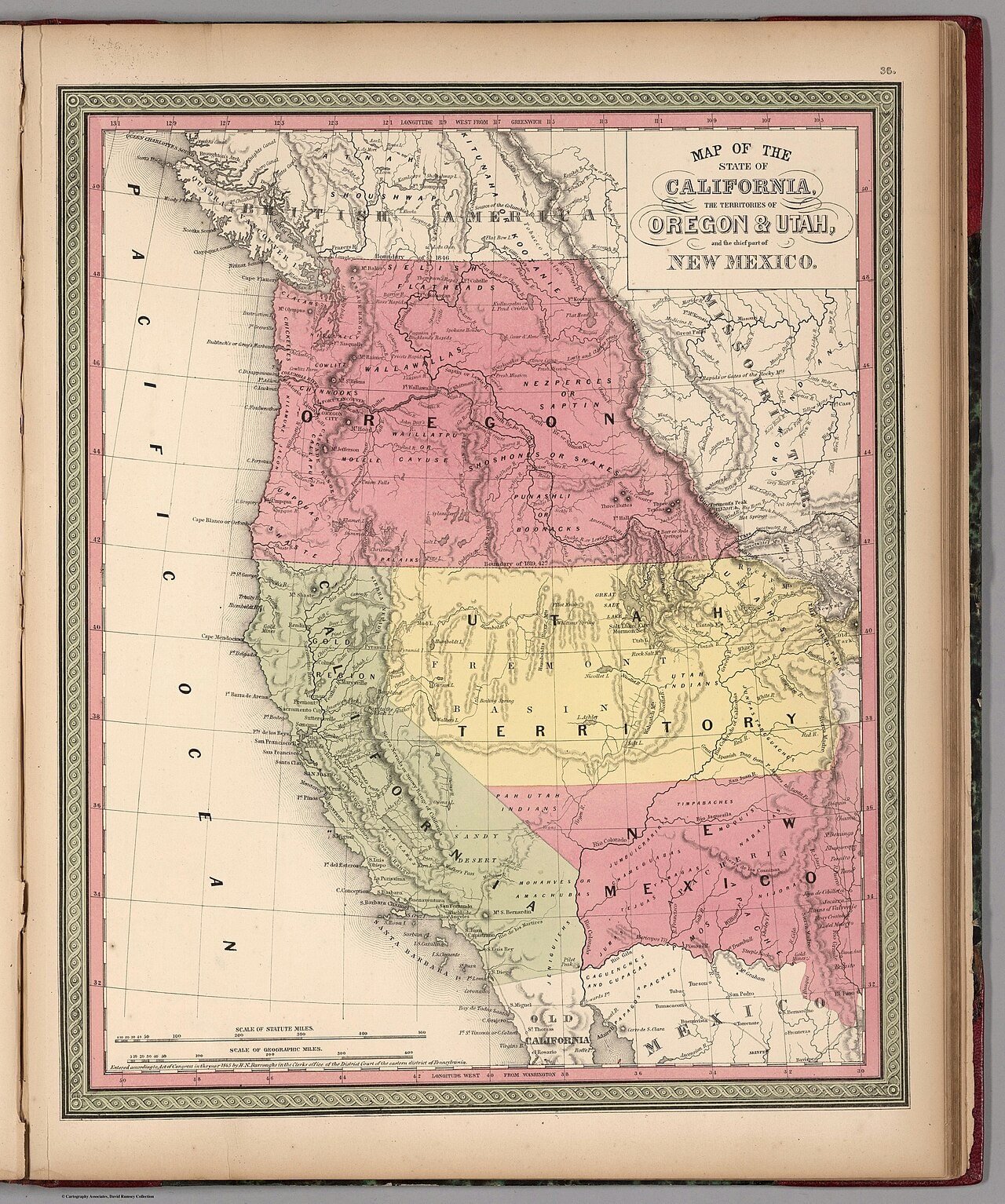
To defuse the crisis, Senator Henry Clay of Kentucky proposed:
- Admit California as a free state.
- Split the rest of the Mexican Cession into Utah and New Mexico territories, with slavery decided by popular sovereignty.
- Give disputed Texas-New Mexico land to the territories, and in return the federal government would assume Texas's $10 million public debt.
- Ban the slave trade in Washington, D.C., while still allowing slaveholding there.
- Pass and rigorously enforce a tough new Fugitive Slave Law.
The Last Great Senate Debate
The three giants of the era gave their final major speeches over this compromise:
- Daniel Webster of Massachusetts argued FOR compromise to save the Union, which cost him the support of his Massachusetts abolitionist base.
- John C. Calhoun of South Carolina argued AGAINST compromise and demanded equal Southern rights in the new territories.
- Younger antislavery senators like William H. Seward of New York opposed it too, arguing that a "higher law" than the Constitution forbade slavery.
(Webster and Calhoun, both born in 1782, died in 1850. Clay died in 1852.)
How It Finally Passed
Opponents, including President Taylor, blocked the plan at first. Then Taylor suddenly died in 1850, and Vice President Millard Fillmore, a compromise supporter, took over. Stephen A. Douglas, a young Democratic senator from Illinois, broke the deal into separate bills and built different coalitions to pass each piece. Fillmore signed them all into law.
Impact
- Admitting California as a free state added to the North's political power.
- The debate deepened many Northerners' commitment to saving the Union.
- Two pieces became flashpoints: the harsh new Fugitive Slave Law and popular sovereignty, both of which fed the conflicts you'll see in the next chapters.
Key Terms to Know
| Term | Why it matters |
|---|---|
| Ostend Manifesto (1854) | Secret plan to buy or take Cuba from Spain that leaked and outraged antislavery Congress members. |
| Walker Expedition | William Walker's attempt to build a proslavery empire in Nicaragua, an example of private Southern expansionism. |
| Clayton-Bulwer Treaty (1850) | U.S.-Britain agreement that neither would take sole control of a future Central American canal. |
| Gadsden Purchase | 1853 buy of southern New Mexico and Arizona land from Mexico for $10 million for a southern railroad route. |
| Free-soil movement | The push to keep slavery (and African Americans generally) out of the Western territories. |
| Free-Soil Party | 1848 party with the slogan "free soil, free labor, and free men" that opposed slavery's expansion. |
| Barnburners | Antislavery Democrats who bolted to the Free-Soil Party, threatening to wreck the Democrats. |
| Lewis Cass | Michigan senator who proposed popular sovereignty and lost the 1848 election to Taylor. |
| Popular sovereignty | Idea that settlers in a territory should vote on whether to allow slavery, not Congress. |
| Wilmot Proviso | Failed proposal to ban slavery from all land won in the Mexican War; it inflamed sectional tensions. |
| Zachary Taylor | Whig president (Mexican War hero) who backed free statehood for California but died in 1850. |
| Henry Clay | Kentucky senator who proposed the five-part Compromise of 1850. |
| Fire-eaters | Southern radicals who pushed for secession when California sought free statehood. |
| Compromise of 1850 | Five-part deal admitting California free, using popular sovereignty, and adding a tough Fugitive Slave Law. |
| Stephen A. Douglas | Illinois senator who split the compromise into separate bills to get it passed. |
| Millard Fillmore | Vice president who became president after Taylor's death and signed the compromise into law. |
Practice and Next Steps
Review the matching course-topic guide for 5.4 The Compromise of 1850, then keep moving through the AMSCO Period 5 chapters from the AMSCO notes hub.
Connect this chapter to what comes before and after:
- AMSCO 5.3 Manifest Destiny and the Mexican-American War sets up the territory fight.
- AMSCO 5.5 Sectional Conflict: Regional Differences shows how the compromise unraveled.
- AMSCO 5.6 Failure of Compromise carries the story toward war.
Lock it in with practice:
- Guided practice MCQs to test the facts above.
- FRQ practice with instant scoring and the FRQ question bank.
- A full-length practice exam and the AP score calculator when you're ready to check your level.
Frequently Asked Questions
What were the five parts of the Compromise of 1850?
Henry Clay's plan (1) admitted California as a free state, (2) organized Utah and New Mexico territories under popular sovereignty, (3) gave disputed Texas land to the territories while the federal government assumed Texas's $10 million debt, (4) banned the slave trade (but not slaveholding) in Washington, D.C., and (5) created a tough new Fugitive Slave Law. Stephen A. Douglas passed each part as a separate bill, and President Millard Fillmore signed them.
What is the difference between free-soilers and abolitionists?
Abolitionists wanted to end slavery everywhere, but free-soilers only wanted to keep slavery out of the Western territories. Many free-soilers had no objection to slavery in the South; they wanted the West reserved for White settlers without competition from slave labor, which meant excluding both enslaved and free African Americans. The Free-Soil Party formed in 1848 with the slogan "free soil, free labor, and free men."
What is popular sovereignty in APUSH?
Popular sovereignty was the idea that settlers in a territory, not Congress, should vote on whether to allow slavery there. Senator Lewis Cass of Michigan proposed it as a moderate compromise, and the Compromise of 1850 used it for the Utah and New Mexico territories. It later became a major source of conflict because it left the slavery question unresolved and open to violence.
Why did Southerners want to acquire Cuba in the 1850s?
Southern expansionists wanted Cuba because they thought it was ideal for plantation slavery and would expand Southern political power. President Polk offered Spain $100 million for it and was refused, and the secret 1854 Ostend Manifesto laid out a plan to buy or seize the island. When it leaked, antislavery members of Congress forced President Pierce to drop the scheme.
What does AMSCO 5.4 cover for the AP US History exam?
AMSCO Topic 5.4 covers how the Mexican Cession sparked fights over slavery in the territories and how leaders tried to resolve them, especially the Compromise of 1850. For the exam, focus on the three positions (free-soil, Southern, popular sovereignty), the 1848 election, and the five parts of the compromise. You can review the matching course-topic study guide for more.
See Fiveable more often in Google
Mark Fiveable as a preferred source and Google is more likely to show you our guides in Top Stories, with a "preferred" badge in AI Mode and AI Overviews.