AMSCO 8.13 The Environment and Natural Resources from 1968 to 1980

🇺🇸AP US History Review
AMSCO 8.13 The Environment and Natural Resources from 1968 to 1980
🇺🇸 AP US History
AMSCO 1.2:Native American Societies Before European Contact Notes
AMSCO 2.1 Context: European Colonization of North America Notes
AMSCO 2.2 European Colonization Notes
AMSCO 2.3 The Regions of the British Colonies Notes
AMSCO 2.4 Transatlantic Trade Notes
AMSCO 2.5 Interactions between American Indians and Europeans Notes
AMSCO 2.6 Slavery in the British Colonies Notes
AMSCO 2.7 Colonial Society and Culture Notes
AMSCO 2.8 Comparison in Period 2 (1607-1754) Notes
AMSCO 3.1 Contextualizing Period 3
AMSCO 3.2 The Seven Year's War
AMSCO 3.3 Taxation Without Representation
AMSCO 3.4 Philosophical Foundations of the American Revolution
AMSCO 3.5 The American Revolution
AMSCO 3.6 The Influence of Revolutionary Ideals
AMSCO 3.7 The Articles of Confederation
AMSCO 3.8 The Constitutional Convention and Debates Over Ratification
AMSCO 3.9 The Constitution
AMSCO 3.10 Shaping a New Republic
AMSCO 3.11 Developing an American Identity
AMSCO 3.12 Movements in the Early Republic
AMSCO 3.13 Continuity and Change in Period 3
AMSCO 4.1 Contextualizing Period 4
AMSCO 4.2 The Rise of Political Parties and the Era of Jefferson
AMSCO 4.3 Politics and Regional Interests
AMSCO 4.4 America on the World Stage
AMSCO 4.5 Market Revolution
AMSCO 4.6 Effects of the Market Revolution on Society and Culture
AMSCO 4.7 Expanding Democracy
AMSCO 4.8 Jackson and Federal Power
AMSCO 4.9 The Development of an American Culture
AMSCO 4.10 The Second Great Awakening
AMSCO 4.11 An Age of Reform
AMSCO 4.12 African Americans in the Early Republic
AMSCO 4.13 Southern Society in the Early Republic
AMSCO 4.14 Causation in Period 4
AMSCO 5.1 Contextualizing Period 5
AMSCO 5.2 The Idea of Manfiest Destiny
AMSCO 5.3 Manifest Destiny and the Mexican-American War
AMSCO 5.4 The Compromise of 1850
AMSCO 5.5 Sectional Conflict: Regional Differences
AMSCO 5.6 Failure of Compromise
AMSCO 5.7 Election of 1860 and Secession
AMSCO 5.8 Military Conflict in the Civil War
AMSCO 5.9 Government Policies During the Civil War
AMSCO 5.10 Reconstruction
AMSCO 5.11 Failure of Reconstruction
AMSCO 5.12 Comparion in Period 5
AMSCO 6.1 Contextualizing Period 6
AMSCO 6.2 Westward Expansion: Economic Development
AMSCO 6.3 Westward Expansion: Social and Cultural Development
AMSCO 6.4 The "New South"
AMSCO 6.5 Technological Innovation
AMSCO 6.6 The Rise of Industrial Capitalism
AMSCO 6.7 Labor in the Gilded Age
AMSCO 6.8 Immigration and Migration in the Gilded Age
AMSCO 6.9 Responses to Immigration in the Gilded Age
AMSCO 6.10 Development of the Middle Class
AMSCO 6.11 Reform in the Gilded Age
AMSCO 6.12 Role of Government in the Gilded Age
AMSCO 6.13 Politics in the Gilded Age
AMSCO 6.14 Continuity and Change Period 6
AMSCO 7.1 Contextualizing Period 7
AMSCO 7.2 Imperialism: Debates
AMSCO 7.3 The Spanish-American War and U.S. Foreign Policy to 1917
AMSCO 7.4 The Progressives
AMSCO 7.5 World War I: Military and Diplomacy
AMSCO 7.6 World War I: Home Front
AMSCO 7.7 1920s: Innovations in Communication and Technology
AMSCO 7.8 1920s: Cultural and Political Controversies
AMSCO 7.9 The Great Depression
AMSCO 7.10 The New Deal
AMSCO 7.11 Inerwar Foreign Policy
AMSCO 7.12 World War II Mobilization
AMSCO 7.13 World War II Military
AMSCO 7.14 World War II and Postwar Diplomacy
AMSCO 7.15 Comparison in Period 7
AMSCO 8.1 Contextualizing Period 8
AMSCO 8.2 The Cold War from 1945 to 1980
AMSCO 8.3 The Red Scare
AMSCO 8.4 Economy after 1945
AMSCO 8.5 Culture after 1945
AMSCO 8.6 Early Steps in the Civil Rights Movement, 1945-1960
AMSCO 8.7 America as a World Power
AMSCO 8.8 The Vietnam War
AMSCO 8.9 The Great Society
AMSCO 8.10 The African American Civil Rights Movement in the 1960s
AMSCO 8.11 The Civil Rights Movement Expands
AMSCO 8.12 Youth Culture of the 1960s
AMSCO 8.13 The Environment and Natural Resources from 1968 to 1980
AMSCO 8.14 Society in Transition
AMSCO 8.15 Continuity and Change in Period 8
AMSCO 9.1 Contextualizing Period 9
AMSCO 9.2 Reagan and Conservatism
AMSCO 9.3 The End of the Cold War
AMSCO 9.4 A Changing Economy
AMSCO 9.5 Migration and Immgiration in the 1990s and 2000s
AMSCO 9.6 Challenges of the 21st Century
AMSCO 9.7 Causation in Period 9
AMSCO 1.1 Contextualizing Period 1 Notes
AMSCO 1.3 European Exploration in the Americas Notes
AMSCO 1.4 Columbian Exchange, Spanish Exploration, and Conquest Notes
AMSCO 1.5 Labor, Slavery, and Caste in the Spanish Colonial System Notes
AMSCO 1.6 Cultural Interactions in the Americas Notes
AMSCO 1.7 Causation in Period 1 Notes
Overview
AMSCO Topic 8.13, "The Environment and Natural Resources from 1968 to 1980," covers the rise of the modern environmental movement and the wave of federal environmental laws that followed. Unlike the Progressive Era conservation movement, which was small and led by politicians like Theodore Roosevelt, this movement had massive popular support. The chapter traces how scientists' warnings, environmental disasters, and the 1973 oil embargo pushed Congress and President Nixon to build the framework of modern environmental protection, including the EPA, the Clean Air Act, and the Endangered Species Act. It connects to two big Period 8 threads: a growing reform movement using legislation to fight pollution, and Middle East oil crises sparking attempts at a national energy policy.
Origins of the Environmental Movement
Three biologists in the 1950s and 1960s turned chemical pollution, nuclear fallout, and population growth into public concerns through their writing and activism.
Rachel Carson and Silent Spring
Many historians date the modern American environmental movement to the publication of Rachel Carson's Silent Spring in 1962. The best-selling book explained the environmental damage caused by DDT, a powerful insecticide widely used in American agriculture. Carson argued that unchecked industrial growth would destroy animal life and eventually human life. Her book made Americans question whether "better living through chemistry" was the solution to modern problems or the cause of an environmental crisis.
Barry Commoner and Nuclear Fallout
In the late 1950s, Barry Commoner and other researchers found high levels of strontium-90, a cancer-causing substance, in children's teeth. The source was aboveground nuclear weapons testing. Commoner led the political fight to end the tests, and in 1963 the United States, the Soviet Union, and other countries agreed to stop testing weapons aboveground.
Paul Ehrlich and The Population Bomb
In The Population Bomb (1968), biologist Paul Ehrlich argued that overpopulation was driving the world's environmental problems. His scariest prediction, a dramatic rise in starvation, never came true because agricultural productivity gains and anti-poverty programs softened the effects of population growth. Still, the book sparked a lasting debate over how many people the earth could sustain.
Public Awareness Grows
A string of environmental disasters in the 1950s through 1970s convinced Americans that the country had serious environmental problems. Media coverage of these accidents made people question whether industry and new technology were always good things, part of what some called a "postmodern" culture.
Environmental Disasters
These accidents reinforced fears about the deadly combination of human error and modern technology:
- 1954: The 23-man crew of the Japanese fishing vessel Lucky Dragon was exposed to radioactive fallout from a hydrogen bomb test at Bikini Atoll in the Pacific.
- 1969: An oil well blowout in Santa Barbara Bay spilled more than 200,000 gallons of oil into the ocean, polluting the California coastline and forcing the oil industry to reform its operations.
- 1969: Ohio's Cuyahoga River literally caught fire because of the oil and chemicals floating on its surface.
- 1979: An accident at the Three Mile Island nuclear power plant in Pennsylvania turned public opinion against building new nuclear plants.
Earth Day 1970
The first Earth Day in 1970 showed how big the movement had become. In New York City, 100,000 people demonstrated their support for protecting the earth. Organizers estimated 1,500 colleges and 10,000 schools took part, and Time magazine estimated about 20 million Americans participated in some Earth Day activity. After 1970, the environment became a major political issue.
"Earthrise" and Pictures from Space
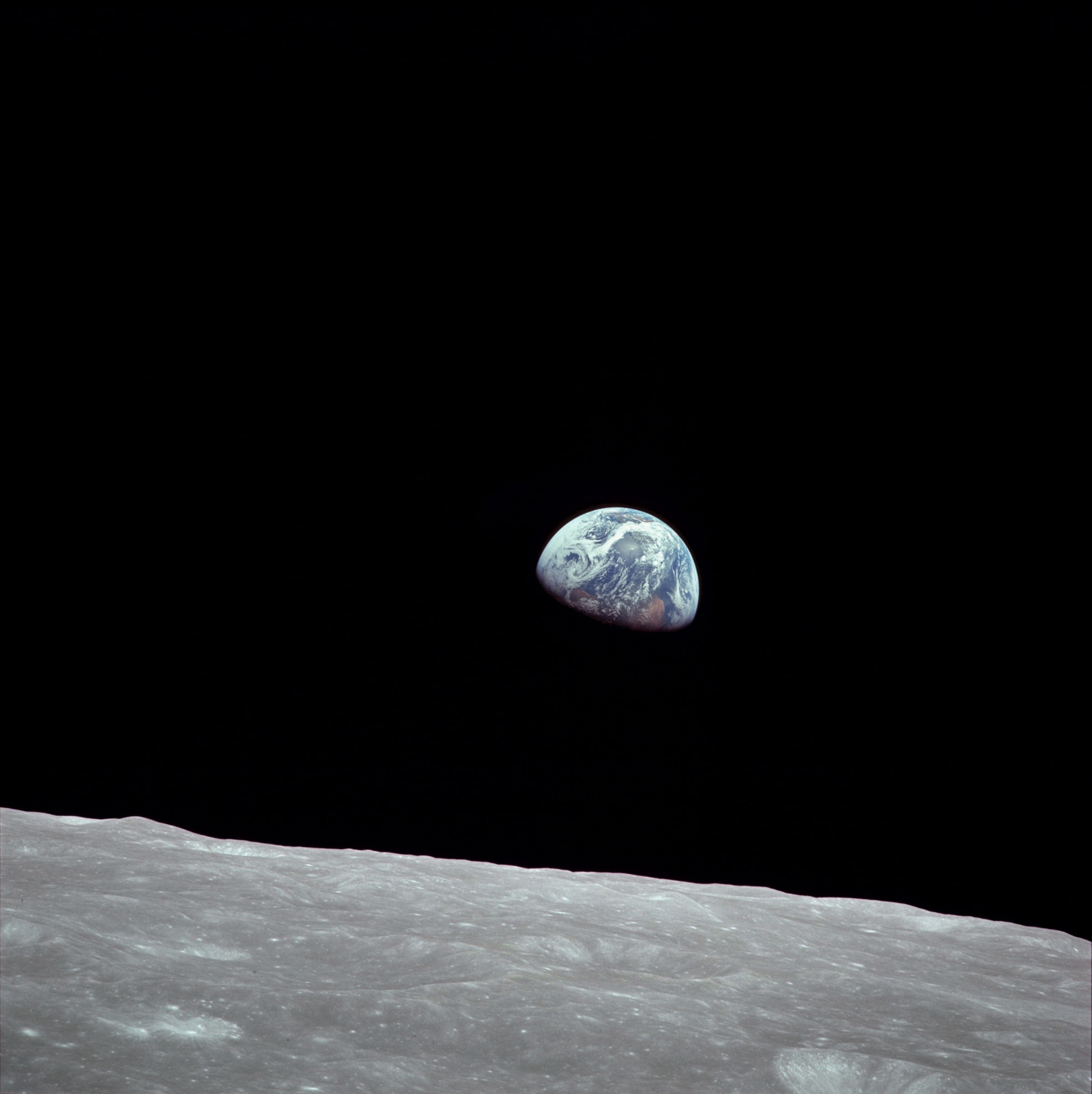
The Apollo crew's first photographs of Earth from space in 1968 gave humanity a new perspective. The photo named "Earthrise" showed a small, fragile planet in the vast lifeless vacuum of space and became an iconic image for the environmental movement. It helped people worldwide understand that they shared a finite environment.
Environmental Activists Get Organized
The movement borrowed organization and tactics from the civil rights and antiwar movements, drawing in thousands of citizens, especially middle-class youth, men, and women. Sierra Club membership jumped from 123,000 in 1960 to 819,000 in 1970. During the 1970s, mainstream groups like the National Audubon Society, the Environmental Defense Fund, the National Wildlife Federation, the National Resources Defense Council, the National Parks Conservation Association, and the Sierra Club built sophisticated Washington, D.C. operations. They acted as watchdogs over federal enforcement, hired lobbyists to push for legislation, lawyers to enforce standards in court, and scientists to identify where new regulations were needed.
Government Environmental Protection
The federal government was slow to act at first, often leaving regulation and enforcement to the states. California led the way on auto emissions, mandating that engine gases be recycled to cut the smog choking its big cities. In the 1960s, President Lyndon Johnson signed almost 300 conservation and beautification bills backed by more than $12 billion in authorized funds. The most significant was the Wilderness Act, which permanently set aside certain federal lands from commercial development to preserve them in their natural state.
The EPA
Under Nixon, environmental protection was a bipartisan issue, and his administration worked with a Democratic Congress. In 1970, Nixon created the Environmental Protection Agency (EPA), an independent federal agency responsible for regulating and enforcing federal policies on air and water pollution, radiation, pesticides, and solid waste. The agency started with 8,000 staff and a $455 million budget; by 1981 it had nearly 13,000 staff and a $1.35 billion budget. The EPA became the foundation of the nation's modern environmental protection system.
Clean Air and Water Legislation
During the 1970s, the federal government took over responsibility for clean air and water. The Clean Air Act of 1970 regulated air emissions from both stationary and mobile sources and authorized the EPA to set standards limiting hazardous air pollutants. More legislation followed:
- Marine Protection, Research, and Sanctuaries Act (1972)
- Safe Drinking Water Act (1974)
- Resource Conservation and Recovery Act (1976)
- Water Pollution Control Act Amendments of 1977, better known as the Clean Water Act
- Superfund Act (1980), which funded cleanup of toxic waste at former industrial sites
The Endangered Species Act
The Endangered Species Act of 1973 protected critically imperiled species like the American bald eagle from extinction caused by "economic growth and development untempered by adequate concern and conservation." It also protected the ecosystems wildlife depend on, which made habitat a flashpoint between preservationists on one side and land developers and industries on the other. The law was called "the Magna Carta of the environmental movement."
The Oil Embargo and Fuel Economy
After the 1973 Yom Kippur War, the Arab members of OPEC embargoed oil sold to Israel's supporters, including the United States. The result was a worldwide oil shortage and long lines at American gas pumps. Congress responded by reducing speed limits to save gasoline, and consumers traded big American gas guzzlers for smaller, fuel-efficient cars imported from Japan. In 1975, Congress enacted the first fuel economy standards, producing more efficient American cars. Better fuel economy also meant fewer harmful emissions, reinforcing the Clean Air Act's tailpipe regulations and reducing the greenhouse gases scientists blame for climate change. This is the energy-policy angle the AP exam cares about: oil crises in the Middle East drove attempts at a national energy policy.
The Antinuclear Movement
The antinuclear movement grew out of the environmental movement and peaked in the 1970s and 1980s. The Three Mile Island accident soured public opinion on new nuclear plants, and the question of where to store radioactive waste safely for generations became a major issue. The movement delayed or halted construction of new nuclear plants and pressured the Nuclear Regulatory Commission to strengthen and enforce safety regulations.
Backlash to Environmental Regulations
The 1970s turned out to be the high point of the environmental movement. In the 1980s, President Ronald Reagan moved to curtail environmental protection as industrial and conservative groups fought back against federal regulations. By 1984, the EPA's budget had been cut 44 percent, and the number of enforcement cases submitted to the EPA fell 56 percent. Keep this in mind for periodization questions: federal environmental power expanded fast from 1968 to 1980, then contracted under Reagan.
Key Terms to Know
| Term | Why it matters |
|---|---|
| Rachel Carson | Biologist whose 1962 book launched the modern environmental movement |
| Silent Spring | Best-seller exposing DDT's environmental damage and questioning unchecked industrial growth |
| Paul Ehrlich | Biologist who blamed overpopulation for the world's environmental problems |
| The Population Bomb | Ehrlich's 1968 book that sparked debate over how many people the earth could sustain |
| Earth Day | First held in 1970; about 20 million Americans participated, making the environment a political issue |
| "Earthrise" | 1968 Apollo photo of Earth from space that became an iconic environmental image |
| Wilderness Act | LBJ-era law permanently setting aside federal lands from commercial development |
| Environmental Protection Agency (EPA) | Independent agency Nixon created in 1970 to enforce federal pollution, pesticide, radiation, and waste rules |
| Clean Air Act | 1970 law regulating emissions from stationary and mobile sources, enforced by the EPA |
| Clean Water Act | Common name for the 1977 Water Pollution Control Act Amendments |
| Superfund Act | 1980 law funding cleanup of toxic waste at former industrial sites |
| Endangered Species Act | 1973 law protecting imperiled species and their habitats, called "the Magna Carta of the environmental movement" |
| Three Mile Island | 1979 Pennsylvania nuclear accident that turned opinion against new nuclear plants |
| Antinuclear movement | Offshoot of environmentalism that delayed nuclear plant construction and pushed for stricter safety rules |
| Emissions | Pollutants released into the air; the target of California standards and the Clean Air Act |
| Greenhouse gases | Atmospheric gases scientists blame for climate change; reduced by fuel economy standards |
| Climate change | Long-term warming linked to greenhouse gases, an emerging concern behind 1970s regulation |
Practice and Next Steps
Reinforce these AMSCO notes with the matching course-topic guide on 8.13 The Environment and Natural Resources, which frames the same material the way the AP exam tests it. For context on where this fits in the period, review AMSCO 8.1 Contextualizing Period 8 and the domestic reform background in AMSCO 8.9 The Great Society. The full set of chapter notes lives on the APUSH AMSCO notes page.
Then test yourself with APUSH guided practice questions, drill key vocabulary in the key terms glossary, or try FRQ practice with instant scoring to see how environmental policy shows up in free-response prompts.
Frequently Asked Questions
What is AMSCO Topic 8.13 about in APUSH?
AMSCO 8.13 covers the rise of the modern environmental movement and federal environmental policy from 1968 to 1980. It includes Rachel Carson's Silent Spring, environmental disasters like the Cuyahoga River fire and Three Mile Island, the first Earth Day in 1970, Nixon's creation of the EPA, and the 1973 OPEC oil embargo's push toward a national energy policy.
Why was Silent Spring important to the environmental movement?
Rachel Carson's Silent Spring (1962) exposed the environmental damage caused by the insecticide DDT and argued that unchecked industrial growth would destroy animal and eventually human life. Many historians mark it as the start of the modern American environmental movement because it forced the public to question whether chemicals and industry were the solution or the problem.
How was the modern environmental movement different from Progressive Era conservation?
The Progressive Era conservation movement was fairly small and led by politicians like Theodore Roosevelt. The modern environmental movement of the 1960s and 70s had widespread popular support, with about 20 million Americans participating in the first Earth Day in 1970 and Sierra Club membership growing from 123,000 in 1960 to 819,000 in 1970. It also borrowed organizing tactics from the civil rights and antiwar movements.
What did Nixon do for the environment?
Nixon created the Environmental Protection Agency (EPA) in 1970, an independent federal agency that enforces rules on air and water pollution, radiation, pesticides, and solid waste. The Clean Air Act of 1970 also passed during his administration, when environmental protection was a bipartisan issue between Nixon and a Democratic Congress.
How does Topic 8.13 show up on the AP US History exam?
The exam asks you to explain how and why environmental policies developed and changed from 1968 to 1980, so be ready to link disasters and activism to specific laws like the Clean Air Act, Endangered Species Act, and Superfund Act, plus the 1973 oil embargo's role in energy policy. The Reagan-era rollback also makes a strong change-over-time contrast. Practice with APUSH guided practice questions to see how these connections get tested.