7.2 Imperialism: Debates

🇺🇸AP US History Unit 7 Review
7.2 Imperialism: Debates
🇺🇸 AP US History
7.1
Context: America in the World
7.2
Imperialism: Debates
7.3
The Spanish-American War
7.4
The Progressives
7.5
World War I: Military and Diplomacy
7.6
World War I: Home Front
7.7
1920s: Innovations
7.8
1920s: Cultural and Political Controversies
7.9
The Great Depression
7.10
The New Deal
7.11
Interwar Foreign Policy
7.12
World War II: Mobilization
7.13
World War II: Military
7.14
Postwar Diplomacy
7.15
Comparison in Period 7
As the United States entered the 20th century, Americans debated the country's expanding role overseas. Supporters of imperialism argued for markets, military power, and national prestige, while critics warned that ruling foreign territories contradicted democratic ideals.
Key Takeaways
- Imperialists saw territories such as Cuba, Hawaii, and the Philippines as sources of valuable crops and coaling stations for ships traveling to the Chinese market.
- Many expansionists used Social Darwinism and claims of Anglo-Saxon superiority to justify ruling indigenous populations.
- Supporters argued that colonies would help the United States keep pace with European powers, while overseas expansion offered a new frontier after the American frontier was declared effectively settled.
- Anti-imperialists argued that ruling unwilling populations violated self-determination, though their racial objections differed: some feared incorporation, while others opposed the racism behind conquest.
- Anti-imperialists also warned that distant possessions could create vulnerabilities and require expensive military commitments, conflicting with a tradition of avoiding foreign entanglements.
Pro-Imperialist Arguments
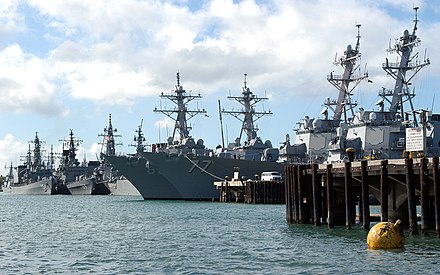
Image Courtesy of Wikipedia

Americans who favored imperial expansion based their support on several key arguments:
- Economic Opportunities: Imperialists saw financial benefits in controlling territories like Cuba, Hawaii, and the Philippines. These lands could produce valuable tropical crops and serve as strategic coaling stations for American ships traveling to the lucrative Chinese market.
- Racial and Religious Superiority: Many expansionists embraced Social Darwinism, which suggested Anglo-Saxon Americans were intellectually, morally, and spiritually superior to other peoples. This belief was used to justify displacing Spanish colonial control and ruling over indigenous populations.
- Competition with European Powers: The late 19th century saw European nations engaged in a second wave of imperial conquest. Proponents argued America needed colonies to maintain its status as a world power and keep pace with European rivals.
- The "Closed Frontier": By 1890, the American frontier was declared effectively settled. Some Americans worried that without new frontiers, the nation would lose the rugged qualities that had defined American character. Overseas expansion offered new frontiers that could preserve these perceived national virtues.
Anti-Imperialist Arguments
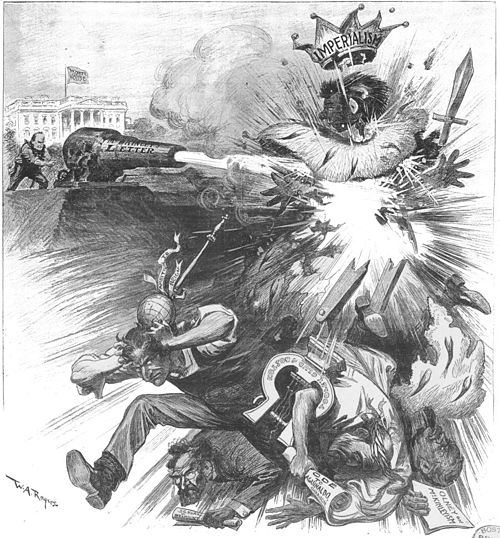
Those opposed to American imperialism mounted passionate resistance through organizations like the Anti-Imperialist League:
- Self-Determination: Anti-imperialists considered ruling over unwilling populations hypocritical for a nation founded on rejection of colonial rule. They emphasized America's own revolutionary heritage and the importance of consent of the governed in political theory.
- Racial Concerns: Opposition to imperialism sometimes came from conflicting racial perspectives. Some worried about incorporating non-white populations into American society, believing they couldn't assimilate. Others opposed imperialism precisely because they recognized the racist foundations of imperial conquest.
- Tradition of Isolationism: Dating back to Washington's presidency, many Americans believed the nation should avoid entangling foreign alliances. Anti-imperialists warned that territorial expansion would create new vulnerabilities and require expensive military commitments to defend distant possessions.
The debate over imperialism revealed deep tensions in American identity at the turn of the century, as the nation struggled to define its proper role in an increasingly interconnected world.
Practice Questions for 7.2
1 of 10
An imperialist argues in 1895 that American expansion into Hawaii and the Caribbean will provide markets for American manufactured goods and agricultural surplus, preventing economic stagnation at home. This argument emerged most directly from which broader economic and social development of the late nineteenth century?
A.
The decline of American agricultural exports due to competition from European farmers in the global marketplace
B.
The success of European colonial powers in extracting raw materials from their possessions, which American businesses sought to replicate
C.
Industrial overproduction and the search for overseas markets coinciding with the perception that domestic expansion had reached its limits
D.
A desire to escape the economic regulations and tariffs imposed by the federal government on domestic commerce
Vocabulary
The following words are mentioned explicitly in the AP® course framework for this topic.Term | Definition |
|---|---|
anti-imperialists | Opponents of American overseas territorial expansion who argued against extending U.S. territory beyond its continental borders. |
competition with European empires | The rivalry between the United States and European powers for global influence, territory, and resources in the late 19th century. |
economic opportunities | Prospects for financial gain and prosperity that motivated settlers to migrate westward, including farming, mining, and trade. |
imperialists | Advocates who supported American expansion of territory, culture, and institutions to peoples around the globe in the late 19th century. |
isolationism | A U.S. foreign policy tradition of avoiding political and military involvement in the affairs of other nations. |
racial theories | Pseudo-scientific ideologies used to justify both imperialist expansion and anti-imperialist resistance during the late 19th century. |
self-determination | The principle that peoples have the right to determine their own political status and form of government without external interference. |
Western frontier | The expanding boundary of American settlement and territorial control that was perceived as 'closed' by the 1890s. |
Frequently Asked Questions
What is imperialism and why did Americans start debating it in the 1890s?
Imperialism is the U.S. policy of extending influence—political, economic, and military—over other lands and peoples (e.g., annexing Hawaii, holding the Philippines after 1898). Americans began debating it in the 1890s because industrial growth created a need for new markets and naval power (Alfred Thayer Mahan), the 1890 frontier-closed idea (Frederick Jackson Turner) pushed leaders to look overseas, and racial/missionary ideas like Social Darwinism and the “White Man’s Burden” justified expansion. Opponents (Anti-Imperialist League) argued it violated self-determination, republicanism, and traditions of limited foreign entanglement. These debates show competing views of America’s role in the world—economic opportunity and global power versus democratic principles and isolationist tradition—which is exactly what Topic 7.2 asks you to explain for the AP exam (use KC-7.3.I.A and I.B). See the Topic 7.2 study guide for review (/apush/unit-7/imperialism-debates/study-guide/XQhEsqd89b8yG7yqh4dK), the unit overview (/apush/unit-7), and practice questions (/practice/ap-us-history).
What were the main arguments that imperialists used to support American expansion overseas?
Imperialists argued the U.S. needed to expand overseas for economic, strategic, and moral reasons. Economically, leaders said new markets and raw materials would absorb industrial overproduction and boost trade (Mahan’s emphasis on sea power). Strategically, naval expansion and overseas bases would protect commerce and U.S. interests (Alfred Thayer Mahan; Roosevelt’s Big Stick ideas/Corollary). Culturally and racially, writers invoked Social Darwinism and the “White Man’s Burden” to claim Anglo-Saxon duty to spread Christianity and “civilization.” Politically, competition with European empires and the 1890 frontier closing (Frederick Jackson Turner) pushed Americans to look abroad. These arguments show up in debates over the Spanish-American War, annexing the Philippines, and the Open Door policy. For more AP-aligned review, see the Topic 7.2 study guide (/apush/unit-7/imperialism-debates/study-guide/XQhEsqd89b8yG7yqh4dK), the unit overview (/apush/unit-7), and practice questions (/practice/ap-us-history).
Why did anti-imperialists think the US shouldn't expand its territory to other countries?
Anti-imperialists argued the U.S. shouldn’t expand overseas for several clear reasons. They appealed to self-determination and republican ideals—annexing territories (like the Philippines) would deny people the right to govern themselves and contradict the Constitution. Many invoked the U.S. tradition of isolationism and the Monroe Doctrine to say America’s role was regional, not colonial. Others worried imperialism would drag the country into foreign entanglements and standing armies that threatened liberty. Some anti-imperialists also used racial arguments or feared economic costs and competition from cheap colonial labor. Groups like the Anti-Imperialist League framed these points during debates after the Spanish-American War. For AP work, practice explaining these differing attitudes about America’s role in the world (LO B) on short answers or DBQs—see the Topic 7.2 study guide for concise notes and examples (/apush/unit-7/imperialism-debates/study-guide/XQhEsqd89b8yG7yqh4dK). For more practice, try Fiveable’s question bank (/practice/ap-us-history).
What does "the Western frontier was closed" mean and how did this affect American imperialism?
“The Western frontier was closed” refers to the 1890 U.S. Census declaration that there was no longer a continuous line of unsettled land west of the Mississippi—the frontier that had offered land, opportunity, and outlet for expansion was gone. Frederick Jackson Turner’s frontier thesis turned that fact into an argument: without new land to absorb Americans, leaders and thinkers worried about economic pressures, social unrest, and lost opportunities for expansion. That helped drive imperialist arguments in the 1890s: businessmen and politicians pushed for overseas markets and naval bases (Mahan), reformers and racists invoked “civilizing” missions and Social Darwinism, and the Spanish-American War/annexations (Hawaii, Philippines) followed. Anti-imperialists countered with self-determination and isolationist tradition. On the AP exam, the “closed frontier” is key context for DBQs/LEQs about causes of U.S. expansion (use it for contextualization). For a focused review, see Fiveable’s Topic 7.2 study guide (/apush/unit-7/imperialism-debates/study-guide/XQhEsqd89b8yG7yqh4dK) and practice questions (/practice/ap-us-history).
How did racial theories support both imperialist and anti-imperialist arguments?
Racial theories like Social Darwinism and the “White Man’s Burden” were turned into tools by both imperialists and anti-imperialists. Imperialists used them to argue the U.S. had a moral and “scientific” duty to spread Christianity, civilization, and Anglo-Saxon institutions—ideas that justified expansion (e.g., Philippine annexation, Roosevelt’s rhetoric). Anti-imperialists also invoked race but to argue the U.S. shouldn’t rule peoples seen as different: they claimed imperialism corrupted American democratic ideals, violated self-determination, and risked mixing races or ruling “alien” populations (views the Anti-Imperialist League expressed). On the AP exam, these opposing uses are good DBQ/LEQ evidence: you can cite Social Darwinism/White Man’s Burden for imperialist motives and the Anti-Imperialist League/self-determination for counterarguments, and analyze POV. For a concise review, see the Topic 7.2 study guide (/apush/unit-7/imperialism-debates/study-guide/XQhEsqd89b8yG7yqh4dK) and practice questions (/practice/ap-us-history).
What's the difference between imperialist and anti-imperialist views on America's role in the world?
Imperialists vs. anti-imperialists: short version. Imperialists argued the U.S. should expand overseas to gain new markets, strategic naval bases (Alfred Thayer Mahan), and cultural influence—backed by Social Darwinism, the “White Man’s Burden,” and the idea that the continental frontier was closed (Turner). They pointed to economic opportunity, competition with European empires, and leaders like McKinley and Roosevelt (Big Stick/Roosevelt Corollary) to justify intervention (Spanish-American War, Open Door Policy). Anti-imperialists countered that expansion violated U.S. principles (self-determination, consent of the governed), revived isolationist traditions (Monroe Doctrine critics), and raised racial and constitutional objections (Anti-Imperialist League, Insular Cases debates). On the AP exam, you should be able to compare these attitudes, cite specific events/people (Philippines, Platt Amendment, Emilio Aguinaldo), and use sourcing in DBQ/LEQ responses. For a focused review, see the Topic 7.2 study guide (/apush/unit-7/imperialism-debates/study-guide/XQhEsqd89b8yG7yqh4dK) and practice questions (/practice/ap-us-history).
I'm confused about how both sides used racial arguments - can someone explain this?
Both imperialists and anti-imperialists used racial ideas—but for opposite goals. Imperialists leaned on Social Darwinism and “White Man’s Burden” arguments: they claimed Anglo-Saxons were more fit to civilize, Christianize, and uplift “lesser” peoples, so expansion was a moral duty and a way to secure markets and global power (CED KC-7.3.I.A). Leaders like Roosevelt and writers like Josiah Strong pushed that language. Anti-imperialists, including the Anti-Imperialist League, also invoked race—but to argue that ruling other peoples violated principles of self-determination and would corrupt U.S. democracy; some worried about mixing races, labor competition, or that imperial rule would import racial hierarchies into American politics (CED KC-7.3.I.B). On the AP exam, be ready to identify these competing racial claims in documents and explain how they supported different visions of America’s role (use DBQ sourcing/POV skills). For a focused review, see the Topic 7.2 study guide (/apush/unit-7/imperialism-debates/study-guide/XQhEsqd89b8yG7yqh4dK) and practice questions (/practice/ap-us-history).
What economic opportunities did imperialists think expansion would bring to America?
Imperialists argued expansion would open new economic opportunities: access to overseas markets for U.S. factories overflowing with goods, sources of raw materials (sugar, rubber, tropical products), and places to invest surplus capital—all seen as solutions after the “closing” of the Western frontier. Thinkers like Alfred Thayer Mahan tied economic growth to sea power, so imperialists also pushed for naval bases and coaling stations to protect trade routes. Policies like the Open Door aimed to secure equal access to China’s huge markets. These economic claims helped justify actions in the 1890s–1900s (Spanish-American War, annexation of the Philippines, Hawaiian Annexation). For AP review, focus on KC-7.3.I.A causes and link evidence (Mahan, Open Door, Spanish-American War) to arguments on the exam; the Topic 7.2 study guide (/apush/unit-7/imperialism-debates/study-guide/XQhEsqd89b8yG7yqh4dK) and practice problems (/practice/ap-us-history) are good resources.
How did the principle of self-determination conflict with American imperialism?
Self-determination is the idea that people should choose their own governments; American imperialism—after the Spanish-American War and in places like the Philippines and Cuba—meant the U.S. often kept control over other peoples instead of letting them govern themselves. Imperialists used arguments like economic need, Mahan’s navy logic, and racial ideas (White Man’s Burden, Social Darwinism) to justify expansion. Anti-imperialists invoked self-determination (and isolationist traditions) to say annexation violated American republican principles—see the Anti-Imperialist League and debates over the Philippines and the Platt Amendment. For the AP exam, this contrast is a common DBQ/LEQ theme: explain how ideology (self-determination) clashed with economic, strategic, and racial motives for expansion. For a focused review, check the Topic 7.2 study guide (/apush/unit-7/imperialism-debates/study-guide/XQhEsqd89b8yG7yqh4dK) and practice questions (/practice/ap-us-history).
What was America's traditional foreign policy before the 1890s and how did imperialism challenge it?
Before the 1890s U.S. foreign policy was mostly isolationist in tone: avoid entangling alliances, focus on continental expansion (Manifest Destiny), and limit overseas territorial holdings while enforcing the Monroe Doctrine in the Western Hemisphere. Imperialism in the 1890s challenged that tradition by pushing for overseas expansion—Hawaiian annexation, victory in the Spanish-American War, and the Philippines—driven by economic desires for new markets, Alfred Thayer Mahan’s push for a strong navy, Social Darwinist/“White Man’s Burden” ideas, and Frederick Jackson Turner’s closed-frontier argument. That shift produced new policies (Open Door in China, Roosevelt Corollary) and sparked the Anti-Imperialist League’s appeal to self-determination and U.S. non-entanglement traditions. On the AP exam you’ll often see this in DBQs/LEQs: use documents to show both imperialist motives (economic, strategic, racial) and anti-imperialist continuity with earlier isolationist rhetoric. For a focused review see the Topic 7.2 study guide (/apush/unit-7/imperialism-debates/study-guide/XQhEsqd89b8yG7yqh4dK); practice questions at (/practice/ap-us-history).
How do I write a DBQ essay comparing imperialist and anti-imperialist arguments?
Start your DBQ with a clear thesis that compares imperialist vs. anti-imperialist motives (e.g., economic markets & naval power vs. self-determination & isolationist tradition) and gives a line of reasoning. Contextualize briefly: late 19th-century industrialization, Turner’s frontier closing, and global imperial competition. Use at least four documents to support claims (show how Mahan and Roosevelt justify navy/Dollar/Big Stick policies for markets and stability; use Puck or Boston Globe cartoons and Hay/Strong to show cultural/racial arguments; use Anti-Imperialist League or Insular Cases to show opposition). For two documents explain POV/purpose/audience (CED Skill 2). Add at least one outside fact (Spanish-American War, Annexation of Hawaii, Filipino-American War, Platt Amendment) as required. Wrap up by weighing which motives were more persuasive/lasting. For topic review check the Fiveable study guide (/apush/unit-7/imperialism-debates/study-guide/XQhEsqd89b8yG7yqh4dK) and practice DBQs (/practice/ap-us-history).
Why did some Americans think they were destined to spread their culture around the globe?
Many Americans in the 1890s felt “destined” to spread U.S. culture because of a mix of economic, ideological, and strategic reasons in the CED. Industrial overproduction and a need for new markets pushed leaders to seek overseas trade (Mahan’s naval/sea-power argument). Cultural ideas like Social Darwinism and the “White Man’s Burden” framed Anglo-Saxon civilization and Christianity as duties to “uplift” other peoples (Josiah Strong). Politically, competition with European empires and the 1890s announcement that the frontier was closed (Turner) made overseas expansion seem like the next outlet for American energy. Leaders like McKinley and Roosevelt turned those beliefs into policy (Spanish-American War, annexation of the Philippines, Roosevelt Corollary). For AP practice, tie these causes together in DBQs or LEQs: cite specific documents/terms (Social Darwinism, Mahan, frontier thesis) and use evidence beyond docs—Fiveable’s Topic 7.2 study guide is a helpful quick review (/apush/unit-7/imperialism-debates/study-guide/XQhEsqd89b8yG7yqh4dK). For more practice, see Fiveable’s APUSH questions (/practice/ap-us-history).
What were the long-term consequences of the imperialism debate on American foreign policy?
The imperialism debate reshaped U.S. foreign policy long-term by shifting the conversation from isolation toward conditional international engagement. Pro-imperialist ideas (Mahan, “White Man’s Burden,” economic expansion) pushed the U.S. to build a navy, acquire overseas bases, intervene in Latin America (Roosevelt Corollary/“Big Stick”), and promote the Open Door in China—policies that normalized active intervention to protect markets and stability. Anti-imperialists’ arguments (self-determination, tradition of non-entanglement) kept isolationist strains alive, influencing debates after WWI and fueling legal/constitutional questions (Insular Cases) about territory and rights. On the AP exam, expect these themes in DBQs/LEQs: use documents to weigh economic, strategic, and racial/ideological causes and show continuity/change in U.S. global role (CED Topic 7.2 keywords apply). For a focused review, see the Topic 7.2 study guide (/apush/unit-7/imperialism-debates/study-guide/XQhEsqd89b8yG7yqh4dK) and practice questions (/practice/ap-us-history).
How did competition with European empires influence American imperialist thinking?
European imperial competition pushed many Americans to support overseas expansion. By the 1890s leaders argued the U.S. risked being shut out of global markets and strategic bases as Britain, France, Germany, and Japan built empires—so economic motives (new markets, raw materials) and strategic ones (Mahan’s call for a big navy and overseas coaling stations) became central to imperialist thinking. Cultural arguments—Social Darwinism, “White Man’s Burden,” and Frederick Jackson Turner’s closed-frontier idea—gave those motives a moral-sounding rationale. That mix helped justify actions like the Spanish-American War, Hawaiian and Philippine annexations, and the Open Door policy in China. For AP essays/DBQs, link these causes (economic, strategic, cultural/ideological) to specific events and documents (e.g., Mahan, Hay, Roosevelt) to meet evidence and contextualization criteria (see the Topic 7.2 study guide: /apush/unit-7/imperialism-debates/study-guide/XQhEsqd89b8yG7yqh4dK). For more practice, try the AP question sets at (/practice/ap-us-history).
Can someone explain isolationism and why anti-imperialists wanted to keep this policy?
Isolationism = a long U.S. foreign-policy tradition of avoiding permanent political or territorial entanglements abroad and focusing on domestic growth. Anti-imperialists used that idea to argue the U.S. shouldn’t annex overseas territories (like the Philippines) because expansion violated republican principles, denied self-determination, and pulled the nation into foreign conflicts. Groups like the Anti-Imperialist League pointed to the Constitution, the Monroe Doctrine, and fears of racial and economic mixing to say empire contradicted American ideals (self-government, limited overseas commitments). They also worried imperialism would require a large standing navy and standing overseas commitments that changed U.S. politics and labor. On the AP exam you should be able to compare these isolationist arguments with imperialist ones (economic opportunity, Mahan’s navy theory, “White Man’s Burden”) and use evidence like the Philippine annexation and the Insular Cases. For a focused review see the Topic 7.2 study guide (/apush/unit-7/imperialism-debates/study-guide/XQhEsqd89b8yG7yqh4dK) and more unit practice (/apush/unit-7); practice questions (/practice/ap-us-history).
See Fiveable more often in Google
Mark Fiveable as a preferred source and Google is more likely to show you our guides in Top Stories, with a "preferred" badge in AI Mode and AI Overviews.