A New Era of Power and Sovereignty
The 18th century marked a turning point in how European states wielded power. While Absolute Monarchies had dominated the 17th century, Enlightenment ideals sparked efforts to rationalize government, centralize authority, and restructure society in ways that reflected reason and progress.
Monarchs known as Enlightened Despots embraced Enlightenment principles—such as legal reform, religious tolerance, and education—but without relinquishing their own power. These rulers restructured state institutions to increase efficiency, promote national identity, and reduce the influence of older feudal or religious systems, all while preserving monarchical authority.

The Peace of Westphalia and the Rise of Prussia
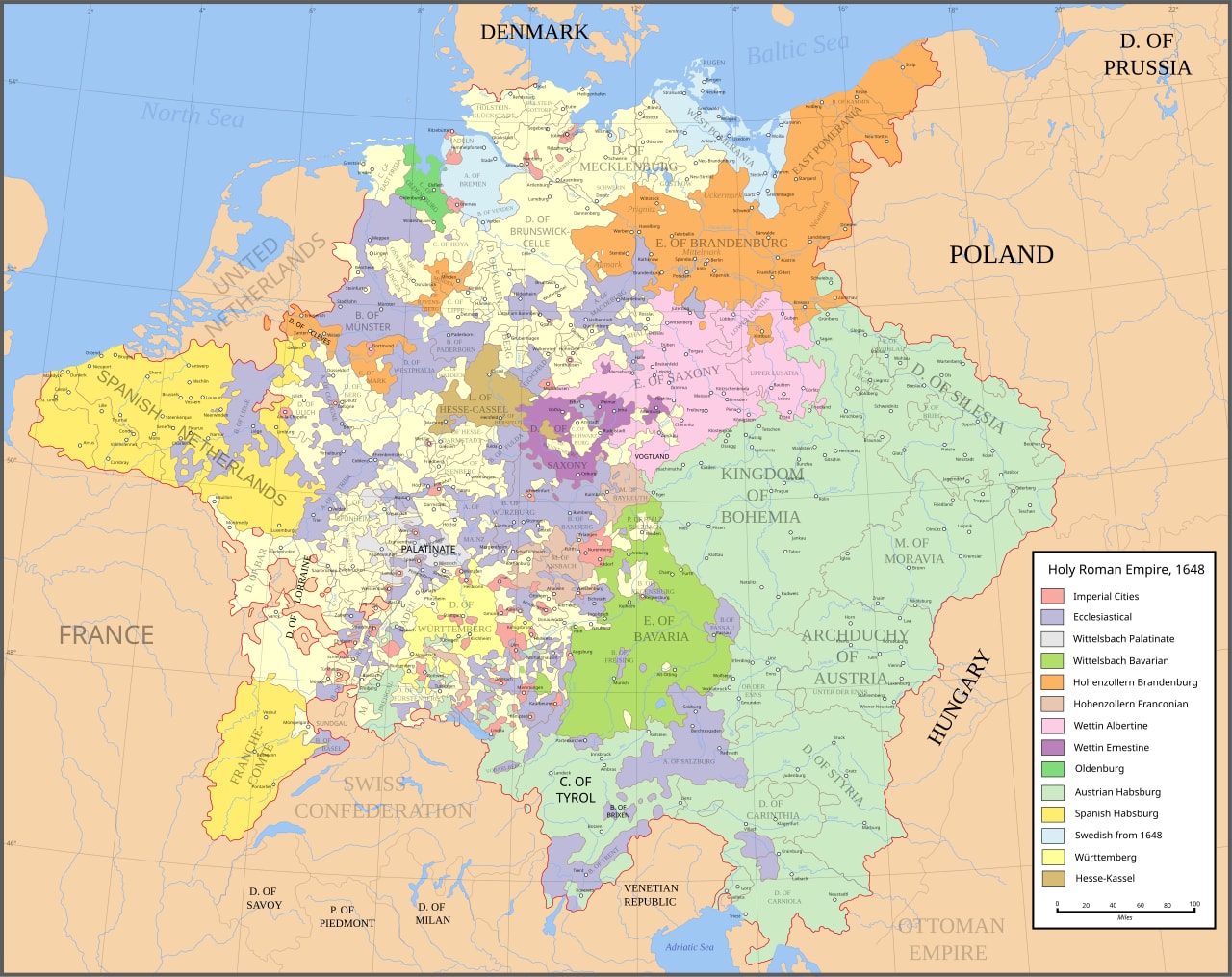
The Peace of Westphalia (1648) marked the end of the Thirty Years’ War and reshaped European political boundaries. It also introduced the principle of Westphalian sovereignty—the idea that states had control over their internal affairs, including religion. This development weakened the authority of the Holy Roman Empire and the Catholic Church, especially in German-speaking lands.
- With religious authority diminished, Prussia emerged as a powerful state in Northern Europe.
- Many German princes adopted Protestantism to escape the Church's influence, allowing rulers like the Hohenzollerns to consolidate power.
- Prussia’s rise reflected the broader trend toward centralized authority, efficient bureaucracy, and strong military institutions.
What Is an Enlightened Despot?
Enlightened despots promoted Enlightenment reforms—such as codified laws, religious tolerance, state-sponsored education, and modernized economies—without sharing political power. These rulers claimed to act in the people’s interest, but did so from above, not through representative government.
💡 They differed from older absolutists by actively reforming institutions to strengthen the state, promote rational governance, and encourage loyalty based on national pride and shared identity.
Examples of Enlightened and Authoritarian Rule
Napoleon Bonaparte (France, 1800–1815)
After the French Revolution, Napoleon rose to power claiming to uphold revolutionary ideals—but consolidated them under a centralized authoritarian regime.
- Napoleonic Code (1804) abolished hereditary privilege, protected private property, and ensured legal equality for men.
- He introduced state-run education, a merit-based bureaucracy, and religious toleration (though he signed a Concordat with the Catholic Church).
- Napoleon promoted nationalism and citizenship, creating a modern French identity that united people under the banner of the state.
- However, his continental ambitions and autocratic control placed limits on political freedom and ultimately led to military overreach and his downfall after the failed Russian campaign and Waterloo.
Maria Theresa of Austria (1740–1780)
Though initially challenged in the War of Austrian Succession, Maria Theresa successfully asserted her rule and modernized Austria:
- Established a state-funded education system and built new schools for boys and girls.
- Created Austria’s first Supreme Court and codified laws to strengthen central governance.
- Supported medical reform, inoculated her children against smallpox, and established a scientific academy.
- Despite many reforms, she remained devoutly Catholic and exiled Jews, reflecting lingering religious intolerance.
Her reign balanced Enlightenment reforms with traditional monarchy, strengthening Austria’s internal unity and administration.
Joseph II of Austria (1765–1790)
Maria Theresa’s son, Joseph II, is often considered the most radical Enlightened Despot:
- Issued the Edict of Toleration (1781), granting limited religious freedom to Protestants and Jews.
- Reduced the political power of the Catholic Church and closed unproductive monasteries.
- Promoted freedom of the press, abolished serfdom (temporarily), and expanded education.
However, Joseph’s reforms were met with backlash from nobility and clergy, and many were reversed after his death. His reign shows how Enlightenment reforms often clashed with entrenched social structures.
Frederick William I of Prussia (1713–1740)
Called the “Soldier King,” Frederick William I focused on strengthening Prussia’s military and state apparatus:
- Established a professional army and a rotating recruitment system.
- Introduced the FIRST universal primary education, reorganized land settlement in plague-ravaged areas, and imposed taxes on the wealthy.
- Sought to make Prussia efficient, disciplined, and economically independent.
His reforms laid the groundwork for Prussia’s transformation into a modern European power.
Frederick II “the Great” of Prussia (1740–1786)
Frederick the Great, son of Frederick William I, was a skilled general and Enlightenment thinker:
- Promoted religious tolerance, legal reform, and patronized arts and philosophy (he corresponded with Voltaire).
- Rationalized the legal code and bureaucracy to support merit-based advancement.
- Though he called himself “the first servant of the state,” he maintained full control over policy and foreign affairs.
Frederick used Enlightenment ideals to build a strong national identity centered on loyalty to the monarch and the state.
Catherine the Great of Russia (1762–1796)
Catherine II, a German princess who took power after a coup, promoted Enlightenment culture while expanding autocracy:
- Corresponded with Enlightenment thinkers and attempted (but failed) to create a constitution.
- Expanded the empire into Poland, Crimea, and Ukraine, reinforcing Russian dominance.
- Promoted women’s education, built libraries and schools, and expanded trade and infrastructure.
- Maintained and expanded serfdom, especially in Ukraine, to gain support from the nobility.
Catherine embraced Enlightenment ideals selectively—advancing culture and administration while preserving the social hierarchy.
Changes and Continuities in European Monarchy: 1450–1815
The transformation of European monarchies from the era of the New Monarchs to Absolutists, and finally to Enlightened Despots, reflects both continuities in centralizing state power and significant changes in the justification and implementation of that power.
Continuities
- Centralization of Power: All three forms of monarchy sought to concentrate power in the hands of the ruler and reduce the influence of external institutions like the Church or feudal nobility.
- Use of Bureaucracy: Professional administrators, taxation systems, and standing armies became tools of statecraft across all three eras.
- Control Over Religion: Each group of monarchs worked to reduce papal influence and control religious affairs within their states.
- Justification of Rule: While the divine right was heavily emphasized under Absolutists, even Enlightened Despots claimed to rule in the "interest of the people"—a secular justification that still consolidated personal power.
Changes Over Time
| Feature | New Monarchs (1450–1648) | Absolutists (1648–1715) | Enlightened Despots (1700s–1815) |
|---|---|---|---|
| Source of Legitimacy | Divine right & traditional monarchy, often with Church approval | Divine Right of Kings; absolute, unchallengeable authority | Utilitarian rule: legitimacy based on service to the people, reform |
| Role of the Church | Reduced Church influence, but often collaborated with it (e.g., Concordats) | Church subordinated to the monarch (e.g., Louis XIV revoking Edict of Nantes) | Church influence reduced; more religious toleration (e.g., Edict of Toleration) |
| Control Over Nobility | Undermined feudal nobles by creating “Nobles of the Robe” | Weakened nobility further; replaced with loyal bureaucrats and militaries | Nobility often retained privileges but were used to implement reforms |
| Economic Approach | Mercantilism began to emerge | Strong state-directed mercantilism (e.g., Colbert in France) | Shift toward laissez-faire and capitalism (e.g., Adam Smith's ideas influence) |
| Relationship with the People | Subjects, not citizens—expected loyalty | Still largely subjects; low political participation | Begins to embrace citizenship rhetoric, legal equality, basic rights |
| View on Reform | Minimal reform—focused on consolidating control | Resisted reform unless it helped centralize authority | Embraced legal, educational, and religious reforms (though selectively) |
| Key Figures | Ferdinand & Isabella, Henry VII, Francis I | Louis XIV, Peter the Great, Charles I | Catherine the Great, Frederick the Great, Joseph II, Napoleon |
National Identity and State Power
From 1450 to 1815, the function and structure of the state evolved dramatically:
- New Monarchs centralized power by curbing feudalism and controlling religion.
- ==Enlightened despots further professionalized government and sought to justify their rule through reform and national pride.==
- Napoleon took these ideals and fused them with nationalism, inspiring other European states to define their own national identities in opposition or imitation.
While many reforms strengthened the state, they also sowed the seeds of liberal revolutions, especially as Enlightenment ideals about representation, rights, and sovereignty took root among the people.
Why This Matters
The 18th century was a pivotal moment in state-building and identity formation. Monarchs experimented with Enlightenment principles to improve their rule, but tensions between reform and control persisted.
These developments:
- Laid the groundwork for modern bureaucracy, centralized law, and secular governance.
- Fostered national consciousness and public opinion.
- Highlighted contradictions between autocratic rule and Enlightenment values, which would later fuel revolutions in France, Latin America, and beyond.
Understanding Enlightened approaches to power helps explain the transition from absolutism to modern nation-states, and the fragile balance between authority and reform that defined 18th-century Europe.
🎥 Watch: AP European History - Enlightened Absolutists
Vocabulary
The following words are mentioned explicitly in the College Board Course and Exam Description for this topic.
| Term | Definition |
|---|---|
| Austria | The central European territory that became the core of Habsburg power after the Peace of Westphalia. |
| civil equality | The granting of equal legal rights and status to all citizens regardless of religion or other characteristics. |
| enlightened absolutism | A form of government in 18th-century Europe where monarchs maintained absolute power while implementing reforms based on Enlightenment principles. |
| Enlightenment thought | Intellectual movement focused on empiricism, skepticism, human reason, and rationalism that challenged prevailing patterns of thought regarding social order, institutions of government, and the role of faith. |
| Habsburgs | A European royal dynasty that ruled the Holy Roman Empire and Austria, shifting their power base eastward after 1648. |
| Holy Roman Empire | A political entity in Central Europe that existed from 962 to 1806, composed of numerous German and Italian states under an elected emperor. |
| Peace of Westphalia | A series of treaties signed in 1648 that ended the Thirty Years' War and established the principle of state sovereignty in Europe. |
| Prussia | A German state that rose to major power status in the 17th and 18th centuries, eventually becoming the dominant German power. |
| religious toleration | The acceptance of different religious beliefs and practices, allowing individuals freedom of conscience and worship without persecution. |
| sovereignty | The power of a state to govern itself and make independent decisions without external interference. |
| unified Europe | The concept of European political, religious, or cultural cohesion and integration as a single entity. |
Frequently Asked Questions
What is enlightened absolutism and how is it different from regular absolutism?
Enlightened absolutism: 18th-century rulers (like Frederick II of Prussia and Joseph II of Austria) kept strong, centralized royal power but used Enlightenment ideas to reform the state—legal codification, administrative centralization, religious toleration (e.g., Joseph’s Patent of Toleration), cameralist economic policies, secularization of some church lands, and limited legal equality for Jews. Regular absolutism earlier focused on unchallenged dynastic authority, military strength (Prussian militarism under Frederick William I), and maintaining traditional church privileges without reforming society or law. For the AP exam, remember to link specific rulers and reforms to the concept (CED keywords above). In short-answer or essays, explain how enlightened monarchs retained absolutist power while adopting rationalizing reforms—showing both continuity (centralized sovereignty) and change (Enlightenment-influenced policies). Review the Topic 4.6 study guide on Fiveable for examples and practice (https://library.fiveable.me/ap-european-history/unit-4/enlightened-other-approaches-power/study-guide/8cP7fBYiiYKd6D392PzI) and try practice questions (https://library.fiveable.me/practice/ap-european-history).
Why did monarchs like Frederick II and Joseph II adopt Enlightenment ideas if they were still absolute rulers?
They adopted Enlightenment ideas because it helped them strengthen and modernize their states while keeping absolute control—a tactic called enlightened absolutism (CED KC-2.1.I.C). Think Frederick II and Joseph II: both used administrative centralization, cameralist economic policies, legal reform, religious toleration, and secularization of church lands to increase efficiency, tax revenue, and loyalty from subjects without sharing political power. Enlightenment rhetoric (justice, utility, rational law) made reforms politically acceptable and helped rulers legitimize stronger, more efficient bureaucracies and militaries. Joseph pushed legal equality and toleration; Frederick promoted religious toleration and merit-based service—reforms that advanced state power but didn’t create constitutional limits. For AP purposes, link these examples to LO G (how Enlightenment thought influenced political power) and LO H (shifts in Central/Eastern Europe). For a focused review, see the Topic 4.6 study guide (https://library.fiveable.me/ap-european-history/unit-4/enlightened-other-approaches-power/study-guide/8cP7fBYiiYKd6D392PzI). For practice, try problems at Fiveable (https://library.fiveable.me/practice/ap-european-history).
What's the difference between Frederick William I and Frederick II of Prussia?
Frederick William I (r. 1713–1740) vs. Frederick II/Frederick the Great (r. 1740–1786): - Frederick William I built Prussia into a highly efficient, militarized state: huge standing army, strict discipline, heavy emphasis on cameralism (state-directed finance/administration), bureaucratic centralization, and close ties with the Junker landowning elites. He prioritized fiscal order and state capacity over cultural life. - Frederick II started as his son’s Enlightenment-influenced ruler who kept his father’s army and administrative efficiency but also promoted enlightened absolutism: legal reform, religious toleration, patronage of arts/Philosophes, and rationalized government. He pursued aggressive foreign policy (Silesia, Seven Years’ War) to expand Prussian power while claiming Enlightenment ideals at home. For AP Euro: Frederick William I represents Prussian militarism and cameralism; Frederick II is an illustrative example of enlightened absolutism (Topic 4.6). For a quick review, see the Topic 4.6 study guide (https://library.fiveable.me/ap-european-history/unit-4/enlightened-other-approaches-power/study-guide/8cP7fBYiiYKd6D392PzI) and practice problems (https://library.fiveable.me/practice/ap-european-history).
How did the Peace of Westphalia help Prussia become more powerful?
The Peace of Westphalia (1648) weakened the Holy Roman Empire's central authority by recognizing the sovereignty of its princes and allowing rulers to make their own foreign policy and religious choices. That mattered for Brandenburg-Prussia: Brandenburg’s rulers could treat their territories more like a unified state, consolidate lands, build a centralized bureaucracy and standing army (cameralism/Prussian militarism), and negotiate independently. Over the 17th–18th centuries, rulers like Frederick William I and Frederick II used that sovereignty to expand administrative control, tax efficiently, and invest in the military—so Prussia “rose to power” within the fragmented German world while the Habsburgs looked east. This connection is in the CED under KC-2.1.III.A and is useful for short-answer or LEQ contextualization on state-building (see Topic 4.6 study guide: https://library.fiveable.me/ap-european-history/unit-4/enlightened-other-approaches-power/study-guide/8cP7fBYiiYKd6D392PzI). For extra practice, try AP-style problems at (https://library.fiveable.me/practice/ap-european-history).
I'm confused about how the Habsburgs shifted their empire eastward - what does that actually mean?
“Shifted their empire eastward” means the Habsburgs moved the center of their power away from their older western European possessions and focused on their Austrian, Hungarian, and Balkan lands in Central and Eastern Europe. After the Peace of Westphalia (1648) limited the emperor’s effective sovereignty in the Holy Roman Empire and the rise of Prussia, Habsburg strategy became more about consolidating control over Austria, Bohemia, and Hungary, defending against the Ottomans, and building a centralized bureaucratic state. That’s why you see rulers like Maria Theresa and Joseph II pushing Habsburg reforms—administrative centralization, cameralist economic policies, secularization, and some religious toleration—to strengthen their multinational empire. This shift is exactly the KC-2.1.III.A connection in the CED (HRE limits → Prussia rises; Habsburgs shift east). For more on Topic 4.6 and how this links to enlightened absolutism, check the Fiveable study guide (https://library.fiveable.me/ap-european-history/unit-4/enlightened-other-approaches-power/study-guide/8cP7fBYiiYKd6D392PzI). For extra practice, try Fiveable’s AP problems (https://library.fiveable.me/practice/ap-european-history).
Can someone explain why Maria Theresa was important to Austrian power?
Maria Theresa strengthened Austrian (Habsburg) power by saving and reforming the state after the War of the Austrian Succession (she kept most Habsburg lands) and modernizing government so it could actually run a large, multiethnic empire. She centralized administration, expanded taxation and budget control (cameralism), professionalized the army, reformed law and education, and curtailed some church privileges to increase state authority. Those changes made the monarchy more efficient and fiscally stable and set up the later, more “enlightened” reforms of her son Joseph II. On the AP, she’s an example of Habsburg reform and administrative centralization in Topic 4.6—know her role in shifting Habsburg focus eastward and in competing with rising Prussia. For a focused review see the Topic 4.6 study guide (https://library.fiveable.me/ap-european-history/unit-4/enlightened-other-approaches-power/study-guide/8cP7fBYiiYKd6D392PzI). For more practice, check Fiveable’s AP practice questions (https://library.fiveable.me/practice/ap-european-history).
What were the main reforms that enlightened monarchs actually made?
Enlightened monarchs made pragmatic, state-centered reforms inspired by Enlightenment ideas—but they kept absolute power. Key changes included: - Religious toleration: e.g., Joseph II’s Patent of Toleration and broader toleration for Protestants/Catholic minorities and some civil improvements for Jews (CED KC-2.3.IV.C). - Administrative centralization and legal reform: streamlined bureaucracy, codified laws, reduced regional privileges (Habsburg and Prussian reforms). - Fiscal/cameral policies: professionalized tax systems, promoted mercantilist/cameralist economic management to boost state revenue. - Education and legal equality: expanded state-run schools and tried to apply more uniform legal standards. - Church reform/secularization: reduced church courts’ power and confiscated some church lands for state use. Examples: Frederick II modernized administration and promoted religious toleration; Joseph II pushed radical reforms (serf relief, secularization) but many were rolled back. For AP review, see the Topic 4.6 study guide (https://library.fiveable.me/ap-european-history/unit-4/enlightened-other-approaches-power/study-guide/8cP7fBYiiYKd6D392PzI) and Unit 4 overview (https://library.fiveable.me/ap-european-history/unit-4). Practice with Fiveable’s AP questions (https://library.fiveable.me/practice/ap-european-history) to prepare for short-answer/essay prompts on enlightened absolutism.
How do I write a DBQ essay about enlightened absolutism vs traditional monarchy?
Start with a clear thesis that answers whether enlightened absolutism differed from traditional monarchy and establish your line of reasoning (put it in your intro or conclusion). In contextualization, situate 18th-century Enlightenment ideas and examples like Frederick II, Joseph II, Maria Theresa, and Prussian/Habsburg reforms (administrative centralization, religious toleration, patent of toleration, secularization). Use the DBQ rubric: explicitly use at least four documents to support your argument, cite one piece of outside evidence (e.g., Catherine the Great’s correspondence or the Patent of Toleration), and for two documents explain POV/purpose/situation/audience. Compare policies (religious toleration, cameralism, legal reform) versus continuities (monarchical control, militarism in Prussia). Aim to show complexity—rulers used Enlightenment ideas to strengthen states, not to democratize fully. Practice this structure during the 15-minute reading period: plan thesis, group docs, note sourcing, then write. For topic review see the Fiveable study guide (https://library.fiveable.me/ap-european-history/unit-4/enlightened-other-approaches-power/study-guide/8cP7fBYiiYKd6D392PzI) and extra practice (https://library.fiveable.me/practice/ap-european-history).
Why did some European governments start tolerating religious minorities by 1800?
By 1800 many European states tolerated religious minorities for practical and ideological reasons tied to Enlightenment reform and state-building. Enlightenment thinkers promoted religious toleration and reason, so rulers influenced by those ideas (enlightened absolutists like Joseph II) issued reforms such as the Patent of Toleration to reduce religious conflict. Politically, toleration helped centralize administration, improve tax revenue, and enlarge the pool of skilled taxpayers and soldiers (cameralism). Economically, governments wanted to attract merchants, professionals, and investment—so extending civil rights (even limited equality for Jews in some places) made sense. Finally, secularization of church lands and administrative reform reduced clerical power, letting monarchs govern more efficiently and keep internal stability. This change maps directly to Unit 4 learning objectives about enlightened absolutism and religious toleration (see the Topic 4.6 study guide: https://library.fiveable.me/ap-european-history/unit-4/enlightened-other-approaches-power/study-guide/8cP7fBYiiYKd6D392PzI). For extra practice, use Fiveable’s Unit 4 resources and practice questions (https://library.fiveable.me/practice/ap-european-history).
What caused the Holy Roman Empire to lose so much power after Westphalia?
The Peace of Westphalia (1648) cut the emperor’s power by legally recognizing the sovereignty of German princes: they could choose religion, make alliances, and exercise most internal authority. That weakened the Holy Roman Emperor’s central control and turned the Empire into a patchwork of semi-independent states. As the CED notes, this opened space for Prussia’s rise and pushed the Habsburgs to focus eastward (Austria) rather than on imperial consolidation. Westphalia also shifted Europe toward a balance-of-power diplomacy where state interest beat pan-Catholic or imperial unity. For AP purposes, connect this to KC-2.1.III.A and LO H: the treaty limited imperial sovereignty, encouraged territorial state-building (Prussian militarism, Habsburg reforms), and helped make the Holy Roman Empire politically marginal. For a concise Topic 4.6 review, see Fiveable’s study guide (https://library.fiveable.me/ap-european-history/unit-4/enlightened-other-approaches-power/study-guide/8cP7fBYiiYKd6D392PzI) and more unit resources (https://library.fiveable.me/ap-european-history/unit-4); practice questions are at (https://library.fiveable.me/practice/ap-european-history).
How did Frederick II use Enlightenment ideas to strengthen Prussia?
Frederick II used Enlightenment ideas to make Prussia more efficient, legitimate, and competitive—while keeping strong royal control (enlightened absolutism). He promoted religious toleration and limited legal reform (more impartial courts, a clearer legal code), encouraged education, arts, and the sciences, and staffed the bureaucracy by merit rather than birth (cameralism). Those reforms improved tax revenue, professionalized administration, and boosted the economy so the state could fund a powerful army and centralized government (administrative centralization). He presented himself as a “philosopher-king,” using Enlightenment rhetoric to justify reforms that strengthened state capacity without giving up sovereignty. For AP use: Frederick II is an illustrative example for Topic 4.6 (enlightened absolutism) in LEQs or SAQs—show context, cite specific reforms, and link how ideas led to stronger institutions (see the Topic 4.6 study guide: https://library.fiveable.me/ap-european-history/unit-4/enlightened-other-approaches-power/study-guide/8cP7fBYiiYKd6D392PzI). For more review, check Unit 4 (https://library.fiveable.me/ap-european-history/unit-4) and practice questions (https://library.fiveable.me/practice/ap-european-history).
What's the connection between the Enlightenment and religious toleration in Europe?
The Enlightenment promoted reason, individual rights, and skepticism of traditional authority—ideas that pushed rulers and thinkers toward religious toleration. Philosophers (like Voltaire) argued that the state should protect civil order, not enforce conscience; that fed into enlightened absolutism, where monarchs such as Joseph II and Frederick II implemented reforms (e.g., Joseph’s Patent of Toleration) to expand toleration and even civil rights for some minorities. By 1800 many western and central states had extended toleration to Christian minorities and, in some places, civil equality to Jews (CED KC-2.3.IV.C). On the AP exam, expect short-answer or LEQ prompts asking you to connect Enlightenment ideas to policy changes (Unit 4 LO G/H). For a clear review, see the Topic 4.6 study guide (https://library.fiveable.me/ap-european-history/unit-4/enlightened-other-approaches-power/study-guide/8cP7fBYiiYKd6D392PzI) and practice questions (https://library.fiveable.me/practice/ap-european-history).
Why did enlightened absolutism mostly happen in eastern and central Europe instead of western Europe?
Enlightened absolutism shows up more in eastern/central Europe because rulers there had the political room and incentives to reform. After Westphalia the Habsburgs and rising Prussia (and other central states) had strong monarchies with weak representative bodies, centralized bureaucracies, and economies still based on serfdom—so monarchs could push top-down reforms (cameralism, administrative centralization, secularizing church lands) to strengthen the state. Think Frederick II, Maria Theresa, Joseph II. In western Europe, by contrast, more powerful parliaments, commercial elites, and already-expanding religious toleration limited a king’s ability or need to carry out radical state-led reform; change there was often driven by bourgeois pressures or gradual legal shifts. This difference maps directly to CED Topic 4.6 (enlightened absolutism, Habsburg/Prussian reforms) and is a useful cause-and-effect point to use on AP short-answers or LEQs (Unit 4, LO G/H). For the Fiveable study guide on this topic see (https://library.fiveable.me/ap-european-history/unit-4/enlightened-other-approaches-power/study-guide/8cP7fBYiiYKd6D392PzI). For broader review or practice, check the Unit 4 overview (https://library.fiveable.me/ap-european-history/unit-4) and practice sets (https://library.fiveable.me/practice/ap-european-history).
What were the long-term effects of Prussia rising to power in the 18th century?
Prussia’s rise in the 18th century had several long-term effects you should know for AP Euro. It turned a medium-sized state into a major Central European power (helped by Westphalia’s fragmentation), pushing the Habsburgs east and reshaping the balance of power. Prussia’s militarized bureaucracy, cameralist economic policies, and administrative centralization under leaders like Frederick William I and Frederick II created an efficient, disciplined state model that influenced German unification in the 19th century. Its emphasis on meritocratic bureaucracy and religious toleration (relative to some neighbors) also fed Enlightened absolutism debates. Long-term, Prussia contributed to the fragmentation-to-unification arc in German lands, strengthened state power over local estates and church lands, and made military organization a central tool of statecraft—key context for 19th-century nationalism and the Concert of Europe. For a quick CED-aligned review, check the Topic 4.6 study guide on Fiveable (https://library.fiveable.me/ap-european-history/unit-4/enlightened-other-approaches-power/study-guide/8cP7fBYiiYKd6D392PzI) and practice questions (https://library.fiveable.me/practice/ap-european-history).
I missed class - what exactly did Joseph II do that made him an "enlightened" monarch?
Joseph II is a textbook example of enlightened absolutism because he pushed state reforms inspired by Enlightenment ideas—rational law, religious toleration, and administrative centralization—while keeping strong monarchical control. Key actions: issued the Patent of Toleration (expanded worship rights for Protestants and Orthodox; limited civil equality for Jews followed), abolished serfdom and feudal labor obligations in 1781 (trying to give peasants personal freedom), reduced the political power and wealth of the Catholic Church (secularized some church lands), modernized administration and the legal system (streamlined bureaucracy, promoted uniform laws), and promoted universal legal equality and some penal reforms. Many reforms met resistance and some were rolled back after his death, showing the limits of top-down Enlightenment change. Joseph II is an AP CED illustrative example of enlightened monarchs (use him in SAQs/LEQs as evidence of KC-2.1.I.C and KC-2.3.IV.C). Review Topic 4.6 on Fiveable (https://library.fiveable.me/ap-european-history/unit-4/enlightened-other-approaches-power/study-guide/8cP7fBYiiYKd6D392PzI). For broader review and practice, see the unit page (https://library.fiveable.me/ap-european-history/unit-4) and practice questions (https://library.fiveable.me/practice/ap-european-history).
