6.5 The Concert of Europe and European Conservatism

🇪🇺AP European History Unit 6 Review
6.5 The Concert of Europe and European Conservatism
🇪🇺 AP European History
6.1
Contextualizing Industrialization and Its Origins and Effects
6.2
The Spread of Industry Throughout Europe
6.3
Second-Wave Industrialization and Its Effects
6.4
Social Effects of Industrialization
6.5
The Concert of Europe and European Conservatism
6.6
Revolutions from 1815-1914
6.7
Ideologies of Change and Reform Movements
6.8
19th-Century Social Reform
6.9
Institutional Responses and Reform
6.10
Causation in the Age of Industrialization
What was the Concert of Europe in AP European History?
After Napoleon's defeat in 1815, conservative leaders rebuilt Europe around tradition, monarchy, and religious authority. The Concert of Europe (also called the Congress System) was their tool for keeping that order in place, using collective action to shut down liberal and nationalist revolutions. Klemens von Metternich led this effort, but pressure from nationalism and liberalism kept building until it broke through in 1848.
Why This Matters for the AP European History Exam
This topic helps you explain how the European political order was both maintained and challenged between 1815 and 1914, which is a core idea in Unit 6. You will need it for causation questions (why conservatives reacted the way they did), continuity and change questions (how the post-Napoleonic order held and then cracked), and comparison questions (conservatism versus liberalism and nationalism). Knowing the ideology behind conservatism, not just the events, gives you usable evidence for both multiple-choice questions and free-response arguments.
This topic also sets up Topic 6.6 (Reactions and Revolutions). The 1848 revolutions and the breakdown of the Concert of Europe make more sense once you understand what the conservative order was trying to protect.
Key Takeaways
- Conservatives built a new ideology around the idea that human nature is not perfectible, which justified support for traditional political and religious authority.
- The Concert of Europe (Congress System) tried to maintain the status quo through collective action and shared conservative goals.
- Metternich is identified as the architect of the Concert of Europe and used it to suppress nationalist and liberal revolutions.
- Conservatives reestablished control in many European states and worked to suppress movements for change, sometimes strengthening religious authority.
- Edmund Burke and Joseph de Maistre are influential conservative thinkers connected to this ideology.
- The conservative order delayed revolution but did not erase liberal and nationalist pressure, which is why this topic leads directly into the upheavals of 1848.
Quick Reference
| Name | Country | Main Goal(s) |
|---|---|---|
| Metternich | Austria | Restore monarchies, suppress revolution, control German/Italian states |
| Alexander I | Russia | Expand influence into Poland, maintain conservative alliance |
| Castlereagh | Britain | Prevent French dominance, balance power, oppose intervention |
| Talleyrand | France | Reintegrate France into Europe, prevent territorial losses |
| Hardenberg | Prussia | Gain land, especially in Poland and western Germany |
The Conservative Ideology After Napoleon
Napoleon's campaigns spread the Napoleonic Code, liberal reforms, and nationalist ideas across Europe. When he was defeated in 1815, traditional rulers wanted to undo that disruption and prevent future revolutions.
Out of this moment, conservatives developed a new political ideology. Its core belief was that human nature is not perfectible. From that starting point, conservatives argued that rapid, rational redesign of society (the kind the Enlightenment and French Revolution promoted) was dangerous. Instead, they supported traditional political and religious authorities, hierarchy, and monarchy as the safest foundation for order.
Three influential conservative thinkers are worth knowing as examples of this ideology:
- Edmund Burke: Author of Reflections on the Revolution in France (1790). He opposed sudden, radical change and argued for gradual reform rooted in tradition and inherited experience.
- Joseph de Maistre: A French Catholic thinker who tied political order to religious authority and defended monarchy as essential to social stability.
- Klemens von Metternich: The Austrian statesman who put conservative ideas into practice across Europe.
The Concert of Europe: Conservatism in Action
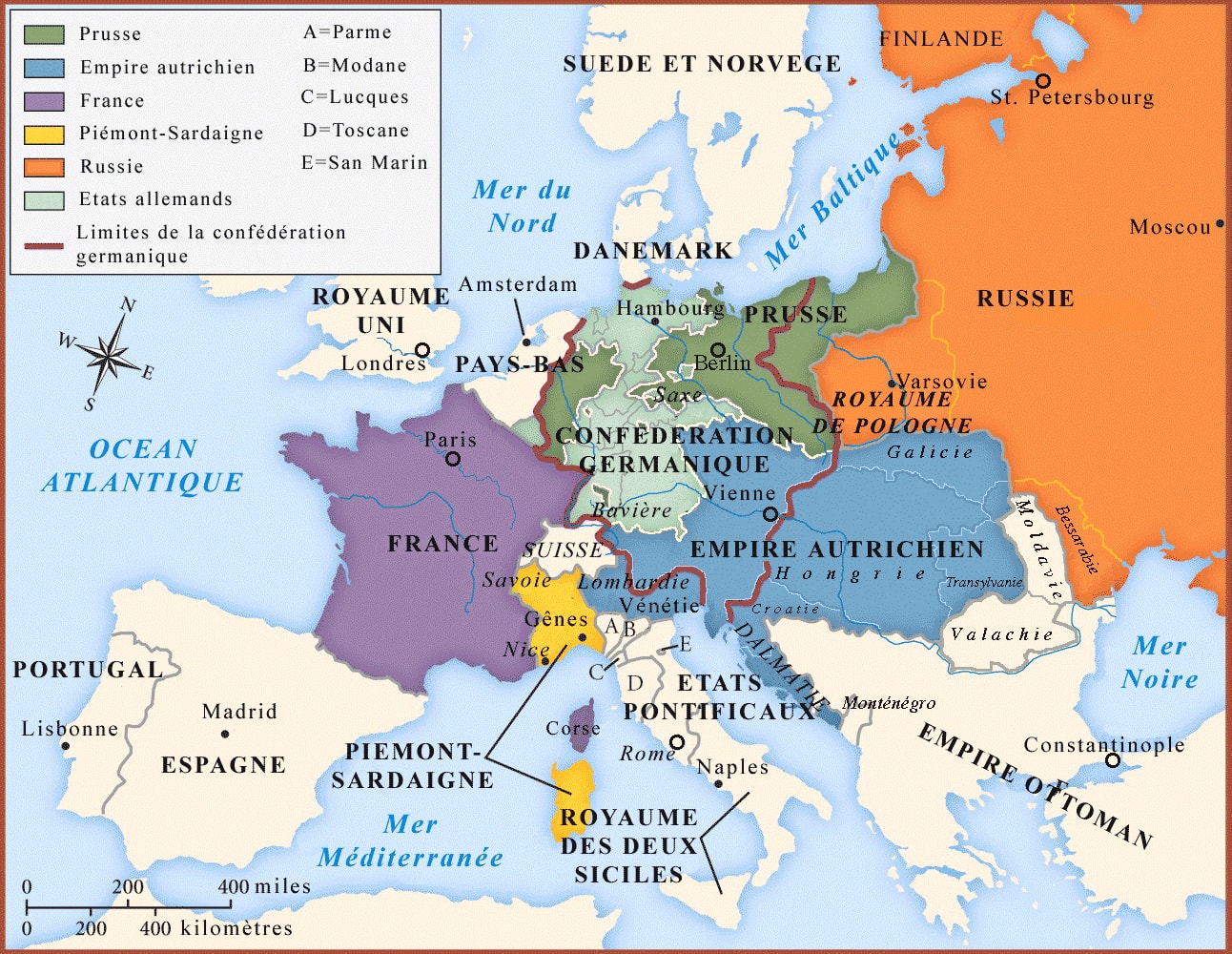
The Concert of Europe, also called the Congress System, was the diplomatic framework that the major powers used after the Congress of Vienna to maintain the status quo. It worked through collective action and shared commitment to conservatism, meaning the powers agreed to cooperate to keep monarchies in place and revolutions out.
Metternich is identified as the architect of the Concert of Europe. He used it as a tool to suppress nationalist and liberal revolutions wherever they appeared. The broader goal was to reestablish conservative control in many European states, block movements for change, and in some places strengthen adherence to religious authority.
Religion and Authority
Part of the conservative project was reviving the influence of religious authority that had been challenged during the Enlightenment. The argument that human nature is not perfectible supported the idea that society needed moral and religious guidance, not reason alone, to stay stable. This is why religious authority and conservative politics often reinforced each other in this period.
Challenges to the Conservative Order
The Concert of Europe kept a lid on things for a while, but it never removed the pressures underneath. Liberalism and nationalism kept growing, and revolts flared up in various parts of Europe during the 1820s and 1830s.
By 1848, revolution erupted across much of Europe. These uprisings, driven by economic hardship and frustration with the political status quo, challenged conservative governments and led to the breakdown of the Concert of Europe. In other words, the order that conservatives built to stop revolution eventually faced the exact wave of change it feared. That story continues in Topic 6.6.
How to Use This on the AP European History Exam
MCQ
Expect source-based questions that ask you to identify a conservative argument or connect a document to the Concert of Europe. Watch for the key idea that human nature is not perfectible, since that belief is the foundation of conservative thinking here. If a passage defends monarchy, tradition, or religious authority against revolutionary change, conservatism is usually the answer.
Free Response
This topic gives you strong evidence for prompts about maintaining or challenging the political order from 1815 to 1914.
- For causation, explain why conservatives reacted against revolution and how Metternich used the Concert of Europe to suppress liberal and nationalist movements.
- For continuity and change, trace how the conservative order held after 1815 and then broke down by 1848.
- For comparison, contrast conservatism with liberalism and nationalism, which push in the opposite direction.
Use specific evidence (Metternich, the Concert of Europe, the idea that human nature is not perfectible) instead of vague statements about "order" or "stability."
Using Sources Effectively
When you analyze a primary source from this period, think about purpose and point of view. A conservative writer is usually trying to defend existing authority and warn against the dangers of rapid change. Tie that purpose back to the belief that human nature is not perfectible to show you understand the reasoning, not just the position.
Common Misconceptions
- Misconception: Conservative meant small government or low taxes.Actually: "Conservative" did not mean small government or low taxes. In this period, conservatism meant defending traditional authority, monarchy, hierarchy, and religion against revolution. It is not the same as modern political labels.
- Misconception: The Concert of Europe was a single treaty or a permanent government.Actually: The Concert of Europe was not a single treaty or a permanent government. It was an ongoing system of cooperation and meetings among the major powers aimed at preserving the status quo.
- Misconception: Metternich personally controlled all of Europe.Actually: Metternich did not personally control all of Europe. He is identified as the architect of the Concert of Europe and a leading figure in suppressing revolution, but the system relied on cooperation among multiple powers.
- Misconception: Conservatism stopped revolution.Actually: Conservatism did not actually stop revolution. It delayed and suppressed it for a time, but liberal and nationalist pressure kept building until the revolutions of 1848 broke the Concert of Europe apart.
- Misconception: "Human nature is not perfectible" is just a quote to memorize.Actually: "Human nature is not perfectible" is not just a quote to memorize. It is the core assumption that explains why conservatives distrusted rapid reform and defended traditional authority.
Related AP European History Guides
Practice Questions for 6.5
1 of 10
Edmund Burke's argument in Reflections on the Revolution in France that society was a partnership across generations rather than a structure to be rapidly rebuilt most directly reflects which conservative principle used to justify resistance to liberal and nationalist movements after 1815?
A.
The conviction that Enlightenment rationalism had successfully improved European governance and institutions
B.
The belief that human nature was not perfectible and that tradition provided necessary moral guidance
C.
The recognition that industrial change required new political structures independent of traditional religious authority
D.
The acceptance of popular sovereignty as the legitimate basis for political authority in modern states
Vocabulary
The following words are mentioned explicitly in the AP® course framework for this topic.Term | Definition |
|---|---|
Concert of Europe | A system of international diplomacy established after the Napoleonic Wars to maintain balance of power and prevent major conflicts among European great powers. |
Congress System | The diplomatic framework established by the Concert of Europe for resolving international disputes through regular conferences among major European powers. |
conservatism | A political ideology that emphasizes the preservation of traditional political and religious authorities and opposes rapid social change. |
European political order | The system of political relationships, power structures, and governance arrangements among European states during the period 1815-1914. |
human nature | In conservative ideology, the fundamental characteristics of humanity viewed as inherently flawed and not capable of perfection through reform. |
liberal revolutions | Movements advocating for constitutional government, individual rights, and democratic reforms, which conservatives opposed. |
nationalist revolutions | Movements seeking to establish independent nation-states or assert national identity, which conservatives attempted to suppress. |
status quo | The existing state of affairs or current political and social order. |
Frequently Asked Questions
What was the Concert of Europe?
The Concert of Europe was the post-1815 diplomatic system in which major powers cooperated to maintain the status quo after Napoleon. In AP European History, connect it to collective action, conservatism, and the effort to prevent liberal and nationalist revolutions.
Why was Metternich important to the Concert of Europe?
Klemens von Metternich was the Austrian statesman identified as the architect of the Concert of Europe. He used conservative diplomacy to support monarchy, preserve order, and suppress liberal and nationalist movements.
What did European conservatives believe after 1815?
European conservatives argued that human nature was not perfectible, so society needed traditional political and religious authority. That belief helped justify monarchy, hierarchy, gradual change, and resistance to revolutionary reform.
How did the Concert of Europe try to maintain order?
The Concert of Europe used cooperation among major powers to defend the post-Napoleonic settlement. Its leaders supported conservative governments and acted against movements they saw as threats to monarchy, tradition, and stability.
How was the Concert of Europe challenged?
The Concert of Europe was challenged by liberalism, nationalism, and revolutionary movements during the 1820s, 1830s, and especially 1848. These pressures showed that conservative control could delay change but could not remove the causes of unrest.
How should I use AP Euro 6.5 on the exam?
Use Topic 6.5 as evidence for how political order was maintained and challenged from 1815 to 1914. Metternich, the Concert of Europe, and conservative ideology work well for causation, continuity and change, and comparison prompts.
See Fiveable more often in Google
Mark Fiveable as a preferred source and Google is more likely to show you our guides in Top Stories, with a "preferred" badge in AI Mode and AI Overviews.