1.6 Age of Exploration

🇪🇺AP European History Unit 1 Review
1.6 Age of Exploration
🇪🇺 AP European History
TLDR
In AP European History Topic 1.6, you learn how new tools in navigation, mapmaking, and military technology let Europeans sail farther and build overseas empires between 1450 and 1648. The driving forces behind exploration were the "three G's" you can think of as wealth (gold, spices, luxury goods), state power through mercantilism, and the spread of Christianity. Spain and Portugal led the way, followed by France, England, and the Netherlands.
Why This Matters for the AP European History Exam
This topic gives you the cause-and-effect backbone for all of Unit 1's exploration content. On the AP European History exam, you will be expected to explain both the technological factors that made exploration possible and the motivations and effects behind it. That combination of "how" (technology) and "why" (economics, state power, religion) shows up in causation questions and works well as evidence in argument-based responses.
You will also use this material to connect exploration to later developments like colonial rivalries (Topic 1.7), the Columbian Exchange (Topic 1.8), and the slave trade (Topic 1.9). Understanding the motivations here sets up the bigger story of Europe's shift toward Atlantic economic power.
Key Takeaways
- Advances in navigation, cartography, and military technology enabled Europeans to establish overseas colonies and empires.
- European states explored to gain direct access to gold, spices, and luxury goods, boosting both personal wealth and state power.
- Mercantilism gave the state a new role in promoting trade and acquiring colonies.
- Christianity motivated exploration and, for some Europeans, served as a justification for subjugating indigenous peoples.
- The economic center of Europe shifted from the Mediterranean toward the Atlantic states.
- Spain and Portugal pioneered overseas empires; France, England, and the Netherlands followed.
Factors That Aided European Exploration and Expansion
The Age of Exploration was driven by technological advances, economic motives, and religious goals. European rulers sponsored voyages to expand trade, build wealth, and spread Christianity.
Technological Advances in Navigation
New maritime technology made long ocean voyages possible. These tools improved navigation, mapmaking, and ship design:
- Compass - helped sailors determine direction.
- Quadrant and astrolabe - let sailors measure latitude at sea.
- Portolani - detailed navigation charts that improved accuracy.
- Sternpost rudder - improved steering.
- Lateen rig - a triangular sail setup that improved maneuverability against the wind.
Better cartography (mapmaking) also gave sailors more reliable geographic knowledge for crossing the Atlantic and Indian Oceans.
The caravel, a light and maneuverable ship type used by Portuguese explorers, is a common example of how these technologies came together in practice, though it is not one of the navigational tools listed as required content for this topic.
Military Technology
Guns and gunpowder gave Europeans a military edge that helped them establish and defend overseas colonies and trade networks, often through coercion of indigenous populations.
Economic Motivations and Mercantilism
European states wanted direct access to gold, spices, and luxury goods. Reaching these goods directly meant they could bypass Ottoman and Italian middlemen who controlled older Mediterranean trade routes.
Mercantilism shaped this push. The basic idea was that a nation's wealth and power depended on accumulating precious metals and keeping a favorable balance of trade. This gave the state a new role in promoting commercial development and acquiring colonies overseas.
The chart below sorts common mercantilist ideas. Treat the named people and policies as examples that illustrate the concept, not as required AP content for this topic.
| Principle | Definition | Example |
|---|---|---|
| Bullionism | The belief that a nation's wealth depended on its gold and silver. | Spanish efforts to extract gold and silver from the Americas. |
| Protectionism | Favoring a positive balance of trade by exporting more than importing. | England's Navigation Acts (1651) limited colonial trade to English ships. |
| Naval power | A strong navy was needed to protect trade and colonies. | Cardinal Richelieu built up the French navy. |
| Colonial possessions | Colonies supplied raw materials and markets for finished goods. | Spain and Portugal colonized Latin America. |
| State regulation of trade | Governments controlled trade and industry to maximize wealth. | Jean-Baptiste Colbert promoted mercantilist policies under Louis XIV. |
Of these, Jean-Baptiste Colbert is the example named in the official course material as a figure tied to state mercantilist policy.
Religious Motivations
Religion was a real stimulus for exploration, not just a side effect of trade.
- Governments and religious authorities sought to spread Christianity, especially Catholicism, to indigenous peoples.
- For some Europeans, spreading the faith served as a justification for subjugating indigenous civilizations.
- Jesuit missionary activity is the key example of religion driving exploration, with Jesuits establishing missions across the Americas, Asia, and Africa.
Shifting Trade Patterns
As Atlantic powers rose, the economic center of Europe moved from the Mediterranean toward the Atlantic states. Spain, Portugal, the Netherlands, England, and France became major trading powers, while Italian maritime cities lost ground.
States Seeking Access to Luxury Goods
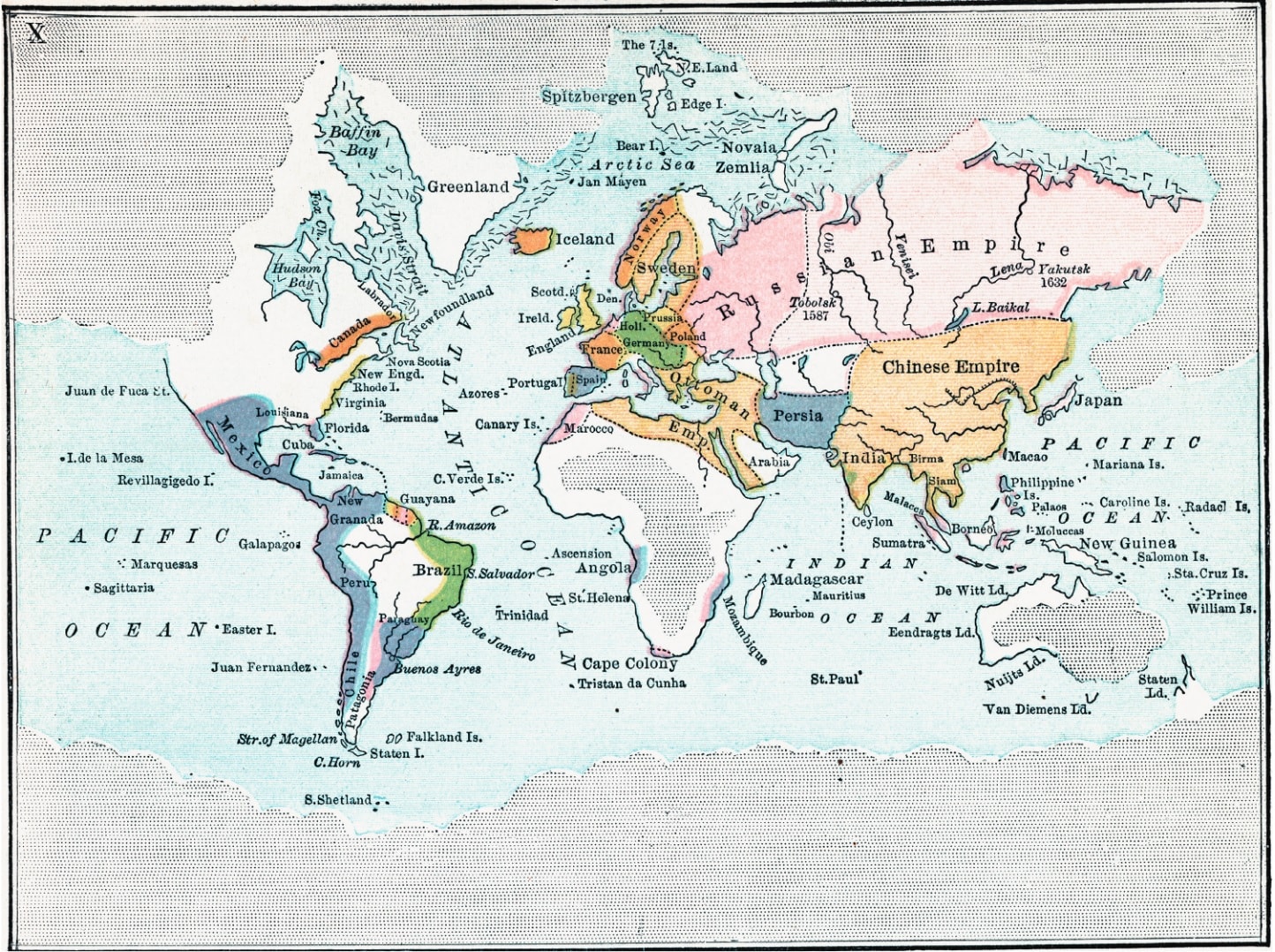
The official course material highlights three states and the regions they targeted:
- Spanish in the New World - focused on western exploration and military expansion in the Americas.
- Portuguese in the Indian Ocean World - built a trade network for spices and other luxury goods.
- Dutch in the East Indies and Asia - competed for Asian trade in the 17th century.
The figures below are widely used examples of how these efforts played out. They help you write specific evidence, but the AP focus for this topic is on the motivations and technology, not memorizing every explorer.
Portugal
- Prince Henry the Navigator financed expeditions along the African coast.
- Vasco da Gama reached India by sea, opening lucrative spice routes.
- Portugal established trading posts in places like Goa, Malacca, and Brazil.
Spain
- Christopher Columbus, sponsored by Ferdinand and Isabella in 1492, landed in the Caribbean while seeking a western route to Asia.
- Ferdinand Magellan's expedition completed the first circumnavigation of the globe, though Magellan died in the Philippines.
- Conquistadors like Hernan Cortes (Aztec Empire) and Francisco Pizarro (Inca Empire) toppled powerful indigenous states in their search for wealth and land.
How to Use This on the AP European History Exam
Causation
This topic is built for causation questions. Practice separating the technological causes (compass, astrolabe, sternpost rudder, lateen rig, guns and gunpowder) from the motivational causes (wealth, state power through mercantilism, and religion). A strong answer connects a specific cause to a specific effect, like linking improved navigation to the ability to maintain Atlantic trade routes.
Free Response
When you need evidence for an argument about exploration, name a specific technology, a specific economic motive, and a religious motive rather than vaguely saying "Europeans wanted to explore." For example, you might pair the rise of mercantilism with Colbert's policies, or pair religious motives with Jesuit missionary work.
Using Sources Effectively
Documents from this era often reveal an author's motive. Ask whether a source emphasizes profit, state power, or spreading Christianity. Identifying which motivation a source reflects helps you analyze point of view and purpose, which strengthens source-based responses.
Common Trap
Do not treat technology and motivation as the same thing. Technology explains how exploration became possible; economics, state power, and religion explain why states chose to do it. Questions often test whether you can keep these straight.
Common Misconceptions
- Misconception: Mercantilism is the same as free trade.Actually: Mercantilism is not the same as free trade. It assumed wealth was limited and that the state should regulate trade to hoard precious metals and run a positive balance of trade.
- Misconception: Exploration was purely economic.Actually: Exploration was not purely economic. Religion was a genuine motivation, and for some Europeans it justified subjugating indigenous peoples.
- Misconception: New technology caused exploration by itself.Actually: New technology did not cause exploration by itself. Tools like the compass and astrolabe made voyages possible, but states still needed economic and religious reasons to fund them.
- Misconception: Spain and Portugal stayed alone on top.Actually: Spain and Portugal did not stay alone on top. France, England, and the Netherlands built their own colonies and trade networks to compete in the 1600s.
- Misconception: Naming explorers is enough.Actually: Naming explorers is not enough. The AP focus here is explaining the technological and motivational factors, so use names as evidence rather than as the whole answer.
Related AP European History Guides
Practice Questions for 1.6
1 of 10
The development of the caravel, astrolabe, and improved portolani maps in the 15th century most directly enabled European exploration by addressing which fundamental challenge?
A.
Enabling European navies to defeat Ottoman and North African naval forces in the Mediterranean
B.
Allowing European merchants to establish permanent settlements in previously unknown territories
C.
Reducing the cost of shipbuilding and making naval construction affordable for merchant traders
D.
Overcoming navigational uncertainty on long ocean voyages beyond coastal waters
Vocabulary
The following words are mentioned explicitly in the AP® course framework for this topic.Term | Definition |
|---|---|
astrolabe | A navigational instrument used to measure the position of stars and the sun for determining location and direction at sea. |
cartography | The art and science of making maps, which improved European understanding of world geography during the Age of Exploration. |
Christianity | A religious faith that served as a motivation and justification for European exploration and the subjugation of indigenous civilizations. |
compass | A navigational instrument that uses magnetic orientation to determine direction, essential for ocean exploration. |
gold | A precious metal sought by European states during the Age of Exploration to enhance personal wealth and state power. |
gunpowder | An explosive powder used in military technology that gave European states a military advantage during exploration and expansion. |
guns | Firearms and artillery that provided European military superiority during exploration and colonial expansion. |
indigenous populations | Native peoples and societies encountered by Europeans during exploration and expansion, often subjected to conquest and conversion. |
lateen rig | A triangular sail configuration that improved ship maneuverability and allowed vessels to sail more effectively against the wind. |
luxury goods | High-value commodities such as spices, silk, and precious materials that European states sought to obtain for wealth and power. |
mercantilism | An economic theory and practice that emphasized national wealth accumulation through trade surpluses, colonial expansion, and government regulation of commerce. |
military technology | Weapons, equipment, and innovations used in warfare, such as machine guns, poison gas, tanks, and aircraft that fundamentally changed combat tactics in World War I. |
navigation | The science and practice of determining a ship's position and course at sea, essential for long-distance oceanic voyages. |
overseas colonies | Overseas territories established and settled by European nations for commercial and religious purposes. |
overseas empires | Territories and colonies established by European powers outside of Europe, used to project power and accumulate wealth through trade and resource extraction. |
portolani | Medieval nautical charts that mapped coastlines and provided navigational information for maritime exploration. |
quadrant | A navigational instrument used to measure the altitude of celestial bodies for determining latitude during ocean voyages. |
spices | Luxury goods from Asia and other regions that European states sought to acquire directly through exploration and trade. |
sternpost rudder | A navigational technology that improved ship steering and maneuverability during ocean voyages. |
Frequently Asked Questions
What technologies helped European exploration in AP Euro 1.6?
Key technologies include the compass, sternpost rudder, portolani, quadrant, astrolabe, lateen rig, guns, and gunpowder. Together they improved navigation, cartography, ship control, and military power.
What were portolani?
Portolani were detailed navigational charts that helped sailors travel more accurately. In AP Euro 1.6, they are an example of cartographic technology that facilitated exploration.
Why did European states explore from 1450 to 1648?
European states sought direct access to gold, spices, and luxury goods, wanted to expand state power through mercantilism, and often aimed to spread Christianity.
How did mercantilism encourage exploration?
Mercantilism gave states a stronger role in promoting trade, acquiring colonies, and accumulating wealth. Colonies supplied raw materials, markets, and access to valuable goods.
How was religion connected to exploration?
Christianity motivated exploration because governments and religious authorities wanted to spread the faith. For some Europeans, religion also served as a justification for subjugating indigenous civilizations.
How is AP Euro 1.6 tested?
AP Euro 1.6 often asks you to separate technological factors from motivations, then explain how navigation, cartography, military technology, wealth, mercantilism, and religion enabled overseas expansion.
See Fiveable more often in Google
Mark Fiveable as a preferred source and Google is more likely to show you our guides in Top Stories, with a "preferred" badge in AI Mode and AI Overviews.