

AP Euro: The Interaction of Europe and The World
The one thing you need to know about this theme:
****Europe’s interactions shaped the world.Interactions between countries inside and outside of the continent would cause ripples that could be felt throughout the world.
College Board Description
Motivated by a variety of factors, Europe’s interaction with the world led to political, economic, social, and cultural exchanges that influenced both European and non-European societies.

Organizing Question
How did Europe’s interactions amongst themselves and Europe’s interactions with the world shape the political, social, cultural, and economic conditions throughout the globe?
Key Vocabulary
exploration
mercantilism
colonization
spheres of influence
imperialism
Enlightenment
Triangular Trade
Columbian Exchange
nationalism
Social Darwinism
industrialization
French Revolution
World War 1 & 2
self-determination
globalization
European Union
Periodization
c. 1450-1648
In this time period, most of the INT is due to exploration! From the start, Europeans were set on finding new ways to access the Silk Road. New technological inventions, like the magnetic compass and astrolabe, allowed for sailors of this time period to do just that.
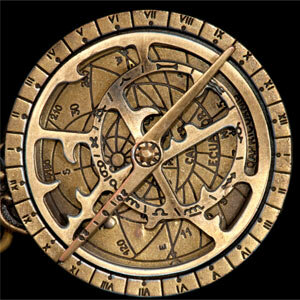
Some countries, like Portugal and Spain, used these newly created sea routes to create colonies that would serve as places to get resources from and places to sell finished goods to. If you look today, places like Macau have a distinctly European flair to them despite being in Asia! While they exploited the locals, Portugal, Spain, and later, England, would become the strongest powers on the European continent due to their colonies.
Portugal and Spain also got rid of many religious groups that did not coincide with their views such as Muslims and Jews. This ensured stability within the nations and without, so that they could focus on exploration.
Speaking of Spain, thanks to Christopher Columbus’ discovery of the New World, a widescale genocide of many indigenous groups occurred due to the introduction of European diseases, like smallpox, and murder. However, Europe received new, never before seen goods like tomatoes and corn! Lots and lots of gold and silver, too. This was known as the Columbian Exchange.
The darker, longer version of this is the Triangular Trade. This was the trade between Europe, Africa, and the Americas that looked like a triangle! Finished goods would head to Africa in exchange for sending slaves to the Americas. These slaves farmed the resources that would be sent to Europe to be finished, and the triangle would repeat.
The rise of exploration and an economic system named mercantilism saw the rise of cities near the sea like Florence, Italy. The amount of gold and silver that accumulated in these countries would lead to the Renaissance and the Price Revolution.
Exploration wasn’t the only INT in this time period, though! The three G’s of exploration were gold, glory, and God, and God was a very big issue during this time.
The invention of the printing press would spread Martin Luther’s ideas about reforming the Catholic Church far and wide. As a result, new sects of Christianity would be formed such as Lutheranism, Calvinism, and Zwinglism. These new sects would spread throughout the world as various followers of these sects sought refuge in new lands.
Meanwhile, good ole Spain was focused on establishing itself as the main defender of Catholicism in Europe and the world. The creation of the Spanish Inquisition assisted them with this task as did their colonies in places like the Philippines.
c. 1648-1815
Three factors shaped the world during this time: the rivalry between Britain and France, the Enlightenment, and the First Industrial Revolution. Ever since the Hundred Years’ War, Britain and France were always trying to be the better nation. Britain was slightly ahead due to the power they gained from their colonies in the New World.
Rulers in this time period tried to effect change in their countries by following Enlightenment ideals. They were known as enlightened monarchs and consisted of people like Catherine the Great. Their new reforms would be the basis for Napoleon’s Napoleonic Code.
Everything changed when the American Revolution occurred. Inspired by the Enlightenment ideas of philosophes, the American colonists raised arms against England and were actually winning. France saw the opportunity and supported the colonists’ victory in their fight for independence, effectively embarrassing what was supposedly the strongest army and navy in the world.
What France didn’t expect with the American Revolution was crippling debt. That, combined with unfair taxes, inflated prices, Enlightenment ideas, and numerous other long-term problems led to the French Revolution. This violent revolution would set off a domino effect of revolutions in the future.
As the Ancient Regime in France crumbled, Napoleon rose. His wide scale conquering of other nations was significantly impacted by the First Industrial Revolution that was occurring at the same time. New inventions and innovations completely changed how warfare was conducted throughout Europe and the war.
What once started in Great Britain as a secret they desperately wanted to keep within the country spread to every developed nation in the world. Industrialization spurred a greater need for resources after countries ran dry and more global markets overseas to sell their cheaper products.
c. 1815-1914
In this period, the interaction of Europe and the world surrounding it can be boiled down to two main events: the Congress of Vienna and imperialism!
First, the Congress of Vienna. After Napoleon’s conquering of different nations and subsequent defeat, the monarchies of the time were scared. Well, most of them at least. Led by Metternich, all of them, except for Britain, wanted to return to the good old days of absolutism. They even established a military alliance that agreed to put down revolutions called the Quadruple Alliance.
The people of the states Napoleon had affected weren’t a big fan of this conservatism, to put it lightly. Napoleon’s conquest had led to the rise of nationalism in numerous states. This wave of nationalism that swept over Europe would lead to multiple revolutions (Revolutions of 1848) and the unification of Germany and Italy.
While the denizens of various states were revolting against conservatism, European powers were also busy “helping savages”. By that, I mean exploiting Africa and Asia for resources, labor, and economic markets! This was all under the guise of social Darwinism and the White Man’s Burden, of course. It stripped Africa and Asia of its resources, burdened the domestic economy of those colonies, and led to the underdevelopment of those areas that we see today. The imperialism of the time and rising nationalism, combined with major industrialization, would give rise to what is the clearest example of Europe’s effect on the world!
c. 1914-Present
Meet World War I, World War II, the Cold War, decolonization, and the European Union. This time period has levels of interaction that no other time period can compare to due to globalization and the fact that Europe isn’t the center of the world anymore.
To start off, World War I began in 1914 as a little squabble between Austria-Hungary and Serbia. However, pre existing alliances would turn the isolated incident of Archduke Franz Ferdinand being killed into a global war that would see countries outside of Europe be involved. It would even spur the Russian Revolution!
After World War I, the Treaty of Versailles debilitated Germany, split up Austria and Hungary, and saw the Ottoman Empire fade into nothing. However, it did come up with the League of Nations which was meant to serve as an international peacekeeping organization… except that it did nothing to stop the second World War and the U.S. didn’t even join.
One notable result of World War I wasn’t just the end of the last empire but pushes for decolonization. Colonies, like India, had fought for the Allies and demanded their independence. African colonies, like South Africa, did as well. Their contributions to the war effort, as well President Wilson’s Fourteen Points and ideal of self-determination, caused them to desire autonomy, and eventually independence.
In the period between World War I and World War II was the Great Depression. The depression was worldwide. Unstable spending habits, the destruction caused by World War I, and the huge task of rebuilding took a toll on the people of Europe. Governments relied on outside help, primarily the U.S., for aid and even they couldn’t do much when the Great Depression came for the U.S.
The second World War was all about appeasement. Sick of fighting, England, Russia, and France all kissed up to Germany. Their economies were still in ruin, like most countries except for the United States. When it became apparent that Hitler was taking advantage of the situation and breaking his agreements, England and France declared war. Like before, the squabbles in Europe spread far and wide across the globe as Jews fled to other countries to escape the Holocaust, and the U.S. was dragged into the fight once again when Japan’s imperialistic tendencies became too much.
Once World War II ended, two superpowers emerged: the U.S. and Russia (which had become the Soviet Union in World War I). Unfortunately, capitalism/democracy and communism were like oil and water. Each country was concerned that as long as the other existed, the world was in danger. This would lead to the Cold War and a metaphorical Iron Curtain that separated Western Europe from Eastern Europe. Multiple “hot wars”, where there was actual fighting, took place all around the world. They ranged from the Chinese Civil War to the Berlin Crisis to the Korean War. More than 50 hot wars occurred during the Cold War! Even though the USSR eventually dissolved, their lingering communist influence can be seen today in countries like Cuba and Laos.
During the Cold War, America and the USSR also had many economic programs that had the same purpose but with different results. Western Europe, under the influence of America, prospered economically while the USSR controlled countries in Eastern Europe fell behind economically.
After the dissolution of the USSR, efforts were made to unify the countries of Europe. They didn’t want a third World War after all. Starting in 1950, the European Coal and Steel Community began unifying European nations politically and economically before becoming the European Union.
Finally, thanks to the rise of the internet, the cellphone, and pop culture, the world is more connected than ever before. Different cultures are being spread faster than ever thanks to increasing rates of immigration and migration. Multiple European businesses globalized as well and can be found in countries outside of Europe which led to increased interaction with the world.
Sample Questions
Sample MCQ

All of the following factors would explain the difference between the GDP of Western European countries and Eastern European countries EXCEPT:
- The failure of USSR economic policies after WWII
- Western Europe being far more industrialized than Eastern Europe
- Eastern European countries shifting to capitalism after the Cold War
- The lack of colonies owned by Eastern Europe countries
Sample SAQ

Using your knowledge of European History and the image above, answer the following in complete sentences.
- What is the author’s point of view on the topic depicted in the picture?
- Identify ONE reason, idea, or event that caused the topic depicted in the picture.
- Explain ONE impact the topic seen in the picture had on European countries that partook in this practice.
Sample LEQ
Describe and explain a significant similarity and a significant difference between the old imperialism of 1450-1750 and the new imperialism of 1870-1918.