

World War II fundamentally transformed America's position in global affairs. By 1945, the United States had emerged as the world's dominant economic, military, and political power. Unlike other major combatants, America's homeland remained untouched by enemy attacks (except for Pearl Harbor), and its economy had dramatically expanded during the war. This unprecedented power allowed the U.S. to reshape the postwar international order according to American interests and values.
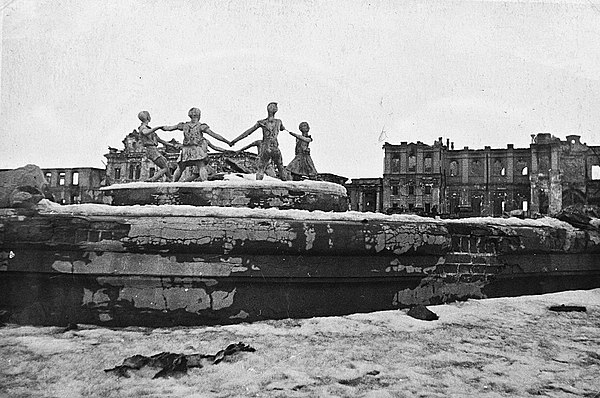
Image Courtesy of Wikipedia
America's Postwar Position
The United States ended World War II in a uniquely advantageous position compared to all other major powers. While other nations faced the enormous task of rebuilding devastated cities and economies, America's strength had only increased.
America's postwar advantages included:
- Minimal damage to the U.S. mainland, with no battles fought on continental American soil
- Relatively lower casualties (approximately 418,000 American deaths compared to an estimated 20 million Soviet deaths)
- A dramatically expanded industrial capacity that had doubled during the war
- The world's strongest navy and air force
- Exclusive possession of atomic weapons
- The world's largest economy, producing about half of the world's goods
This combination of factors allowed the United States to exert unprecedented influence over postwar arrangements and establish itself as a true global superpower.

The Bretton Woods System
The United States used its economic dominance to reshape the international financial system during the final phases of the war. In July 1944, representatives from 44 nations met at Bretton Woods, New Hampshire, to design a new economic order.
The resulting Bretton Woods system established:
- A system of fixed exchange rates with currencies pegged to the U.S. dollar
- The dollar as the world's reserve currency, backed by gold at $35 per ounce
- The International Monetary Fund (IMF) to stabilize currencies and assist nations facing financial difficulties
- The World Bank to provide loans for postwar reconstruction and development
Through this system, the United States effectively became the financial center of the world economy. American economic leadership provided stability for international trade and helped rebuild war-torn economies, while also ensuring markets for American goods and services.
Postwar Treaties and Settlements
The United States played the leading role in shaping peace treaties and establishing new international arrangements after the war. These agreements reflected both America's dominant position and its vision for a liberal international order.
Paris Peace Treaties
In 1947, the victorious Allies signed peace treaties with Italy, Hungary, Romania, Bulgaria, and Finland. These agreements:
- Redrew national boundaries in Europe
- Required payment of war reparations
- Imposed limitations on military forces
- Established conditions for withdrawing occupation forces
The United States also played a crucial role in the 1951 Treaty of Peace with Japan, which:
- Officially ended the state of war between Japan and the Allied Powers
- Recognized Japan's sovereignty
- Required Japanese acceptance of the judgments of the Tokyo War Crimes Tribunal
- Allowed the United States to maintain military bases in Japan
Occupation Policies in Germany and Japan
The United States implemented policies in occupied territories designed to prevent future aggression while rebuilding former enemies as democratic allies:
In Germany:
- The country was divided into four occupation zones (American, British, French, and Soviet)
- Industrial facilities were initially dismantled as war reparations
- Denazification programs removed former Nazi officials from positions of power
- Democratic institutions were established in the Western zones
- The U.S. initiated the Marshall Plan to rebuild the German economy
In Japan:
- General Douglas MacArthur served as Supreme Commander of the Allied Powers
- A new democratic constitution was implemented in 1947, renouncing war
- Economic reforms broke up major industrial conglomerates
- Land reform redistributed property to tenant farmers
- Women received the right to vote and other democratic rights
War Crimes Trials
The United States took the lead in establishing international tribunals to prosecute Axis leaders for war crimes and crimes against humanity:
The Nuremberg Trials
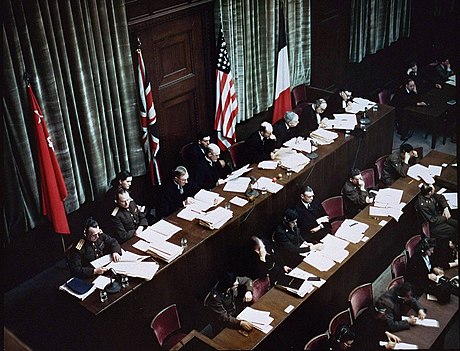
Between 1945 and 1949, the International Military Tribunal at Nuremberg tried Nazi leaders for:
- Crimes against peace (planning and waging aggressive war)
- War crimes (violations of the laws of war)
- Crimes against humanity (including the Holocaust)
The Nuremberg Trials established important legal precedents, including:
- Individual responsibility for violations of international law
- Rejection of "following orders" as a defense for atrocities
- The concept that some crimes are so heinous they violate universal moral law
The Tokyo War Crimes Trials
The International Military Tribunal for the Far East (1946-1948) prosecuted Japanese leaders for:
- Planning and waging aggressive war in the Pacific
- Atrocities committed against civilians and prisoners of war
- Responsibility for brutality in occupied territories
Though controversial in some aspects, these trials established that leaders could be held personally accountable for violations of international law and human rights abuses.
The United Nations
The United States played the leading role in establishing the United Nations as the cornerstone of the postwar international system. Unlike after World War I, when the U.S. rejected the League of Nations, American leadership was essential to the UN's creation and continued functioning.
The United Nations Charter was signed in San Francisco on June 26, 1945, establishing an organization designed to:
- Maintain international peace and security
- Develop friendly relations among nations
- Promote social progress and human rights
- Provide a forum for cooperation in solving international problems
The UN's structure reflected American influence:
- The Security Council gave permanent membership and veto power to five major powers: the U.S., Soviet Union, China, Britain, and France
- The organization's headquarters was established in New York City
- The Universal Declaration of Human Rights, adopted in 1948, reflected American democratic values
U.S. participation gave the UN greater legitimacy and resources than the League of Nations had possessed, though Cold War tensions would soon limit its effectiveness in resolving major conflicts.
Nuclear Monopoly and the Dawn of the Cold War
America's exclusive possession of atomic weapons—its nuclear monopoly—gave it unprecedented military power in the immediate postwar years. The bombings of Hiroshima and Nagasaki had demonstrated the devastating potential of these weapons.
The nuclear monopoly:
- Provided the United States with unmatched strategic leverage
- Created significant tensions with the Soviet Union, which raced to develop its own nuclear capability
- Contributed to an emerging arms race that would define the Cold War era
- Ended in 1949 when the Soviet Union successfully tested its first atomic bomb
Even before the war ended, tensions had emerged between the United States and the Soviet Union over the future of Eastern Europe and other postwar arrangements. By 1947, these tensions had evolved into the Cold War, a global ideological and geopolitical struggle that would dominate international relations for the next four decades.
The postwar period marked a pivotal transition in America's role in world affairs. The United States abandoned its traditional reluctance to become entangled in foreign commitments and embraced its new position as a global superpower. The international institutions, alliances, and economic systems established under American leadership would shape world politics for generations to come. While the Cold War would soon complicate America's vision for a peaceful liberal world order, the United States had undeniably emerged from World War II as the most powerful nation on Earth.
🎥 Watch: AP US History - Period 7 Review
Vocabulary
The following words are mentioned explicitly in the College Board Course and Exam Description for this topic.Term | Definition |
|---|---|
Allied victory | The successful conclusion of World War II by the Allied powers, including the United States, Soviet Union, and Great Britain, over the Axis powers. |
postwar peace settlements | The diplomatic agreements and treaties negotiated after World War II to establish new international order and resolve territorial and political issues. |
war-ravaged | Describing regions, particularly Asia and Europe, that were severely damaged and devastated by the destruction and violence of World War II. |
Frequently Asked Questions
What happened to Europe and Asia after World War II ended?
After WWII Europe and Asia were devastated physically, economically, and politically—and that shaped postwar diplomacy. In Europe cities, industry, and transport were ruined; Western Europe received U.S. economic aid (Marshall Plan) and cooperative security through NATO while Germany was occupied, demilitarized, tried at Nuremberg, and eventually split into zones. In Asia major war damage and weakened European empires sped decolonization; Japan was occupied, restructured democratically, and rebuilt with U.S. help. Globally, the U.S. emerged as the most powerful Allied victor, shaping institutions (United Nations, Bretton Woods financial system) and using economic and “atomic diplomacy” as tools. Those conditions helped create the United States–Soviet rivalry and the origins of the Cold War—central CED themes for Topic 7.14 (KC-7.3.III.E). For review, see the Topic 7.14 study guide (https://library.fiveable.me/ap-us-history/unit-7/postwar-diplomacy/study-guide/xMjx3s8J0K11zGx6sHBP) and practice questions (https://library.fiveable.me/practice/ap-us-history).
Why did the United States become the most powerful country after WWII?
Because WWII left Europe and Asia devastated while the U.S. economy, industry, and military capacity expanded, the United States emerged as the world’s most powerful nation. U.S. factories had turned out enormous war production, the U.S. held the world’s largest gold reserves and the dollar became the basis for global finance (Bretton Woods). American leadership in defeating the Axis gave it leverage at Yalta and Potsdam and authority in creating institutions—the United Nations, Marshall Plan economic aid, occupation governments in Germany and Japan, and later NATO—that shaped the postwar order. The atomic monopoly (briefly) and a huge standing military reinforced influence, while European colonial powers were weakened and decolonization opened new diplomatic arenas. This is exactly what KC-7.3.III.E highlights in Topic 7.14 (see the study guide: https://library.fiveable.me/ap-us-history/unit-7/postwar-diplomacy/study-guide/xMjx3s8J0K11zGx6sHBP). For more review and practice, check the Unit 7 overview (https://library.fiveable.me/ap-us-history/unit-7) and AP practice questions (https://library.fiveable.me/practice/ap-us-history).
What is postwar diplomacy and why does it matter?
Postwar diplomacy = how the United States and other powers negotiated the peace, rebuilt economies, and organized global institutions after World War II. It includes conferences (Yalta, Potsdam), creation of the United Nations, Bretton Woods financial system, Marshall Plan economic reconstruction, occupation of Germany and Japan, Nuremberg Trials, and early Cold War moves (Truman Doctrine, NATO, atomic diplomacy). It matters because U.S. victory and economic strength let America shape the postwar order—stopping humanitarian collapse, rebuilding markets, and containing Soviet influence—so the U.S. emerged as the world’s most powerful nation (CED KC-7.3.III.E). For the AP exam, connect these developments to consequences of U.S. wartime involvement (Origins of the Cold War, decolonization, NATO) and use specific examples in DBQs/LEQs. For a focused study, see the Topic 7.14 study guide (https://library.fiveable.me/ap-us-history/unit-7/postwar-diplomacy/study-guide/xMjx3s8J0K11zGx6sHBP); review Unit 7 overview (https://library.fiveable.me/ap-us-history/unit-7) and practice questions (https://library.fiveable.me/practice/ap-us-history).
How did the U.S. role in winning WWII change America's position in the world?
Because the U.S. played the decisive role in winning WWII, its global position shifted from one great power among many to the preeminent superpower. Militarily and economically the United States emerged strongest: it helped shape postwar institutions (United Nations, Bretton Woods financial system), led economic reconstruction (Marshall Plan), and occupied Germany and Japan—setting political and economic systems there. Diplomatically the U.S. set the agenda with the Truman Doctrine and NATO, beginning the U.S.–Soviet rivalry that became the Cold War; “atomic diplomacy” and the Nuremberg Trials also signaled new norms and leverage. These outcomes are exactly the CED’s focus on how wartime leadership produced American dominance in peace settlements, institutions, and global order. If you want to review this topic for DBQs or LEQs, see the Topic 7.14 study guide (https://library.fiveable.me/ap-us-history/unit-7/postwar-diplomacy/study-guide/xMjx3s8J0K11zGx6sHBP), the full Unit 7 overview (https://library.fiveable.me/ap-us-history/unit-7), and practice questions (https://library.fiveable.me/practice/ap-us-history).
What were the main peace settlements after World War II?
The main post–World War II peace settlements were a mix of diplomatic conferences, legal reckonings, occupation arrangements, and economic plans that shaped the Cold War world. - Yalta (Feb 1945) and Potsdam (July–Aug 1945): Allies agreed on zones of occupation in Germany, free elections in Eastern Europe (disputed in practice), and terms for Japan’s surrender—key origins of the U.S.–Soviet rivalry. - Division and occupation of Germany; creation of West/East zones that led to long-term division and NATO. - Occupation and democratization of Japan under U.S. guidance. - Nuremberg Trials: criminal prosecution of Nazi leaders and establishment of wartime-atrocity legal precedents. - Bretton Woods (1944): IMF and World Bank set global economic rules; dollar-centered system. - Marshall Plan (1948) + Truman Doctrine: U.S. economic/military aid to rebuild Europe and contain Soviet influence. - United Nations founded to manage collective security and diplomacy. These items map directly to KC-7.3.III.E and are testable on APUSH free-response and short-answer questions (see the Topic 7.14 study guide: https://library.fiveable.me/ap-us-history/unit-7/postwar-diplomacy/study-guide/xMjx3s8J0K11zGx6sHBP). For more unit review and practice Qs, check the Unit 7 overview (https://library.fiveable.me/ap-us-history/unit-7) and Fiveable practice problems (https://library.fiveable.me/practice/ap-us-history).
I'm confused about how America went from isolationist to world superpower so quickly - can someone explain?
Short answer: WWII flipped the U.S. from isolation to superpower mainly because other great powers were weakened while the U.S. came out economically and militarily stronger and politically central to rebuilding the world. By 1945 the U.S. had 50%+ of global manufacturing, an unmatched navy and the atomic bomb, plus leadership roles at Yalta/Potsdam and in creating institutions (United Nations, Bretton Woods system). That let the U.S. lead economic reconstruction (Marshall Plan), set security policy (Truman Doctrine, NATO), occupy Germany and Japan, and shape postwar order—so the U.S. became the go-to power in Europe and Asia. For APUSH, link this to KC-7.3.III.E and be ready to explain consequences of U.S. involvement on exams (DBQ/LEQ/SAQs). Review Topic 7.14 for details (https://library.fiveable.me/ap-us-history/unit-7/postwar-diplomacy/study-guide/xMjx3s8J0K11zGx6sHBP), the Unit 7 overview (https://library.fiveable.me/ap-us-history/unit-7), and practice 1000+ questions at (https://library.fiveable.me/practice/ap-us-history).
What's the difference between America's role before and after World War II?
Before WWII the United States was important but often reluctant to lead globally: after 1898 it practiced overseas expansion and economic engagement (Spanish-American War, Open Door) but between the wars it drifted toward isolationism and limited commitments. After WWII everything changed—America emerged as the most powerful nation, central to military and economic order. The U.S. led postwar diplomacy at Yalta/Potsdam, created and backed the United Nations, shaped the Bretton Woods financial system, funded European recovery (Marshall Plan), occupied Germany and Japan, and organized collective defense (NATO). That shift also launched the United States–Soviet rivalry and early Cold War policies (Truman Doctrine, atomic diplomacy). For the AP exam, be ready to connect these consequences to KC-7.3.III.E and use specific examples (Marshall Plan, occupations, UN, NATO). Review Topic 7.14 on Fiveable (https://library.fiveable.me/ap-us-history/unit-7/postwar-diplomacy/study-guide/xMjx3s8J0K11zGx6sHBP) and try practice questions (https://library.fiveable.me/practice/ap-us-history).
How did the war-ravaged condition of other countries help the United States gain power?
Because Europe and Asia were physically and economically shattered after WWII, the United States could step into roles others couldn’t—and that made it the world’s most powerful nation. U.S. industry and infrastructure were intact, so America became the main producer, creditor, and supplier for global reconstruction (Bretton Woods, Marshall Plan). The U.S. also controlled nuclear weapons early on (atomic diplomacy) and led the creation of new international institutions (United Nations, IMF/World Bank) that set postwar rules. Occupations of Germany and Japan, plus influence at Yalta and Potsdam, let the U.S. shape political settlements and democratization. A weakened colonial order and rivalry with the USSR opened space for U.S. leadership (Truman Doctrine, NATO). For AP exam prep, link these outcomes to KC-7.3.III.E and use the Topic 7.14 study guide for details (https://library.fiveable.me/ap-us-history/unit-7/postwar-diplomacy/study-guide/xMjx3s8J0K11zGx6sHBP). For extra practice, try problems at https://library.fiveable.me/practice/ap-us-history.
What were the consequences of U.S. involvement in World War II for American foreign policy?
U.S. involvement in WWII transformed American foreign policy: the U.S. emerged as the world’s leading power and took on active, long-term global responsibilities. Key consequences include building institutions (United Nations, Bretton Woods financial system), leading economic reconstruction (Marshall Plan) and creating security commitments (Truman Doctrine, NATO) that started the Cold War rivalry with the USSR. Major conferences (Yalta, Potsdam) and actions (Nuremberg Trials, occupations of Germany and Japan) set legal and political precedents. The U.S. used economic and atomic diplomacy to shape global order, encouraged decolonization in Asia while balancing containment, and shifted from isolation to permanent international engagement. For AP exam connections, this fits KC-7.3.III.E and shows causes/effects you can use in DBQs/LEQs. Review Topic 7.14 on Fiveable (https://library.fiveable.me/ap-us-history/unit-7/postwar-diplomacy/study-guide/xMjx3s8J0K11zGx6sHBP), unit overview (https://library.fiveable.me/ap-us-history/unit-7), and practice questions (https://library.fiveable.me/practice/ap-us-history).
Why were European and Asian countries so destroyed after the war while America wasn't?
Europe and Asia were ruined after WWII because most fighting, bombing, and occupation happened there—major cities, factories, railroads, and farms were heavily damaged, and millions of civilians died. The U.S., by contrast, fought mostly overseas, so its industrial base, infrastructure, and population were intact. That left America with a huge economic lead (high manufacturing output, strong dollar after Bretton Woods), a dominant military (including atomic diplomacy), and political leverage to shape postwar institutions (United Nations, Marshall Plan, occupations of Germany and Japan). Those factors let the U.S. steer peace settlements and economic reconstruction and set the stage for Cold War rivalry. For AP review, this maps to Topic 7.14 (postwar diplomacy) and the CED learning objective about consequences of U.S. involvement in WWII—see the Topic 7.14 study guide (https://library.fiveable.me/ap-us-history/unit-7/postwar-diplomacy/study-guide/xMjx3s8J0K11zGx6sHBP). Practice the DBQ/LEQ prompts on Fiveable’s practice page (https://library.fiveable.me/practice/ap-us-history) to link evidence (Marshall Plan, Bretton Woods, occupations) to claims on the exam.
How do I write a DBQ essay about America's emergence as a superpower after WWII?
Start with a clear thesis that answers “how and why” the U.S. emerged as the most powerful nation after WWII (e.g., economic strength, military/atomic advantage, and leadership in rebuilding/institutions). Quickly contextualize: wartime destruction in Europe/Asia + Allied victory left the U.S. with intact industry, huge gold reserves, and global bases. Plan paragraphs that use documents to support each cause: - Economic: cite Bretton Woods, Marshall Plan evidence and connect to dollar/IMF leadership. - Political/diplomatic: use Yalta/Potsdam, UN, Truman Doctrine, NATO to show institutional leadership. - Military/strategic: use occupation of Germany/Japan, atomic diplomacy, U.S.–Soviet rivalry to show hard power and containment. Remember AP DBQ rules: 1 clear thesis, contextualization, use at least 4 documents to support an argument, include 1+ piece of outside evidence (e.g., Nuremberg Trials, Marshall Plan spending, creation of NATO), explain POV/audience for at least 2 docs, and show complexity (multiple causes and consequences). For topic review see Fiveable’s Topic 7.14 study guide (https://library.fiveable.me/ap-us-history/unit-7/postwar-diplomacy/study-guide/xMjx3s8J0K11zGx6sHBP) and practice questions (https://library.fiveable.me/practice/ap-us-history).
What does "dominant U.S. role in Allied victory" actually mean in simple terms?
It means the United States was the leading power among the Allies in winning WWII and shaping the peace afterward. In plain terms: U.S. factories made huge amounts of ships, planes, tanks, and supplies (Lend-Lease helped Allies); U.S. troops and industrial output were decisive in Europe and the Pacific; American scientists developed the atomic bomb; and U.S. diplomats helped write postwar agreements (Yalta, Potsdam) and set up institutions like the United Nations, Bretton Woods, Marshall Plan, NATO, and occupations of Germany and Japan. Because of that leadership in military, economic, and diplomatic arenas, the United States emerged as the most powerful nation and a main actor in the Origins of the Cold War (CED keywords). For quick review on Topic 7.14, see the Fiveable study guide (https://library.fiveable.me/ap-us-history/unit-7/postwar-diplomacy/study-guide/xMjx3s8J0K11zGx6sHBP) and try practice questions (https://library.fiveable.me/practice/ap-us-history).
How did postwar peace settlements give America more influence globally?
Postwar peace settlements turned the U.S. into the dominant global power by giving it military, economic, and institutional control over reconstruction and security. U.S. forces and occupation policies reshaped Germany and Japan; the U.S. led Nuremberg trials and occupations that set legal and political norms (Occupation of Germany/Japan, Nuremberg Trials). Economically, Bretton Woods established dollar-centered finance and institutions, and the Marshall Plan rebuilt Western Europe—tying allies to U.S. markets and aid. Politically, conferences at Yalta and Potsdam, plus creation of the United Nations, put the U.S. at the center of postwar diplomacy. Cold War measures—Truman Doctrine, NATO, and “atomic diplomacy”—formalized U.S.–Soviet rivalry and U.S. leadership in collective security and containment. These developments are key CED concepts you should cite on FRQs and the DBQ for Topic 7.14; review the topic study guide (https://library.fiveable.me/ap-us-history/unit-7/postwar-diplomacy/study-guide/xMjx3s8J0K11zGx6sHBP) and practice questions (https://library.fiveable.me/practice/ap-us-history).
What were the long-term effects of America becoming the most powerful nation after WWII?
Becoming the world’s most powerful nation after WWII reshaped U.S. foreign policy, the global order, and the economy for decades. Politically and militarily, the U.S. led creation of institutions (United Nations, NATO) and engaged in sustained rivalry with the USSR—setting off the Cold War, containment (Truman Doctrine), and alliances that committed the U.S. to collective security. Economically, Bretton Woods and U.S. financial power underwrote reconstruction (Marshall Plan) and tied many countries to dollar-based trade, boosting American markets. The U.S. also shaped postwar justice and occupation policy (Nuremberg Trials, Occupations of Germany and Japan), practiced “atomic diplomacy” via nuclear deterrence, and influenced decolonization in Asia. Long-term effects for AP topics: an active global role across diplomacy, military commitments, and economic leadership that appears frequently on DBQs/LEQs about origins of the Cold War and postwar reconstruction. For a focused review, see the Topic 7.14 study guide (https://library.fiveable.me/ap-us-history/unit-7/postwar-diplomacy/study-guide/xMjx3s8J0K11zGx6sHBP) and practice questions (https://library.fiveable.me/practice/ap-us-history).