22.3 Economic Imperialism in East Asia

🗽US History Unit 22 Review
22.3 Economic Imperialism in East Asia
🗽 US History
Economic Imperialism in East Asia
The U.S. saw China as a goldmine of economic opportunities in the late 19th century. With its vast population and resources, China promised huge profits for American businesses looking to expand their reach and compete with European powers.
The Open Door policy and Boxer Rebellion shaped America's approach to China. These events highlighted the challenges of pursuing economic interests in unstable regions and set the stage for future U.S. involvement in Asia.

Top images from around the web for Economic motivations for China market
Welcome to Economics – Introduction to Microeconomics View original
Is this image relevant?
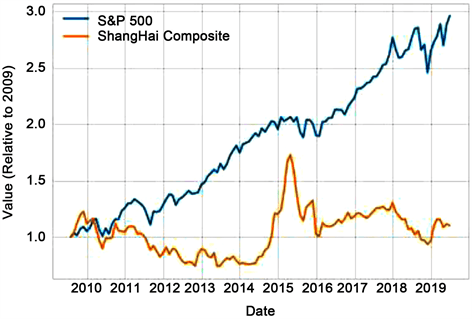
Comparison and Analysis of Chinese and United States Stock Market View original
Is this image relevant?
The World Economy: Historical Statistics - Wikipedia View original
Is this image relevant?
Welcome to Economics – Introduction to Microeconomics View original
Is this image relevant?
Comparison and Analysis of Chinese and United States Stock Market View original
Is this image relevant?
Economic Motivations for the China Market
American interest in China wasn't just about one product or resource. It was about access to an enormous market that European powers were already carving up.
- Consumer market: China's population of roughly 400 million people represented a massive potential customer base for American manufactured goods like textiles, kerosene, and machinery.
- Natural resources: China had abundant coal, iron, and other minerals that American companies wanted access to for industrial production.
- Infrastructure investment: American firms saw opportunities to build railroads, ports, and telegraph lines in China, generating profits while expanding U.S. influence.
- Competition with Europe: Britain, France, Germany, and Russia had already established spheres of influence (regions where a foreign power had exclusive economic privileges). The U.S. feared being shut out of the China trade entirely if it didn't act.

Impact of the Open Door Notes
In 1899 and 1900, U.S. Secretary of State John Hay sent diplomatic letters known as the Open Door Notes to the major European powers and Japan. The core idea was simple: no single country should have a monopoly on trade with China. All nations should have equal access to Chinese markets.
The notes had several goals:
- Oppose exclusive spheres of influence by calling on foreign powers to keep their Chinese trading ports open to all nations on equal terms, including equal tariffs and trade regulations.
- Protect U.S. commercial interests by ensuring American businesses could compete on equal footing rather than being locked out by European deals with China.
- Preserve China's territorial integrity, at least on paper, by discouraging outright colonization or partition of the country.
In practice, the Open Door policy had limited success. European powers gave vague, noncommittal responses to Hay's notes, and China's weak central government couldn't enforce equal access even if it wanted to. Still, the policy mattered because it signaled a new direction in U.S. foreign policy: the idea that America would actively assert its economic interests in Asia and champion free trade as a guiding principle.

The Boxer Rebellion's Influence on U.S. Policy
The Boxer Rebellion (1899–1901) was an anti-foreign uprising led by a Chinese militia group called the "Righteous and Harmonious Fists" (dubbed "Boxers" by Westerners). They targeted foreign missionaries, merchants, and diplomats, and eventually besieged the foreign legation quarter in Beijing.
Here's how events unfolded and why they mattered for U.S. policy:
- The uprising intensified as Boxers, with tacit support from elements of the Chinese government, attacked foreign nationals and Chinese Christians across northern China.
- An international coalition responded. The U.S. joined Britain, France, Germany, Russia, Japan, and other nations in sending roughly 20,000 troops to suppress the rebellion and relieve the besieged legations in Beijing.
- The Boxer Protocol of 1901 ended the conflict. China was forced to pay million in indemnities to the foreign powers, allow foreign troops to be stationed in Beijing, and accept other concessions that deepened foreign control.
- The U.S. used the aftermath to reassert the Open Door policy. Hay issued a second round of Open Door Notes in 1900, this time emphasizing China's territorial integrity. The U.S. wanted to prevent the other powers from using the rebellion as an excuse to carve China into colonies.
The rebellion demonstrated that the U.S. was willing to use military force to protect its economic interests abroad. It also revealed the risks of operating in politically unstable regions, a tension that would resurface throughout 20th-century U.S. foreign policy in Asia.
Tools of Economic Imperialism
Foreign powers, including the U.S., used several mechanisms to maintain economic dominance in China:
- Unequal treaties: Agreements imposed on China after military defeats (like the Treaty of Nanking in 1842) that granted foreign powers special trading privileges, port access, and territorial concessions. China had little power to negotiate.
- Extraterritoriality: A legal arrangement where foreign citizens in China were subject to their own country's laws, not Chinese laws. This undermined Chinese sovereignty and gave foreigners a significant legal advantage.
- Gunboat diplomacy: The practice of using naval power to intimidate or coerce weaker nations into accepting economic or political demands. The presence of foreign warships in Chinese ports served as a constant reminder of military consequences.
- Foreign-led modernization: Initiatives to build railroads, mines, and telegraph systems in China. While these projects brought some infrastructure development, they primarily served the economic interests of the foreign powers funding them.
See Fiveable more often in Google
Mark Fiveable as a preferred source and Google is more likely to show you our guides in Top Stories, with a "preferred" badge in AI Mode and AI Overviews.