10.5 The Tyranny and Triumph of the Majority

🗽US History Unit 10 Review
10.5 The Tyranny and Triumph of the Majority
🗽 US History
Alexis de Tocqueville and American Democracy
Alexis de Tocqueville, a French political thinker, visited the United States in the 1830s and wrote Democracy in America, one of the most influential studies of American political life. He praised many aspects of American democracy but also identified a core danger he called the "tyranny of the majority": the idea that in a democracy, the majority can use its power to trample the rights and interests of minority groups, creating a form of democratic despotism.

Top images from around the web for Tocqueville's tyranny of majority concept
Tyranny of the majority - The Democracy Foundation View original
Is this image relevant?
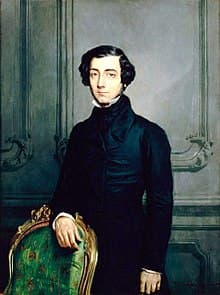
Alexis de Tocqueville - Wikipedia View original
Is this image relevant?
The Tyranny and Triumph of the Majority | US History I (OS Collection) View original
Is this image relevant?
Tyranny of the majority - The Democracy Foundation View original
Is this image relevant?
Alexis de Tocqueville - Wikipedia View original
Is this image relevant?
Tocqueville's tyranny of the majority concept
Tocqueville worried that majority power, left unchecked, could:
- Impose its will on society without regard for individual liberties
- Stifle dissent and suppress alternative viewpoints
- Lead to mob rule and hasty, ill-considered decisions
To counteract these dangers, Tocqueville emphasized several safeguards:
- Checks and balances in the political system
- An independent judiciary to protect civil liberties
- Decentralization of power to local and state governments
- Civil associations and a free press to foster diversity of opinion
These weren't just abstract ideas. Tocqueville saw voluntary organizations, local governments, and newspapers as the practical tools that kept American democracy from sliding into majority tyranny.
The Election of 1840 and the Rise of Mass Democracy
The 1840 presidential election between Whig candidate William Henry Harrison and Democratic incumbent Martin Van Buren saw voter turnout reach nearly 80%, a record high for the time. This election is a landmark because it showed how far mass politics had come since the founding era.

Factors in 1840 voter participation
Expanded suffrage: During the 1820s and 1830s, many states reduced or eliminated property requirements for voting. This opened the polls to far more white men, dramatically increasing the eligible electorate.
Innovative campaign strategies: The Whig Party pioneered new tactics that changed American politics. They portrayed Harrison as a humble "log cabin and hard cider" candidate to appeal to ordinary voters, even though he actually came from a wealthy Virginia family. Mass rallies, parades, and political songs generated enthusiasm and drew huge crowds.
Economic discontent: The Panic of 1837 and the recession that followed hit hard. Many voters blamed Van Buren and the Democrats for the economic crisis and were eager for change. Economic pain is one of the strongest motivators for voter turnout, and 1840 proved it.
Better transportation and communication: Improved roads, canals, and a growing network of newspapers made it easier for candidates to reach voters and for voters to stay informed about political issues.
Political Parties in the Jacksonian Era

Whigs vs. Democrats: policies and voters
The two major parties of this era reflected deep divisions over the role of the federal government, economic policy, and sectional interests.
The Whig Party:
- Supported a strong national government and federal investment in internal improvements (roads, canals)
- Favored a national bank to stabilize currency and promote economic growth
- Advocated for protective tariffs to shield American industries from foreign competition
- Drew support from Northern industrialists and merchants, some farmers who wanted infrastructure and stable currency, and opponents of Andrew Jackson's policies (including Southern planters who rejected his stance on nullification)
The Democratic Party:
- Championed states' rights and limited federal government power
- Opposed a national bank, viewing it as a tool of the wealthy elite
- Favored lower tariffs to promote free trade and reduce consumer costs
- Drew support from Southern planters who opposed tariffs, small farmers and laborers who distrusted banks and big business, and supporters of Jackson's populist opposition to the "money power"
What they shared: Both parties tried to appeal to the growing number of white male voters by presenting themselves as defenders of the common man. Both used new campaign tactics like mass rallies and partisan newspapers. And both reflected the growing sectionalism and economic divisions shaping the country during this period.
Balancing Majority Rule and Individual Rights
The tension between majority rule and individual rights sits at the heart of American government. The Founders designed a constitutional republic rather than a pure democracy precisely to prevent the potential excesses Tocqueville later described.
Several mechanisms were built into the system to protect minority interests:
- The Bill of Rights placed certain liberties beyond the reach of majority vote
- Separation of powers among the three branches prevented any one group from concentrating authority
- Federalism distributed power between national and state governments
Tocqueville also observed that the sheer diversity of interests and groups in American society, what political scientists call pluralism, helped prevent any single faction from dominating. When many competing groups exist, they tend to check each other's power, making outright majority tyranny harder to sustain.
See Fiveable more often in Google
Mark Fiveable as a preferred source and Google is more likely to show you our guides in Top Stories, with a "preferred" badge in AI Mode and AI Overviews.