29.3 The Civil Rights Movement Marches On

🗽US History Unit 29 Review
29.3 The Civil Rights Movement Marches On
🗽 US History
Civil Rights Activism in the 1960s

Top images from around the web for Strategies of civil rights activists
File:1963 march on washington.jpg - Wikimedia Commons View original
Is this image relevant?
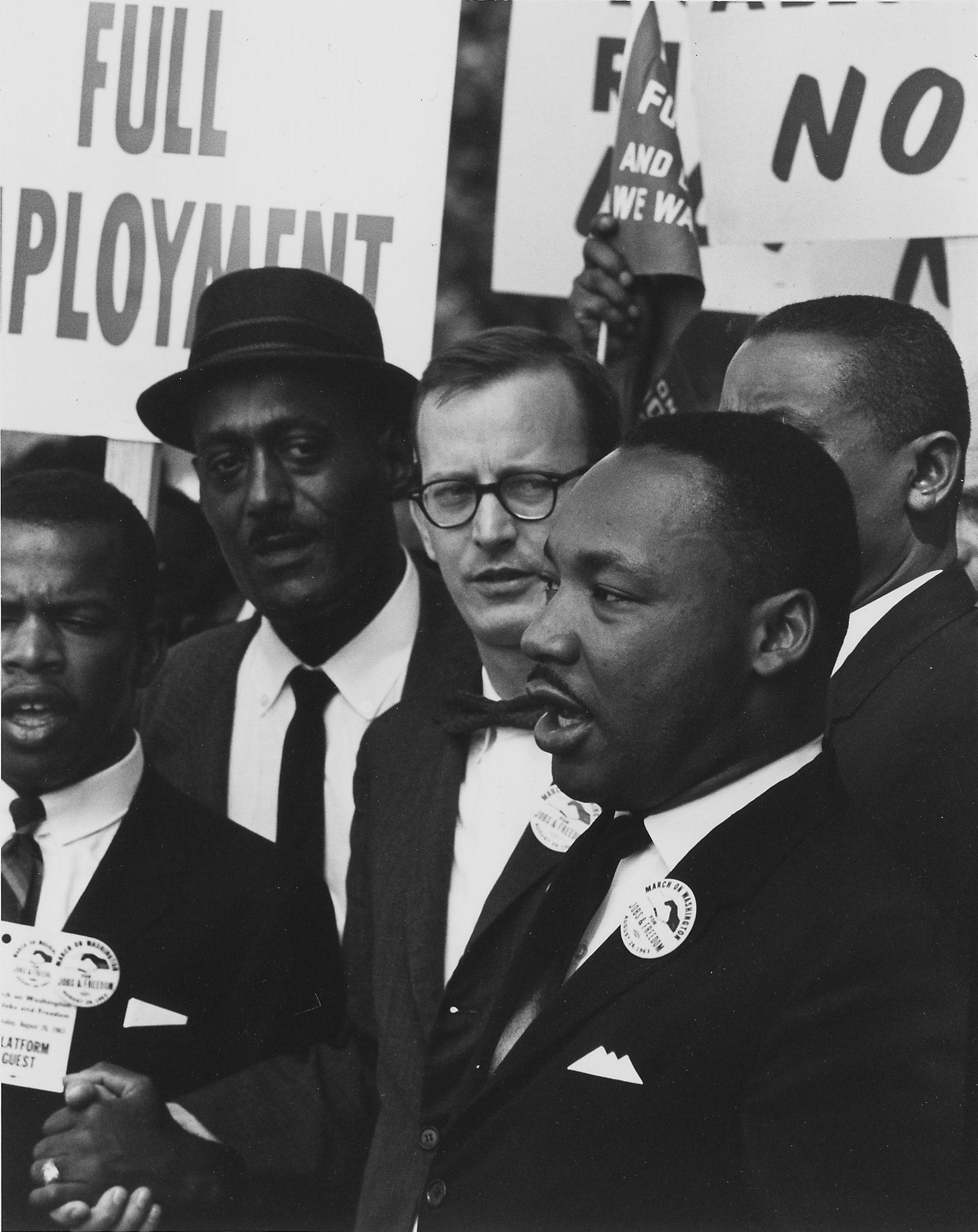
File:Dr. Martin Luther King Jr. at a civil rights march on Washington D.C. in 1963.jpg ... View original
Is this image relevant?
File:1963 march on washington.jpg - Wikimedia Commons View original
Is this image relevant?
File:Dr. Martin Luther King Jr. at a civil rights march on Washington D.C. in 1963.jpg ... View original
Is this image relevant?
Strategies of civil rights activists
Civil rights activists in the 1960s used several overlapping strategies to dismantle segregation and secure equal rights. These fell into three broad categories: nonviolent direct action, voter registration, and legal/legislative challenges.
Nonviolent direct action drew on the philosophy of civil disobedience, using peaceful resistance to expose the injustice of segregation and force a public response.
- The Greensboro sit-ins (1960) kicked off a wave of protests when four Black college students sat at a whites-only lunch counter in North Carolina and refused to leave. The tactic spread rapidly to other cities.
- Freedom Rides (1961) sent integrated groups of riders on interstate buses through the Deep South to test whether federal desegregation rulings were being enforced. Riders faced brutal mob violence, which drew national media attention and pressured the federal government to act.
- The Birmingham Campaign (1963), organized by Martin Luther King Jr. and the Southern Christian Leadership Conference (SCLC), combined boycotts, sit-ins, and marches in one of the most segregated cities in America. Police Commissioner Bull Connor's use of fire hoses and attack dogs against peaceful protesters, including children, shocked the nation.
- The March on Washington for Jobs and Freedom (1963) brought over 200,000 people to the National Mall to demand civil rights legislation. It's best remembered for King's "I Have a Dream" speech, and it built momentum for what became the Civil Rights Act of 1964.
Voter registration drives targeted the systematic exclusion of Black voters, especially in the Deep South.
- Freedom Summer (1964) brought hundreds of volunteers, many of them white college students from the North, to Mississippi to register Black voters and set up Freedom Schools. The murder of three civil rights workers that summer exposed the dangers activists faced and drew national outrage.
- The Selma to Montgomery marches (1965) protested voter suppression in Alabama. On "Bloody Sunday," state troopers attacked marchers with tear gas and clubs at the Edmund Pettus Bridge. Televised footage of the violence helped push Congress to pass the Voting Rights Act.
Legislation and legal challenges translated grassroots pressure into lasting structural change.
- The Civil Rights Act of 1964 banned discrimination based on race, color, religion, sex, or national origin in public accommodations, employment, and federally funded programs.
- The Voting Rights Act of 1965 outlawed discriminatory voting practices like literacy tests and provided for federal oversight of elections in areas with histories of voter suppression.
- Loving v. Virginia (1967) struck down state laws banning interracial marriage as unconstitutional.
- Brown v. Board of Education (1954) had already overturned the "separate but equal" doctrine, but actual school desegregation remained slow and contested well into the 1960s. Brown set the legal foundation that later activism built on.
Impact of the Black Power movement
By the mid-1960s, some activists grew frustrated with the pace of change and the limits of nonviolent protest. The Black Power movement called for Black self-determination, racial pride, and a willingness to defend Black communities, marking a significant shift in tone and strategy.
Key figures shaped the movement in different ways:
- Stokely Carmichael (later Kwame Ture), chairman of the Student Nonviolent Coordinating Committee (SNCC), popularized the phrase "Black Power" during a 1966 march in Mississippi. Under his leadership, SNCC moved away from interracial coalition-building and toward a more militant stance.
- Malcolm X, a minister in the Nation of Islam before breaking with the organization, had been advocating Black pride, self-defense, and pan-Africanism since the early 1960s. His autobiography and speeches influenced a generation of activists even after his assassination in 1965.
- Huey P. Newton and Bobby Seale founded the Black Panther Party in Oakland, California, in 1966. The Panthers combined armed neighborhood patrols to monitor police with community programs like free breakfast for children and health clinics.
The movement emphasized cultural pride and economic independence:
- African Americans embraced African heritage through names, clothing like dashikis, and natural hairstyles like the afro.
- Activists called for Black-owned businesses and institutions as a path to economic self-sufficiency.
- The Black Panther Party's practice of openly carrying firearms symbolized the movement's stance on armed self-defense against police brutality.
Black Power also had a concrete political impact:
- Political activism surged, especially in local elections where Black communities could build power.
- Shirley Chisholm became the first Black woman elected to Congress (1968), and Carl Stokes became the first Black mayor of a major U.S. city when he won in Cleveland (1967).
- The movement influenced the development of affirmative action policies aimed at addressing systemic inequalities in education and employment.

The struggle against racial discrimination
All of this activism took place against the backdrop of entrenched racial inequality. Jim Crow laws in the South enforced segregation in everything from schools to water fountains, backed by the threat of violence. Grassroots organizing at the community level, from church groups to student organizations, provided the foundation for larger campaigns. Desegregation efforts targeted public spaces, schools, and institutions, but progress was uneven and often met fierce resistance from white citizens and local officials alike.
The Chicano Movement
The Chicano Movement (El Movimiento) emerged alongside the Black civil rights struggle, fighting for the rights of Mexican Americans across several fronts: labor, land, education, and political representation.
Accomplishments of the Chicano Movement
Farm workers' rights became the movement's most visible cause.
- Cesar Chavez and Dolores Huerta co-founded the National Farm Workers Association (later the United Farm Workers, or UFW) to organize predominantly Mexican American farm laborers.
- The Delano Grape Strike (1965–1970) combined work stoppages with a nationwide consumer boycott of table grapes. The boycott drew broad public support and eventually forced growers to negotiate contracts that improved wages, benefits, and working conditions.
Land rights were a central issue in New Mexico, where Mexican American families had lost land grants through legal manipulation and discrimination.
- Reies López Tijerina led the Alianza Federal de Mercedes, which demanded the return of communal land grants guaranteed by the Treaty of Guadalupe Hidalgo (1848).
- In 1966, Tijerina organized the occupation of the Echo Amphitheater in a national forest to assert these claims and draw public attention.
Chicano nationalism and youth activism built cultural pride and political identity.
- Rodolfo "Corky" Gonzales founded the Crusade for Justice in Denver, which promoted Chicano nationalism, emphasizing pride in Mexican American culture and the right to self-determination.
- The First National Chicano Liberation Youth Conference (1969) brought together young activists from across the country. It produced "El Plan Espiritual de Aztlán," a document that articulated a vision of Chicano unity and identity.
Educational reforms pushed schools and universities to serve Mexican American students better.
- Activists demanded and won the creation of Chicano studies programs at universities to study Mexican American history, culture, and contemporary issues.
- Campaigns for bilingual education and culturally relevant curricula challenged English-only policies that disadvantaged Spanish-speaking students.
Political activism increased Mexican American representation in government.
- La Raza Unida Party, founded in 1970 in Texas, ran Chicano candidates in local, state, and national elections, winning several races in South Texas and pushing the major parties to address Mexican American concerns.
- Mexican American representation in elected offices grew at all levels of government throughout the late 1960s and 1970s, giving the community a stronger voice in policy decisions.
See Fiveable more often in Google
Mark Fiveable as a preferred source and Google is more likely to show you our guides in Top Stories, with a "preferred" badge in AI Mode and AI Overviews.