3.1 Spanish Exploration and Colonial Society

🗽US History Unit 3 Review
3.1 Spanish Exploration and Colonial Society
🗽 US History
Spanish Colonial Settlements and Society
Spanish exploration and colonization created a new social order across the Americas between the 1500s and 1700s. Understanding how Spain organized its colonies helps explain the racial hierarchies, labor systems, and cultural transformations that shaped the Western Hemisphere for centuries.

Top images from around the web for Features of Spanish colonial settlements
Talk:Spanish Texas - Wikipedia, the free encyclopedia View original
Is this image relevant?
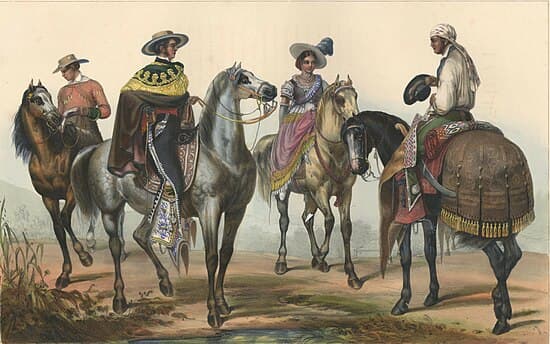
Hacienda - Wikipedia View original
Is this image relevant?
La Encomienda View original
Is this image relevant?
Talk:Spanish Texas - Wikipedia, the free encyclopedia View original
Is this image relevant?
Hacienda - Wikipedia View original
Is this image relevant?
Features of Spanish Colonial Settlements
Spanish colonies were built around four key institutions, each serving a different purpose:
- Encomienda system granted Spanish colonists (often conquistadors) the right to demand labor and tribute from Native Americans living in a specific area. In return, the encomendero was supposed to protect and Christianize them. In practice, this system functioned as forced labor and placed Spaniards firmly at the top of the social order.
- Missions were religious settlements run by Catholic friars, primarily Franciscans and Jesuits, aimed at converting Native Americans to Catholicism. Beyond religion, missions also served as centers for agriculture, education, and trade, pulling indigenous people into the Spanish colonial economy.
- Haciendas were large agricultural estates owned by wealthy Spaniards. These focused on farming and ranching, and relied heavily on Native American or African slave labor to operate.
- Urban centers like Mexico City, Lima, and Havana functioned as administrative and commercial hubs. These cities were seats of colonial government and reflected the wealth flowing through the Spanish Empire.

Structure of Spanish Colonies
The Spanish Empire divided its American territories into viceroyalties, large administrative units each governed by a viceroy appointed directly by the Spanish crown. While each region had its own economic focus, they all shared a rigid social hierarchy called the casta system, a racial classification system designed to maintain social order and reinforce Spanish dominance.
That hierarchy looked like this across most colonies:
- Peninsulares (Spaniards born in Spain) held the highest positions
- Criollos (Spaniards born in the Americas) were wealthy but excluded from top government roles
- Mestizos (mixed Spanish and Native American ancestry) occupied a middle tier
- Native Americans and Africans were at the bottom
The major colonial regions each had distinct economic foundations:
- New Spain (Mexico) built its economy on silver mining, especially at Zacatecas, along with agriculture (maize, wheat) and trade. A viceroy oversaw centralized political control.
- Peru centered on silver mining at Potosí, one of the richest mines in the world, and textile production (wool). Its political structure mirrored New Spain's, with a viceroy governing a large indigenous population descended from the Inca Empire.
- Caribbean islands (Cuba, Hispaniola, Puerto Rico) developed plantation-based economies focused on sugar production. These were governed by a captain-general and had a social structure dominated by a small white elite over a large population of enslaved Africans.

Impact on Native American Populations
Spanish colonization devastated Native American societies in several overlapping ways:
- Demographic collapse was the most destructive consequence. European diseases like smallpox, measles, and influenza swept through indigenous populations that had no prior exposure or immunity. Some regions experienced population declines of up to 90%.
- Land seizures disrupted traditional ways of life. Spanish colonists took Native American lands for farms, ranches, and mines, breaking apart existing economic systems and patterns of land use. The encomienda system formalized much of this displacement.
- Forced cultural assimilation came primarily through Catholic missionaries, who worked to eradicate Native American religious practices. This included imposing the Spanish language, requiring European-style dress, and suppressing indigenous customs and beliefs.
- Mestizaje, the mixing of Spanish and Native American populations through intermarriage and sexual relations, produced a growing mestizo population. This process created blended cultural forms known as syncretism, where elements of both Spanish and Native American traditions merged into something new.
Spanish Colonialism in Context
Two broader historical forces shaped how Spain approached colonization:
The Reconquista, the centuries-long Christian reconquest of the Iberian Peninsula from Muslim rule (completed in 1492, the same year Columbus sailed), deeply influenced Spanish attitudes. It established a pattern of conquest, religious conversion, and subjugation of non-Christians that colonizers carried directly into the Americas.
The Columbian Exchange refers to the massive transfer of plants, animals, diseases, and technologies between the Eastern and Western Hemispheres after 1492. While it brought new crops like potatoes and maize to Europe, it also carried the diseases that caused demographic collapse among Native Americans. This exchange reshaped environments and economies on both sides of the Atlantic.
See Fiveable more often in Google
Mark Fiveable as a preferred source and Google is more likely to show you our guides in Top Stories, with a "preferred" badge in AI Mode and AI Overviews.