20.2 The Key Political Issues: Patronage, Tariffs, and Gold

🗽US History Unit 20 Review
20.2 The Key Political Issues: Patronage, Tariffs, and Gold
🗽 US History
Political Patronage and Reform

Top images from around the web for Spoils system vs civil service reform
Civil Service Reform | Boundless US History View original
Is this image relevant?
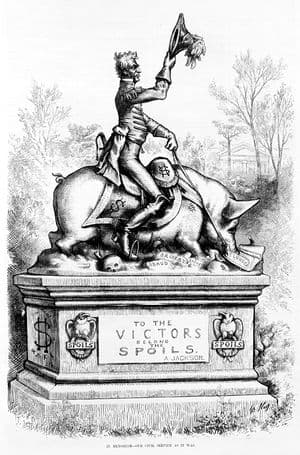
Spoils system - Wikipedia View original
Is this image relevant?
Pendleton Civil Service Reform Act - Wikipedia View original
Is this image relevant?
Civil Service Reform | Boundless US History View original
Is this image relevant?
Spoils system - Wikipedia View original
Is this image relevant?
Spoils System vs. Civil Service Reform
The spoils system was the practice of awarding government jobs as rewards for political loyalty. Both Democrats and Republicans used it, and the result was predictable: unqualified people filling important positions, widespread corruption, and a bloated, inefficient bureaucracy.
Civil service reform aimed to replace this system with one based on merit. The landmark legislation was the Pendleton Civil Service Reform Act (1883), passed after the assassination of President James Garfield by a disappointed office-seeker. The act established the Civil Service Commission, which administered competitive exams for federal positions. Initially it covered only about 10% of federal jobs, but presidents gradually expanded its reach over the following decades. The reform improved government competence and began chipping away at the power political machines held through patronage.
Political Patronage in the Gilded Age
Political machines like Tammany Hall in New York City ran on patronage. They rewarded loyal supporters with government jobs, city contracts, and favors. In return, those supporters turned out votes on election day. The system bred kickbacks, bribes, and a culture where loyalty mattered far more than ability.
Reform-minded Republicans known as Mugwumps broke with their own party over the patronage issue, even backing Democrat Grover Cleveland in the 1884 presidential election because of his reform credentials. Their pressure, combined with public outrage over corruption, helped build momentum for the Pendleton Act and later Progressive-era reforms that continued to shrink the patronage system into the early 20th century.

Economic Policies and Debates
Impact of Tariff Policies
Tariffs were one of the most divisive issues of the Gilded Age, and they split the country along regional and economic lines.
- High tariffs protected northeastern manufacturers from foreign competition, but they raised prices on everyday goods for consumers across the country.
- Tariff revenue was the federal government's primary source of income (there was no federal income tax until 1913).
- Farmers and southern/western agricultural regions wanted lower tariffs. High tariffs made the manufactured goods they bought more expensive, and foreign nations often retaliated with tariffs on American agricultural exports, shrinking farmers' markets.
The tariff debate played out through specific legislation:
- The McKinley Tariff (1890) pushed average rates to about 48%, one of the highest levels in American history. It was deeply unpopular with consumers and contributed to Republican losses in the 1890 midterm elections.
- The Wilson-Gorman Tariff (1894) lowered rates somewhat but was so watered down by Senate amendments that President Cleveland refused to sign it, letting it become law without his signature.
Republicans generally championed protectionism, arguing that high tariffs shielded American workers and industries. Democrats tended to favor lower tariffs, though the party was not unified on the issue.

Gold Standard vs. Free Silver Debate
The question of what backed American currency may sound dry, but it was one of the most heated political fights of the era. At its core, this was a debate about the money supply and who benefited from it.
- The gold standard tied the value of the dollar to gold reserves. Bankers, creditors, and eastern business interests supported it because it kept the currency stable and protected the value of debts owed to them.
- Free silver advocates wanted the government to mint silver coins at a fixed ratio of 16 ounces of silver to 1 ounce of gold. Farmers, debtors, and western silver miners supported this because expanding the money supply would cause inflation, which makes debts easier to repay and raises crop prices.
The logic for debtors: if you owe $100 and the money supply expands, each dollar is worth less, so your debt is effectively smaller in real terms. Creditors hated this for the exact same reason.
The Populist Party made free silver a central plank of its platform. In 1896, Democrat William Jennings Bryan delivered his famous "Cross of Gold" speech at the Democratic National Convention, declaring, "You shall not crucify mankind upon a cross of gold." Bryan won the Democratic nomination and the Populist endorsement, but Republican William McKinley won the election with strong support from business interests and urban voters. McKinley's victory effectively settled the debate in favor of the gold standard, which remained U.S. policy until the 1930s.
Economic Philosophy and Monetary Policy
The federal government during the Gilded Age largely followed laissez-faire economics, meaning minimal regulation of business and limited intervention in the economy.
Deflation was a persistent problem throughout this period. As the economy grew but the money supply (tied to gold) did not keep pace, prices fell steadily. This hit farmers especially hard: they took out loans when prices were higher and had to repay them when their crops sold for less. The monetary policy debate was really about who should bear the costs of economic change, and the answer during the Gilded Age consistently favored creditors and industrial interests over farmers and working people.
See Fiveable more often in Google
Mark Fiveable as a preferred source and Google is more likely to show you our guides in Top Stories, with a "preferred" badge in AI Mode and AI Overviews.