30.4 Watergate: Nixon’s Domestic Nightmare

🗽US History Unit 30 Review
30.4 Watergate: Nixon’s Domestic Nightmare
🗽 US History
The 1972 Election and Watergate Scandal
The Watergate scandal began as a botched burglary and ended with the first presidential resignation in American history. More than just a political crisis, it fundamentally changed how Americans viewed their government and the presidency itself.

Top images from around the web for Nixon's 1972 campaign strategies
1972 United States presidential election - Wikipedia View original
Is this image relevant?
Watergate: Nixon’s Domestic Nightmare | United States History II View original
Is this image relevant?
Watergate: Nixon’s Domestic Nightmare | United States History II View original
Is this image relevant?
Richard Nixon - Wikipedia View original
Is this image relevant?
Richard Nixon - Wikipedia View original
Is this image relevant?
1972 United States presidential election - Wikipedia View original
Is this image relevant?
Watergate: Nixon’s Domestic Nightmare | United States History II View original
Is this image relevant?
Nixon's 1972 Campaign Strategies
Nixon's re-election campaign, the Committee to Re-elect the President (CRP, often mocked as "CREEP"), raised massive amounts of money, frequently through illegal means. The committee also employed "dirty tricks" against Democratic opponents, including forged letters, planted spies, and orchestrated break-ins designed to sabotage opposition campaigns.
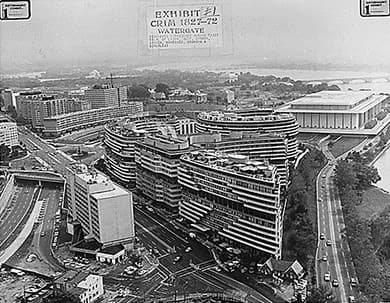
On June 17, 1972, five men connected to CRP were arrested for breaking into the Democratic National Committee headquarters at the Watergate complex in Washington, D.C. Their goal was to plant wiretaps and steal documents.
Washington Post reporters Bob Woodward and Carl Bernstein investigated the break-in and uncovered connections between the burglars and Nixon's re-election campaign. They relied on a series of confidential informants, most famously a source known as "Deep Throat" (later revealed to be FBI Associate Director Mark Felt).
Despite the growing scandal, Nixon won the 1972 election in a landslide against Democrat George McGovern, capitalizing on his foreign policy successes with China and the Soviet Union and running against a weak, divided Democratic opposition.
The Watergate Cover-up and Its Consequences
Almost immediately after the break-in, Nixon and his top associates worked to conceal any White House connection to the burglary. This cover-up proved far more damaging than the break-in itself.
- Nixon directed aides to pressure the CIA into blocking the FBI's investigation, framing it as a national security matter.
- The White House "Plumbers" unit, originally created to stop government leaks (like the Pentagon Papers), had already been involved in illegal activities, including a break-in at the office of Daniel Ellsberg's psychiatrist.
- Nixon invoked executive privilege to withhold tapes and documents from investigators, arguing that presidential communications were constitutionally protected.
- The cover-up eventually led to charges of obstruction of justice against Nixon and several of his closest aides.
Impact of the Watergate Scandal
The unraveling happened in stages, each one more damaging than the last:
- Senate Watergate hearings (1973) brought the scandal into American living rooms on live television.
- White House Counsel John Dean testified that Nixon had been directly involved in the cover-up, famously telling the president there was "a cancer on the presidency."
- A former White House aide revealed the existence of a secret taping system that had recorded Oval Office conversations, meaning there was potential proof of everything.
- October 1973: The Saturday Night Massacre. Nixon ordered the firing of special prosecutor Archibald Cox, who had subpoenaed the White House tapes. Attorney General Elliot Richardson and Deputy Attorney General William Ruckelshaus both resigned rather than carry out the order. Solicitor General Robert Bork ultimately fired Cox. The episode sparked a constitutional crisis and turned public opinion sharply against Nixon.
- July 1974: The Supreme Court ruled unanimously in United States v. Nixon that the president had to release the tapes. The recordings revealed Nixon's direct involvement in the cover-up, including a "smoking gun" tape from just six days after the break-in.
- August 8, 1974: Facing near-certain impeachment by the House and conviction by the Senate, Nixon resigned, becoming the first U.S. president to leave office this way.
The long-term effects of Watergate were significant. Public trust in government dropped sharply. Congress passed the Federal Election Campaign Act amendments to reform campaign finance, and the scandal led to increased scrutiny of presidential power for years to come. The suffix "-gate" became permanently attached to American political scandals.
Gerald Ford's Presidency
Gerald Ford became president under extraordinary circumstances. He had not been elected to either the presidency or the vice presidency (he was appointed VP under the 25th Amendment after Spiro Agnew's resignation). His central challenge was restoring public confidence in government while managing serious economic and foreign policy problems.

Domestic Policy
Ford's most consequential early decision was his pardon of Richard Nixon on September 8, 1974. He argued the nation needed to move past Watergate rather than endure a lengthy criminal trial of a former president. The decision was deeply unpopular at the time and likely contributed to his defeat in 1976.
On the economic front, Ford inherited stagflation, a painful combination of high inflation and high unemployment that defied conventional economic solutions. His Whip Inflation Now (WIN) program encouraged voluntary measures to fight inflation but had little real impact and was widely ridiculed. Ford also vetoed dozens of spending bills in an effort to control budget deficits, reflecting his fiscal conservatism.
Foreign Policy
- Détente continued. Ford maintained Nixon's policy of easing tensions with the Soviet Union and signed the Helsinki Accords in 1975. These agreements recognized post-World War II borders in Europe and included provisions promoting human rights, which later became a tool for dissidents behind the Iron Curtain.
- Fall of Saigon (April 1975). The Vietnam War ended with the collapse of South Vietnam. Ford ordered Operation Frequent Wind, the emergency evacuation of American personnel and allied South Vietnamese refugees by helicopter from the U.S. embassy in Saigon. The iconic images of helicopters lifting off rooftops marked the final, chaotic chapter of American involvement in Vietnam.
- Mayaguez Incident (May 1975). Cambodia's Khmer Rouge seized the U.S. merchant ship Mayaguez. Ford ordered a military rescue operation that recovered the crew but resulted in 41 American casualties, more than the number of crew members rescued. The episode demonstrated Ford's willingness to use force to protect American interests abroad.
The 1976 Election
Despite his efforts to heal the nation, Ford narrowly lost the 1976 presidential election to Democrat Jimmy Carter. The lingering damage from the Nixon pardon, ongoing economic troubles, and a strong primary challenge from Ronald Reagan all weakened Ford heading into the general election.
See Fiveable more often in Google
Mark Fiveable as a preferred source and Google is more likely to show you our guides in Top Stories, with a "preferred" badge in AI Mode and AI Overviews.