23.5 Demobilization and Its Difficult Aftermath

🗽US History Unit 23 Review
23.5 Demobilization and Its Difficult Aftermath
🗽 US History
Postwar Challenges and the 1920 Election
When the armistice ended fighting in November 1918, most Americans expected a smooth return to peacetime life. Instead, demobilization brought economic turmoil, social upheaval, and political fear that reshaped the country. These postwar crises help explain why voters overwhelmingly chose a new direction in 1920.

Top images from around the web for Postwar challenges in America
The Transition to Peace: 1919-1921 | Boundless US History View original
Is this image relevant?
The Transition to Peace: 1919-1921 | Boundless US History View original
Is this image relevant?
Progressive Charlestown: Recognizing reality would help View original
Is this image relevant?
The Transition to Peace: 1919-1921 | Boundless US History View original
Is this image relevant?
The Transition to Peace: 1919-1921 | Boundless US History View original
Is this image relevant?
Postwar Economic Challenges
The wartime economy didn't transition smoothly to peace. Prices roughly doubled between 1916 and 1920, while wages lagged behind, squeezing working families hard. At the same time, millions of soldiers flooded back into the job market, and the government canceled war contracts almost overnight. The result was rising unemployment and deep frustration.
That frustration fueled a massive wave of labor unrest in 1919:
- The Seattle General Strike saw 65,000 workers walk off the job in February, briefly paralyzing the city.
- The Boston Police Strike left the city without law enforcement for days, alarming the public and boosting Governor Calvin Coolidge's national profile when he called in the state guard.
- The Steel Strike of 1919 involved over 350,000 steelworkers demanding better hours and union recognition. It ultimately failed, but it showed how desperate conditions had become.
Labor unions had grown during the war, and workers now expected their gains to stick. Employers and much of the public, however, increasingly viewed strikes with suspicion, especially as fears of radical revolution spread.

Social Challenges
- Veteran reintegration: Over 4 million soldiers returned home, many dealing with physical wounds or what was then called "shell shock." The government had no comprehensive system for veteran support, and many struggled to find work or readjust to civilian life.
- The influenza pandemic of 1918–1919 killed an estimated 675,000 Americans, more than the war itself. It disrupted communities, overwhelmed hospitals, and compounded the grief of a nation already mourning its war dead.
- Prohibition: The 18th Amendment took effect in January 1920, banning the manufacture, sale, and transportation of alcohol. Rather than eliminating drinking, it drove the alcohol trade underground. Speakeasies multiplied, bootlegging became big business, and organized crime figures like Al Capone built empires supplying illegal liquor.

The Red Scare and Racial Tensions
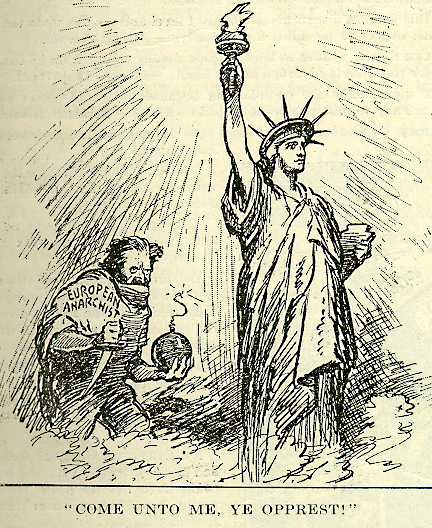
The Red Scare grew directly out of the Russian Revolution of 1917. Many Americans feared that Bolshevik-style revolution could spread to the United States, especially as strikes and bombings made headlines. Attorney General A. Mitchell Palmer seized on these fears, ordering a series of raids in 1919–1920 that targeted suspected radicals, socialists, and anarchists. Thousands were arrested, often without warrants or due process. Around 500 people were deported, including the well-known anarchist Emma Goldman, who was among 249 deportees sent to Russia aboard a ship the press dubbed the "Soviet Ark."
The Sacco and Vanzetti case became a symbol of the era's anti-immigrant climate. Nicola Sacco and Bartolomeo Vanzetti, two Italian-born anarchists, were convicted of murder in 1921 in a trial widely criticized for its bias. Their case drew international attention and raised serious questions about whether they received a fair trial.
Racial violence also surged during this period. The Great Migration had brought over one million African Americans from the South to Northern cities during and after the war, seeking better jobs and an escape from Jim Crow. But competition for housing and employment created intense friction. The Red Summer of 1919 saw race riots erupt in more than 25 cities, including a devastating outbreak in Chicago where 38 people were killed and hundreds injured over nearly two weeks.
The Ku Klux Klan experienced a dramatic resurgence, growing to an estimated 4 million members by the mid-1920s. This new Klan was not limited to the South; it spread into Northern and Midwestern states and broadened its targets beyond African Americans to include Catholics, Jews, and immigrants. The Klan wielded real political influence, electing sympathetic officials at the local and state level.
Postwar Attitudes and Policies
The war's aftermath left many Americans wanting to pull back from the world. Isolationism gained broad support as people rejected Woodrow Wilson's vision of international engagement through the League of Nations. The Senate's refusal to ratify the Treaty of Versailles reflected this shift.
Xenophobia intensified alongside the Red Scare. Nativist sentiment drove demands for tighter immigration restrictions, which would culminate in quota laws in the early 1920s. Americanization programs pressured immigrants to adopt English, American customs, and civic values, reflecting anxiety about national unity and loyalty.
Factors in Harding's Electoral Victory
By 1920, voters were exhausted. Warren G. Harding's campaign slogan, "Return to Normalcy," captured exactly what most Americans wanted: stability, predictability, and an end to the upheaval of the Wilson years.
Several factors combined to produce Harding's landslide:
- Wilson's unpopularity weighed heavily on Democrats. His failed fight for the League of Nations, his stroke, and the postwar economic problems had eroded public trust. Democratic nominee James M. Cox couldn't escape the association.
- Harding's personal appeal worked in his favor. He ran a traditional "front porch" campaign from his home in Marion, Ohio, projecting calm and approachability.
- Economic promises resonated with voters. Harding pledged lower taxes and protective tariffs, positioning Republicans as better managers of the economy.
The result was decisive: Harding won 60.3% of the popular vote and 404 electoral votes. Cox carried only the solidly Democratic South. It was one of the largest margins in presidential history to that point, and it signaled that the country was ready to leave the war era behind.
See Fiveable more often in Google
Mark Fiveable as a preferred source and Google is more likely to show you our guides in Top Stories, with a "preferred" badge in AI Mode and AI Overviews.