23.3 A New Home Front

🗽US History Unit 23 Review
23.3 A New Home Front
🗽 US History
World War I didn't just send soldiers overseas. It reshaped life at home in ways that outlasted the fighting itself. The war's demands pulled new groups into the workforce, strengthened organized labor, and accelerated social reforms like Prohibition and women's suffrage. Understanding these home front changes is key to seeing how the war became a turning point in American society.
World War I's Impact on American Society

Top images from around the web for Impact on organized labor
Progressive Charlestown: The Workers First Agenda View original
Is this image relevant?
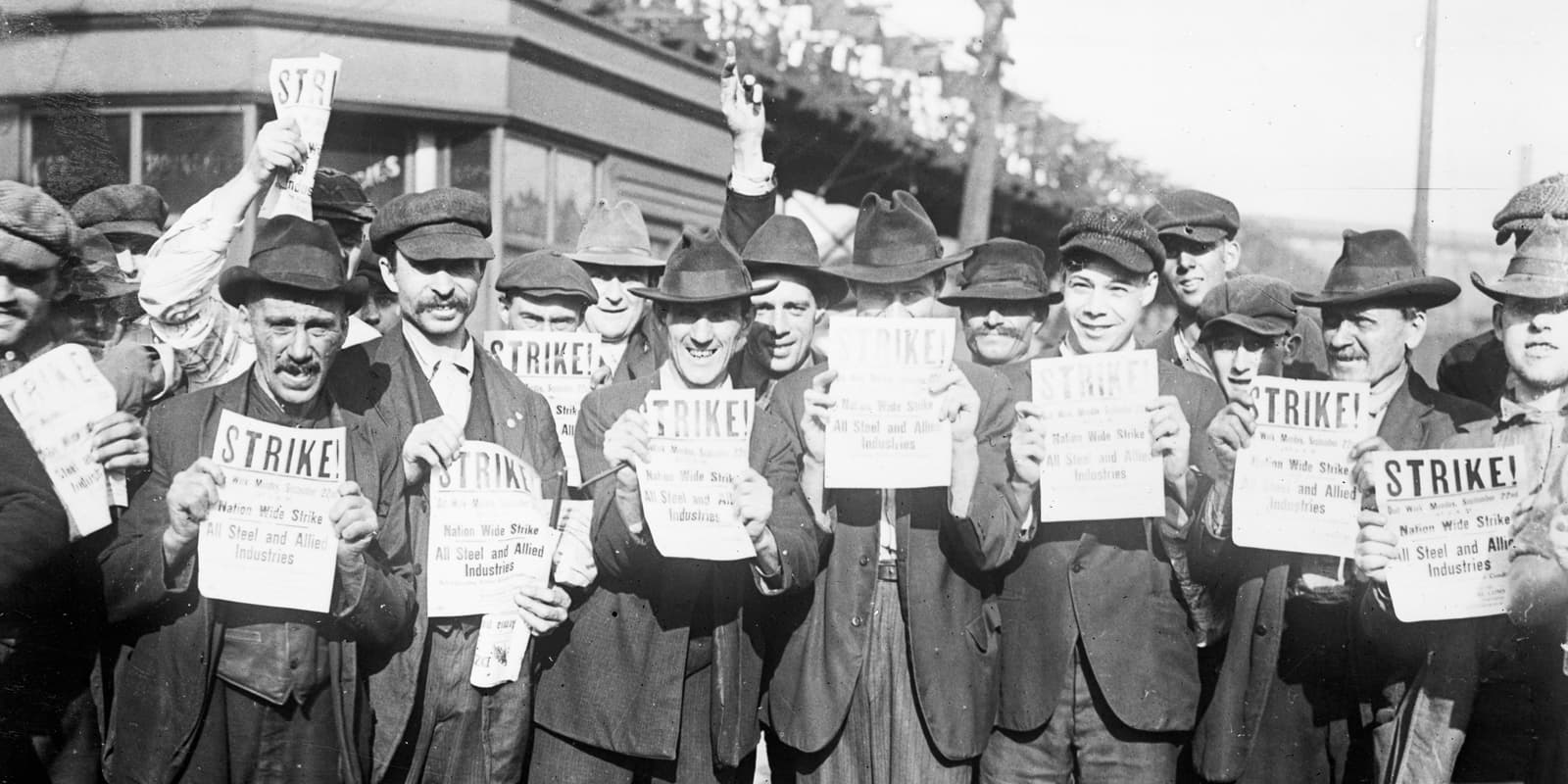
World War I and Its Aftermath | US History II (American Yawp) View original
Is this image relevant?
The Labor Movement | US History II (American Yawp) View original
Is this image relevant?
Progressive Charlestown: The Workers First Agenda View original
Is this image relevant?
World War I and Its Aftermath | US History II (American Yawp) View original
Is this image relevant?
Impact on Organized Labor
The war created a perfect storm for union power. Factories needed to produce massive quantities of war materials, but millions of working-age men were shipping off to fight. That combination of high demand and low labor supply gave workers real leverage for the first time in years.
- The National War Labor Board, established in 1918, mediated disputes and discouraged strikes during wartime. Crucially, the government recognized workers' right to organize and bargain collectively for better wages and conditions.
- American Federation of Labor (AFL) membership jumped from about 2 million in 1916 to 3.2 million by 1919, reflecting how wartime conditions made union membership more attractive and more effective.
This didn't last. The postwar economic downturn, combined with a growing fear of radicalism (the Russian Revolution had just happened in 1917), turned public opinion against unions. Major strikes in the steel and coal industries in 1919 were portrayed as unpatriotic or even Bolshevik-inspired. Government and business leaders used that narrative to break strikes and roll back union gains.

Changing Roles During WWI
Women in the workforce: With men leaving for the front, women filled jobs that had previously been closed to them. Over 1 million women joined the wartime workforce in munitions factories, offices, and transportation. This expanded their economic opportunities and visibly challenged traditional gender roles. Still, women were often paid less than men for the same work, and most were expected to give up their jobs once the war ended.
The Great Migration: Roughly 500,000 African Americans moved from the rural South to northern industrial cities between 1916 and 1919, drawn by wartime factory jobs and the hope of escaping Jim Crow laws. This movement, known as the Great Migration, reshaped the demographics of cities like Chicago, Detroit, and New York.
Northern cities were not the promised land many had hoped for. African Americans faced housing discrimination, competition for jobs, and outright racial violence. The East St. Louis Riot of 1917 killed dozens of Black residents, and the Chicago Race Riot of 1919 left 38 dead. Despite their contributions to the war effort, African Americans continued to face systemic racism and segregation in the postwar era.

Wartime Influence on Social Reforms
Prohibition: Wartime nationalism gave the temperance movement the final push it needed. Anti-German sentiment made it easy to target the brewing industry, which was heavily associated with German Americans. Propaganda framed alcohol consumption as wasteful and unpatriotic when the nation needed to conserve grain for the war effort. The 18th Amendment, ratified in 1919, prohibited the manufacture, sale, and transportation of alcohol nationwide.
Women's suffrage: Women's visible contributions to the war effort undercut the old argument that women belonged only in the domestic sphere. If women could build munitions, run streetcars, and serve as nurses near the front lines, denying them the vote became harder to justify. President Woodrow Wilson, who had previously been lukewarm on suffrage, publicly endorsed it as a "war measure" in 1918. The 19th Amendment, granting women the right to vote, was ratified in 1920.
Mobilizing the Home Front
The federal government took on a far more active role in daily life than Americans were used to. Mobilization touched nearly every aspect of the economy and society.
- Conscription: The Selective Service Act of 1917 required men aged 21 to 30 (later expanded to 18 to 45) to register for the military draft, rapidly expanding the armed forces to nearly 4 million.
- Economic mobilization: The War Industries Board coordinated the shift to wartime production, directing factories to prioritize weapons, ammunition, and military supplies.
- Conservation and rationing: The Food Administration, led by Herbert Hoover, encouraged voluntary rationing through campaigns like "Meatless Mondays" and "Wheatless Wednesdays" to ensure enough food reached troops overseas.
- Propaganda: The Committee on Public Information (CPI), headed by George Creel, used posters, films, and speakers (known as "Four Minute Men") to build public support for the war and encourage enlistment and bond purchases.
- Restrictions on civil liberties: The Espionage Act (1917) and Sedition Act (1918) criminalized interference with the draft and criticism of the government or military. These laws were used to suppress dissent, jail war opponents like Socialist leader Eugene V. Debs, and silence anti-war speech. The Supreme Court upheld these restrictions in Schenck v. United States (1919), establishing the "clear and present danger" test for limiting free speech.
See Fiveable more often in Google
Mark Fiveable as a preferred source and Google is more likely to show you our guides in Top Stories, with a "preferred" badge in AI Mode and AI Overviews.