30.1 Identity Politics in a Fractured Society

🗽US History Unit 30 Review
30.1 Identity Politics in a Fractured Society
🗽 US History
Social Movements and Identity Politics in the 1960s-1970s

Top images from around the web for Impact of 1960s counterculture
Counterculture of the 1960s - Wikipedia View original
Is this image relevant?
Counterculture of the 1960s - Wikipedia View original
Is this image relevant?
Counterculture | Boundless US History View original
Is this image relevant?
Counterculture of the 1960s - Wikipedia View original
Is this image relevant?
Counterculture of the 1960s - Wikipedia View original
Is this image relevant?
Impact of 1960s Counterculture
The counterculture of the 1960s was a broad rejection of mainstream American values: materialism, conformity, and trust in established institutions. Young people in particular turned toward individual expression, communal living, drug experimentation, and sexual liberation as alternatives to the society their parents had built.
This rebellion showed up everywhere in popular culture:
- Music became a vehicle for countercultural ideas. The 1969 Woodstock festival, which drew roughly 400,000 people to a farm in upstate New York, became a symbol of the era's embrace of peace, psychedelic rock, and communal experience.
- Fashion signaled defiance of convention: tie-dye shirts, bell-bottom jeans, and long hair on men all marked someone as part of the movement.
- Art and literature pushed boundaries. Beat Generation writers like Allen Ginsberg and Jack Kerouac had laid groundwork in the 1950s, and underground comix and experimental art carried that spirit forward.
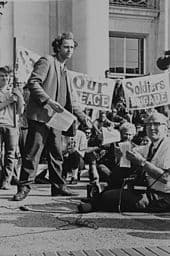
The counterculture was deeply tied to political activism. Anti-Vietnam War protests, draft resistance, and civil rights organizing all drew energy from the same rejection of authority. Organizations like Students for a Democratic Society (SDS) and the Free Speech Movement at UC Berkeley represented the "New Left," pushing for radical social and political change.
The counterculture's long-term effects reshaped American society. It fostered greater acceptance of diverse lifestyles, helped launch the environmental movement, and influenced music, art, and fashion for decades. It also contributed to a growing embrace of multiculturalism, the idea that American society should reflect and value many different cultural traditions.

Goals of the American Indian Movement
The American Indian Movement (AIM) was founded in 1968 in Minneapolis by activists including Dennis Banks, Clyde Bellecourt, and Russell Means. It arose because Native Americans faced severe poverty, inadequate healthcare and education on reservations, and the ongoing erosion of their cultural identity through government assimilation policies.
AIM's core goals included:
- Protecting treaty rights and tribal sovereignty that the federal government had repeatedly violated or ignored
- Improving living conditions on reservations, where poverty rates, unemployment, and health problems far exceeded national averages
- Preserving Native American culture, including languages, spiritual practices, and traditions threatened by decades of forced assimilation
- Combating the broader marginalization of Native communities in American political and social life
To draw national attention, AIM used dramatic direct action. Native activists occupied Alcatraz Island from 1969 to 1971, claiming the abandoned federal prison under an old treaty provision. In 1973, AIM members seized the town of Wounded Knee, South Dakota, the site of an 1890 massacre, leading to a 71-day armed standoff with federal authorities. These events forced Native American issues into the national spotlight in a way that quieter lobbying had not.
AIM also pursued legal challenges and cultural revitalization programs to maintain indigenous languages and customs. Their activism contributed directly to important legislation: the Indian Self-Determination and Education Assistance Act (1975) gave tribes greater control over federal programs on their lands, and the American Indian Religious Freedom Act (1978) protected Native spiritual practices.

Influence of Gay Rights and Women's Movements
Gay Rights Movement
Before the late 1960s, LGBTQ+ activism existed but was small and cautious. Organizations like the Mattachine Society (founded 1950) and the Daughters of Bilitis (founded 1955) worked quietly for acceptance. That changed on June 28, 1969, when police raided the Stonewall Inn, a gay bar in New York City's Greenwich Village, and patrons fought back. The Stonewall Riots lasted several nights and are widely considered the catalyst for the modern gay rights movement.
In Stonewall's wake, more confrontational groups like the Gay Liberation Front formed, and the movement shifted toward open visibility and demands for legal equality. Activists campaigned for the decriminalization of homosexuality and anti-discrimination protections. Public attitudes shifted slowly, but the movement steadily increased LGBTQ+ visibility in American life.
Women's Liberation Movement
Second-wave feminism in the 1960s and 1970s expanded beyond the earlier fight for voting rights to tackle workplace discrimination, reproductive rights, and deeply rooted cultural sexism. Consciousness-raising groups, where women shared personal experiences of discrimination, became a key organizing tool. Public protests, like the 1968 demonstration at the Miss America pageant in Atlantic City, challenged narrow gender expectations.
The movement achieved significant legislative and legal victories:
- Title VII of the Civil Rights Act (1964) banned sex discrimination in employment, giving women a legal tool to fight workplace inequality.
- Roe v. Wade (1973) established a constitutional right to abortion, a landmark ruling on reproductive autonomy.
- Women entered the workforce and higher education in growing numbers throughout the 1970s, breaking barriers in professions previously closed to them.
The push for the Equal Rights Amendment (ERA), which would have enshrined sex equality in the Constitution, passed Congress in 1972 but ultimately fell short of ratification by the 1982 deadline. This failure highlighted the limits of the era's progress and the strength of conservative opposition.
Identity Politics and Social Constructionism
Identity politics refers to political organizing based on shared characteristics like race, gender, sexuality, or ethnicity. Rather than appealing to broad coalitions, groups organized around their specific experiences of marginalization to demand rights and recognition. The movements described above are all examples of identity politics in action.
Underlying much of this activism was the idea of social constructionism: the theory that categories like race, gender, and sexuality are not purely natural or fixed but are shaped by cultural and historical context. What a society considers "normal" or "deviant" changes over time, and these categories carry real consequences for who holds power and who doesn't.
The concept of intersectionality, developed by legal scholar Kimberlé Crenshaw (though the term came later, in 1989), describes how multiple identities overlap. A Black woman, for instance, faces discrimination that is not simply racism plus sexism but a distinct combination of both. This framework pushed activists and scholars to think more carefully about who was being left out even within progressive movements.
These ideas reshaped both activism and academic study of social issues during this period and continue to influence debates about equality and justice today.
See Fiveable more often in Google
Mark Fiveable as a preferred source and Google is more likely to show you our guides in Top Stories, with a "preferred" badge in AI Mode and AI Overviews.