28.3 The American Dream

🗽US History Unit 28 Review
28.3 The American Dream
🗽 US History
The American Dream in the 1950s
The postwar economic boom made the 1950s the defining decade for the "American Dream." A combination of government policy, veteran benefits, and rising wages pushed millions of families into the middle class, while suburbanization and consumer culture reshaped what prosperity looked like in everyday life.

Top images from around the web for Eisenhower's policies and American Dream
Culture of Abundance | Boundless US History View original
Is this image relevant?
The American Dream | United States History II View original
Is this image relevant?
The 1950s: Chasing the American Dream - Brewminate: A Bold Blend of News and Ideas View original
Is this image relevant?
Culture of Abundance | Boundless US History View original
Is this image relevant?
The American Dream | United States History II View original
Is this image relevant?
Eisenhower's Policies and the American Dream
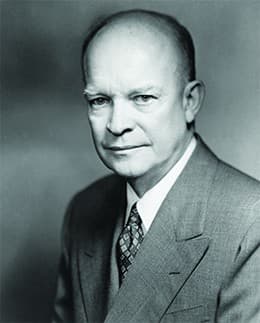
Eisenhower governed through what he called the "Middle Way," a moderate Republican approach that accepted the core of the New Deal rather than dismantling it. He expanded Social Security coverage to an additional 10 million workers, raised the minimum wage, and maintained programs like unemployment insurance. The goal was economic stability without dramatic government expansion.
His administration also prioritized balanced budgets, low inflation, and conditions friendly to private-sector growth. Companies like General Motors thrived in this environment, and steady economic growth defined much of the decade.
The Interstate Highway Act of 1956 was the largest public works project in American history at that point. It created over 41,000 miles of highways, which:
- Connected cities and suburbs, making commuting practical for millions
- Stimulated job creation in construction, trucking, and related industries
- Accelerated suburbanization by making it easy to live far from where you worked
- Fueled automobile and oil industry growth
The G.I. Bill (officially the Servicemen's Readjustment Act of 1944) was equally transformative, even though it predated Eisenhower. By the 1950s, its effects were in full swing. Veterans received low-interest home loans that made places like Levittown possible, and they gained access to tuition-free college education at institutions across the country. This drove an unprecedented expansion of the middle class and made homeownership and higher education realistic goals for families that had never had either.

Gender Roles in Post-War America
The 1950s reinforced a sharp division between men's and women's roles. Men were expected to be breadwinners and heads of household, while women were expected to manage the home and raise children. Television shows like Leave It to Beaver portrayed this arrangement as the natural, ideal family structure.
Career options for women were narrow. Most working women were funneled into secretarial, nursing, or teaching positions, and they earned significantly less than men for comparable work. There was little institutional support for working mothers, and societal pressure strongly favored staying home.
The nuclear family ideal (married couple with children in a single-family home) became the cultural standard. Divorce carried heavy stigma, and single parenthood was treated as a social failure rather than a reality many families navigated.
These pressures weren't unchallenged forever. By the early 1960s, Betty Friedan's The Feminine Mystique (1963) gave voice to widespread dissatisfaction among suburban women who felt trapped by domesticity. More women were pursuing higher education throughout the 1950s, and that growing educational access laid the groundwork for the second-wave feminist movement.

Impact of Suburbanization on Society
Suburbs like Levittown, New York became symbols of the postwar American Dream. Developers mass-produced affordable homes using assembly-line techniques, and G.I. Bill loans made them accessible to returning veterans. For millions of families, owning a home with a yard represented an escape from cramped urban apartments.
But suburban growth came with significant trade-offs:
- Homogenization. Suburban developments featured nearly identical ranch-style houses and attracted overwhelmingly white, middle-class residents. This wasn't accidental. Practices like redlining (where banks refused loans in minority neighborhoods) and restrictive covenants kept Black families and other minorities out of most suburbs, deepening racial segregation.
- Consumer culture. Rising disposable income, new credit tools like the Diners Club card (the first major credit card, introduced in 1950), and aggressive advertising created a boom in consumer spending. Shopping centers and indoor malls replaced downtown stores as the places where suburban families spent money. Owning the latest appliances, a new car, and a well-furnished home became markers of success. Materialism increasingly defined what the American Dream meant in practice.
- Changing social life. Suburban design emphasized privacy and car travel over walkable public spaces. The close-knit social networks of urban neighborhoods gave way to more isolated, individualistic living. Families spent more time in their own homes and less time in shared community spaces.
- Environmental and infrastructure costs. Urban sprawl consumed farmland and natural habitats. Car dependence increased fossil fuel consumption and air pollution. The Interstate Highway System, while economically powerful, also cut through and destroyed many urban neighborhoods, disproportionately affecting communities of color.
The American Dream and Social Mobility
At the heart of the 1950s American Dream was the belief in upward social mobility. The idea was straightforward: if you worked hard, you could move up the economic ladder regardless of where you started.
For many white Americans, this belief matched reality during the 1950s. The combination of G.I. Bill benefits, expanding universities, rising wages, and affordable suburban housing created genuine pathways from working-class origins to middle-class comfort. Meritocracy (the idea that talent and effort determine success) became a core part of American identity.
However, these pathways were not equally open to everyone. Black Americans, Latino Americans, and other marginalized groups faced systemic barriers including segregation, redlining, employment discrimination, and unequal access to G.I. Bill benefits (which were administered locally and often denied to Black veterans in practice). The American Dream was real for many, but its promise was unevenly distributed along racial and economic lines.
See Fiveable more often in Google
Mark Fiveable as a preferred source and Google is more likely to show you our guides in Top Stories, with a "preferred" badge in AI Mode and AI Overviews.