31.2 Political and Cultural Fusions

🗽US History Unit 31 Review
31.2 Political and Cultural Fusions
🗽 US History
Reagan Era and Conservative Influence

Top images from around the web for Conservative shift in Reagan era
Reaganomics - Simple English Wikipedia, the free encyclopedia View original
Is this image relevant?
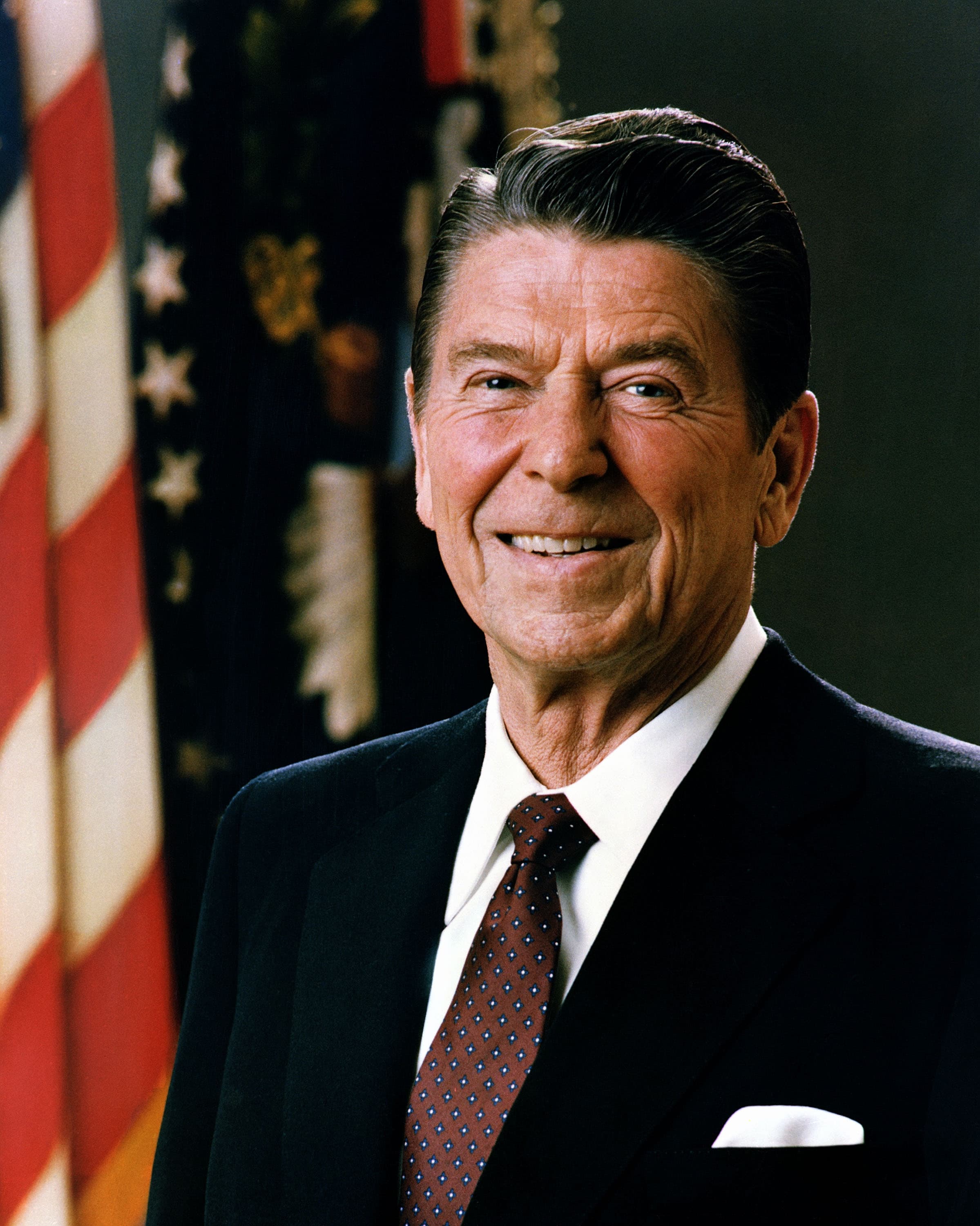
File:Official Portrait of President Reagan 1981.jpg - Wikimedia Commons View original
Is this image relevant?
File:President Reagan speaking in Minneapolis 1982.jpg - Wikimedia Commons View original
Is this image relevant?
Reaganomics - Simple English Wikipedia, the free encyclopedia View original
Is this image relevant?
File:Official Portrait of President Reagan 1981.jpg - Wikimedia Commons View original
Is this image relevant?
Conservative Shift in the Reagan Era
Reagan's presidency (1981–1989) represented the most decisive rightward turn in American politics since the 1920s. His administration combined free-market economics, military buildup, and cultural traditionalism into a coalition that would define the Republican Party for decades.
Supply-side economics ("Reaganomics") rested on the idea that cutting taxes, especially for top earners and corporations, would stimulate investment and growth that would eventually benefit everyone. Reagan signed major tax cuts in 1981, slashed federal regulations on business, and reduced spending on domestic social programs. Critics argued the benefits stayed concentrated at the top, pointing to rising income inequality and a ballooning federal deficit.
On foreign policy, Reagan sharply escalated Cold War tensions. He boosted military spending by roughly 35% over his first term, branded the Soviet Union an "Evil Empire" in a 1983 speech, and backed anti-communist movements abroad, including the Contras in Nicaragua and the mujahideen in Afghanistan. He also appointed conservative justices to the Supreme Court, including Sandra Day O'Connor (the first woman on the Court) and Antonin Scalia, shifting the judiciary rightward.
Cultural conservatism gained real political muscle during this period. The Moral Majority, founded by televangelist Jerry Falwell in 1979, mobilized millions of evangelical Christians into a voting bloc focused on opposition to abortion, support for school prayer, and resistance to gay rights. The Religious Right became a core part of the Republican coalition, and broader conservative opposition to feminism helped defeat the Equal Rights Amendment in 1982.
Reagan's legacy proved durable. Subsequent Republican candidates routinely invoked his name and policies, and conservative institutions like the Heritage Foundation gained outsized influence on policy. Neoconservatism also emerged as a distinct ideology during this era, advocating for assertive U.S. intervention abroad and promoting American exceptionalism as a guiding principle.

Social and Political Challenges

AIDS Crisis and LGBTQ+ Activism
The AIDS crisis was one of the defining public health and civil rights emergencies of the late twentieth century. The first cases were reported in 1981 among gay men in Los Angeles and New York City. The disease was initially called GRID (Gay-Related Immune Deficiency), a label that reinforced the dangerous misconception that it affected only gay men and fueled stigma from the start.
The federal government's response was staggeringly slow. The Reagan administration largely ignored AIDS for years; Reagan himself did not publicly address the epidemic until 1987, by which point over 20,000 Americans had already died. Funding for research and treatment lagged far behind the scale of the crisis, and people with AIDS faced widespread discrimination in housing, employment, and healthcare.
That government failure galvanized LGBTQ+ activism on a scale not seen since the Stonewall era:
- ACT UP (AIDS Coalition to Unleash Power), founded in 1987, staged dramatic protests to demand government action. Their slogan "Silence = Death" became one of the most recognizable symbols of the era. ACT UP's confrontational tactics, including demonstrations at the FDA and on Wall Street, pressured officials to accelerate drug approval processes.
- Queer Nation, formed in 1990, focused on challenging homophobia in everyday life and increasing LGBTQ+ visibility through public actions.
- The crisis pushed broader LGBTQ+ rights issues, including anti-discrimination protections and eventually marriage equality, into mainstream political debate.
The toll was enormous. By 1995, AIDS was the leading cause of death for Americans aged 25–44. But the crisis also forged deep community solidarity and built the organizational infrastructure that powered future LGBTQ+ rights victories.
Consequences of the War on Drugs
The War on Drugs began under Nixon in 1971 but escalated dramatically under Reagan, with consequences that reshaped the criminal justice system for a generation. Understanding the policy choices and their effects is central to grasping late-twentieth-century debates about race, policing, and inequality.
Harsh sentencing laws were the primary tool. The Anti-Drug Abuse Act of 1986 established mandatory minimum sentences for drug offenses and created a stark 100:1 sentencing disparity between crack and powder cocaine. Possessing just 5 grams of crack triggered the same mandatory five-year sentence as 500 grams of powder cocaine. Because crack was far more prevalent in Black urban communities while powder cocaine was more common among white users, this disparity had deeply racialized effects.
The drug war also expanded the reach of law enforcement. Federal agencies like the DEA grew significantly, local police departments received military-grade equipment, and border enforcement intensified.
Mass incarceration was the most visible result:
- The U.S. prison population roughly quadrupled between 1980 and 2000, rising from about 500,000 to over 2 million.
- African Americans and Hispanics were arrested, convicted, and sentenced at vastly disproportionate rates compared to white Americans, despite similar rates of drug use across racial groups.
- A prison-industrial complex developed as private companies like Corrections Corporation of America profited from building and operating prisons, creating financial incentives to keep incarceration rates high.
The long-term social damage extended well beyond prison walls. Families and communities, particularly in urban areas, were disrupted as parents and breadwinners were locked up for nonviolent offenses. Former inmates faced enormous barriers to employment, housing, and voting rights after release, perpetuating cycles of poverty. These consequences eventually fueled growing calls for criminal justice reform that gained momentum into the 2000s and 2010s.
Cultural and Economic Shifts
The so-called culture wars intensified throughout the 1980s and 1990s as Americans became increasingly polarized over social issues. Abortion, LGBTQ+ rights, religious expression in public spaces (such as prayer in schools and Ten Commandments displays in courthouses), and debates over multiculturalism in education all became flashpoints that split the electorate along ideological lines.
Economically, neoliberalism became the dominant framework for both parties. This philosophy emphasized free-market capitalism, deregulation, privatization of government services, and free trade. Reagan championed these ideas, but they also shaped the Clinton administration in the 1990s through policies like welfare reform and the North American Free Trade Agreement (NAFTA).
Globalization accelerated alongside these shifts. International trade expanded, supply chains stretched across borders, and cultural exchange intensified through new communications technology. But globalization also contributed to the decline of American manufacturing jobs, particularly in the Rust Belt, as companies moved production overseas to reduce labor costs. This economic restructuring deepened regional inequalities and planted seeds of political resentment that would surface forcefully in later decades.
See Fiveable more often in Google
Mark Fiveable as a preferred source and Google is more likely to show you our guides in Top Stories, with a "preferred" badge in AI Mode and AI Overviews.