3.2 Colonial Rivalries: Dutch and French Colonial Ambitions

🗽US History Unit 3 Review
3.2 Colonial Rivalries: Dutch and French Colonial Ambitions
🗽 US History
Colonial Rivalries in North America
French and Dutch colonial efforts in North America took very different shapes, but both revolved around one resource: fur. Understanding how these two powers operated helps explain why colonial North America developed the way it did, and why Native American alliances became so central to European success on the continent.

Top images from around the web for French vs Dutch colonial approaches
First Nations - Wikipedia View original
Is this image relevant?
Colonial Rivalries: Dutch and French Colonial Ambitions · US History View original
Is this image relevant?
History of Native Americans in the United States - Wikipedia View original
Is this image relevant?
First Nations - Wikipedia View original
Is this image relevant?
Colonial Rivalries: Dutch and French Colonial Ambitions · US History View original
Is this image relevant?
French vs. Dutch Colonial Approaches
France and the Netherlands both wanted profit from the New World, but they went about it in distinct ways.
The French built their colonial strategy around the fur trade and Catholic missionary work. Rather than establishing large farming settlements, they developed deep relationships with Native American groups, especially the Huron and Algonquin, who had expertise in hunting and trapping beaver pelts. French traders depended on these alliances for survival and profit. Alongside the traders, Jesuit missionaries traveled into the interior to convert Native Americans to Catholicism, which also extended French political influence.
The Dutch were more straightforwardly commercial. They established the colony of New Netherland, with its capital at New Amsterdam (present-day New York City), and focused on building a profitable trading network. The Dutch West India Company set up trading posts and exchanged European manufactured goods for furs, primarily with the Iroquois. Unlike the French, the Dutch showed little interest in religious conversion. Their relationships with Native Americans centered almost entirely on trade, which kept interactions relatively peaceful for a time.
The key contrast: France pursued fur trade plus religious conversion and deep Native alliances. The Dutch pursued fur trade plus commerce, with minimal interest in reshaping Native cultures.

Fur Trade's Impact on the Colonies
The fur trade wasn't just an economic activity; it determined where settlements grew, which Native groups gained power, and how each colony was organized.
In New Netherland:
- The Dutch West India Company established trading posts along the Hudson River Valley
- New Amsterdam and Fort Orange (present-day Albany) grew into important commercial centers because of their positions along trade routes
- The Iroquois supplied furs in exchange for European goods like metal tools, cloth, and firearms, which shifted the balance of power among Native groups in the region
In New France:
- French voyageurs and coureurs des bois (independent fur traders) pushed deep into the continental interior to trade directly with Native tribes
- Trading posts at Quebec and Montreal became the economic hubs of the colony
- Because the French depended so heavily on Native American partners for the fur trade, colonial policies consistently prioritized maintaining those alliances. This gave Native groups real leverage in negotiations with the French.

Religion in French Colonization
Catholic missionary work was woven into the fabric of French colonialism in ways that had no real parallel in Dutch or English colonies of this period.
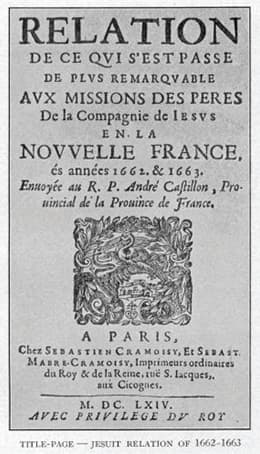
Jesuit missionaries were sent to New France specifically to convert Native Americans to Catholicism. They established mission settlements like Sainte-Marie among the Hurons, learned Native languages, and studied local customs so they could communicate more effectively. Their dedication to understanding Native cultures made them unusually effective, but also deeply disruptive.
The impact on Native communities was mixed and often devastating:
- Some Native Americans did convert, though many blended Catholic practices with their own traditional beliefs rather than fully replacing them
- Jesuit presence altered social and political dynamics within Native communities, sometimes creating divisions between converts and traditionalists
- European diseases, especially smallpox, spread through mission settlements and trade networks, killing large portions of Native populations
For the French colonial project, the Jesuits served multiple purposes. Their conversion efforts helped cement alliances with Native groups. Their detailed reports and maps of the interior gave French officials valuable geographic and political intelligence that guided further exploration and settlement.
Economic and Political Developments
These colonial rivalries played out within a broader economic framework. Mercantilism was the dominant economic theory of the era, holding that a nation's power depended on accumulating wealth through a favorable balance of trade. Colonies existed, in this view, to supply raw materials (like furs) to the mother country and to buy finished goods in return.
The triangular trade system connected Europe, Africa, and the Americas in a complex web of exchange. European manufactured goods went to Africa; enslaved people were transported to the Americas; and raw materials like sugar, tobacco, and furs flowed back to Europe. This system fueled colonial economies across the continent.
These rivalries eventually boiled over into outright war. The Seven Years' War (1756–1763), known in North America as the French and Indian War, pitted France and its Native allies against Great Britain. The conflict ended with the Treaty of Paris (1763), which forced France to cede most of its North American territories to Britain. This treaty effectively ended France's presence as a colonial power on the North American mainland and dramatically reshaped the political map of the continent.
Note: The Seven Years' War falls outside the 1500–1700 timeframe of this unit, but it's the direct consequence of the rivalries that developed during this period. Your course may address it in a later unit.
See Fiveable more often in Google
Mark Fiveable as a preferred source and Google is more likely to show you our guides in Top Stories, with a "preferred" badge in AI Mode and AI Overviews.