1.1 Moles and Molar Mass

🧪AP Chemistry Unit 1 Review
1.1 Moles and Molar Mass
🧪 AP Chemistry
A mole is a counting unit equal to Avogadro's number, particles, and molar mass in g/mol lets you convert between lab-scale mass and particle count. Use with dimensional analysis to move between grams, moles, and particles. For AP Chemistry, keep units visible so the setup shows which quantity each conversion factor cancels.
Moles and Molar Mass Summary
Moles and molar mass connect the lab-scale mass you can measure to the particle-scale atoms, molecules, or formula units that react. One mole contains Avogadro's number of particles, and molar mass tells you the grams in one mole of a substance.
For AP Chemistry Topic 1.1, the core calculation is n = m/M, where n is moles, m is mass, and M is molar mass. Use dimensional analysis to convert between grams, moles, and particles, keeping units visible so they cancel correctly.
Why This Matters for the AP Chemistry Exam
You can't count atoms directly, so chemistry depends on connecting measurable mass to the number of particles in a sample. This topic gives you that link, and it shows up constantly. Almost every quantitative problem later in the course (stoichiometry, solution concentration, gas laws, thermochemistry, equilibrium) starts by converting a mass into moles. Getting comfortable with the mole concept and dimensional analysis now makes the rest of the course much smoother.
On the exam, you'll use these skills to identify the right relationship to solve a problem and to carry units correctly through multistep calculations. Strong unit tracking helps you catch your own errors and show clear work on free response.
Key Takeaways
- A mole is an amount of substance containing Avogadro's number of particles: N_A = 6.022 x 10^23 mol^-1.
- Molar mass (M) has units of g/mol and equals the sum of the average atomic masses from the periodic table.
- The average mass of one particle in amu is numerically equal to the molar mass in g/mol, which links the particle scale to the lab scale.
- Use n = m/M to convert between mass and moles; rearrange to m = nM or M = m/n as needed.
- Use Avogadro's number to convert between moles and particles: particles = n x N_A.
- Track units with dimensional analysis so unwanted units cancel and you end with the unit you want.
Core Concepts
Why the Mole Exists
In lab work you measure mass with a balance, but reactions happen one particle at a time. There has to be a connection between the mass of a substance and the number of particles it contains. The mole provides that connection.
A mole is just a counting unit, like a dozen. A dozen always means 12, and a mole always means 6.022 x 10^23 of whatever you are counting (atoms, molecules, or formula units). That value is Avogadro's number, N_A = 6.022 x 10^23 mol^-1.
Atomic Mass Units and the Mole

The mass of a single atom or molecule is measured in atomic mass units (amu). The useful trick is this: the average mass of one particle in amu is numerically equal to the molar mass of that substance in grams per mole. So one carbon atom averages about 12.01 amu, and one mole of carbon weighs about 12.01 g. This numerical equality is what lets you turn a weighed mass into a particle count.
Molar Mass
The molar mass of a substance is the mass in grams of one mole of it, with units of g/mol. To find it, add up the average atomic masses of every atom in the formula. You get those atomic masses from the periodic table provided on the AP exam.
For a molecular compound, this is the molecular mass. For an ionic compound, you add the atomic masses in the formula unit, sometimes called the formula mass. Either way, the process is the same: count each element, multiply by its atomic mass, and sum.
Periodic table provided on the AP Chemistry Exam
Worked Example: Water (H2O)
One molecule of water has 2 hydrogen atoms and 1 oxygen atom.
- Hydrogen: 2 x 1.008 = 2.016 g/mol
- Oxygen: 1 x 16.00 = 16.00 g/mol
Add them: 2.016 + 16.00 = 18.02 g/mol.
Worked Example: Carbon Dioxide (CO2)
CO2 has 1 carbon atom and 2 oxygen atoms. Multiply each subscript by the element's atomic mass, then add.
- Carbon: 1 x 12.01 = 12.01 g
- Oxygen: 2 x 16.00 = 32.00 g
Total: 12.01 + 32.00 = 44.01 g/mol.
Dimensional Analysis
Dimensional analysis (the unit-factor method) is how you convert between units by multiplying by ratios that equal 1. You'll use it all year, so build fluency now.
The idea: write your starting quantity, then multiply by conversion factors arranged so the units you don't want cancel and the unit you want stays. A conversion factor is just a ratio of equal quantities, like 1 mol = N_A particles, or 1 mol = molar mass in grams.
The two conversion factors you use most in this topic:
- Mass to moles: divide by molar mass (this is n = m/M in action).
- Moles to particles: multiply by Avogadro's number.
Putting It Together: 50.0 g of CO2

Grams to Moles
Start with 50.0 g of CO2 and divide by the molar mass so grams cancel:
50.0 g CO2 x (1 mol CO2 / 44.01 g CO2) = 1.14 mol CO2
This is exactly n = m/M, since you are dividing mass by molar mass.
Moles to Molecules
Convert 1.14 mol CO2 to molecules using Avogadro's number so moles cancel:
1.14 mol CO2 x (6.022 x 10^23 molecules / 1 mol) = 6.86 x 10^23 molecules CO2
Molecules to Atoms of Each Element


Use the subscripts as ratios:
- Carbon: there is 1 C per CO2, so 6.86 x 10^23 atoms of C.
- Oxygen: there are 2 O per CO2, so multiply by 2 to get about 1.37 x 10^24 atoms of O.
The subscript tells you the atom-to-molecule ratio, which becomes your conversion factor.
How to Use This on the AP Chemistry Exam
Problem Solving
- Identify what you have and what you want, then pick the relationship that connects them (usually n = m/M or N_A).
- Set up conversion factors so units cancel. Keep units written at every step; this is your built-in error check.
- Rearrange n = m/M when needed: m = nM to find mass, M = m/n to find molar mass.
Free Response
- Show full setups with units, not just final numbers. Clear work earns credit even if you slip on arithmetic.
- Watch significant figures, but do your rounding at the end so you don't lose accuracy mid-problem.
Common Trap
- Don't confuse molecules with atoms. A mole of CO2 gives Avogadro's number of CO2 molecules, but the number of oxygen atoms is twice that.
Common Misconceptions
- Misconception: A mole is a mass.Actually: A mole is not a mass. It is a count of particles (6.022 x 10^23). Molar mass is the mass of that count, in g/mol.
- Misconception: Avogadro's number and molar mass are the same tool.Actually: Avogadro's number and molar mass are different tools. Use molar mass to go between grams and moles, and Avogadro's number to go between moles and particles. You can't skip straight from grams to particles in one factor without combining both.
- Misconception: Atomic mass is the same as atomic number.Actually: Atomic mass is not the same as atomic number. The atomic number is the proton count; the atomic mass (in amu) is what you use to build molar mass.
- Misconception: Molecular mass and formula mass are different calculations.Actually: "Molecular mass" and "formula mass" describe the same calculation applied to different substances. Molecules have a molecular mass; ionic compounds have a formula mass based on the formula unit. Both come from summing atomic masses.
- Misconception: Counting molecules is the same as counting atoms of one element.Actually: Counting molecules is not the same as counting atoms of one element. Always apply the subscript ratio when a question asks for atoms of a specific element.
Related AP Chemistry Guides
Practice Questions for 1.1
1 of 10
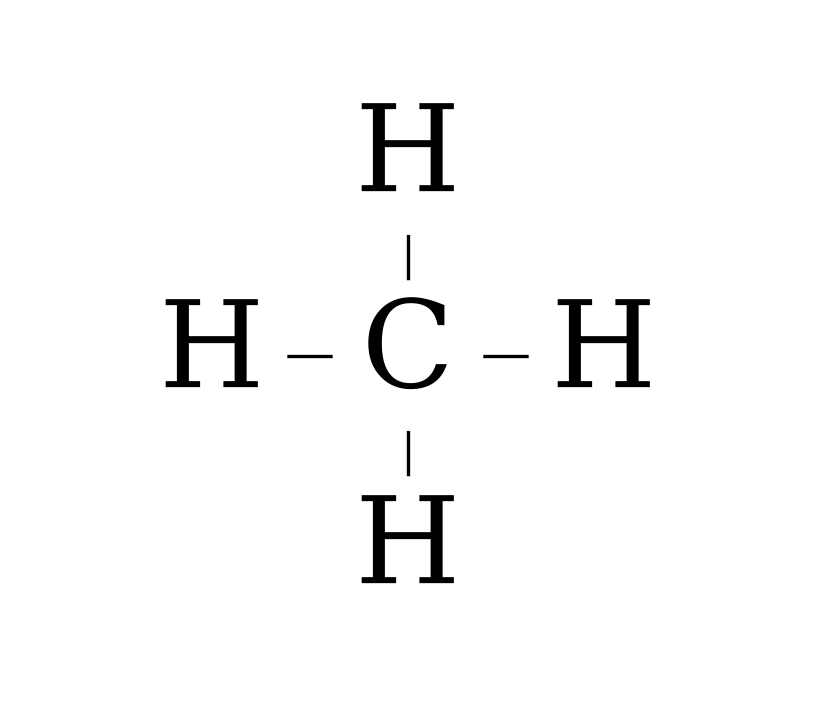
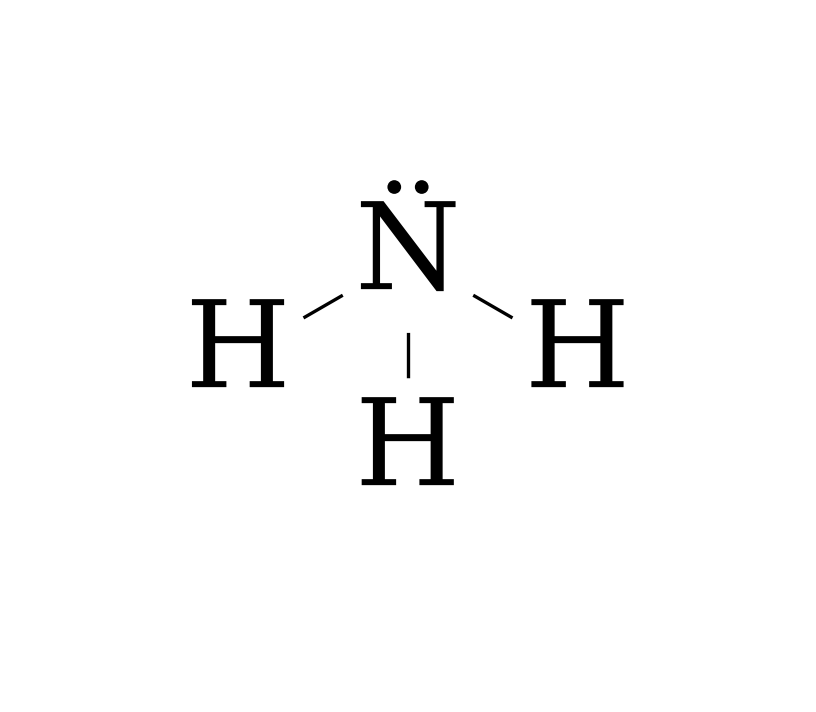
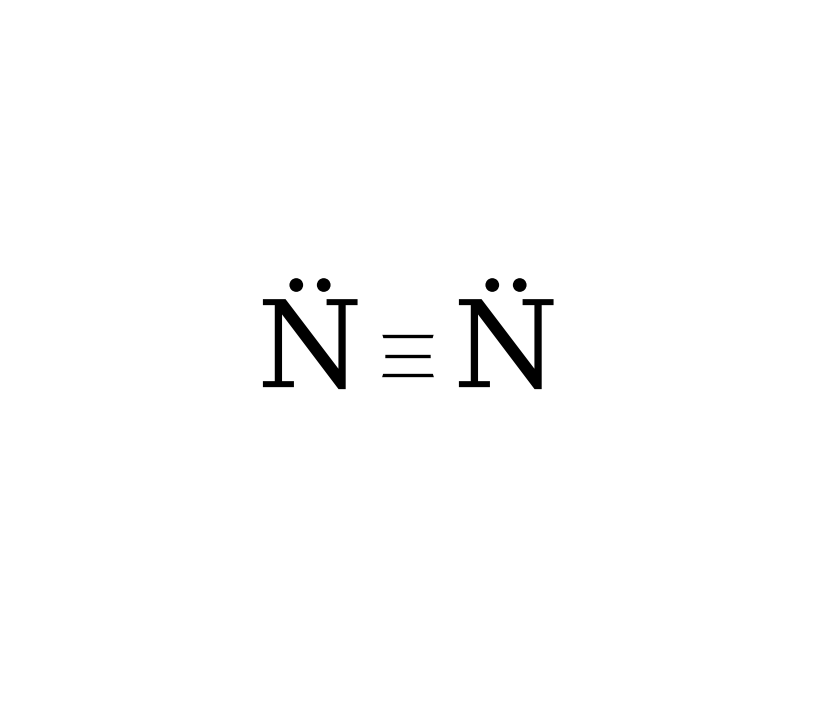
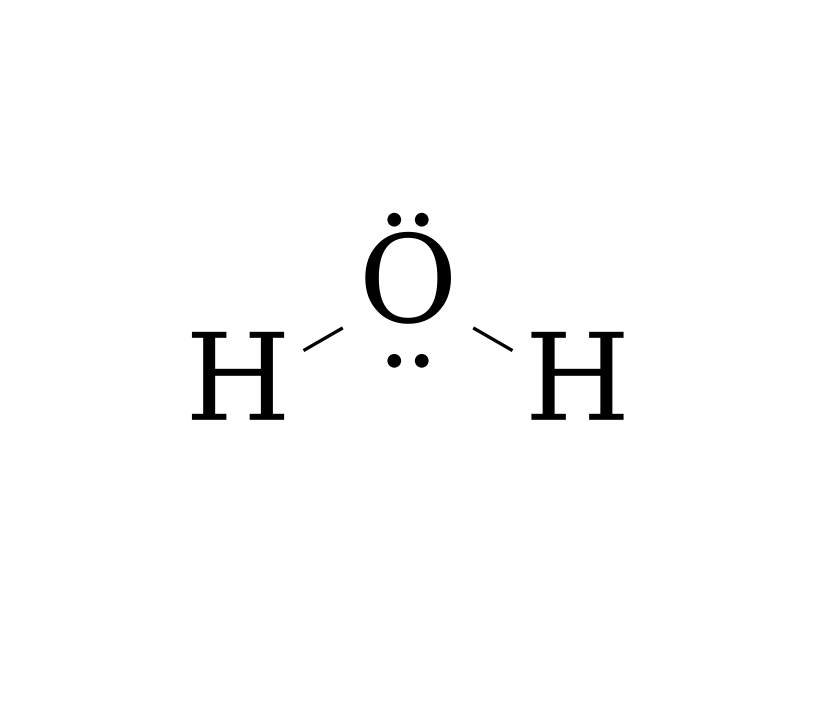
A pure gas has a mass of for 4 molecules.
Based on the data, which gas is present?
A.
B.
C.
D.
Vocabulary
The following words are mentioned explicitly in the AP® course framework for this topic.Term | Definition |
|---|---|
atomic mass units | A unit of mass used to express the mass of individual atoms or molecules, where one amu is defined relative to carbon-12. |
Avogadro's number | The constant 6.022 × 10^23 mol^-1 that represents the number of particles (atoms, molecules, or formula units) in one mole of a substance. |
constituent particles | The individual atoms, molecules, or ions that make up a substance. |
dimensional analysis | A mathematical technique for converting between different units of measurement by using conversion factors and canceling units. |
formula unit | The smallest unit of a compound that shows the fixed proportions of atoms or ions held together. |
molar mass | The mass in grams of one mole of a substance, numerically equal to the average mass of one particle in atomic mass units. |
mole concept | A fundamental chemistry concept that relates the number of particles (atoms, molecules, or ions) to measurable quantities through Avogadro's number. |
Frequently Asked Questions
What is a mole in AP Chemistry?
A mole is a counting unit equal to Avogadro's number, 6.022 x 10^23 particles. AP Chemistry uses moles to connect measurable mass in grams to atoms, molecules, ions, or formula units.
What is molar mass?
Molar mass is the mass of one mole of a substance in grams per mole. Find it by adding the atomic masses from the periodic table for every atom in the chemical formula.
How do you use n = m/M?
Use n = m/M by dividing mass in grams by molar mass in grams per mole to find moles. You can rearrange the same relationship to solve for mass or molar mass.
How do you convert moles to particles?
Multiply the number of moles by Avogadro's number. Always label the particle type, such as atoms, molecules, ions, or formula units, based on the substance in the problem.
Why is dimensional analysis important for AP Chemistry 1.1?
Dimensional analysis shows whether each conversion factor cancels correctly. It helps prevent common mistakes like mixing up grams, moles, particles, and molar mass.
What is a common mistake with moles and molar mass?
A common mistake is confusing molecules with atoms or ignoring subscripts in a formula. Another is using Avogadro's number when the problem only asks for a grams-to-moles conversion.
See Fiveable more often in Google
Mark Fiveable as a preferred source and Google is more likely to show you our guides in Top Stories, with a "preferred" badge in AI Mode and AI Overviews.