3.9 Black Organizations and Institutions

✊🏿AP African American Studies Unit 3 Review
3.9 Black Organizations and Institutions
✊🏿 AP African American Studies
3.1
The Reconstruction Amendments
3.2
Social Life: Reuniting Black Families and the Freedmen's Bureau
3.3
Black Codes, Land, and Labor
3.4
The Defeat of Reconstruction
3.5
Disenfranchisement and Jim Crow Laws
3.6
White Supremacist Violence and the Red Summer
3.7
The Color Line and Double Consciousness in American Society
3.8
Lifting as We Climb: Uplift Ideologies and Black Women's Rights and Leadership
3.9
Black Organizations and Institutions
3.10
HBCUs, Black Greek Letter Organizations, and Black Education
3.11
The New Negro Movement and the Harlem Renaissance
3.12
Photography and Social Change
3.13
Envisioning Africa in Harlem Renaissance Poetry
3.14
Symphony in Black: Black Performance in Music, Theater, and Film
3.15
Black History Education and African American Studies
3.16
The Great Migration
3.17
Afro-Caribbean Migration
3.18
The Universal Negro Improvement Association
In the early twentieth century, African Americans built their own businesses, newspapers, banks, and churches because Jim Crow and segregation shut them out of white-controlled institutions. These Black organizations created jobs, spread news, advocated for civil rights, and developed leaders, helping communities become more self-sufficient and proud.
Why This Matters for the AP African American Studies Exam
This topic shows how African Americans responded to exclusion by creating institutions that supported economic stability and community life. On the exam, you can use it to explain causation (how segregation led to Black institution-building) and continuity (how organizations like the Black press and Black churches kept shaping activism for decades). You will also analyze required sources tied to Madam C.J. Walker and Black-owned banking, so be ready to explain what these images and objects reveal about Black economic empowerment.
Key Takeaways
- African Americans created businesses and organizations to serve Black communities because they were excluded from white-controlled institutions under Jim Crow.
- The Black press shared news ignored by mainstream outlets, documented community life, and pushed back against racial discrimination.
- The African Methodist Episcopal Church (AME), founded in 1816, was the first Black Christian denomination in the United States, and Black churches multiplied after Reconstruction.
- Black churches functioned as community centers, offering safe spaces for worship, organizing, and cultural expression while developing future leaders.
- Madam C.J. Walker, the first woman millionaire in the United States, built products that celebrated Black beauty and reinvested through philanthropy.
- Citizens Savings Bank and Trust Company, founded in 1904, is the oldest continuously operating African American-owned bank in the United States.
Promoting Economic Stability
Black Businesses and Organizations
Because Jim Crow and segregation laws shut African Americans out of much of American society, many built businesses and organizations made to serve Black communities. These institutions:
- Provided goods and services that white-owned businesses often denied to Black customers
- Improved the self-sufficiency and economic independence of African American neighborhoods
- Created jobs for African Americans who faced discrimination in the wider job market, helping workers gain skills and contributing to a growing Black middle class
- Built community pride and showed the resourcefulness of Black entrepreneurs
One well-known example is the Greenwood district in Tulsa, Oklahoma, often called "Black Wall Street," a thriving center of Black enterprise before it was harmed in the 1921 Tulsa race massacre.
Citizens Savings Bank and Trust Company (founded in 1904) is the oldest continuously operating African American-owned bank in the United States. Originally called the One Cent Savings Bank, it became the first African American-owned bank to join the Federal Deposit Insurance Corporation (FDIC) and the Federal Reserve System.
Expansion of the Black Press
Black-owned newspapers provided news tailored to African American readers. The Black press:
- Covered events and issues that mainstream white-owned media ignored or misrepresented
- Highlighted the achievements and contributions of African Americans
- Documented community life, including social events, cultural activities, and religious gatherings
- Served as a platform for protesting racial discrimination and advocating for civil rights
Papers like the Chicago Defender and Pittsburgh Courier are examples of outlets that challenged segregation and encouraged African Americans to take action against injustice. The Chicago Defender also helped encourage many to join the Great Migration north.
African American Christian Institutions
As African Americans created their own churches to escape discrimination in white-led congregations, Black Christian institutions became central to community building. The African Methodist Episcopal Church (AME), founded in 1816, was the first Black Christian denomination in the United States. It gave African Americans spaces to worship freely and shape their faith on their own terms.
After Reconstruction, the number of Black churches grew significantly as African Americans left white-shaped congregations to build their own places of worship. These churches became central to community life and later played a major role in civil rights organizing.
Black Churches as Community Centers
Black churches did far more than hold worship services. They:
- Gave individuals and families a sense of belonging and support
- Hosted cultural events like music performances and literary readings
- Served as hubs for organizing political and social activism, including providing meeting spaces and resources for later movements
- Developed Black leadership and talent by giving people chances to practice public speaking and lead
Many influential figures in politics, music, and education came out of Black church communities. As a later application, churches and ministers became key to civil rights organizing in the 1950s and 1960s.
Black Inventors and Entrepreneurs
African American inventors and entrepreneurs showed Black success and reinvested in their communities through philanthropy.
- Madam C.J. Walker, born Sarah Breedlove, became the first woman millionaire in the United States.
- She developed hair care products designed for African American women.
- Her business employed thousands of Black women as sales agents and factory workers.
These entrepreneurs created products that celebrated Black beauty and challenged beauty standards that excluded Black features, helping instill pride in African American consumers. Many used their wealth to fund schools, churches, and other community efforts.
Required Sources
Advertisement for Madam C.J. Walker Products, 1906-1950
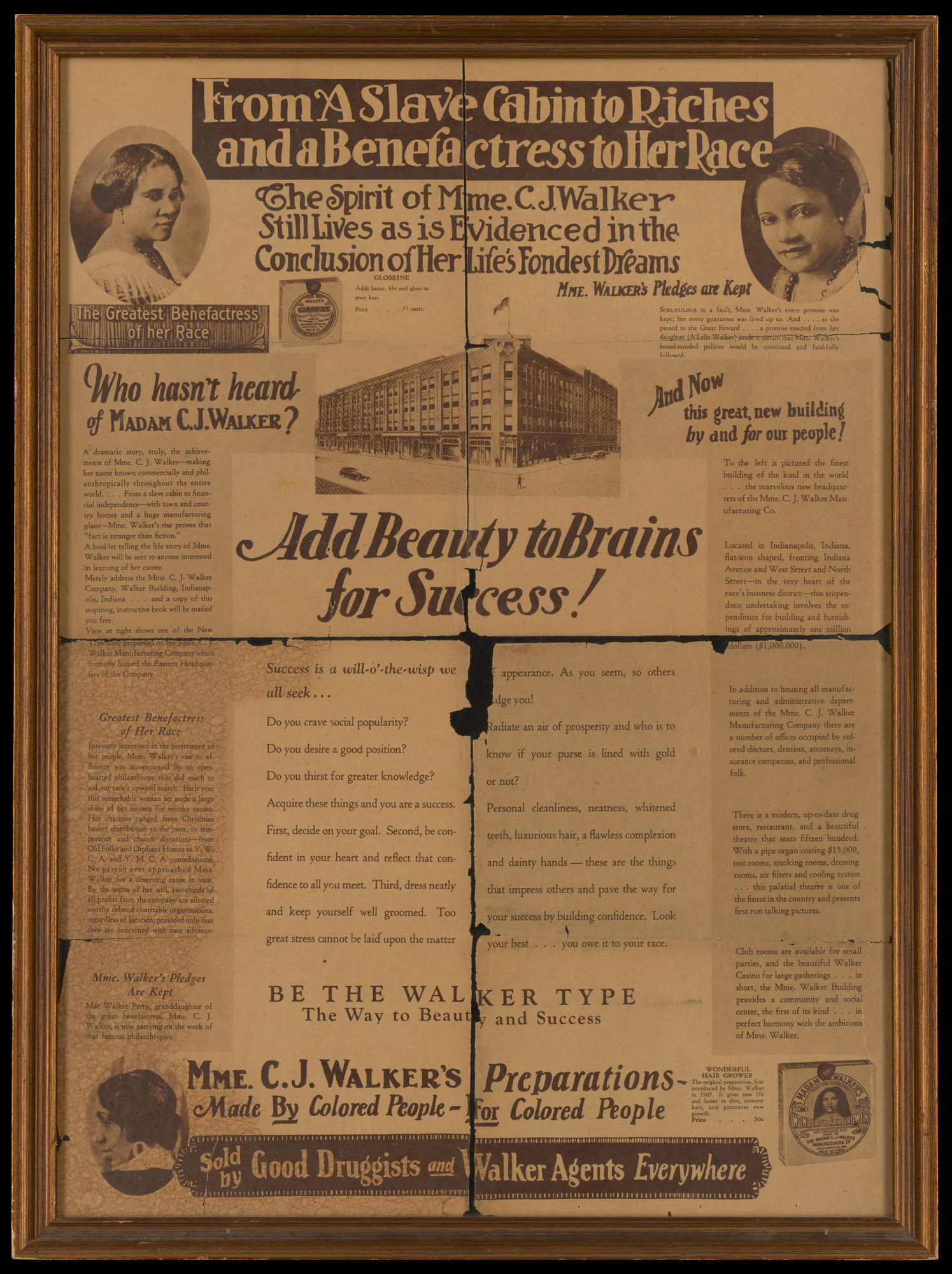
This advertisement shows how Walker marketed products directly to African American women and connected beauty products to Black pride and economic opportunity. When analyzing it, think about audience, message, and how the ad reflects Black economic self-sufficiency.
Photograph of a Convention of Madam C.J. Walker Agents at Villa Lewaro, 1924
This photo captures the network of Black women who worked as Walker sales agents. It shows how her business created jobs and built a community of Black women entrepreneurs, not just a single successful individual.
Clock Used by the Citizens Savings and Trust Company, 1920-2013
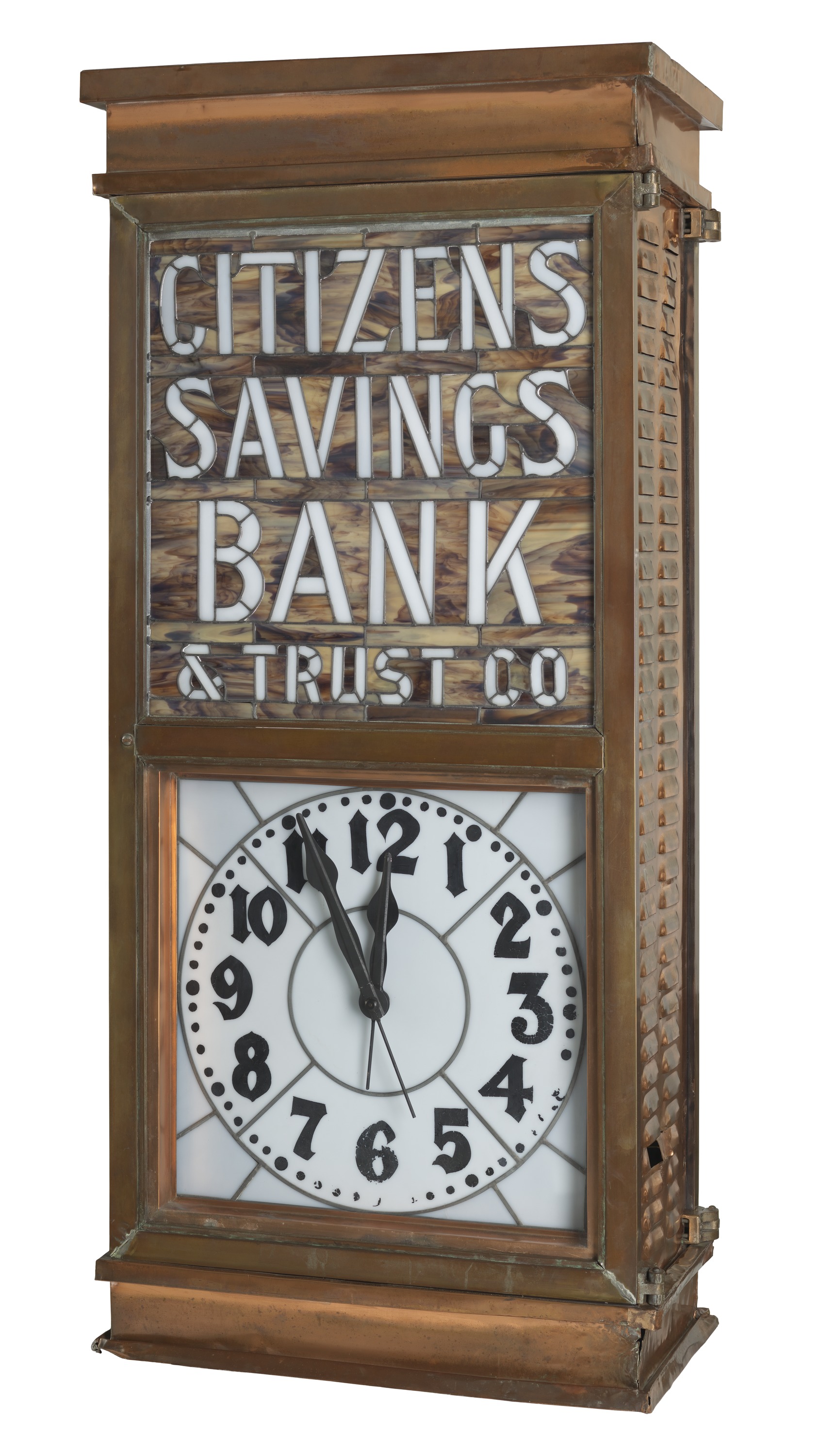
This clock is a physical link to African American economic empowerment in the early twentieth century. As one of the first Black-owned banks in the United States, Citizens Savings provided financial services to a community largely excluded from mainstream banking.
The clock's long span of use, from 1920 to 2013, points to the lasting legacy of Black entrepreneurship and self-reliance. It is a reminder of how African Americans built wealth and economic stability despite systemic discrimination.
How to Use This on the AP African American Studies Exam
Using Sources Effectively
When you get a required source from this topic, identify what it shows about Black self-sufficiency. For the Walker ad and convention photo, focus on how Black businesses created jobs and pride. For the Citizens Savings clock, connect it to Black banking and economic independence under segregation.
Making Connections
Use causation to explain why these institutions formed: exclusion from white-controlled society pushed African Americans to build their own. Use continuity and change to trace how the Black press, Black churches, and Black businesses kept shaping community life and later activism.
Common Trap
Do not treat individuals like Madam C.J. Walker as just personal success stories. The stronger point is how their businesses, philanthropy, and networks lifted whole communities.
Common Misconceptions
- Misconception: Black institutions were only reactions to exclusion.Actually: Black institutions were not only reactions to exclusion. They were also acts of pride and self-definition that built lasting community strength.
- Misconception: The AME Church was the only Black church.Actually: The AME Church was not the only Black church, but it was the first Black Christian denomination in the United States, founded in 1816. Many other Black churches grew, especially after Reconstruction.
- Misconception: The Black press only reported news.Actually: The Black press did more than report news. It documented community life and actively protested discrimination and pushed for civil rights.
- Misconception: Madam C.J. Walker's impact came only from her personal wealth.Actually: Madam C.J. Walker was the first woman millionaire in the United States, and her impact came from employing and empowering thousands of Black women, not just her personal wealth.
- Misconception: "Black Wall Street" in Tulsa is a required term for this topic.Actually: "Black Wall Street" in Tulsa is a strong example of Black enterprise, but it is an illustrative example here, not a required term for this topic.
Related AP African American Studies Guides
- 3.10 HBCUs, Black Greek Letter Organizations, and Black Education
- 3.12 Photography and Social Change
- 3.5 Disenfranchisement and Jim Crow Laws
- 3.8 Lifting as We Climb: Uplift Ideologies and Black Women's Rights and Leadership
- 3.13 Envisioning Africa in Harlem Renaissance Poetry
- 3.4 The Defeat of Reconstruction
Practice Questions for 3.9
1 of 10
Which of the following provides the strongest evidence that the Black press addressed information gaps created by mainstream media's exclusion of African American perspectives?
A.
Black newspapers employed African American journalists despite discrimination in white-owned publications.
B.
Black newspapers covered issues affecting African American communities that white-owned media ignored.
C.
Black newspapers established printing facilities and distribution networks across multiple regions.
D.
Black newspapers published advertisements for Black-owned businesses, generating revenue for operations.
Vocabulary
The following words are mentioned explicitly in the AP® course framework for this topic.Term | Definition |
|---|---|
African Methodist Episcopal Church (AME) | The first independent Black Christian denomination in the United States, founded in 1816 to serve African American worship and community needs. |
Black churches | African American religious institutions that served as safe spaces for worship, cultural expression, community organizing, and developing Black leadership. |
Black entrepreneurs | African American business owners who established and operated enterprises to serve their communities and contribute to the economy. |
Black press | African American-owned and operated newspapers and publications that provided news, documentation of community life, and platforms for protesting racial discrimination. |
economic stability | A state of financial security and predictability, which the G.I. Bill aimed to provide through access to education, housing, and business loans. |
philanthropy | The practice of charitable giving and support for community initiatives, as demonstrated by successful African American entrepreneurs. |
racial discrimination | Systemic and individual acts of unfair treatment based on race, limiting opportunities and rights for African Americans. |
self-sufficiency | The ability of a community or group to meet its own needs through internal resources and institutions rather than relying on external support. |
Frequently Asked Questions
What were Black organizations and institutions in early twentieth-century America?
They were Black-owned businesses, newspapers, banks, churches, and community organizations created to meet Black community needs during exclusion and segregation. They promoted self-sufficiency, leadership, and economic stability.
Why was the Black press important?
The Black press reported news that mainstream white-owned papers ignored or distorted. It documented community life, protested racial discrimination, and connected African Americans locally and nationally.
What role did Black churches play in African American communities?
Black churches provided spaces for worship, organizing, cultural expression, and leadership development. They also became important centers for later political activism and civil rights work.
Why is the AME Church significant?
The African Methodist Episcopal Church, founded in 1816, was the first Black Christian denomination in the United States. Its growth shows how African Americans created independent religious institutions.
Why is Madam C.J. Walker important for this topic?
Madam C.J. Walker built a beauty-products business that celebrated Black beauty, employed Black women, and supported community initiatives through philanthropy. She is a key example of Black entrepreneurship.
What should I connect the required sources to on the AP exam?
Connect the Walker advertisement and convention photo to Black entrepreneurship and women's labor. Connect the Citizens Savings clock to Black banking, community wealth, and economic self-sufficiency under segregation.
See Fiveable more often in Google
Mark Fiveable as a preferred source and Google is more likely to show you our guides in Top Stories, with a "preferred" badge in AI Mode and AI Overviews.